
1. Background
Non-typhoidal Salmonella (NTS) enteritis is a leading cause of bacterial gastroenteritis in infants worldwide, who are particularly susceptible because of their underdeveloped immune systems, immature gut microbiota, and weaker gastric acid barrier (1-3). Although infections typically present as self-limiting diarrhea, they can progress to invasive disease with severe complications, imposing a substantial disease burden (4-6).
NTS enteritis exhibits marked seasonal and regional variation, with summer–autumn peaks well documented in temperate regions (5, 7). However, correlations with climatic factors and interannual fluctuations remain insufficiently studied in certain populations. Salmonella Typhimurium is recognized as a common serotype, but its regional distribution and antimicrobial resistance patterns require further investigation (8, 9). Globally, increasing resistance to antibiotics, including ampicillin, trimethoprim-sulfamethoxazole, fluoroquinolones, and third-generation cephalosporins, has been observed (10-12). The emergence of MDR strains has narrowed treatment options and increased healthcare costs.
2. Objectives
Studies of NTS enteritis in infants remain limited, particularly regarding factors associated with infection with MDR strains. Therefore, we conducted a retrospective study of infants with NTS enteritis in Chengdu from 2018 to 2023 to investigate its epidemiology, clinical features, and resistance profiles and to identify factors associated with escalation of antibiotic therapy.
3. Methods
3.1. Study Subjects
A retrospective study was conducted at a tertiary hospital in Chengdu, western China. Infants diagnosed with NTS enteritis by stool culture were included. Demographic, clinical, laboratory, microbiological, and treatment data were collected. The inclusion criteria were as follows: 1) age ≤ 12 months; 2) mucoid stool with or without blood; 3) stool microscopy showing > 5 white blood cells/high-power field; 4) stool culture positive for NTS; and 5) complete clinical and antimicrobial susceptibility data. The exclusion criteria were as follows: 1) coinfection with other intestinal pathogens; 2) food allergy-related gastrointestinal disease; and 3) incomplete data or loss to follow-up.
A total of 287 hospitalized infants with stool cultures positive for NTS during the study period were initially screened. After applying the inclusion and exclusion criteria, 58 patients were excluded: 23 because of coinfection with other intestinal pathogens, 12 because of food allergy-related gastrointestinal disease, and 23 because of incomplete clinical or antimicrobial susceptibility data. The remaining 229 infants were consecutively included. No microbiologically eligible case was omitted because of missing data alone.
Antibiotic escalation to cefoperazone-sulbactam was defined as switching from initial empirical therapy (ampicillin or cefotaxime) to intravenous cefoperazone-sulbactam after 48 - 72 hours of treatment because of persistent fever (≥ 39°C), worsening diarrhea frequency (> 10 episodes/day), or clinical deterioration (e.g., dehydration or poor perfusion), and before susceptibility results were available. Escalation decisions followed a standardized hospital protocol for pediatric bacterial enteritis and were made by the attending physician based on predefined severity criteria. Escalation was a composite clinical decision shaped by individual patient response, local protocols, and the timing of susceptibility results; it should not be interpreted as a direct marker of biological treatment failure.
The study was approved by the Ethics Committee of Chengdu Women’s and Children’s Central Hospital (Approval No.: 2022[003]). Informed consent was waived by the Ethics Committee because this was a retrospective study using de-identified data from routine clinical practice, and no additional interventions were performed. Patient records were anonymized before analysis.
4. Results
4.1. Demographic Characteristics
A total of 229 infants were divided into three age groups: 0 - 6 months (46, 20.1%), 6 - 9 months (86, 37.6%), and 9 - 12 months (97, 42.4%). The median age was 266 days (IQR, 220 - 318 days). Males comprised 55.5% (127/229), and 79.2% (181/229) were urban residents. Cesarean delivery accounted for 47.6% (109/229); 77.3% (177/229) were not exclusively breastfed; 5.2% (12/229) were underweight; and 1.7% (4/229) were overweight.
4.2. Epidemiological Profile of NTS Enteritis in Infants
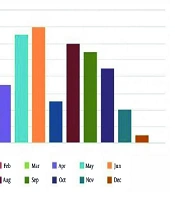
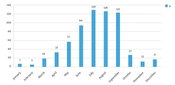
Annual detection rates showed a three-phase pattern: a low baseline in 2018 (5.34%), a sharp peak in 2020 (20.1%), stabilization at high levels (19.6% in 2021 and 17.3% in 2022), and a slight decrease in 2023 (13%) (P < 0.05) (Figure 1A). Monthly average detection rates exhibited significant seasonal fluctuations: rates were lowest in January–March (4.7%, 5.2%, and 5.2%), increased in April (13.5%), peaked in summer–autumn in June (20.5%), July (18.5%), August (16.7%), and September (22.2%), and then declined to 8.6% in December (P < 0.05) (Figure 1B).
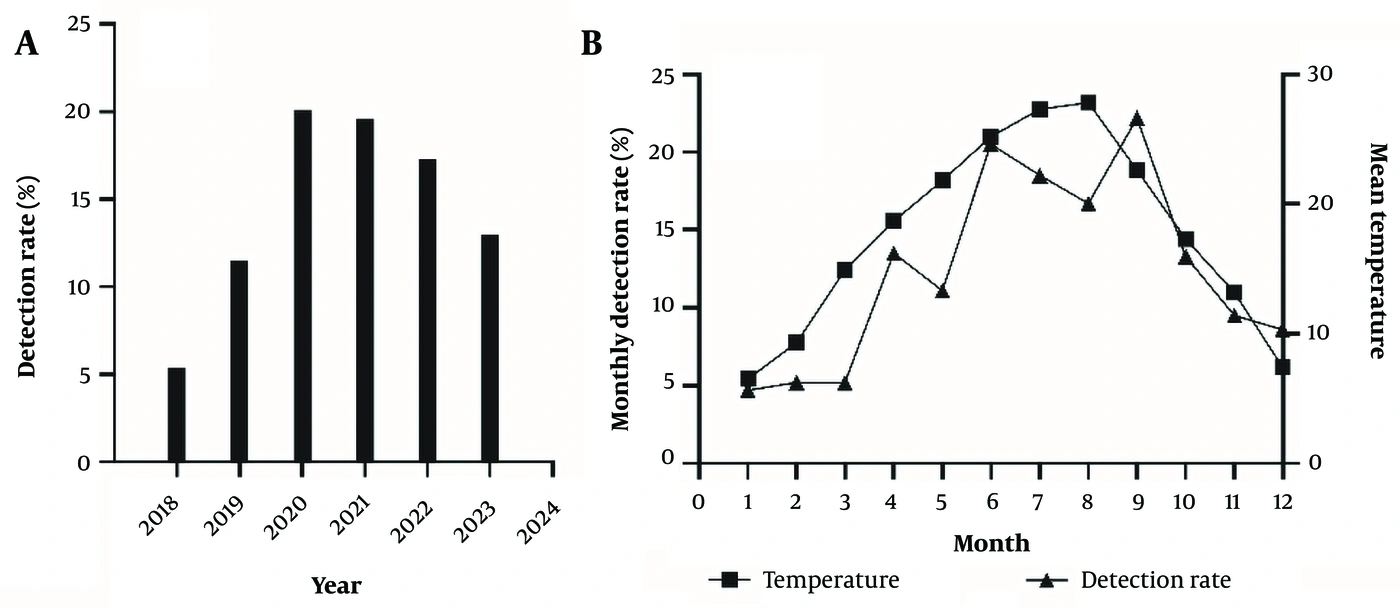
Figure 1.
Epidemiological profile of NTS enteritis in infants (2018 - 2023): A, annual detection rate from 2018 to 2023; B, monthly average detection rates and monthly average temperature.
Monthly average temperature showed a unimodal distribution: it was lowest in January (6.3°C), peaked in July (26.8°C), decreased slightly in August (26.6°C), remained at 22.6°C in September, and then declined to 6.8°C in December. A significant positive correlation was observed between the monthly average detection rate and temperature (r = 0.847, P < 0.001) (Figure 1B).
4.3. Clinical Characteristics
No significant differences were found in sex, residence, delivery mode, feeding pattern, or nutritional status across groups (P > 0.05). Clinical differences were observed in fever levels (χ2 = 21.357, P < 0.001) and platelet counts (F = 5.68, P = 0.004). Infants aged < 6 months had the lowest fever levels (Cramér V = 0.216, moderate association) and the highest platelet counts, with a mean difference of 72.38 × 10⁹/L (95% CI, 18.5 - 126.3) compared with the 9- to 12-month group (P = 0.009; partial η2 = 0.048, small to moderate effect) (Table 1).
Table 1.
Comparison of Demographic Characteristics and Clinical Features Among Infants with NTS Enteritis in Different Age Groups a
| Characteristic | Overall (n = 229) | 0 - 6 months (n = 46) | 6 - 9 months (n = 86) | 9 - 12 months (n = 97) | χ2/F | P-Value |
|---|---|---|---|---|---|---|
| Male/female | 127/102 (55.5) | 28/18 (60.9) | 49/37 (56.9) | 50/47 (51.5) | 1.22 | 0.54 |
| Urban residence | 181 (79.2) | 35 (76.1) | 70 (81.3) | 76 (78.4) | 0.56 | 0.76 |
| Preterm | 59 (25.8) | 5 (10.9) | 4 (4.6) | 10 (10.3) | 2.42 | 0.30 |
| Cesarean section | 109 (47.6) | 25 (54.3) | 45 (52.3) | 39 (40.2) | 3.74 | 0.15 |
| Exclusive breastfeeding | 52 (22.7) | 16 (34.8) | 19 (22.0) | 17 (17.5) | 5.32 | 0.07 |
| Abnormal nutritional status | 16 (7.0) | 2 (4.3) | 7 (8.1) | 7 (7.2) | 0.68 | 0.71 |
| Bloody stool | 144 (62.9) | 28 (60.9) | 55 (64.0) | 61 (62.3) | 0.12 | 0.94 |
| Fever (°C) | 21.36 | < 0.001 b | ||||
| No fever | 32 (14.0) | 15 (32.6) | 9 (10.4) | 8 (8.3) | ||
| 37.3 - 38 | 13 (5.7) | 4 (8.7) | 5 (5.8) | 4 (4.1) | ||
| 38.1 - 39 | 30 (13.1) | 8 (17.4) | 12 (13.9) | 10 (10.3) | ||
| 39.1 - 41 | 154 (67.2) | 19 (41.3) | 60 (69.7) | 75 (77.3) | ||
| Stool frequency (episodes/d) | 0.07 | 0.96 | ||||
| 1 - 5 | 17 (7.4) | 3 (6.5) | 9 (10.5) | 5 (5.2) | ||
| 6 - 10 | 110 (48.0) | 23 (50.0) | 38 (44.2) | 49 (50.5) | ||
| > 10 | 102 (44.5) | 20 (43.5) | 39 (45.3) | 43 (44.3) | ||
| Complications | ||||||
| Dehydration | 67 (29.3) | 14 (30.4) | 21 (24.4) | 32 (33.0) | 1.66 | 0.44 |
| Electrolyte disturbance | 8 (3.5) | 1 (2.1) | 5 (5.8) | 2 (2.1) | - | 0.33 c |
| Metabolic acidosis | 25 (10.9) | 6 (13.0) | 9 (10.4) | 10 (10.3) | 0.27 | 0.87 |
| Myocardial injury | 12 (5.2) | 4 (8.7) | 4 (4.6) | 4 (4.1) | - | 0.52 c |
| Liver dysfunction | 19 (8.3) | 4 (8.7) | 9 (10.4) | 6 (6.2) | 1.11 | 0.57 |
| CRP maximum, mg/L | 44.02 ± 40.13 | 36.15 ± 43.58 | 48.08 ± 41.87 | 44.14 ± 2.16 | 1.33 | 0.27 |
| PLT (× 109/L) | 396.86 ± 123.78 | 442.91 ± 140.19 | 401.93 ± 117.10 | 370.53 ± 11.71 | 5.68 | 0.004 b |
| S. Typhimurium | 175 (76.4) | 31 (67.4) | 65 (75.5) | 79 (81.4) | 3.47 | 0.18 |
| Antibiotic escalation | 50 (21.8) | 8 (17.4) | 14 (16.2) | 28 (28.9) | 4.90 | 0.09 |
| MDR cases | 51 (22.2) | 13 (28.3) | 16 (18.6) | 22 (22.7) | 1.63 | 0.44 |
a Values are expressed as No. (%) or mean ± SD.
b P < 0.05 was considered statistically significant.
c Fisher exact test.
4.4. Microbiological Characteristics and Antimicrobial Resistance
Seventeen serotypes were identified. Salmonella Typhimurium was predominant (76.42%), followed by S. London (6.55%) and S. Dublin (3.49%). No significant differences were observed in serotype distribution across age groups (P > 0.05). The remaining serotypes were relatively rare, accounting for 12.88% (Table 2).
Table 2.
Distribution of Salmonella Serotypes Identified from Infant Patients with NTS Enteritis a
| Serotype | Isolates |
|---|---|
| S. Typhimurium | 175 (76.42) |
| S. London | 15 (6.55) |
| S. Dublin | 8 (3.49) |
| S. Bovis-morbificans | 5 (2.18) |
| S. Enteritidis | 4 (1.75) |
| S. Newport | 2 (0.87) |
| S. Manhattan | 2 (0.87) |
| S. Stanley | 2 (0.87) |
| S. Aberdeen | 2 (0.87) |
| S. Potsdam | 2 (0.87) |
| S. Braenderup | 1 (0.44) |
| S. Huangkumcoast | 1 (0.44) |
| S. Meleagridis | 1 (0.44) |
| S. Klosterneuendorf | 1 (0.44) |
| S. Newlands | 1 (0.44) |
| S. Thompson | 1 (0.44) |
| S. Choleraesuis | 1 (0.44) |
| Unspecified serotype | 5 (2.18) |
a Values are expressed as No. (%).
Of the 229 isolates, 180 (78.6%) showed resistance, with 51 (22.2%) exhibiting MDR. Ampicillin showed the highest resistance (> 60%), followed by trimethoprim-sulfamethoxazole (98, 42.8%), ciprofloxacin (48, 21.0%), cefotaxime (44, 19.2%), and cefoperazone-sulbactam (6, 2.6%). No significant changes in annual resistance rates were observed from 2018 to 2023 (P > 0.05) (Table 3).
Table 3.
Annual Resistance Rates of NTS Isolates from Infants to Selected Antimicrobial Agents (2018 - 2023) a
| Antimicrobials | 2018 (n = 15) | 2019 (n = 33) | 2020 (n = 44) | 2021 (n = 54) | 2022 (n = 41) | 2023 (n = 42) | χ2 | P-Value |
|---|---|---|---|---|---|---|---|---|
| Cefotaxime | 2 (13.3) | 5 (15.1) | 6 (13.6) | 13 (24.0) | 6 (14.6) | 12 (28.5) | 5.31 | 0.379 |
| Ampicillin | 9 (60.0) | 27 (81.8) | 27 (61.3) | 39 (72.2) | 29 (70.7) | 29 (69.0) | 44.61 | 0.465 |
| Ciprofloxacin | 4 (26.6) | 9 (27.2) | 10 (22.7) | 7 (12.9) | 8 (19.5) | 10 (23.8) | 3.51 | 0.621 |
| TMP-SMX | 8 (53.3) | 12 (36.4) | 21 (47.7) | 23 (42.5) | 15 (36.5) | 19 (45.2) | 2.42 | 0.778 |
| Cefoperazone-sulbactam | 0 (0) | 0 (0) | 2 (4.5) | 1 (1.8) | 2 (4.8) | 1 (2.3) | - | 0.794 b |
a Values are expressed as No. (%). Abbreviation: TMP-SMX, trimethoprim-sulfamethoxazole.
b Fisher exact test.
Among the 180 infants with drug-resistant strains, 129 were non-MDR, of whom 81.4% did not receive escalation to cefoperazone-sulbactam. Of the 51 infants with MDR strains, 66.7% (34/51) did not receive escalation. Among the 49 infants with nonresistant strains, 81.6% (40/49) did not receive escalation. Escalation rates did not differ significantly among groups (P > 0.05).
Multivariate logistic regression identified three factors independently correlated with antibiotic escalation to cefoperazone-sulbactam (Table 4): urban residence (OR = 0.436, 95% CI, 0.195 - 0.973, P < 0.05), stool frequency (> 10 episodes/day) (OR = 2.146, 95% CI, 1.047 - 4.399, P < 0.05), and MDR strains (OR = 2.731, 95% CI, 1.214 - 6.144, P < 0.05). These associations reflect clinician-driven escalation decisions and should not be interpreted as causal determinants of the biological “need” for cefoperazone-sulbactam.
Table 4.
Multivariate Analysis of Factors Associated with Antibiotic Escalation to Cefoperazone-Sulbactam a
| Variables | B | SB | Wald | P | OR | 95% CI |
|---|---|---|---|---|---|---|
| Age (days) | 0.005 | 0.003 | 3.532 | 0.060 | 1.005 | [1.000, 1.010] |
| Residence | -0.831 | 0.410 | 4.112 | 0.043 | 0.436 | [0.195, 0.973] |
| Bloody stool | 0.096 | 0.378 | 0.065 | 0.799 | 1.101 | [0.525, 2.310] |
| Fever | 1.264 | 0.735 | ||||
| Fever with 37.3 - 38.0°C (1) | -0.028 | 0.997 | 0.001 | 0.977 | 0.972 | [0.138, 6.861] |
| Fever with 38.1 - 39.0°C (2) | -0.189 | 0.757 | 0.063 | 0.802 | 0.828 | [0.188, 3.647] |
| Fever with 39.1 - 41.0°C (3) | 0.410 | 0.617 | 0.442 | 0.506 | 1.506 | [0.450, 5.044] |
| Gestational age | -1.834 | 1.077 | 2.901 | 0.089 | 0.160 | [0.019, 1.318] |
| Nutritional status | 0.534 | 0.681 | 0.615 | 0.433 | 1.706 | [0.449, 6.474] |
| Metabolic acidosis | 0.026 | 0.587 | 0.002 | 0.965 | 1.026 | [0.325, 3.242] |
| Myocardial injury | 1.250 | 0.789 | 2.509 | 0.113 | 3.489 | [0.743, 16.373] |
| Liver dysfunction | -0.349 | 0.673 | 0.270 | 0.604 | 0.705 | [0.189, 2.635] |
| Stool frequency | 0.764 | 0.366 | 4.349 | 0.037 | 2.146 | [1.047, 4.399] |
| Dehydration | 0.268 | 0.395 | 0.459 | 0.498 | 1.307 | [0.603, 2.835] |
| PLT (× 109/L) | 0.003 | 0.002 | 3.147 | 0.076 | 1.003 | [1.000, 1.006] |
| CRP maximum (mg/L) | -0.010 | 0.006 | 3.025 | 0.082 | 0.990 | [0.979, 1.001] |
| MDR | 1.005 | 0.414 | 5.899 | 0.015 | 2.731 | [1.214, 6.144] |
a Variable coding: Residence: 0 = rural, 1 = urban; Bloody stool: 0 = no, 1 = yes; Fever: 0 = no, 1 = 37.3 - 38.0°C, 2 = 38.1 - 39.0°C, 3 = 39.1 - 41.0°C; Gestational age: 0 = term, 1 = preterm; Nutritional status: 0 = normal, 1 = abnormal (malnutrition or overweight); Metabolic acidosis: 0 = no, 1 = yes; Myocardial injury: 0 = no, 1 = yes; Stool frequency: 0 = 1 - 10 episodes/day, 1 = > 10 episodes/day; Dehydration: 0 = no, 1 = yes; MDR: 0 = no, 1 = yes; Antibiotic escalation (outcome): 0 = no, 1 = yes. Age, PLT, and CRP were analyzed as continuous variables. Abbreviations: OR, odds ratio; CI, confidence interval.
5. Discussion
This study investigated the epidemiological, clinical, and microbiological characteristics of NTS enteritis in infants in West China over a recent 6-year period. NTS enteritis in infants exhibited a distinct summer–autumn peak, and the monthly average detection rate was strongly positively correlated with temperature (r = 0.847, P < 0.001), consistent with reports from most temperate regions worldwide (5). The underlying mechanism may involve increased reproduction and transmission of Salmonella in food, water sources, and the environment under high-temperature conditions (14, 15). Beyond environmental conditions, food-animal sources are important in NTS transmission. For instance, a recent report from Iran documented substantial Salmonella contamination in broiler chickens, reinforcing poultry as a persistent reservoir (16). This finding highlights the value of integrated surveillance along the food chain, especially during warm seasons when bacterial growth accelerates. Notably, the detection rate in September was higher than that in July and August. This may be explained by the persistently high average temperature in September (22.6°C), combined with rainy, humid conditions that may prolong Salmonella survival. Although a summer peak remained a consistent characteristic, the specific peak month, intensity, and duration showed substantial interannual variation. We lacked complete monthly humidity and rainfall data for the study period, both of which may affect Salmonella survival and transmission. Their omission is a limitation; future studies incorporating these covariates could better disentangle the drivers of seasonal variation beyond temperature.
Fever patterns in infants with NTS enteritis varied with age. Infants under 3 months of age primarily presented without fever (85.7%), whereas those aged 3 - 6 months frequently presented with high fever (48.7%). The highest rate of high fever (77.3%) was observed in infants aged 9 - 12 months. This age-related difference in clinical phenotype might reflect maturation of immune responses during infancy because younger infants have relatively immature innate and adaptive immune responses, resulting in weaker systemic inflammatory responses such as high fever (17). Other indicators of disease severity, including diarrhea frequency, dehydration, electrolyte disorders, and complications, did not differ significantly across age groups. Thus, disease severity should be assessed comprehensively using multidimensional indicators (eg, diarrhea frequency, dehydration status, and complications) rather than relying solely on fever or any other single symptom.
Salmonella Typhimurium was the predominant serotype (76.42%), consistent with global and Asian trends (5), highlighting its continued dominance in infections among infants. However, antimicrobial resistance poses a more serious challenge: resistance rates to ampicillin and trimethoprim-sulfamethoxazole (TMP-SMX) remained extremely high (> 50%), indicating that these two traditional first-line oral antibiotics have become ineffective for treating NTS enteritis in infants in this region. They may no longer be suitable as first-line choices for empirical antibacterial treatment. The 21.0% ciprofloxacin resistance rate in our cohort is concerning given the growing reliance on fluoroquinolones for invasive salmonellosis. Studies from Tehran have reported frequent QRDR mutations in gyrA/parC and plasmid-mediated qnr genes in NTS isolates; similar determinants might be present in West China, underscoring the need for genomic surveillance to guide empirical therapy (18). Although the overall resistance rate to cefotaxime (19.2%) was relatively lower, the increase to 28.5% in 2023 is a warning signal regarding its continued use. This trend suggests the potential spread of extended-spectrum β-lactamase-producing strains, which could severely threaten the efficacy of third-generation cephalosporins. In this context, cefoperazone-sulbactam (resistance rate, 2.6%) demonstrated excellent in vitro activity, suggesting that it could be a reasonable option for empirical and targeted treatment of severe or complicated infections. This finding is consistent with a single-center study from Gannan, China, which also reported low resistance rates to cefoperazone-sulbactam among pediatric NTS isolates (19). However, this recommendation is based on susceptibility data only; comparative clinical effectiveness studies are needed before it can be advocated as a preferred choice. Although our MDR definition follows a widely used standard, it relies on a limited antibiotic panel and does not distinguish resistance mechanisms (eg, extended-spectrum β-lactamase [ESBL], AmpC, and efflux pumps). Therefore, comparisons with studies using different panels should be interpreted cautiously.
Multivariate logistic regression was used to identify factors independently associated with antibiotic escalation to cefoperazone-sulbactam in infants with NTS enteritis (Table 4). Infants from urban areas were significantly less likely to receive antibiotic escalation than those from rural areas (OR = 0.436, 95% CI, 0.195 - 0.973, P = 0.043). This disparity presumably reflects differences in socioeconomic status, sanitation conditions, and caregiver health literacy. Rural households typically have lower incomes, which restrict access to clean water, proper sanitation facilities, and timely medical care, thereby increasing pathogen exposure and infection severity. Lower health literacy associated with limited educational opportunities in disadvantaged regions may further delay care seeking and worsen outcomes. Diarrhea frequency was a significant predictor of treatment escalation (OR = 2.146; 95% CI, 1.047 - 4.399; P = 0.037), reflecting greater disease severity. Increased frequency indicates more intense intestinal mucosal inflammation and correlates strongly with dehydration, electrolyte imbalances, and metabolic acidosis requiring intensified therapy. The age-related differences in fever and platelet counts also warrant pathophysiological consideration. The blunted febrile response in infants < 6 months likely reflects innate immune immaturity—reduced pyrogenic cytokine (IL-6, TNF-α) production and a less mature hypothalamic set point. This does not indicate milder disease because other severity markers (stool frequency, dehydration, and complications) did not differ by age. Higher platelet counts in younger infants may result from more robust reactive thrombocytosis, an acute-phase response mediated by IL-6 and thrombopoietin, or may simply reflect the physiological decline in platelet counts during the first year. Overall, these findings reinforce that severity assessment should integrate multiple clinical and laboratory parameters rather than fever alone. Moreover, serotype-specific virulence profiles might modulate clinical heterogeneity across age groups. Phylogenetic and virulence gene analyses of Iranian NTS isolates have shown that different serotypes harbor distinct effector/toxin repertoires that differentially trigger host inflammation. Although S. Typhimurium dominated in our series, intraserotype genomic variation could partly underlie age-related differences in fever and acute-phase responses, a hypothesis warranting future molecular epidemiological investigation (20).
Multidrug resistance in NTS strains showed the strongest association with antibiotic escalation (OR = 2.731, 95% CI, 1.214 - 6.144, P = 0.015). This indicates that MDR was a major driver of switching to broader-spectrum antibiotics. First-line agents (ampicillin, trimethoprim-sulfamethoxazole, and even third-generation cephalosporins) often failed in MDR cases, prompting the use of reserve options such as cefoperazone-sulbactam, which remained highly active in our cohort (resistance rate, 2.6%). From an antimicrobial stewardship perspective, this escalation pattern reflected appropriate targeting. Broader-spectrum agents were reserved for infections likely to be resistant, whereas first-line drugs were preserved for susceptible cases. Nevertheless, increasing MDR rates threaten this balance, leading to greater reliance on last-line antibiotics, narrowing treatment options, and potentially further fueling the development of resistance. Urgent action is required, including enhanced resistance surveillance, prudent use of broad-spectrum antibiotics, and robust infection control measures in both community and healthcare settings.
5.1. Study Limitations
Despite providing valuable insights, this study has several limitations, and several potential biases warrant explicit consideration. First, the primary outcome—antibiotic escalation—is inherently a clinician-driven decision rather than a fixed biological endpoint. Despite standardized protocols, individual judgment, parental expectations, and variable timing of susceptibility results may have influenced these decisions. Thus, the identified correlates should be interpreted as associations with a treatment change rather than definitive predictors of therapeutic need and may not generalize to settings with different stewardship practices. Second, admission bias is possible because only hospitalized infants were included, which may overrepresent severe cases and limit generalizability to mild or outpatient NTS enteritis. Third, treatment-selection bias is possible because antibiotic escalation was based on physician judgment despite a standardized protocol, and unmeasured confounders (eg, parental request and previous antibiotic use) could influence decisions. Fourth, referral bias is possible because, as a tertiary center, our cohort may include more complex or refractory cases from surrounding regions. Fifth, rural/urban residence likely serves as a proxy for unmeasured socioeconomic, sanitation, and health literacy variables, and its independent effect should be interpreted cautiously. These biases do not invalidate our findings but underscore the need for multicenter prospective validation.
5.2. Conclusions
NTS enteritis in infants in West China showed marked seasonal variation influenced by temperature, with Salmonella Typhimurium as the dominant serotype and high resistance to traditional first-line antibiotics (ampicillin, trimethoprim-sulfamethoxazole, ciprofloxacin, and cefotaxime). Rural residence, stool frequency, and MDR were independently associated with antibiotic escalation. Enhanced resistance surveillance and appropriate antibiotic use are urgently needed.