1. Background
Salmonella-induced gastrointestinal infections remain a major public health concern globally (1), with an estimated annual mortality of 155,000 - 300,000, particularly in low- and middle-income countries (2, 3). More than 2,600 serotypes of Salmonella have been identified, differentiated based on their surface antigenic structures (4). Human-restricted typhoidal serotypes, such as Salmonellatyphi and paratyphi, typically cause systemic illness characterized by fever and abdominal pain. In contrast, non-typhoidal Salmonella (NTS) serotypes infect a broad range of hosts and most commonly lead to self-limiting gastroenteritis. Globally, NTS is a leading cause of bacterial foodborne diarrhea (5) and a primary pathogen responsible for acute diarrheal disease in Chinese children (6, 7). Among NTS serotypes, S. enterica serovar Typhimurium is the most frequently isolated, particularly in pediatric populations.
Recent surveillance data have highlighted an increasing incidence of S. typhimurium enteritis and a growing trend of antimicrobial resistance (8). These developments pose significant challenges to clinical management and underscore the need for region-specific data to guide empirical antibiotic selection. However, current data on the clinical and antimicrobial resistance patterns of S. typhimurium infections in pediatric patients in China remain limited.
2. Objectives
This retrospective study aimed to describe the clinical characteristics and antimicrobial resistance profiles of pediatric S. typhimurium infections over a five-year period in a tertiary hospital in the Gannan region of southern China.
3. Methods
3.1. Study Subjects
We conducted a retrospective cohort study of 81 pediatric patients with S. enterica serovar Typhimurium enteritis, confirmed by stool culture at the First Affiliated Hospital of Gannan Medical University from October 2019 to October 2024. Inclusion criteria were as follows: (1) Hospitalized children under the age of 14 years; (2) a positive stool culture for S. typhimurium; and (3) availability of complete clinical data. Exclusion criteria included: Duration of diarrhea exceeding four weeks at the time of initial diagnosis.
3.2. Clinical Data Collection
Clinical data were extracted from electronic medical records, including demographic characteristics (age and gender), clinical presentation (symptoms, duration, and complications), routine laboratory parameters, microbiological results (culture and susceptibility), therapeutic interventions (e.g., duration of antimicrobial use), and clinical outcomes.
3.3. Microbiological Testing and Antimicrobial Susceptibility
All microbiological procedures followed the National Clinical Laboratory Procedures (4th edition). Bacterial identification and antimicrobial susceptibility testing were performed using the Bruker MALDI-TOF Biotyper (Bruker Daltonics, Germany) and the VITEK 2 Compact automated systems (bioMerieux, France). Susceptibility testing of S. typhimurium isolates was conducted against 13 antimicrobial agents, including amoxicillin-clavulanate potassium, amikacin, ceftriaxone, ceftazidime, cefoperazone-sulbactam, cefuroxime axetil, cefepime, piperacillin-tazobactam sodium, imipenem, ertapenem, co-trimoxazole, tigecycline, and levofloxacin. Interpretation of susceptibility results was based on the Clinical and Laboratory Standards Institute (CLSI) 2022 guidelines. Notably, isolates with intermediate susceptibility were not considered resistant for this study.
3.4. Statistical Analysis
Data management and processing were performed using Microsoft Excel 2016. Categorical variables are presented as frequencies and percentages, while continuous variables are reported as medians to account for potential non-normal distributions.
4. Results
4.1. Seasonal Distribution
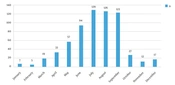
Salmonella typhimurium enteritis occurred throughout the year, but with a clear seasonal pattern (Figure 1). The majority of cases (76.54%, 62/81) were reported between April and September. The highest monthly incidence was recorded in June (14 cases), followed by May (13 cases), August (12 cases), and September (11 cases). A noticeable increase in case numbers was observed in 2023 and 2024 compared to the previous three years.
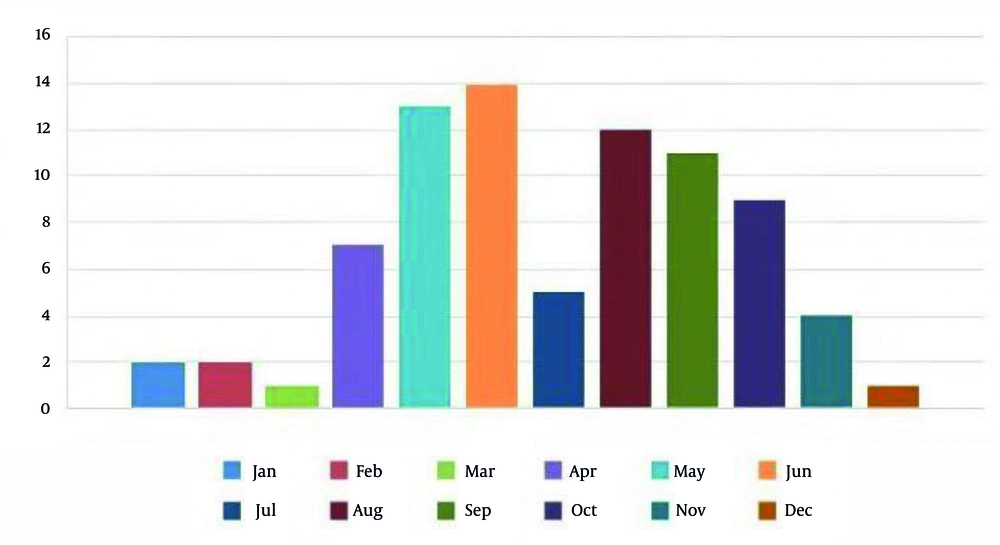
Figure 1.
Distribution of the onset month of 8l pediatric cases with Salmonella typhimurium enteritis
4.2. Clinical Characteristics
As shown in Table 1, among the 81 hospitalized children, 44 (54.32%) were male and 37 (45.68%) were female, resulting in a male-to-female ratio of 1.19:1. Age distribution analysis revealed a median age of 15 months (range: 1 to 120 months), with the age group under 2 years representing the most vulnerable population (57 cases, 70.37%; Figure 2). All patients presented with diarrhea. Stool characteristics included watery yellow/green, mucoid, pasty, and bloody types, with mucoid stools observed in 65 cases (80.25%). Fever occurred in 79 patients (97.53%), with 75 cases experiencing high-grade fever (> 39°C). The duration of fever was ≤ 3 days in 35 cases, 4 - 7 days in 39 cases, and > 7 days in 5 cases. Additional symptoms included abdominal pain (21 cases, 25.93%), vomiting (17 cases, 20.99%), convulsions (4 cases), and abdominal distension (3 cases). Complications included respiratory tract infections in 41 cases (50.62%), bacteremia in 11 (13.58%), hand-foot-and-mouth disease in 2 (2.47%), and rotavirus enteritis in 1 case (1.23%).
Table 1.
Baseline Clinical Characteristics of 81 Pediatric Cases with Salmonella typhimurium Enteritis
| Characteristics | Count (N = 81) |
|---|---|
| Age (y) | |
| 0 ~ 2 | 57 |
| 2 ~ 6 | 22 |
| > 6 | 2 |
| Gender | |
| Male | 44 |
| Female | 37 |
| Fever | 79 |
| Stoolproperty | 81 |
| Watery | 54 |
| Mucus | 65 |
| Bloody | 45 |
| Mushy | 12 |
| Abdominal pain | 21 |
| Abdominal distension | 3 |
| Vomiting | 17 |
| Convulsion | 4 |
| Accompanying disease | |
| Respiratory infections | 41 |
| Hand foot mouth disease | 2 |
| Rotavirus enteritis | 1 |
| Bacteremia | 2 |
| Fever (d) | |
| 1 ~ 3 | 35 |
| 4 ~ 7 | 39 |
| > 7 | 5 |
| Inpatient (d) | |
| 1 ~ 5 | 13 |
| 6 ~ 9 | 20 |
| 10 ~ 14 | 33 |
| ≥ 15 | 15 |
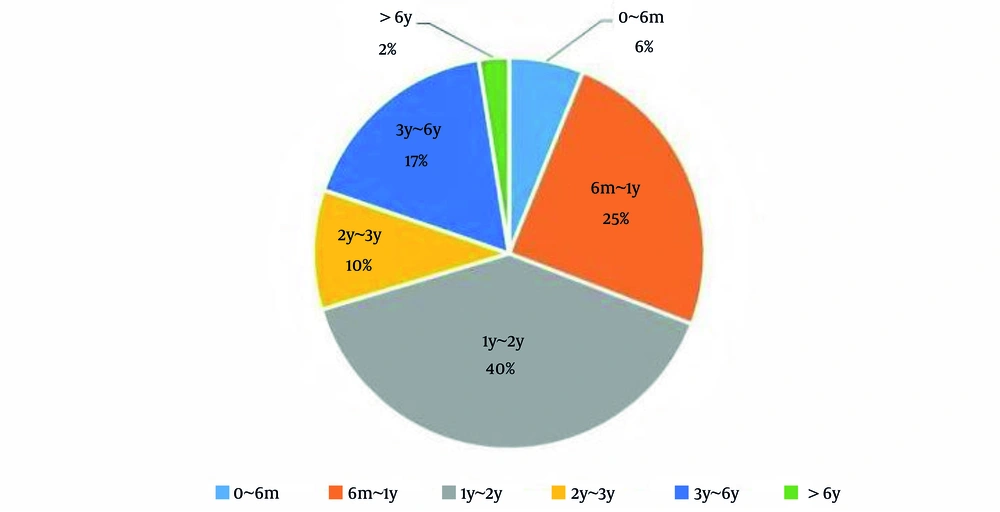
Figure 2.
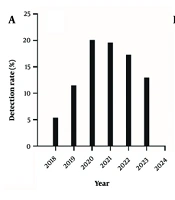
Age distribution of 8l pediatric cases with Salmonella typhimurium enteritis (%)
4.3. Laboratory Examinations
Peripheral white blood cell counts ranged from 0.68×10⁹/L to 23.37×10⁹/L, with elevated counts (≥ 15×109/L) in 25 patients (30.86%; Table 2). C-reactive protein (CRP) levels of ≥ 30 mg/dL were observed in 40 cases (49.38%), while 34 cases (41.98%) exhibited procalcitonin levels of ≥ 0.5 ng/mL. Elevated myocardial enzymes were detected in 4 cases (4.94%), and elevated liver transaminases were found in 1 case (1.23%). Furthermore, hypokalemia was present in 8 cases (9.88%), and hyponatremia was identified in 18 cases (22.22%). Influenza virus infection was a complication in 5 cases (6.17%). All cases yielded positive stool cultures for S. typhimurium, with 28 positive results obtained prior to discharge. Abdominal upright radiographs revealed signs of incomplete intestinal obstruction in 6 cases (7.41%) and ascites in 2 cases (2.47%). No cases of intussusception were detected by ultrasound examination.
Table 2.
Auxiliary Examination Results of 81 Pediatric Cases with Salmonella typhimurium Enteritis
| Laboratory Tests and Images | Count (N = 81) |
|---|---|
| Peripheral blood leucocyte ≥ 15 × 109/L | 25 |
| CRP ≥ 30 mg/dL | 40 |
| PCT ≥ 0.5 ng/mL | 34 |
| ALT ≥ 80U/L | 1 |
| CK-MB ≥ 70U/L | 4 |
| Hypokalemia | 8 |
| Hyponatremia | 18 |
| Influenza virus infections | 5 |
| Stool culture positive before discharge | 28 |
| Incomplete intestinal obstruction | 6 |
| Ascites | 2 |
| Intussusception | 0 |
Abbreviation: CRP, C-reactive protein.
4.4. Antimicrobial Susceptibility
Antimicrobial susceptibility testing was conducted on 81 strains of S. typhimurium. As shown in Table 3, the highest resistance rates were observed for cefuroxime axetil and amikacin (> 90%). Other resistance rates included co-trimoxazole (62.96%), ceftriaxone (48.15%), ceftazidime (35.80%), amoxicillin-clavulanate (28.40%), cefepime (23.46%), piperacillin-tazobactam (17.28%), and cefoperazone-sulbactam (14.81%). Ertapenem, imipenem, and tigecycline showed low resistance rates. Notably, two isolates exhibited resistance to carbapenem antibiotics.
Table 3.
Drug Sensitivity Results of 81 Pediatric Cases with Salmonella typhimurium Enteritis a
| Antibiotics | Count of Bacterial Strains | Drug Resistance | Intermediary | Sensitivity |
|---|---|---|---|---|
| Amoxicillin-clavulanate potassium | 81 | 23 (28.40) | 11 (13.58) | 47 (58.02) |
| Piperacillin tazobactam sodium | 81 | 14 (17.28) | 4 (4.94) | 63 (77.78) |
| Amikacin | 77 | 70 (90.91) | 2 (2.60) | 5 (6.49) |
| Cefatriaxone | 81 | 39 (48.15) | 0 | 42 (51.85) |
| Ceftazidime | 81 | 29 (35.80) | 0 | 52 (64.20) |
| Cefoperazone sodium | 81 | 12 (14.81) | 10 (12.35) | 59 (72.84) |
| Cefuroxime | 71 | 69 (97.18) | 2 (2.82) | 0 |
| Cefepime | 81 | 19 (23.46) | 6 (7.41) | 56 (69.13) |
| Etapenem | 80 | 1 (1.25) | 1 (1.25) | 78 (97.50) |
| Imipenem | 81 | 2 (2.47) | 0 | 79 (97.53) |
| Trimethoprim sulfamethoxazole | 81 | 51 (62.96) | 1 (1.24) | 29 (35.80) |
| Tigecycline | 81 | 4 (4.94) | 3 (3.70) | 74 (91.36) |
| Levofloxacin | 81 | 9 (11.11) | 37 (45.68) | 35 (43.21) |
a Values are expressed as No. (%).
4.5. Treatment and Prognosis
All patients received empirical antibiotic therapy. In 51 cases (62.96%), treatment was initiated within three days of symptom onset. Cephalosporins were used in 72 patients (88.89%), with third-generation cephalosporins administered in 65 cases (80.25%). Penicillins and carbapenems were used in 8 (9.88%) and 1 (1.23%) case, respectively. Clinical improvement was observed in 47 patients (58.02%) before microbiological test results were available. Based on susceptibility results, antibiotic regimens were adjusted in 34 cases (41.98%). A total of 34 patients (41.98%) received antibiotic therapy for more than 10 days. No deaths occurred in this cohort. A favorable outcome (clinical cure or improvement) was achieved in 76 patients (93.83%), while 5 patients were discharged against medical advice. The length of hospital stay ranged from 3 to 27 days, with a median of 11 days.
5. Discussion
Infectious diarrhea remains a major cause of morbidity and mortality in children under five (9). Among its causes, S. enterica serovar Typhimurium has become increasingly prominent in pediatric populations. Previous reports have highlighted concerns regarding inappropriate antimicrobial use during treatment (10, 11). This study aimed to characterize the clinical features and antimicrobial resistance patterns of pediatric S. typhimurium enteritis to inform diagnosis and treatment. In our cohort, infections occurred year-round, with a pronounced seasonal peak in summer and autumn. This pattern is consistent with previous reports from multiple regions in China (12) and internationally, including the United States and Europe, where higher incidence has been observed in warmer, more humid months (13). Similar seasonal trends have been attributed to enhanced bacterial proliferation in food and greater outdoor food consumption during these periods (14). The rise in cases after 2023 may partly reflect increased outdoor activity and food exposure following COVID-19 restriction relaxation, a trend also noted in post-pandemic surveillance data from Japan (15).
Most cases occurred in children under two years of age, consistent with earlier studies showing heightened susceptibility in this age group due to immature immune function and reduced gastric acidity (16). While most patients were previously healthy, those with underlying conditions such as acute lymphoblastic leukemia or congenital heart disease may be linked to more severe or prolonged disease courses. Clinical symptoms ranged from mild, self-limiting diarrhea to systemic disease. The high rates of diarrhea (100%) and fever (97.5%) mirrored those reported in previous pediatric series. However, our cohort exhibited a slightly higher rate of respiratory tract co-infection (50.6%) compared with the ~35 - 40% reported elsewhere (17). Early-stage stool characteristics (watery or egg-white-like) were occasionally misinterpreted as viral gastroenteritis, emphasizing the importance of prompt stool culture. Of 81 cases, 79 presented with isolated gastroenteritis and 2 developed bacteremia. Respiratory tract co-infections were observed in 50.6% of cases. These findings underscore the need to consider S. typhimurium in the differential diagnosis of febrile pediatric patients with mucoid diarrhea, particularly during summer and autumn and in those under two years old.
Regarding complications, we observed incomplete intestinal obstruction, consistent with occasional reports in the literature (18), whereas intussusception was rare and in line with its infrequent mention in other pediatric S. typhimurium studies. Laboratory profiles showing elevated CRP and procalcitonin are in agreement with inflammatory marker patterns documented in comparable patient populations (19). A key management challenge is the emergence of multidrug-resistant (MDR) strains. In our cohort, resistance to third-generation cephalosporins (~40%) is similar to rates reported in recent Chinese surveillance studies (20) but higher than those in North American pediatric isolates (~20 - 25%) (21). Detection of isolates resistant to both cephalosporins and fluoroquinolones mirrors global trends of rising MDR S. typhimurium. Our finding of high resistance to amikacin and trimethoprim-sulfamethoxazole highlights the need for region-specific surveillance to guide empiric therapy.
We observed prolonged fecal shedding (median 5 weeks, extending to 7 weeks in children under five), which is consistent with shedding durations reported in both Chinese and international cohorts (22). As in prior studies, prolonged shedding was more common in patients receiving extended antibiotic therapy, supporting evidence that antibiotics may disrupt gut microbiota and delay bacterial clearance (23). Notably, fecal microbiota transplantation (FMT) has been reported to successfully eradicate drug-resistant NTS in recurrent cases (24), and our findings support the potential of microbiome-restorative approaches. Our antimicrobial susceptibility results support recommendations to consider piperacillin-tazobactam or cefoperazone-sulbactam for severe infections and limit antibiotic duration in immunocompetent patients with mild disease. However, optimal regimens for immunocompromised children remain unclear, and further multicenter prospective studies are warranted.
This study has several limitations. Its retrospective design limited our ability to explore molecular resistance mechanisms, and immune function data were incomplete. Additionally, as a single-center study with a relatively small sample size, generalizability may be limited. Multicenter prospective studies are needed to validate these findings and further elucidate host-pathogen interactions.
5.1. Conclusions
In summary, S. typhimurium remains an important pathogen in pediatric infectious diarrhea, with increasing antimicrobial resistance posing substantial challenges. Improved diagnostic accuracy, antimicrobial stewardship, and continued surveillance are essential to optimize clinical outcomes and mitigate the spread of resistant strains.