


1. Introduction
Improvements in treatment of burn patients have been dramatic in recent years, although associated infections lead to increased mortality in these patients. Immunodeficiency status of the patient and virulence characteristic of pathogenic agent are the main factors that can cause infections in these patients. Both cell mediated and humoral immunity have great effects on infection in burn patient (1).
Multi drug resistant (MDR) Pseudomonas and Acinetobacter are defined as resistant to at least three classes of antibiotics. Most studies have demonstrated that MDR gram negative infections convey increased mortality, longer hospital stays and higher hospital costs when compared with infections associated with susceptible strains (2, 3). Sepsis and related problems are the major cause of death in burns patients and represent an outstanding problem also in view of the emergence of MDR organisms (4).
2. Case Description
An 11-year-old girl was admitted to pediatric burns unit with a history of thermal injury. She was transferred to our burns unit for definitive management. She had sustained approximately 68% total body surface area (TBSA) affecting her posterior trunk, upper and lower limbs. Full thickness injury mainly affected her posterior trunk (Figure 1).
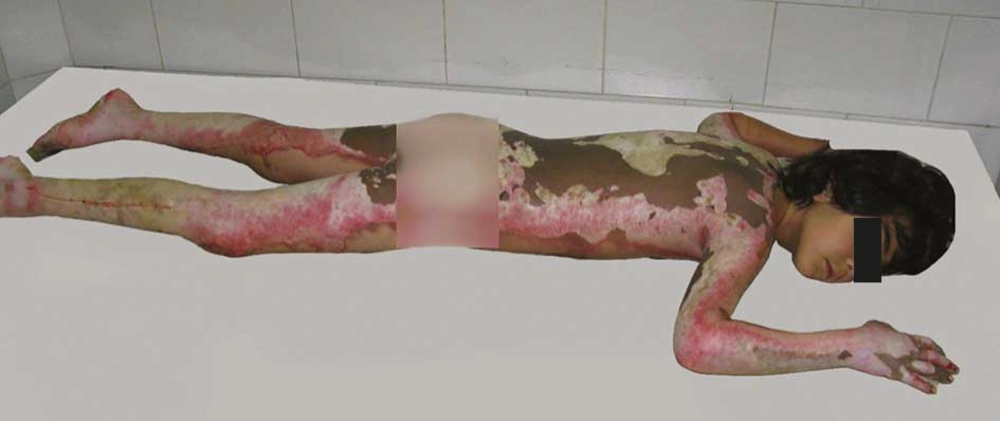
Figure 1.
Photograph Showing Full Thickness Injury Mainly Affecting Posterior Trunk
After initial fluid resuscitation, supportive care and first debridement, on the sixth day, she had developed sudden tachycardia, tachypnea and high grade fever. Over a period of 3-4 days, sepsis progressed to severe form and septic shock. Routine blood tests showed leukopenia (neutropenia), thrombocytopenia, elevated liver enzymes, elevated fibrinogen deposit product (FDP) and d-dimer. Blood gas analysis showed severe metabolic acidosis. Serum immunoglobulin levels especially IgG1 and IgG2 subclasses were decreased. Serum creatinine, prothrombin time (PT) and partial thromboplastin time (PTT) were elevated. Urine analysis and serum electrolytes were within normal limits. Blood and wound cultures were positive for multi-drug resistant (MDR) Pseudomonas aeruginosa and the central venous catheter culture was positive for Acinetobacter baumanii. Tissue culture was positive for MDR Pseudomonas aeruginosa > 105 CFU per gram tissue. Radiological investigations with chest x-rays reveal acute respiratory distress syndrome (ARDS) appearance.
In this situation, the patient was treated with systemic antibiotics including Teicoplanin (gram positive organisms are dominant in the early days of burn injury) and Meropenem, topical agents, novel dressing, granulocyte colony stimulating factor (G-CSF) and intravenous immunoglobulin (IVIG). After clarification of culture results, Teicoplanin was stopped and treatment with Tobramycin and Colistin started. She was managed with packed cells, fresh frozen plasma, platelet and cryoprecipitate. Ventilatory support was done. Nutritional supports especially zinc, glutamine, multivitamins, albumin and aminofusion had very important roles in patient management. After five days, the patient's general condition was better than last days (Figure 2).
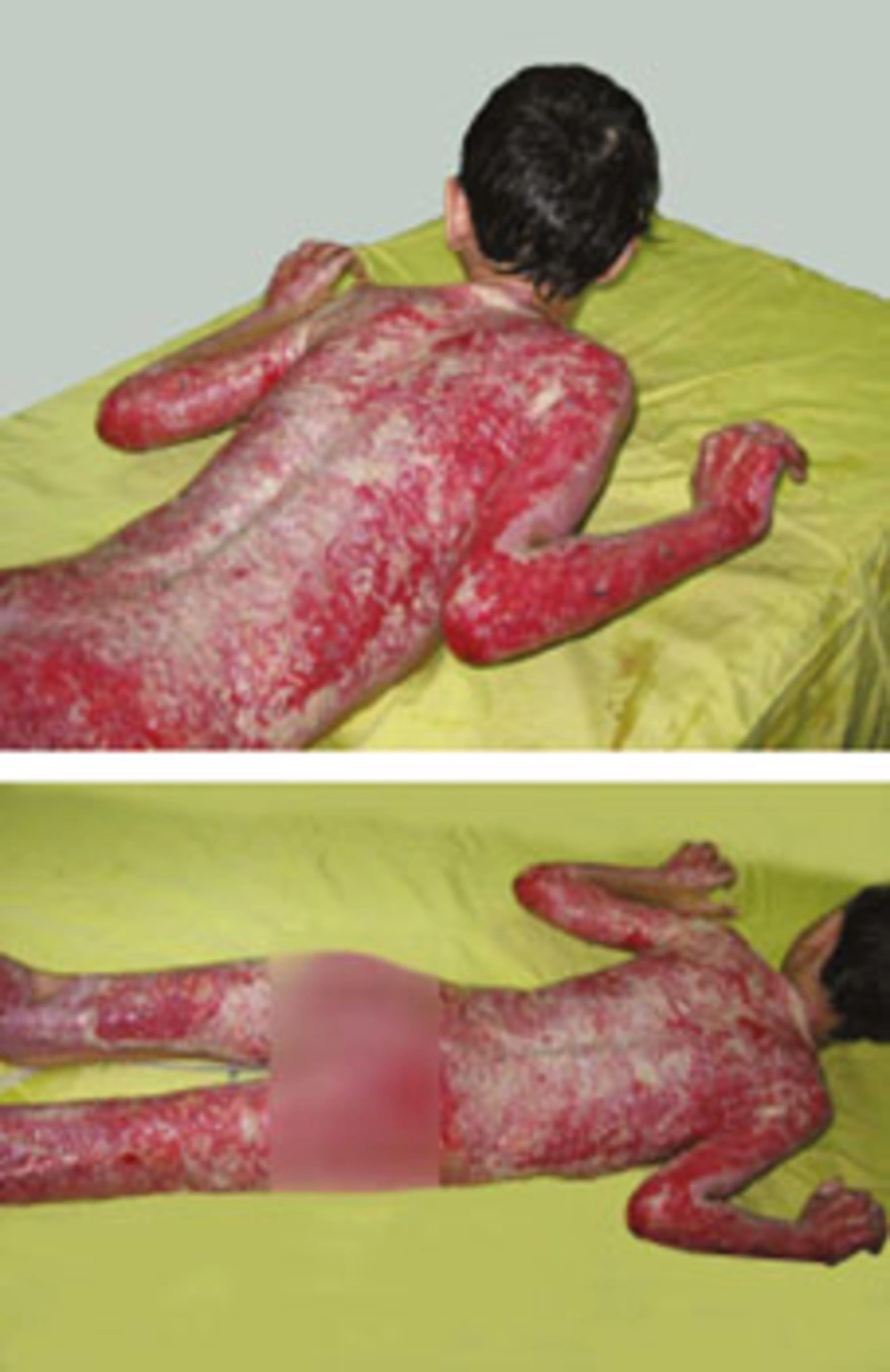
Figure 2.
Photograph Showing Wound Appearance Was Better Than Last Days. Novel painless dressing with ENTONOX mask is shown in this picture.
She underwent multiple debridement of all the wounds which were covered with skin grafting from multiple donor sites (Figure 3). She made a full recovery and was discharged 9 weeks later.
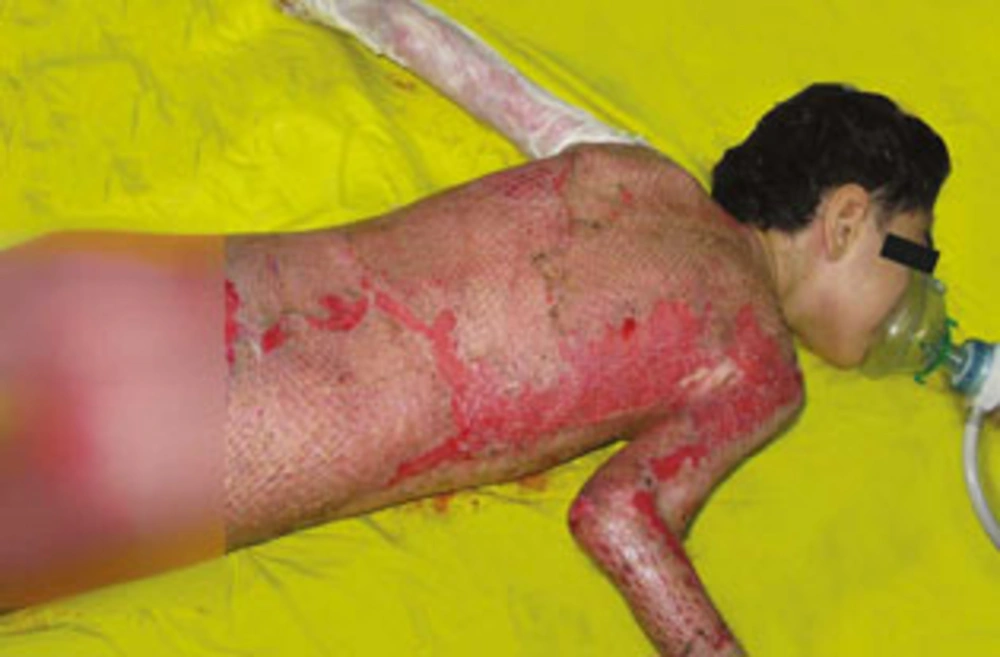
Figure 3.
Photograph Showing Skin Grafting from Multiple Donor sites
3. Discussion
In different investigations, the mortality rate due to MDR Pseudomonas and Acinetobacter infections among burn patients has been reported as 30 to 38%. In comparison to this high mortality rate reported in the literature, the survival of our case is notable and wonderful (5). In a study by Azimi et al., it was shown that comorbidity of Pseudomonas and Acinetobacter infection causes longer hospital stay and increased mortality in burn patients (6). The most reliable predictor of outcome of pediatrics burns is the percentage of TBSA burned, followed by depth. The enormous progress in burn treatment is attributable to the multiple factors including knowledge of the pathophysiology of burns, recognition of the importance of nutritional needs, use of topical agents/novel dressing/systemic antibiotics, increasing in immune system and early debridement/grafting techniques. For a child with a disrupted mechanical barrier and suppressed immune system, any organism is a potential pathogen (7).
Multi-drug resistant Pseudomonas and Acinetobacter species are defined as resistant to at least three classes of antibiotics. The number of organisms present on the burn wound, organism's unique virulence, invasiveness and motility affect pathogenicity. In a study by Goverman et al., they identified 14 children infected with pan-resistant gram negative organisms that were treated by 16 courses of Colistin. 12 (85.7%) cases had a favorable response to therapy; however 2 (14.3%) cases died due to sepsis (8). Ferreira et al. reported that nowadays resistance in Pseudomonas and Acinetobacter species have been a growing problem in burn patients and antibacterial therapy has been frequently associated with resistance. Also they indicated that prevention of cross-transmission is an important factor in controlling resistance for these patients (9).
The patient's blood cultures with BACTEC method showed Pseudomonas aeruginosa that was resistant to Aztreonam, Cefepime, Amikacin and Ciprofloxacin. The isolate was sensitive to Tobramycin, Meropenem and Colistin. Colistin is a polypeptide antibiotic of the Polymixin group that is rapidly bactericidal to gram negative bacteria. This drug has a detergent-like mechanism interfering with the outer cytoplasmic membrane of the bacteria. Colistin remains active against almost all strains of Pseudomonas and Acinetobacter. Acquired resistance is rare. Colistin seems to be a safe drug in selected cases of infections with MDR gram negative micro-organisms (10). In a study by Tamma et al., they found out that Colistin application was safe. Although there was some evidence of nephrotoxicity and neurotoxicity in some patients, but these adverse effects are reversible and rare (11).
In the study by Keen et al., it was reported that percentage of TBSA and other clinical parameters have influence on empiric antibiotic therapy and management of patients with multidrug resistant Pseudomonas and Acinetobacter (12).
Systemic antibiotics are only used when systemic infection is strongly suspected, but its role is adjunctive and it never replaces surgical debridement, use of topical agents, nutritional support, increasing in immune system function (IVIG/G-CSF/IFN-γ) and grafting. Evidence in the published literature suggests that this combination therapy is effective for burned patients with MDR gram negative sepsis (13).
Considering the present study, it is believed that an early diagnosis of the wound infection, administration of the appropriate systemic and topical antibiotics, early excision and grafting, adoption of infection control and prevention standards like proper hand hygiene, isolation rooms, environmental cleanliness and disinfection methods may significantly reduce infections caused by MDR micro-organisms in burn units. Also the pattern of resistance to antibiotics is an important factor in treatment, and using new antibiotics can be useful.


