Treatment of diseases caused by
P. aeruginosa has become increasingly difficult. The consecutive increase in the population of immunocompromised patients and the evolutionary features of pathogenic bacteria to promptly mutate and adapt to antibacterial threats in the environment (eg, hospital) make the treatment of bacterial infections a serious problem (
1).
This study investigated the demographic and microbiological features of patients infected with
P. aeruginosa. In our study, consistent with previous research, the majority of the studied patients were female and older than 30 years (
3). This may be due to factors such as differences in the immune system, lifestyle, and professional performance of individuals infected with this opportunistic pathogen. In the present study, patients hospitalized in the ICU were the main susceptible group to
P. aeruginosa infections, which is also noted in other studies (
19).
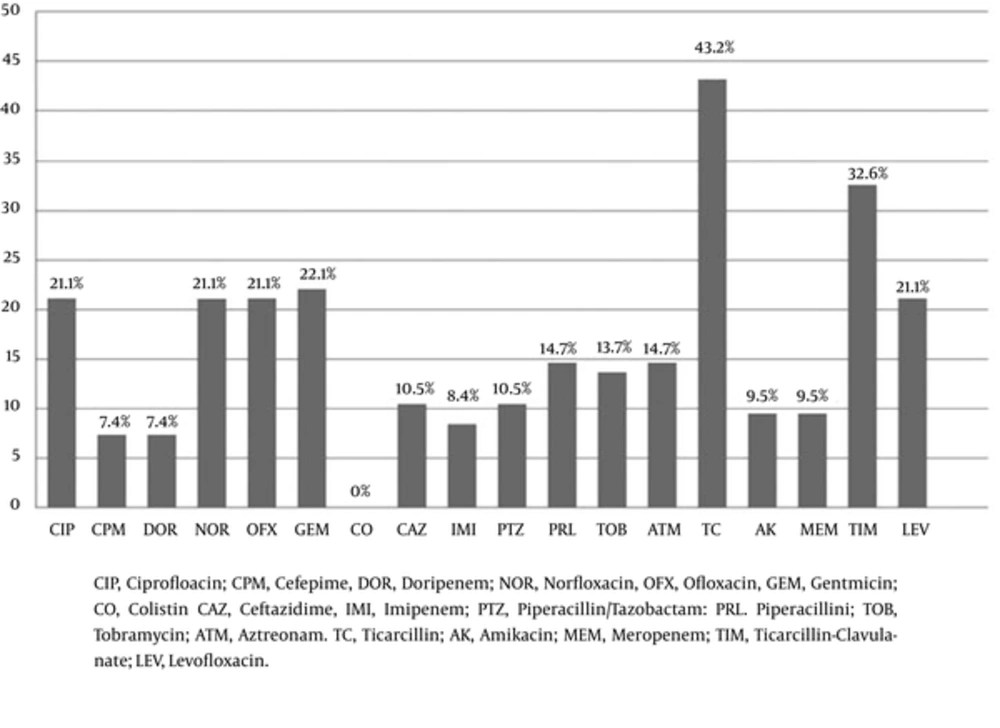
The percentage of carbapenem-resistant isolates in the present research is comparable to other studies in Iran (
4). Evidently, the prevalence rates vary in different studies, which could be explained by differences in the sample size, distribution of risk factors, and treatment regimen patterns. In the present study, 8.4% of the isolates were imipenem-resistant, similar to previous research (
4). Nevertheless, Franco and colleagues reported that 34.5% of blood isolated strains were resistant to imipenem in 2010 (
20).
In the current study, 7.36% of the bacteria were resistant to the aminoglycoside antibiotic class (9.5% of the isolates were resistant to amikacin). Raja et al. reported that 6.73% of
P. aeruginosa isolates were resistant to amikacin in Malaysia (
21), which is in agreement with the present findings. In a multicenter study in Iran, the results showed that 20% of the isolates were resistant to amikacin (
4). In another study in Pakistan on
P. aeruginosa strains isolated from lower respiratory tract infections, Fatima and colleagues showed that 35% of the isolates were resistant to amikacin (
22). Our results showed that 22.1% of the strains were resistant to gentamicin.
The antibiotic resistant patterns reported by Jafari and colleagues showed that 49% of the isolates were resistant to gentamacin (
23). Various studies have shown different resistance patterns, which may be due to differences in treatment regimens used for infected patients in healthcare settings. To alleviate the rate of multi-drug resistance (MDR) and spread of resistance, clinicians should switch to therapies with a narrower spectrum. In the current study, 6.31% of the isolates had an IMIR-MEMR-CPMR-CAZR pattern; therefore, these drugs are not suitable for the treatment of
P. aeruginosa-related infections. Our findings also showed that all the bacterial strains (100%) were susceptible to colistin. However, the point to be noted is that colistin is a toxic antibiotic and used as a last-line treatment option for the treatment of infections caused by
P. aeruginosa.
The frequency of
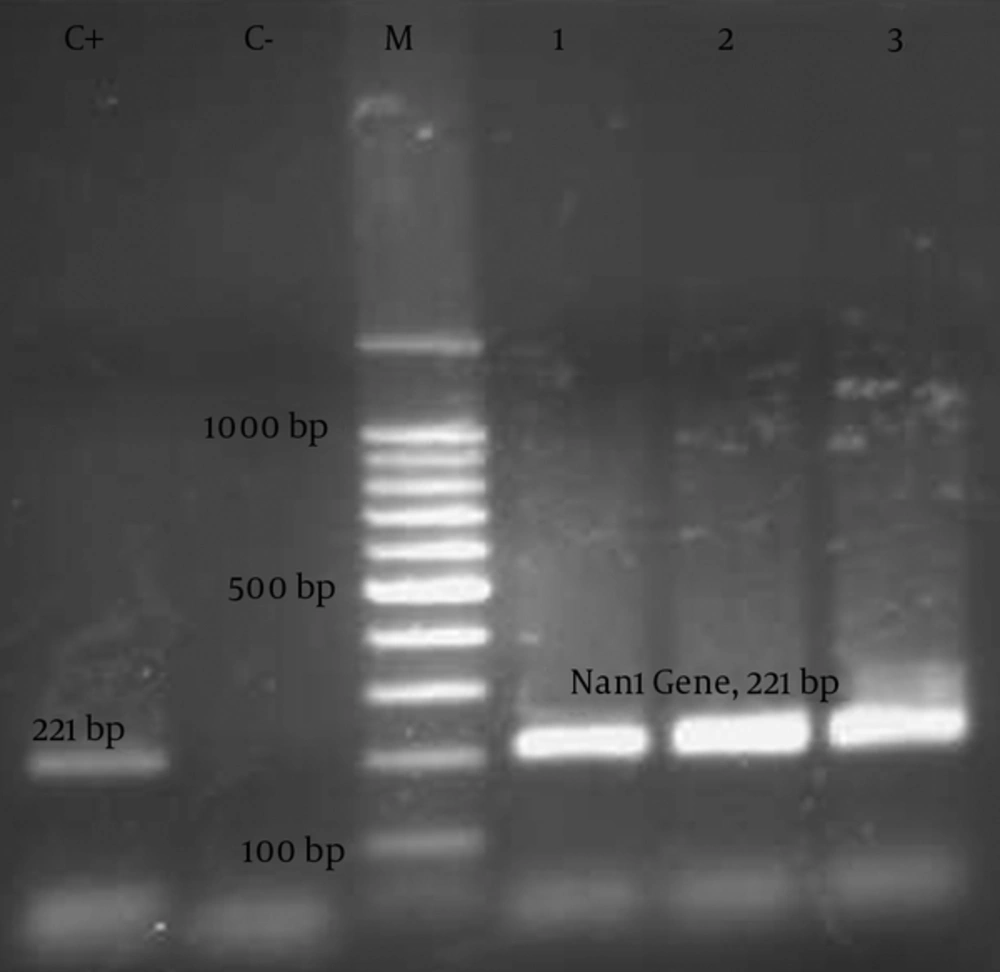
nan1 gene among the tested
P. aeruginosa was high (44.2%), which suggests the key role of neuraminidase enzyme in the pathogenesis of this group of isolates. The propagation of virulence-related genes varied with respect to the site of infection in infected patients. In this regard, Mitov et al. reported 15.4% distribution of
nan1 gene in wound isolates from patients and a variable frequency rate of the gene in the isolates from different specimens of affected patients (6.7% to 62.5%) (
18). In the present study, among 7 cefepime-resistant
P. aeruginosa isolates, 5 had the
nan1 gene. In our study, the frequency of int1 gene (30.5%) was lower than those reported by Gu et al. in China (40.8%) (
24). This may be due to differences in the distribution of antibiotic resistance in various geographical regions.
The point to be noted is that
P. aeruginosa is intrinsically resistant to penicillin (ie, benzylpenicillin), first-generation cephalosporin (cephalothin and cefazolin), second-generation cephalosporin (cefuroxime), cephamycin (cefoxitin and cefotetan), ampicillin, amoxicillin, ampicillin-sulbactam, amoxicillin-clavulanate, cefotaxime, ceftriaxone, ertapenem, tetracycline, tigecycline, trimethoprim, trimethoprim-sulfamethoxazole, chloramphenicol, and fosfomycin. Therefore, these drugs are not clinically effective and should not be reported. In fact, intrinsic antibiotic resistance is so common that in vitro susceptibility testing is unnecessary (
14).
Today, a major concern of medical and clinical practitioners is the emerging MDR and pandrug-resistant pathogenic bacteria and their associated complications in developing countries (
25-
28). This is principally true for
P. aeruginosa and its capability to emerge as MDR clones. The most difficult challenge of
P. aeruginosa infections is its capability to promptly show resistance to several unrelated classes of antibiotics during the period of clinical therapy.
The emerging outbreak of MDR and PDR
P. aeruginosa strains is related to different factors, such as its inherent resistance to a variety of antibiotics, its capability to gain antimicrobial resistance determinants, history of surgical interventions and chronic infections, irrational use of antibiotics, and abundance use of broad-spectrum antibiotics, which increase the selection of bacterial resistant clones (
27).
Synergistic responses are an important feature of some drug combinations (eg, piperacillin-tazobactam). The main focus of combination-antibiotic therapy against
P. aeruginosa is preventing the emergence of antimicrobial resistance and treatment failure. The combination of an anti-Pseudomonal-beta-lactam with an aminoglycoside has been often the therapeutic regimen of choice for this pathogenic bacterium. In this regard, antibiotic resistance trends from large multicenter and national surveillance studies provide important information. It should be also noted that in many cases, antibiotic resistance is transmitted to the human community and healthcare settings through other environmental and food sources (
29-
35).
Simultaneous determination of antibiotic susceptibility profiles and virulence determinants is a contemporary approach for the examination of microbiological aspects of infections caused by P. aeruginosa. The large sample size of the present study allowed elucidation of statistically significant results with regard to the prevalence of antibiotic resistance and virulence genes in the tested isolates from markedly varying sites and sources of isolation.
Finally, selection of the most effective anti-Pseudomonal drug (including in vitro test and report) is a decision best made by each clinical microbiology laboratory in consultation with the infectious diseases practitioners and pharmacologists, as well as therapeutic and hospital infection control committees.