Human papillomavirus infection in men was thought to be transient with no clinical consequences. According to current studies, however, it may impair fertility and reduce the efficiency of assisted reproductive technology (
11). Since the effect of HPV infection on semen and male fertility potential is still controversial, this cross-sectional study explored the prevalence of HPV infection in semen and its relationship with sperm parameters in infertile Iranian male partners of couples seeking infertility treatment.
We found the prevalence of HPV-positive semen samples to be 12.85%. Some studies in Iran have confirmed our results. Previous studies have shown that the prevalence of HPV infection in semen samples of infertile Iranian men was 11.43% to 28.88 % (
17,
18,
23). In this regard, our results were closer to Moghimi et al.’s study (11.43%) (
18). The prevalence differences may be due to different geographical areas, demographic and social characteristics, lifestyle and behavioral factors, sexual behaviors, and utilization of different diagnostic tests to detect HPV (
29). Moreover, HPV genotype distribution also differs between countries and populations, and even in various parts of the same country (
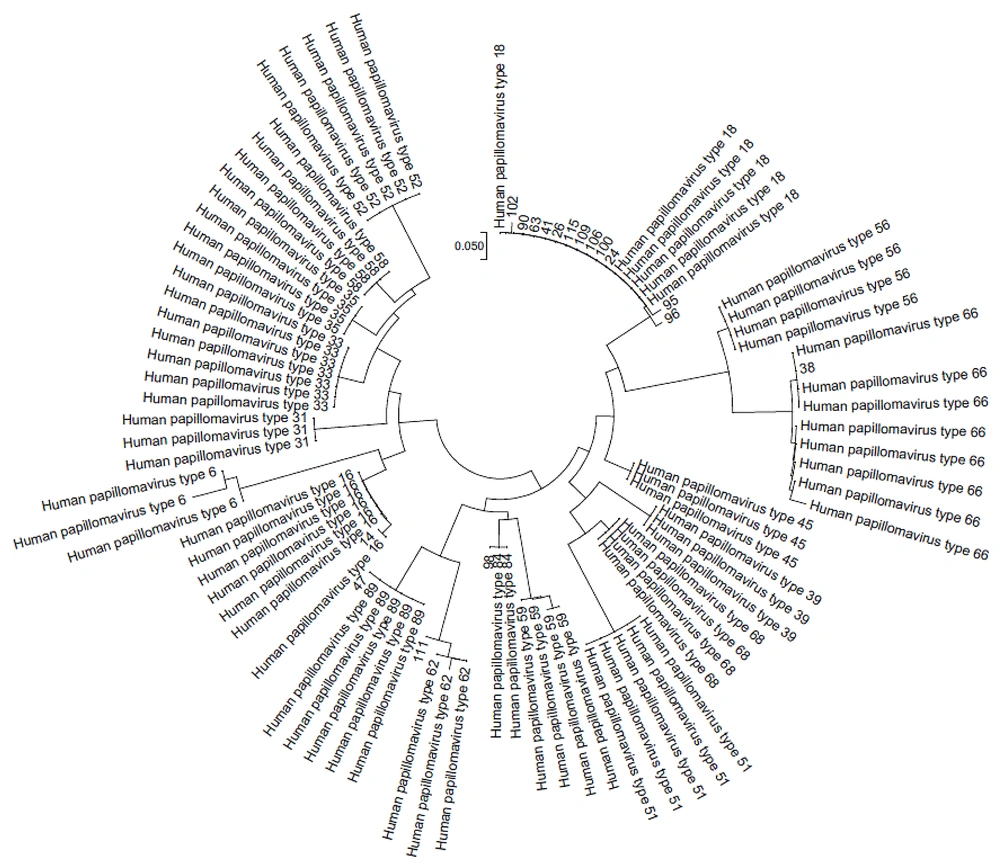
30). In the present study, among 140 infertile Iranian men, high-risk and low-risk HPV genotypes were identified in 14 (10%) and 3 (2.14%) patients, respectively. The most common genotype was HPV 18 (
Table 3), which is consistent with the previous study conducted by our team (
28). It has been shown that HPV 6, 11, and 16 were the most common genotypes among Iranian individuals with positive HPV DNA (
30). Perhaps this difference in genotype results is because the distribution of HPV varies between different regions of the same country (
30).
One of the most commonly proposed mechanisms to explain the relationship between HPV infection and male fertility is impaired semen and sperm parameters. Men with HPV-positive semen samples have considerably lower sperm concentrations, total sperm counts, and semen volumes (
31). A recent systematic review summarized 14 studies examining the consequences of HPV infection on semen quality. Four studies found no relationship between HPV seminal infection and sperm parameters (
32). In the present study, the WBC count was considerably higher in the HPV-positive group than in the HPV-negative group (
Table 2). These results are in line with previously reported data (
33,
34). Discrepantly, a study found no association between HPV infection and leukocytospermia (
13). This discrepancy may be due to the small sample size in the mentioned article (8 samples were detected for HPV infection).
An increase in WBC may be due to different reasons, including male accessory gland infection (MAGI). Since HPV is an important viral cause of MAGI, causing higher WBC counts in semen, leukocytospermia is considered one of the characteristic symptoms of MAGI (
35). Given that the majority of seminal HPV infections are asymptomatic, leukocytospermia may be considered an important diagnostic indicator (
35). Leukocytospermia in MAGI is linked to elevated levels of reactive oxygen species and reduced sperm quality and function (
36). Notably, HPV-antigen identification in semen and circulating leukocytes (
37) can lead to both humoral (
38) and cell-mediated immune responses (
39). A higher number of WBCs can result in oxidative stress, with over-production of reactive oxygen species culminating in lipid peroxidation and increased DFI (
40).
In the field of reproductive medicine, sperm DNA fragmentation has received practical relevance. It is also included in the recent literature on HPV infection in semen (
41,
42). Sperm DNA integrity is a sensitive parameter for assessing fertility (
43). There is currently convincing evidence that infertile males have a remarkably higher DFI than fertile men (
44-
46). Similar to the previous reports, we found that HPV-positive semen samples had considerably higher DFI values compared to HPV-negative samples. The etiology of the higher DFI is likely to be multifactorial. These elevated DFI values in this study may be due to the increased number of WBCs in the semen and, subsequently, the reactive oxygen species production. Oxidative stress in semen samples is closely connected to sperm DNA damage (
47). Accordingly, HPV has been linked to male infertility by reducing sperm DNA integrity. Expression of E6 and E7 oncoproteins in HPV-positive cells plays a significant role in the generation of reactive oxygen species and oxidative stress, leading to DNA damage. Moreover, pro‐inflammatory cytokines like IL‐1, IL‐6, and TNF‐α are upregulated by HPV and also cause the sperm cells to undergo apoptosis and DNA fragmentation (
48,
49).
Nevertheless, several studies on this subject have shown discrepant results (
50,
51) that might be due to a smaller number of samples or/and the different methods for measuring DFI in those studies.
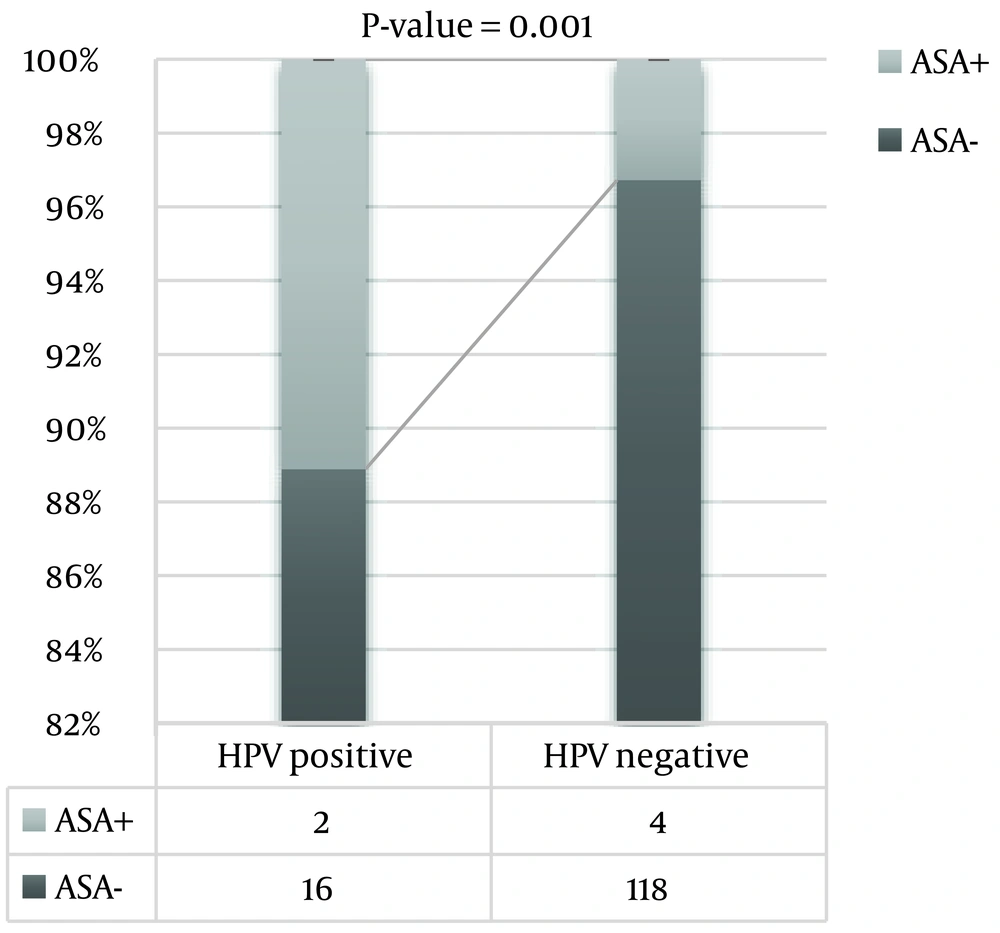
Another possible explanation for male infertility in patients with HPV-positive semen is ASAs, which may impair male fertility by compromising sperm motility and sperm-oocyte binding (
14). According to our findings, HPV-infected patients showed a significantly higher frequency of ASAs-positive samples compared to uninfected individuals; this result is similar to previous reports (
14,
17). It has already been confirmed that the presence of HPV DNA on the sperm surface is often associated with ASAs of IgA and IgG classes and impaired sperm motility in infertile patients (
14). This data implies that the HPV DNA on the sperm surface may stimulate ASA formation. When ASA binds to the sperm surface, it causes the release of pro-inflammatory cytokines that interfere with sperm motility and fertility after viral clearance time (approximately 24 months) (
14). It has also been reported that the presence of ASAs in HPV-positive semen samples is associated with reduced semen volume, sperm count, motility, and normal morphology (
17). The results of this study show significantly lower sperm motility in the ASA-positive group (21.25% in the ASA-positive group versus 70.5% in the ASA-negative group).
It has been found that there is a considerable association between HPV-infected semen samples and hypospermia, abnormal seminal viscosity, higher pH, and a higher number of leukocytes (
33). It was also hypothesized that males with HPV-infected semen samples may have an alteration in the proportion of fluid secreted by the male accessory glands, including the seminal vesicles and prostate (
33). Fructose is the main carbohydrate source in seminal plasma (
52). It is essential for sperm motility and metabolism (
3). The WHO guideline recommends the measurement of seminal fructose as an indicator of seminal vesicle function (
3). Measurement of its concentration in semen samples has been used to investigate obstructive azoospermia and male accessory gland inflammation (
53). In this article, fructose was evaluated as a seminal vesicle marker, and zinc as a prostate secretion marker. The results showed that fructose levels were not significantly different between HPV-infected and non-infected semen samples, which is consistent with previous studies (
13). It has been revealed that, overall, STI infections are associated with lower fructose concentrations, while HPV infection is not. It was also shown that leukocytospermia was associated with reduced fructose concentration in semen samples (
13). Conversely, in the present study, higher WBC count was not associated with altered fructose concentration. This inconsistency may be due to the fact that the aforementioned study (
13) measured the association between leukocytospermia and fructose concentration in semen samples infected with several STI pathogens (our study focused only on HPV-positive samples), and their results cannot be solely related to HPV-positive samples (
13).
Zinc appears to be essential for semen quality. It is first excreted into the prostatic fluid. Measuring zinc levels in seminal plasma seems important in assessing male fertility status, as there have been reports of low zinc levels in sperm samples from infertile men (
54). These findings might be attributable to impaired prostatic excretory function or an asymptomatic prostate infection (
54). A high prevalence of HPV genotypes has been shown in asymptomatic patients with prostate infection, but there is a lack of information about the relationship between HPV infection and zinc levels in semen (
55). Here, in the present research, we reported for the first time that seminal zinc levels are not different between HPV-positive and HPV-negative sperm samples. This result provides further insight into the relationship between HPV infection and less-noticed measures of semen quality.
5.1. Conclusions
This study confirms that HPV DNA is common in semen samples of Iranian male partners of couples seeking infertility treatment. It also shows that the presence of HPV seminal is associated with a higher presence of anti-sperm antibodies, WBC counts, and increased sperm DFI values. Overall, these findings highlight the importance of a thorough investigation of seminal HPV in men with infertility, along with other infertility tests. Additionally, more extensive studies should be conducted for a more in-depth assessment of the impact of HPV on male infertility.