
1. Introduction
Cryptococcal meningitis (CM) is one of the leading causes of meningitis in regions heavily impacted by HIV, and it is the primary cause of HIV-related deaths in Africa and globally (1). The disease is caused by Cryptococcus neoformans and the C. gattii species complex, an encapsulated fungus that was once rare as a human pathogen but has become more prevalent due to increasing cases of immunodeficiency. The life cycle of cryptococcal fungi involves both sexual and asexual stages, with the encapsulated form being the primary form found in the environment and humans. Cryptococcus produces urease and is detected by a rapid urease test. It has a brown or black colony containing melanin, which protects the fungus against the host. The primary characteristic of C. neoformans and the C. gattii species complex is growth at high temperatures (37°C) (2).
The disease is primarily transmitted through inhalation of cryptococcal yeast found in bird feces and their habitat (3). The main predisposing factor for CM is HIV, but it can also occur in patients undergoing immunosuppressive and steroid treatment, those suffering from organ failure, solid organ transplantation, innate immune problems, and blood disorders. However, cases of the disease have also been reported in healthy individuals. The incubation period ranges from one to two weeks in HIV-positive patients and six to twelve weeks in other cases (4).
Cryptococcal meningitis presents with a variety of clinical manifestations, ranging from mild airway colonization to widespread infection, meningitis, and organ damage. Skin involvement can appear as acneiform lesions, purpura, vesicles, nodules, abscesses, ulcers, granulomas, pustules, draining sinuses, and cellulitis. The disease mainly affects the Central Nervous System (CNS) and typically presents as acute meningoencephalitis. Symptoms include headache, lethargy, fever, changes in consciousness, nausea, vomiting, skin and lung lesions, double vision, photophobia, a gradual decrease in consciousness and visual acuity, ataxia, aphasia, seizures, and deafness. Symptoms are minimal in HIV-positive patients (5).
The main diagnostic tool for CM is cerebrospinal fluid (CSF) analysis for culture and cryptococcal antigen. Treatment involves induction, stabilization, and maintenance stages with antifungal drugs. In the induction phase, amphotericin B (3 - 4 mg/kg/day) and flucytosine (100 mg/kg/day) are prescribed for two weeks. In the stabilization and maintenance phases, fluconazole (400 - 800 mg/day) and fluconazole (200 mg/day) are prescribed for 8 - 10 weeks and 6 months, respectively (6).
Herein, we report a rare case of recurrent fatal cryptococcal meningitis in a patient who had undergone a liver transplant. The patient had suspicious ulcerated skin lesions that were refractory to glucantime treatment.
2. Case Presentation
A 61-year-old man from northern Iran, employed in the hospital service department, underwent liver transplantation four years ago due to autoimmune hepatitis. Recently hospitalized due to weakness and skin lesions, he exhibited ulcerative lesions near the nasal bridge and on the left cheek, confirmed as leishmaniasis through biopsy. The patient initially received topical glucantime treatment but showed no response. Upon re-hospitalization, he developed lethargy, worsening headaches, and nausea. Systemic symptoms worsened, including a walking disorder, diplopia, and frequent unconsciousness during hospital procedures. His medical history included open-heart surgery twenty-one years ago, diabetes since the liver transplant, and hypertension. He was on immunosuppressive drugs (prograf, myfortic, and prednisolone), blood pressure medications (Amlodipine), and diabetes medications (Gloripa and NovoRapid insulin). He had no history of contact with animals or birds, no recent travel, and no contact with similar patients. During examination, the patient was alert but sleepy, with nuchal rigidity and light-reactive pupils. Cranial nerves were normal, but limbs showed weakness with no complete paralysis and spastic reflexes. An ulcerative skin lesion was evident on the left cheek as the presentation of systemic cryptococcosis (Figure 1). Elevated ESR and CRP levels were observed, while blood cell count and metabolic panel tests were normal (Table 1).
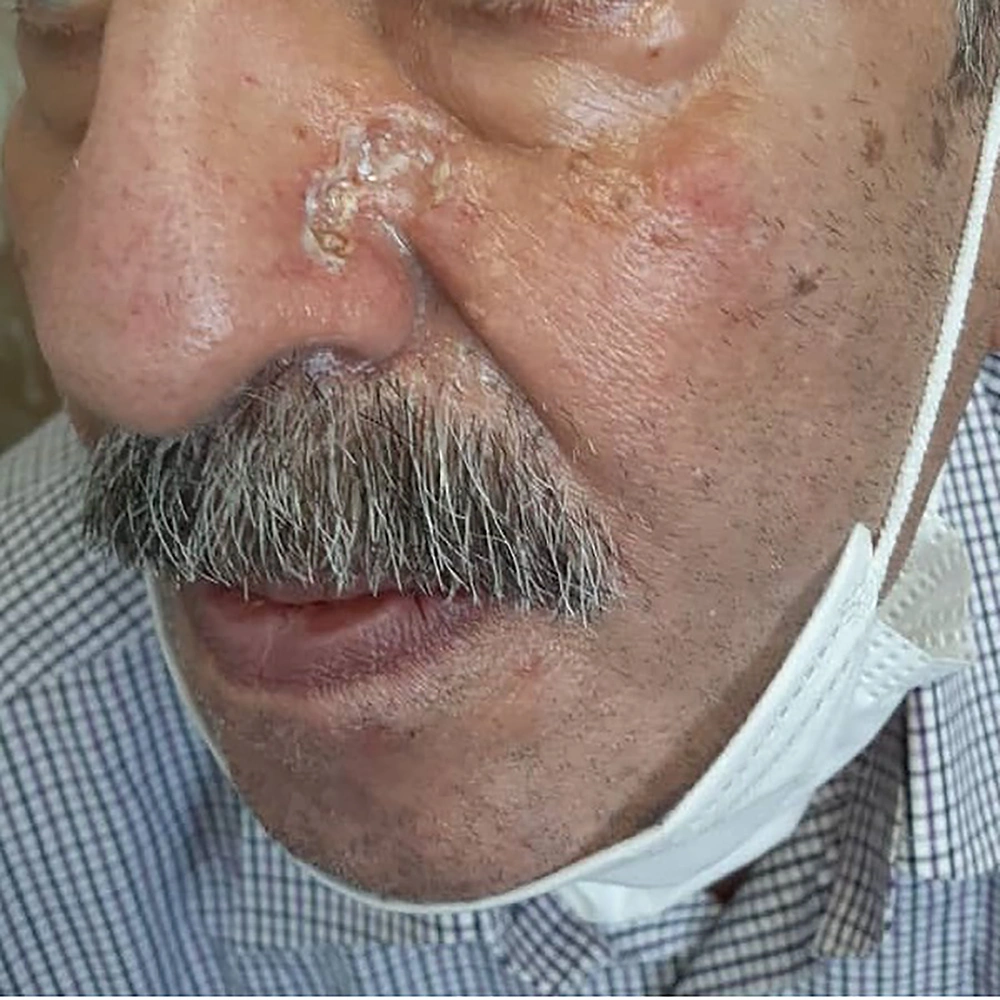
Figure 1.
Ulcerative lesions on the left cheek in the patient with cryptococcal meningitis
Table 1.
Laboratory Results
| Laboratory Results | Values |
|---|---|
| CSF | |
| Total cell | 85 |
| RBC (count/mm3) | 65 |
| WBC (count/mm3) | 20 (56% Lymphocytes) |
| Yeast | Cryptococcus neoformans-positive |
| Glucose (mg/dL) | 5 |
| Protein (mg/dL) | 325.5 |
| CBC | |
| WBC (103/mL) | 10.5 |
| RBC (106/µL) | 5.11 |
| HB (g/dL) | 15.2 |
| Platelets (103/mL) | 241 |
| CRP (mg/dL) | 11.2 |
| ESR (mm/h) | 46 |
| ALT (IU/L) | 31 |
| AST (IU/L) | 19 |
| PT (seconds) | 12 |
| PTT (seconds) | 34 |
| BUN (mg/dL) | 18 |
Abbreviations: CBC, complete blood count; RBC, red blood cells; WBC, white blood cells; HB, hemoglobin; CSF, cerebrospinal fluid; CRP, C-reactive protein; ESR, erythrocyte sedimentation rate; ALT, alanine aminotransferase; AST, aspartate aminotransferase; BUN, blood urea nitrogen; PT, prothrombin time; PTT, partial thromboplastin time.
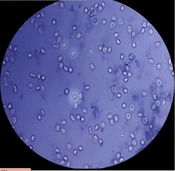
Magnetic resonance imaging (MRI) revealed subcortical and deep lesions in the white matter, lesions around the ventricles, and mild temporal lobe atrophy (Figure 2). Cerebrospinal fluid analysis showed twenty white blood cells, predominantly lymphocytes, increased protein levels, and hypoglycorrhachia. Encapsulated yeast cells with narrow budding were observed in the CSF smear stained with Nigrosin (Figure 3). Cryptococcal polysaccharide antigen was detected in the CSF using the CrAg LFA assay, an immunochromatographic test (IMMYdiagnostics, Norman, OK, USA). Smooth white-to-cream yeast colonies were grown in CSF culture media. For confirmation, a polymerase chain reaction (PCR) assay using the universal primers internal transcribed spacer 1 (ITS1) and ITS4 R was performed (7). The amplicon was sequenced (Gen Fanavaran Ltd., Tehran, Iran) and compared with sequences in GenBank databases, showing 100% similarity with C. neoformans VNI. The sequence that was obtained was deposited in the GenBank database under the accession number OP579231. Cryptococcal infection was reported in the repeated biopsy of the skin lesion (Figure 4). The patient was treated with intravenous liposomal amphotericin B at 300 mg daily and oral fluconazole at 800 mg daily. Despite invasive treatments, the patient’s consciousness gradually decreased over 10 to 12 days, leading to transfer to the intensive care unit and intubation due to worsening respiratory distress symptoms. By the end of the disease course, infiltrative and bilateral lung involvement developed, and finally, the patient presented with bradycardia and apnea.
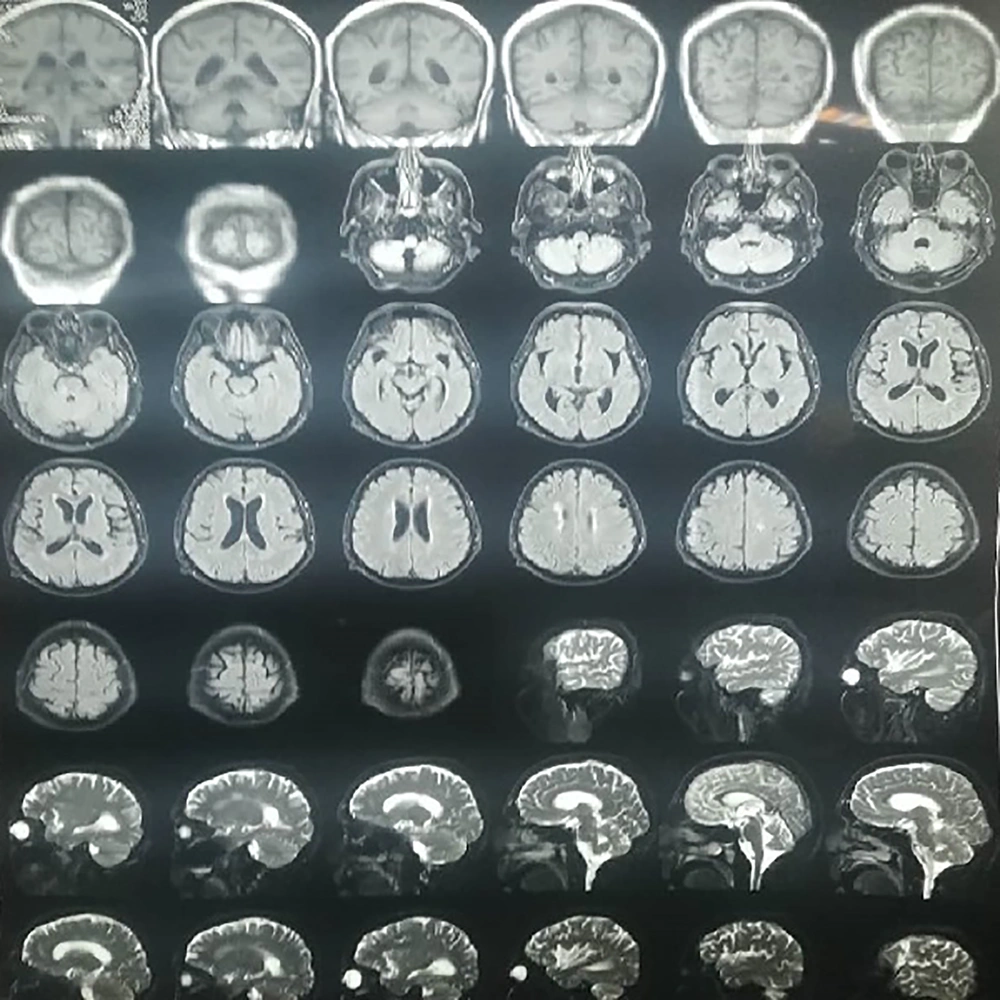
Figure 2.
Neuroimaging features of the patient with cryptococcal meningitis
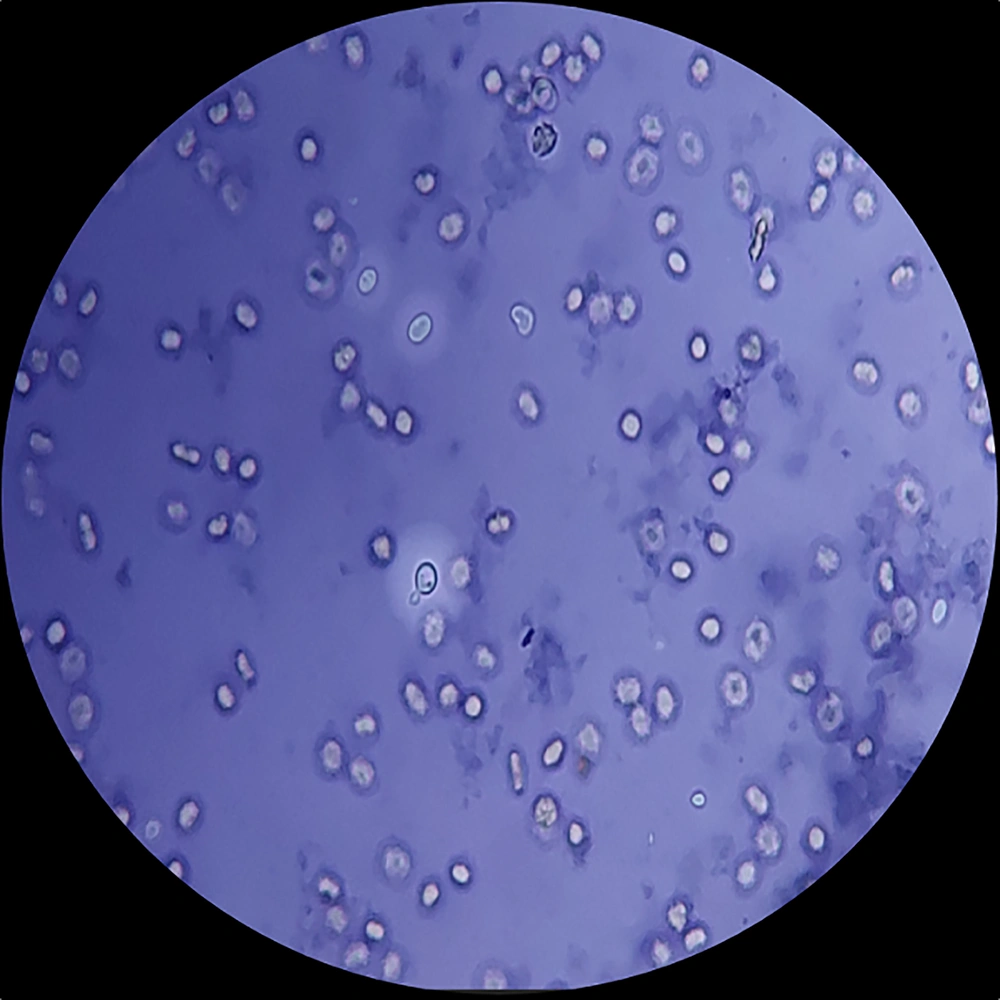
Figure 3.
Encapsulated yeast cell with narrow-based budding in CSF stained by Nigrosin consistent with Cryptococcus species
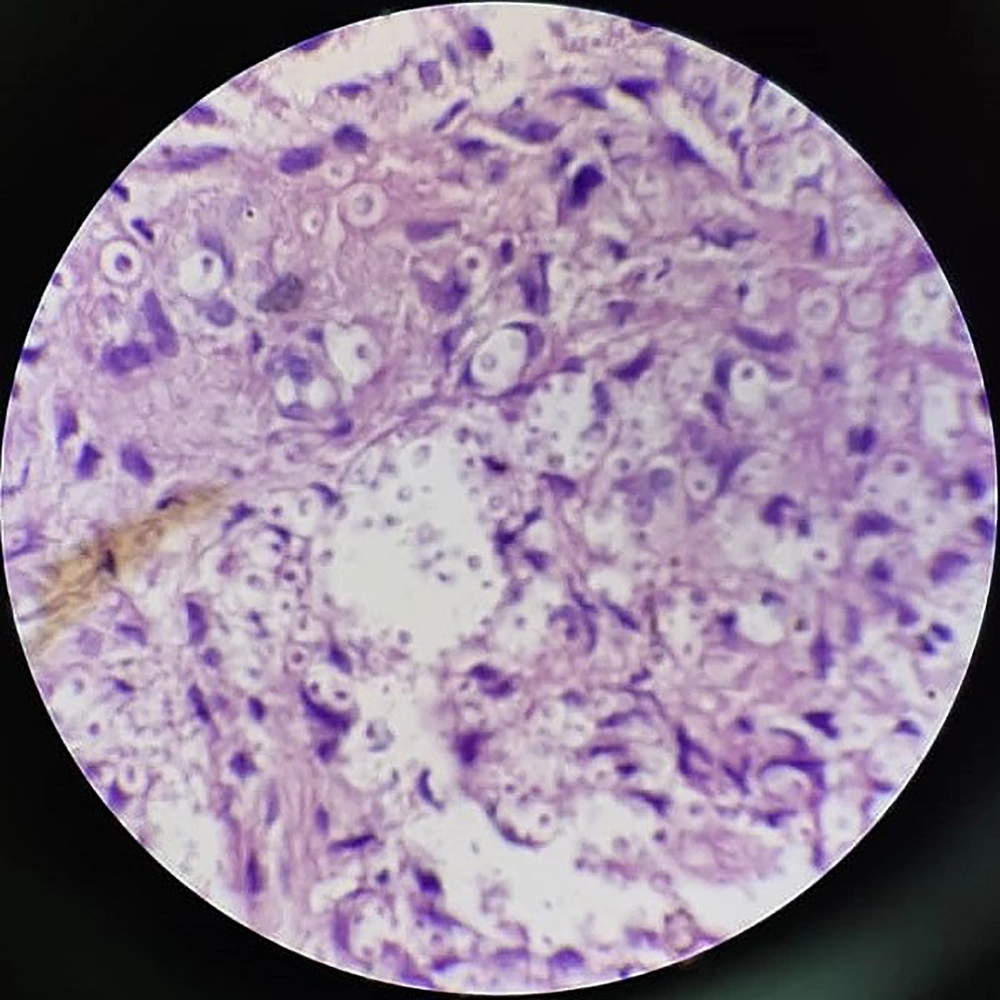
Figure 4.
Encapsulated budding yeast cells in the second biopsy of skin lesions, stained using Hematoxylin and Eosin (H&E) and Periodic acid- Schiff (PAS)
In 2019, less than a year after liver transplantation due to autoimmune liver disease, the patient experienced similar symptoms, including headache, nausea, lethargy, weakness, walking disorder, and decreased level of consciousness. The patient was diagnosed with cryptococcal meningitis after CSF analysis and received amphotericin B (300 mg once daily for two weeks) and flucytosine (7500 mg daily for two weeks) as induction treatments and fluconazole (800 mg daily for 8 weeks) as stabilization treatment. Additionally, he underwent fluconazole maintenance treatment of 200 mg once daily for six months after recovery.
3. Discussion
Cryptococcal meningitis can affect HIV-positive patients, those treated with immunosuppressive drugs and steroids, recipients of solid organ transplants, individuals with sarcoidosis, immunodeficiency, and blood disorders. Cryptococcal meningitis ranks as the third most common invasive fungal infection in solid organ transplants (8). The inhalation of Cryptococcus gattii and C. neoformans yeasts can cause a wide range of symptoms, from asymptomatic infection to CNS involvement, during an incubation period of one to two weeks in HIV-positive patients and 6 to 12 weeks in other patients. Cryptococcal meningitis often occurs one year after transplantation, although it may be seen within three months after transplantation in donor-related infections (9).
Ferreira et al. reported a case of a patient with recent conditions who presented with symptoms of CNS involvement two weeks after transplantation (10). The disease cases have also been increasingly reported in healthy individuals. Acharya et al. reported a case of CM in a person without any underlying disease (11).
The fungus has a strong affinity for the CNS, leading to the subsequent development of CM. However, in cases such as the present patient, the disease may initially manifest in another organ, such as the skin, before CNS symptoms emerge. Organ transplant recipients are at high risk for adverse skin complications, including cryptococcal involvement. Delayed diagnosis and inadequate treatment can result in lung and CNS involvement (12). Noguchi et al. recommended regular monitoring of organ transplant recipients by the transplant skin clinic before and after transplantation and throughout their lifetime (13).
In this study, the patient was diagnosed with CM following liver transplantation. Mansoor et al. also reported a similar case (14), with the patient experiencing a relapse three years after initial complete recovery. Additionally, Ting et al. reported a case of CM following decompensated cirrhosis while the patient was awaiting transplantation (15). Symptoms of CM include headache, weakness, lethargy, nausea, vomiting, walking disorder, diplopia, ataxia, aphasia, and decreased level of consciousness. Differential diagnoses for the disease include pyogenic abscesses, nocardial, Aspergillus, tuberculosis, Histoplasma capsulatum, Acanthamoeba, lymphoma, neurosyphilis, meningeal metastasis, and cerebral hemorrhage.
The diagnosis of CM is typically based on CSF analysis. Before CSF sampling, a CT scan and MRI are performed to rule out other potential differential diagnoses. The patient in the current study presented with cryptococcal reinfection; however, Nanfuka et al. described four unusual clinical scenarios for the disease, including false-negative cryptococcal antigen (CrAg) in the CSF of a symptomatic patient, the possibility of disease incidence in patients with high CD4T levels, cryptococcal seroconversion antigenemia despite fluconazole treatment, and early symptomatic relapse despite negative antigen (16). Therefore, the disease course and classification should be considered in this study. The treatment is divided into three stages: Induction, stabilization, and maintenance. A professional team, including a radiologist, internist, infectious disease specialist, neurologist, and pharmacist, is needed to perform the treatment (6).
The prognosis of the disease is poor in cases of CSF pressure higher than 25 cm H2O, low white blood cell count in the CSF, a sensory disorder, high antigen titer in the CSF, and delayed diagnosis. Disease relapse has a better prognosis within the first four weeks after recovery than after more than 4 weeks (17). In non-HIV patients, delayed diagnosis increases deaths (18). The disease complications include persistent infection, as evidenced by a positive CSF culture four weeks after treatment, relapse, increased CSF pressure, post-treatment Immune Reconstitution Inflammatory Syndrome (IRIS) against Cryptococcal infection, cerebral Cryptococcus, hydrocephalus, dementia, and chronic headache (19). Good clinical practice training helps to prevent relapse (20). Early diagnosis, attention to the symptoms of all organs, including the skin, antifungal prophylaxis with simultaneous management of increased CSF pressure, use of flucytosine in induction therapy, and cryptococcal antigen screening (7, 21) help reduce complications and mortality. Notably, the fungal infection has often been overlooked and rarely included in the differential diagnosis. In the future, it is crucial for healthcare providers to remain vigilant for signs of opportunistic infections in immunocompromised patients and to consider prophylactic treatments when appropriate. Additionally, ongoing research and advancements in medical care are needed to improve outcomes for these vulnerable patient populations.
3.1. Conclusions
This case emphasizes the importance of regular follow-up visits for high-risk patients and early screening to diagnose fungal infections effectively for proper management. Clinicians should consider this differential diagnosis and be prepared for long-term antifungal treatment, especially in immunocompromised patients, to reduce unfavorable outcomes.