


1. Background
Helicobacter pylori (H. pylori) infection is the most common gastrointestinal bacterial disease worldwide (1). The bacteria is the major contributor of gastritis and many of the other diseases associated with gastritis are induced by Helicobacter species (1). Patients with Helicobacter pylori are at risk of peptic ulcer, at least four times more than the negative ones (2). Retrospective and prospective studies have shown previous infections with H. pylori in 90% of the patients with stomach cancer including gastric lymphoma (3, 4). Risk of gastric cancer associated with H. pylori is estimated 80% in developing countries and 70% in developed countries (2). On the other hand, recent studies have indicated strong relationship between H. pylori and mental retardation and patients’ lifestyle (5). Risk factors of H. pylori acquisition are low social class in adulthood, and facing poor living conditions along with chronic diseases in childhood (6). Also the epidemiological and clinical statistics show that H. pylori infection in childhood will remain throughout the life, hence children and adult with physical and mental disabilities are more vulnerable to H. pylori infection (7). The life style, nutrition, and sanitary condition of these patients are completely different with those of normal people, especially in Down syndrome (8). Given that most of the patients with mental disabilities live in welfare centers; therefore, person to person contact, use of common devices and oral contact are considered as H. pylori transmission risk factors
2. Objectives
The current study aimed to determine the prevalence of H. pylori in patients with Down syndrome in Tehran Welfare Center in 2013, in order to standardized H. pylori eradication protocol among these patients.
3. Patients and Methods
Formal testing for mental impairment was performed using the Brunet–Lezin (13) and Terman-Merill test 14. No patient had undergone anti-Helicobacter pylori therapy previously, informed consent was obtained for all procedures in the study; moreover the study was approved by the University Ethical Committee. This cross sectional study was performed and sampling was conducted randomly from 75 children who were institutionalized in the welfare centers, and other 75 gender-matched outpatients as controls. A 5 mL blood sample was obtained from each of the 75 subjects and serum immunoglobulin G (IgG) was produced in response to H. pylori infection using ELISA kit with 92% sensitivity and 95% specificity (Europital, Italy), also the serum samples were examined by rapid test regardless of negative or positive result, then urease breath test (UBT) was used as the gold standard. The findings were analyzed by SPSS software version 17 and absolute and relative frequency of the data was obtained. To determine the relationship between H. pylori and the variables such as age and sex, the Chi square test and, in some cases, Fisher's exact test were used. In addition a One-Way ANOVA was used for data with normal distribution. It should be mentioned that due to cultural issues, female patients are kept in home; thus, in the current study the samples were selected from the male patients.
4. Results
The result of ELISA test showed 34 negative and 41 positive cases, all of the positive cases were approved by UBT test (P < 0.0001) (Figures 1and 2). Comparing ELISA test results with patients’ age showed that the age of most positive ELISA cases were 11- 20 and 31-50 years , also 15 positive and 20 negative ELISA cases were in 11-20 age range, and five positive and four negative ELISA cases were in 31-50 age ranges. There were nine patients in the 0-9 age range with eight negative and one positive ELISA cases (P < 0.001) (Figure 3) (Table 1). Comparing the relationship between age and H. pylori by rapid test showed that most of the positive cases were in 31-50 age group, and most of the negative cases were in 11-20 age group (Figure 3). In addition, tin order to find the relationship between age and H. pylori by UBT we found that most of the positive cases were in 31-50 age group, and most of the negative cases were in 11-20 age group (Figure 4).
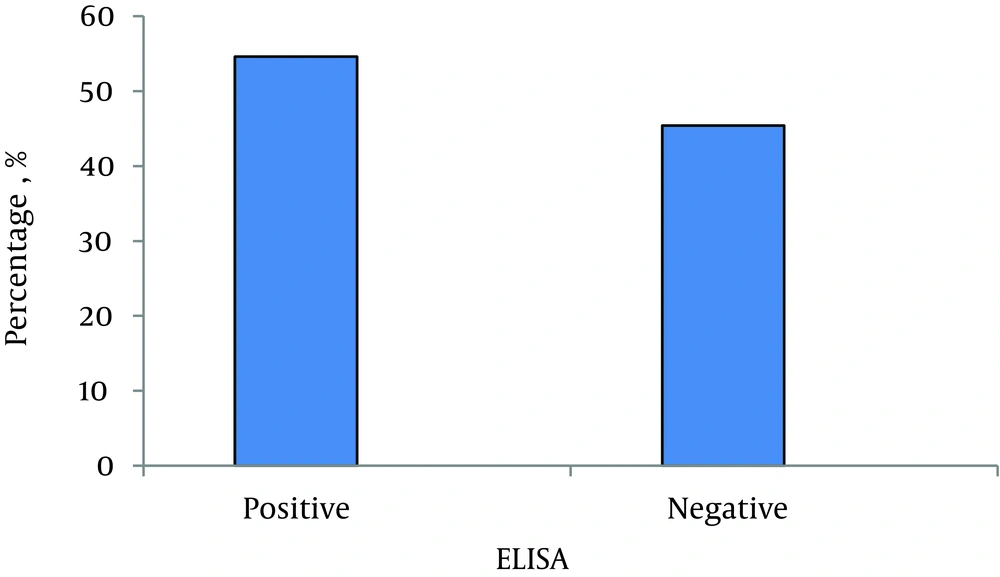
Figure 1.
ELISA Test Result of Helicobacter pylori Infection in Patients With Down Syndrome and Mental Retardation
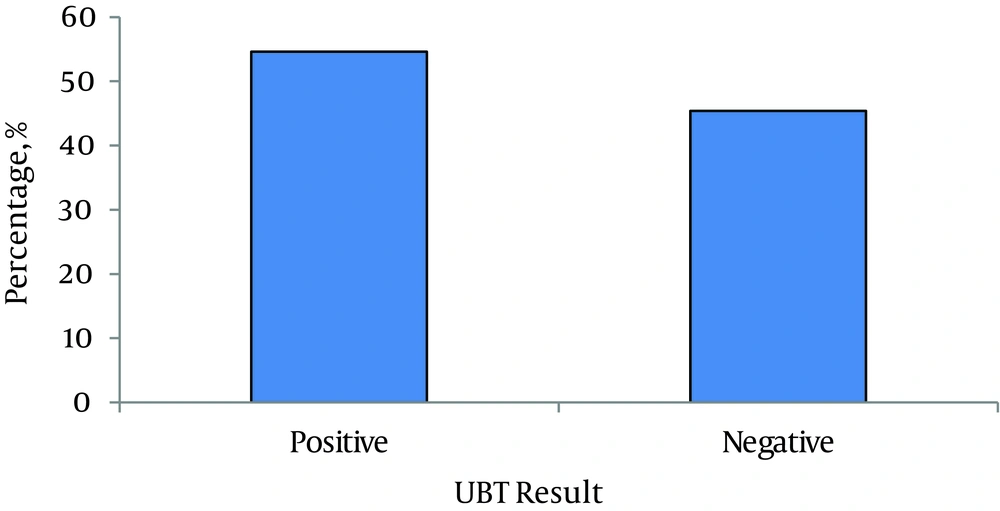
Figure 2.
UBT Result of Helicobacter pylori Infection in Patients With Down Syndrome and Mental Retardation
Table 1. Comparing the Relationship Between Age and Helicobacter pylrori Infection in the Patients With Mental Retardation and Down Syndrome by ELISA
| Age Group | ELISA | Total | |
|---|---|---|---|
| Negative | Positive | ||
| 0-10 Years | |||
| Count | 8 | 1 | 9 |
| % Within age group | 88.9 | 11.1 | 100.0 |
| % of Total | 10.7 | 1.3 | 12.0 |
| 11-20 Years | |||
| Count | 20 | 15 | 35 |
| % Within age group | 57.1 | 42.9 | 100.0 |
| % of Total | 26.7 | 20.0 | 46.7 |
| 21-30 Years | |||
| Count | 2 | 10 | 12 |
| % Within age group | 16.7 | 83.3 | 100.0 |
| % of Total | 2.7 | 13.3 | 16.0 |
| 31-50 Years | |||
| Count | 4 | 15 | 19 |
| % Within age group | 21.1 | 78.9 | 100.0 |
| % of Total | 5.3 | 20.0 | 25.3 |
| Total | |||
| Count | 34 | 41 | 75 |
| % Within age group | 45.3 | 54.7 | 100.0 |
| % of Total | 45.3 | 54.7 | 100.0 |
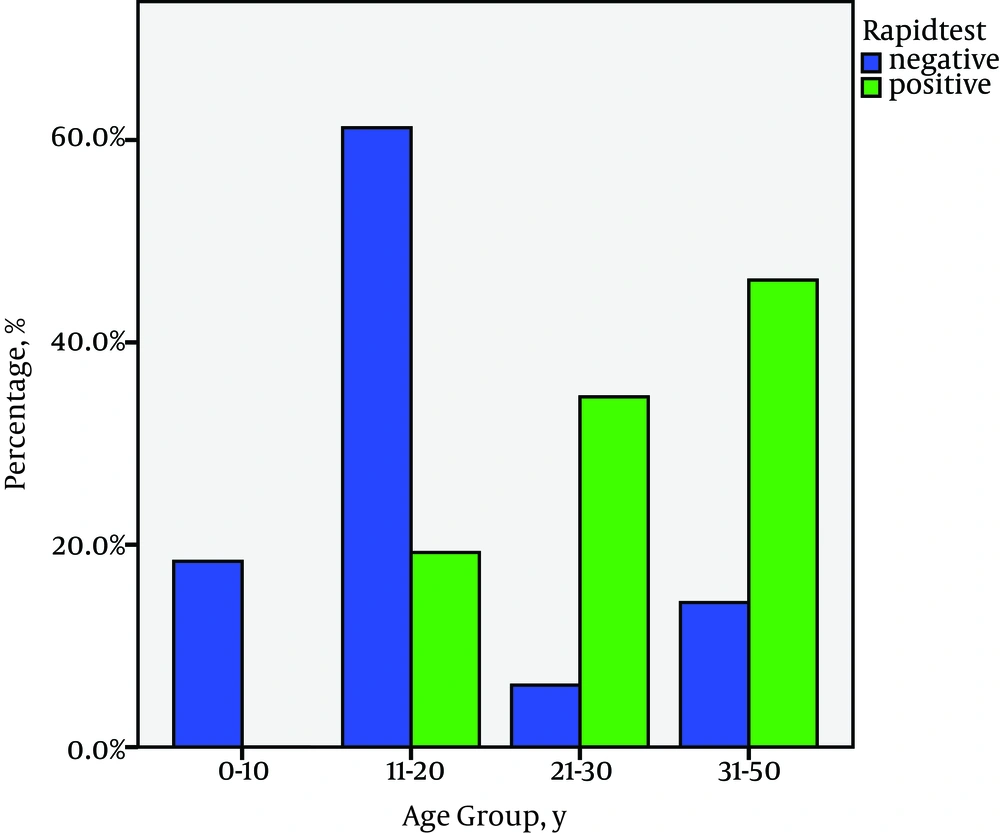
Figure 3.
Comparing the Relationship Between Age and Helicobacter pylrori Infection in Patients With Mental Retardation and Down Syndrome by Rapid Test
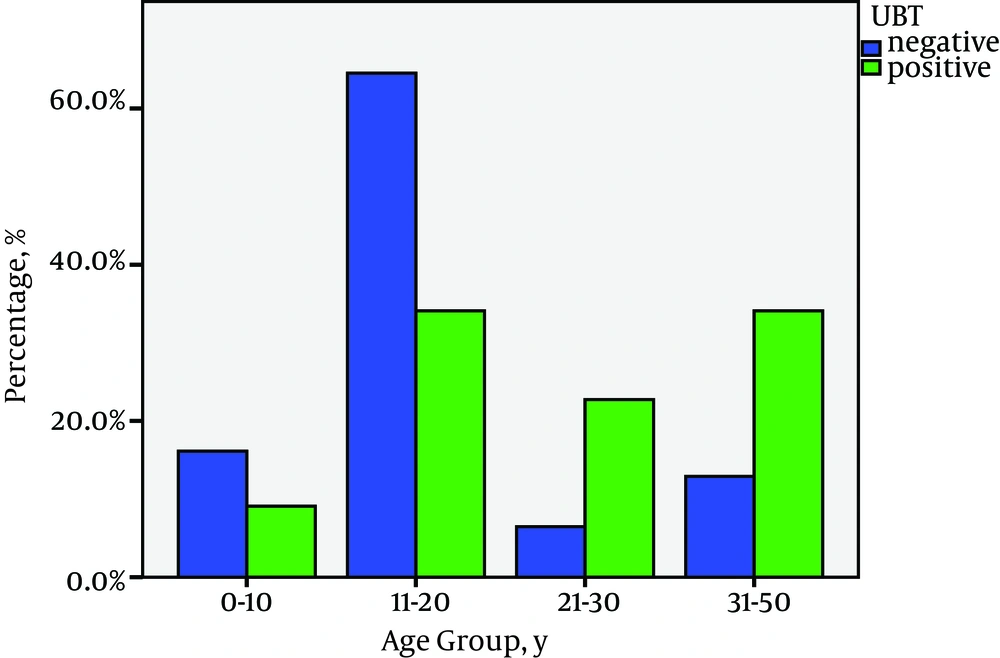
Figure 4.
Comparing the Relationship Between Age and Helicobacter pylrori Infection in Patients With Mental Retardation and Down Syndrome by Urease Breath Test (UBT).
5. Discussion
Helicobacter pylori is the most common persistent bacterial infection which causes chronic inflammation of the inner lining of the stomach (9). These bacteria are the main factor of causing gastritis and other diseases related to gastritis such as peptic ulcer, stomach cancer and lymphoma, more over they are known to be connected with the increase risk of precancerous lesions such as chronic atrophic gastritis (AG), or gastric intestinal metaplasia (GIM), and cancer. In addition, H. pylori can cause ischemic heart disease (IHD), chronic obstructive pulmonary disease (COPD), iron deficiency anemia (IDA), cerebral and neurological disease such as Alzheimer and migraine (9-11). Owing to the fact that patients with Down syndrome have genetic defects and physical problems, it seems vital to prevent the prevalence of infection among them; hence, early detection of the infection in such patients can prevent the spread of it (12). Due to the life condition of the institutionalized children, transmission of H. pylori can occurred easily; therefore, it is a serious matter to recognize and determine transmission risk factors of H. pylori. With rapid diagnosis of this infection it can be treated faster and the occurrence of complications will be prevented (13). Wallace et al. studied the adult mentally retarded (54% males and 46% females) in 2003 and showed that serological and urea breathing test (UBT) have acceptable sensitivity, specificity, positive and negative predictive value, although UBT could not be performed in all patients (14). Luzza et al. studied 42 children with Down syndrome in terms of H. pylori in 2004. They reported that 50% of the patients were seropositive, which was confirmed by C-UBT test in 95%. Luzza et al. also studied 42 children with Down syndrome (34 males and 50 females 2-18 years) in terms of H. pylori in 2004 and concluded that 50% of the patients were seropositive which was confirmed by C-UBT test in 95%,while in the current study 54.6% were seropositive , and it was also confirmed by C-UBT test (12). Considering that UBT is an expensive test, in the first step the current study used ELISA test then UBT test was used to confirm the positive cases. ELISA test was used in order to determine the prevalence of H. pylori in patients with mental retardation and Down syndrome, ELISA test results were evaluated in 34 negative and 41 positive cases; also all of the positive cases were confirmed by UBT (P < 0.0001). The most positive ELISA cases were reported in the age range of 11-20.According to Palka et al., UBT and ELISA tests in 50.9% and 49.7% of the peptic ulcer cases can detect H. pylori, respectively (15).
To sum up, the findings of the current study indicated that H. pylori infection occurs at a higher rate in children with mental retardation and Down syndrome; therefore, it seems highly vital to control the transmission of H. pylori among such children.

