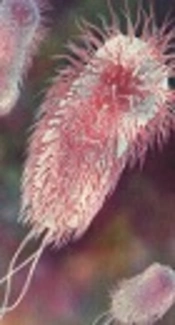
Cover image of the article: The First Report of Extended-Spectrum β-Lactamase (ESBL) Genes in an Escherichia coli Isolate from a One-Month-Old Infant with Acute Lymphoblastic Leukemia (ALL) in Iran

Image Credit:Arch Clin Infect Dis

The First Report of Extended-Spectrum β-Lactamase (ESBL) Genes in an Escherichia coli Isolate from a One-Month-Old Infant with Acute Lymphoblastic Leukemia (ALL) in Iran

Authors

Mahdaneh Roshani1, Hossein GoudarziHossein Goudarzi ORCID1, Fattaneh Sabzehali1, Soroor Erfanimanesh2, Masoud DadashiMasoud Dadashi ORCID1, Ali HashemiAli Hashemi ORCID3,*
1Department of Microbiology, School of Medicine, Shahid Beheshti University of Medical Sciences, Tehran, Iran
2Department of Microbiology, School of Medicine, Tehran University of Medical Sciences, Tehran, Iran
3Infectious Diseases and Tropical Medicine Research Center, Shahid Beheshti University of Medical Sciences, Tehran, Iran
*Corresponding Author: Corresponding author: Dr. Ali Hashemi, PhD, Infectious Diseases and Tropical Medicine Research Center, Shahid Beheshti University of Medical Sciences, Tehran, Iran. P. Box: 19857-17443, Tel: +98-2123872556, E-mail: Email: hashemi1388@yahoo.com

Archives of Clinical Infectious Diseases:Vol. 12, issue 4; e57592
Published online:Oct 29, 2017
Article type:Case Report
Received:Dec 11, 2016
Accepted:Sep 19, 2017
How to Cite:Roshani M, Goudarzi H, Sabzehali F, Erfanimanesh S, Dadashi M, et al. The First Report of Extended-Spectrum β-Lactamase (ESBL) Genes in an Escherichia coli Isolate from a One-Month-Old Infant with Acute Lymphoblastic Leukemia (ALL) in Iran. Arch Clin Infect Dis. 2017;12(4):e57592. doi: https://doi.org/10.5812/archcid.57592

Abstract

Background:

Bloodstream infection is one of the most life-threatening complications recognized as the frequent cause of treatment failure in children with acute lymphoblastic leukemia.

Objectives:

In this study, we describe the isolation of an extended-spectrum β-lactamase (ESBL)-producing Escherichia coli.

Methods:

Antimicrobial susceptibility tests were determined on the isolate by the Kirby-Bauer disk diffusion method. In addition, ESBL production of the isolate was examined using the Combination Disk Diffusion Test (CDDT). PCR was used to screen the presence of CTX-M-1, CTX-M-2, CTX-M-8, CTX-M-9, CTX-M-25, ISEcp1, IS26, and IS903 genes in this isolate.

Results:

We found an ESBL-producing E. coli in a 1-month-old infant with a blood cancer that carried CTX-M-1 group enzymes.

Conclusions:

Our finding emphasized the need for more precise screening methods to identify the causative infectious agents at early stages of infection to choose the appropriate treatment in these severely immunocompromised patients.


Highlights

1. Introduction

Bloodstream infection is one of the most life-threatening complications and it remains the frequent cause of treatment failure in children with acute lymphoblastic leukemia (1). Nowadays, increasing rates of antibiotic resistance among carbapenem-resistant E. coli isolates is a major concern worldwide (2-5). The production of ß-lactamases, including enzymes of Ambler classes A, D, and B, with the corresponding genes often associated with mobile genetic elements such as plasmids, is the most common mechanism of resistance (6, 7). Extended spectrum beta-lactamases (ESBLs), produced by bacteria, are a rapidly evolving group of β-lactamase enzymes. These enzymes are capable of hydrolyzing aztreonam and cephalosporins (8). CTX-M enzymes are clustered in the class A group of ESBLs and are rapidly scattering among E. coli strains worldwide (9). Up to now, more than 170 allelic variants of this enzyme have been reported (http://www.lahey.org/studies/other.asp#table1). During the past several years, CTX-M enzymes have become the most frequent ESBL enzymes in clinical gram-negative isolates, particularly in South America, Europe, and Asia (4, 10). Herein we describe the isolation of an extended-spectrum β-lactamase (ESBL) producing Escherichia coli from a one-month-old infant with acute lymphocytic leukemia (ALL) in Iran.

2. Case Presentation

A one-month-old female infant with acute lymphoblastic leukemia (ALL) who suffered from blood infection was hospitalized in a hospital of Rasht, Iran, during 2015. Blood culture was carried out in order to detect the causative agent immediately after admission. The blood sample was positive for Escherichia coli. Antimicrobial susceptibility tests were also determined on the isolate by the Kirby-Bauer disk diffusion method using Mast Co (Mast Group, Merseyside, UK) on Mueller Hinton agar (Merck, Germany) and interpreted as recommended by the clinical and laboratory standards institute (CLSI 2014). Escherichia coli ATCC 25922 was used as the control strain. In addition, ESBL production of the isolate was examined using the Combination Disk Diffusion Test (CDDT). In brief, discs containing Ceftazidime (CAZ) and Cefotaxime (CTX) with Ceftazidime 30 µg + Clavulanic (CA) 10 µg and Cefotaxime 30 µg + Clavulanic (CA) 10 µg per disc (Mast Group, Merseyside, UK) were applied on a lawn culture of the isolate. The zones of inhibition were compared for the CTX, CAZ discs and that of the CAZ 30 µg + (CA) 10 µg and CTX 30 µg + CA 10 µg discs. An increase in the zone diameter of ≥ 5 mm around the disks in the presence of clavulanic acid was considered positive for the presence of ESBL in the isolate. K. pneumoniae ATCC700603 and Escherichia coli ATCC 25922 were used as positive and negative controls for ESBL production, respectively. PCR was used to screen the presence of CTX-M-1, CTX-M-2, CTX-M-8, CTX-M-9, and CTX-M-25 genes in this isolate using a PCR purification kit (Bioneer Co., Korea). The presence of ISEcp1, IS26, and IS903 elements was also investigated. Primers and PCR programs used in this study were performed as previously described (11, 12). Sequencing was performed by the Bioneer Company (Korea) and nucleotide sequences were analyzed by FinchTV software and compared with the sequences in GenBank using the NCBI basic local alignment search tool (www.ncbi.nlm.nih.gov/BLAST). The results of antimicrobial susceptibility tests showed that the isolate was resistant to Ampicillin (AMP, 10 µg), Ceftazidime (CAZ, 30 µg), Ceftriaxone (CRO, 30 µg), Amikacin (AK, 30 µg), Ciprofloxacin (CIP, 5 µg), Gentamicin (GEN, 10 µg), Levofloxacin (LEV, 5 µg) and susceptible to Imipenem (IPM, 10 µg). The combination Disk Diffusion Test (CDDT) results revealed that the isolate was positive for producing extended- spectrum β-lactamase (ESBL). The isolate was positive for CTX-M-1 (CTX-M-15), ISEcp1, IS26, and IS903 elements and negative for other CTX-M subclasses.

3. Discussion

The presence of ESBL has been associated with increased mortality, longer duration of hospital stay, and increased hospital cost. Over the past few years, a remarkable increase has been reported in the number of ESBL-E. Coli-associated bloodstream infections in several parts of the world (13, 14). Furthermore, in cancer patients with prolonged hospitalization and with ALL who had received antibiotics for a prolonged period, the opportunity for these bacteria to cause infections enhances (14). Recent data have documented the importance of CTX-M enzymes in the ESBL epidemic around the world (15). ESBL-producing organisms, especially those carrying CTX-M-15, are commonly resistant to cephalosporins as the first-line choice for the treatment of bacteremic patients. Furthermore, ESBL-producing bacteria typically carry genetic determinants that confer resistance to fluoroquinolones and aminoglycosides. Thus, carbapenems, along with other drugs, such as Beta-lactam/beta-lactamase inhibitor combinations, may likely have an increasing role as empirical therapy for patients who are infected with ESBL-producing organisms in community and hospitals (15). In summary, we found an ESBL-producing E. coli in a 1-month-old infant with a blood cancer that carried CTX-M-1 group enzymes. The isolation of such strain from a one-month-old infant with acute lymphoblastic leukemia is a unique event with relevant microbiological, clinical, and epidemiological implications. Infections in cancer and immunocompromised children pose a particular challenge because the pathogens are often unusual. Therefore, appropriate treatment measures must begin early in the course of the infection. On the other hand, resistance genes on mobile elements such as plasmids may easily distribute among individuals and make the situation more difficult to manage. Our finding emphasizes the need for more precise screening methods to identify the causative infectious agent at early stages of infection to choose the appropriate treatment in these severely immunocompromised patients.

Acknowledgments

Footnotes

  • Conflicts of Interest:The authors declare that they have no conflict of interest.

References

  • 1.
    Yeh TC, Liu HC, Hou JY, Chen KH, Huang TH, Chang CY, et al. Severe infections in children with acute leukemia undergoing intensive chemotherapy can successfully be prevented by ciprofloxacin, voriconazole, or micafungin prophylaxis. Cancer. 2014;120(8):1255-62. [PubMed ID: 24415457]. https://doi.org/10.1002/cncr.28524.
  • 2.
    Goudarzi H, Aghamohammad S, Hashemi A, Nikmanesh B, Noori M. Distribution of blaTEM, blaSHV and blaCTX-M genes among escherichia coli isolates causing urinary tract infection in children. Arch Clin Infect Dis. 2013;8(3). https://doi.org/10.5812/archcid.16207.
  • 3.
    Ruhnke M, Arnold R, Gastmeier P. Infection control issues in patients with haematological malignancies in the era of multidrug-resistant bacteria. Lancet Oncol. 2014;15(13):e606-19. [PubMed ID: 25456379]. https://doi.org/10.1016/S1470-2045(14)70344-4.
  • 4.
    Rossolini GM, D'Andrea MM, Mugnaioli C. The spread of CTX-M-type extended-spectrum beta-lactamases. Clin Microbiol Infect. 2008;14 Suppl 1:33-41. [PubMed ID: 18154526]. https://doi.org/10.1111/j.1469-0691.2007.01867.x.
  • 5.
    Rahmati Roodsari M, Fallah F, Taherpour A, Hakemi Vala M, Hashemi A. Carbapenem-Resistant Bacteria and Laboratory Detection Methods. Arch Pediatr Infect Dis. 2013;2(3):188-91. https://doi.org/10.5812/pedinfect.5193.
  • 6.
    Hakemi Vala M, Hallajzadeh M, Hashemi A, Goudarzi H, Tarhani M, Sattarzadeh Tabrizi M, et al. Detection of Ambler class A, B and D ss-lactamases among Pseudomonas aeruginosa and Acinetobacter baumannii clinical isolates from burn patients. Ann Burns Fire Disasters. 2014;27(1):8-13. [PubMed ID: 25249841].
  • 7.
    Gholipourmalekabadi M, Bandehpour M, Mozafari M, Hashemi A, Ghanbarian H, Sameni M, et al. Decellularized human amniotic membrane: more is needed for an efficient dressing for protection of burns against antibiotic-resistant bacteria isolated from burn patients. Burns. 2015;41(7):1488-97. [PubMed ID: 26048133]. https://doi.org/10.1016/j.burns.2015.04.015.
  • 8.
    Taherpour A, Hashemi A. Detection of OqxAB efflux pumps, OmpK35 and OmpK36 porins in extended-spectrum-beta-lactamase-producing Klebsiella pneumoniae isolates from Iran. Hippokratia. 2013;17(4):355-8. [PubMed ID: 25031516].
  • 9.
    Pitout JD, Laupland KB. Extended-spectrum beta-lactamase-producing Enterobacteriaceae: an emerging public-health concern. Lancet Infect Dis. 2008;8(3):159-66. [PubMed ID: 18291338]. https://doi.org/10.1016/S1473-3099(08)70041-0.
  • 10.
    Bonnet R. Growing group of extended-spectrum beta-lactamases: the CTX-M enzymes. Antimicrob Agents Chemother. 2004;48(1):1-14. [PubMed ID: 14693512]. https://doi.org/10.1128/AAC.48.1.1-14.2004.
  • 11.
    Manageiro V, Clemente L, Jones-Dias D, Albuquerque T, Ferreira E, Canica M. CTX-M-15-Producing Escherichia coli in Dolphin, Portugal. Emerg Infect Dis. 2015;21(12):2249-51. [PubMed ID: 26583927]. https://doi.org/10.3201/eid2112.141963.
  • 12.
    Wang G, Huang T, Surendraiah PK, Wang K, Komal R, Zhuge J, et al. CTX-M beta-lactamase-producing Klebsiella pneumoniae in suburban New York City, New York, USA. Emerg Infect Dis. 2013;19(11):1803-10. [PubMed ID: 24188126]. https://doi.org/10.3201/eid1911.121470.
  • 13.
    Ferreira CM, Ferreira WA, Almeida NC, Naveca FG, Barbosa M. Extended-spectrum beta-lactamase-producing bacteria isolated from hematologic patients in Manaus, State of Amazonas, Brazil. Braz J Microbiol. 2011;42(3):1076-84. [PubMed ID: 24031725]. https://doi.org/10.1590/S1517-838220110003000028.
  • 14.
    Cornejo-Juarez P, Perez-Jimenez C, Silva-Sanchez J, Velazquez-Acosta C, Gonzalez-Lara F, Reyna-Flores F, et al. Molecular analysis and risk factors for Escherichia coli producing extended-spectrum beta-lactamase bloodstream infection in hematological malignancies. PLoS One. 2012;7(4). e35780. [PubMed ID: 22540004]. https://doi.org/10.1371/journal.pone.0035780.
  • 15.
    Chen LF, Freeman JT, Nicholson B, Keiger A, Lancaster S, Joyce M, et al. Widespread dissemination of CTX-M-15 genotype extended-spectrum-beta-lactamase-producing enterobacteriaceae among patients presenting to community hospitals in the southeastern United States. Antimicrob Agents Chemother. 2014;58(2):1200-2. [PubMed ID: 24247126]. https://doi.org/10.1128/AAC.01099-13.

Copyright

Copyright © 2017, Archives of Clinical Infectious Diseases. This is an open-access article distributed under the terms of the Creative Commons Attribution-NonCommercial 4.0 International License (http://creativecommons.org/licenses/by-nc/4.0/) which permits copy and redistribute the material just in noncommercial usages, provided the original work is properly cited

Similar Articles

21
Nov
2018
Detection of IS903, IS26 and ISEcp1 Elements in CTX-M-Producing Klebsiella pneumoniae and Escherichia coli Isolates From Patients with Leukemia in Iran

Detection of IS903, IS26 and ISEcp1 Elements in CTX-M-Producing Klebsiella pneumoniae and Escherichia coli Isolates From Patients with Leukemia in Iran

Mahdane Roshani,
Hossein Goudarzi,
Ali Hashemi,
Abdollah Ardebili,
Soroor Erfanimanesh,
Aghil Bahramian

Roshani M, Goudarzi H, Hashemi A, Ardebili A, Erfanimanesh S, et al. Detection of IS903, IS26 and ISEcp1 Elements in CTX-M-Producing Klebsiella pneumoniae and Escherichia coli Isolates From Patients with Leukemia in Iran. Jundishapur J Microbiol. 2018;11(12):e58929. doi: https://doi.org/10.5812/jjm.58929

18
Apr
2015
Occurrence of SHV, TEM and CTX-M β-Lactamase Genes Among Enteropathogenic Escherichia coli Strains Isolated From Children With Diarrhea

Occurrence of SHV, TEM and CTX-M β-Lactamase Genes Among Enteropathogenic Escherichia coli Strains Isolated From Children With Diarrhea

Mojtaba Memariani,
Shahin Najar Peerayeh,
Taghi Zahraei Salehi,
Seyyed Khalil Shokouhi Mostafavi

Memariani M, Najar Peerayeh S, Zahraei Salehi T, Shokouhi Mostafavi SK. Occurrence of SHV, TEM and CTX-M β-Lactamase Genes Among Enteropathogenic Escherichia coli Strains Isolated From Children With Diarrhea. Jundishapur J Microbiol. 2015;8(4):e15620. doi: https://doi.org/10.5812/jjm.8(4)2015.15620

27
Mar
2017
CTX-M-15 Type β-lactamases From Clinical Isolates of Escherichia coli by Polymerase Chain Reaction and DNA Sequencing

CTX-M-15 Type β-lactamases From Clinical Isolates of Escherichia coli by Polymerase Chain Reaction and DNA Sequencing

Mahboobeh Nakhaei Moghaddam,
Mohammad Reza Zolfaghari,
Niloofar Tavakoli‐Hoseini

Nakhaei Moghaddam M, Zolfaghari MR, Tavakoli‐Hoseini N. CTX-M-15 Type β-lactamases From Clinical Isolates of Escherichia coli by Polymerase Chain Reaction and DNA Sequencing. Zahedan J Res Med Sci. 2017;19(3):e5814. doi: https://doi.org/10.5812/zjrms.5814

1
Feb
2014
Characterization of AmpC, CTX-M and MBLs types of β-lactamases in clinical isolates of Klebsiella pneumoniae and Escherichia coli producing Extended Spectrum β-lactamases in Kerman, Iran

Characterization of AmpC, CTX-M and MBLs types of β-lactamases in clinical isolates of Klebsiella pneumoniae and Escherichia coli producing Extended Spectrum β-lactamases in Kerman, Iran

Shahla Mansouri,
Davood Kalantar Neyestanaki,
Mostafa Shokoohi,
Shahnaz Halimi,
Reza Beigverdi,
Fereshteh Rezagholezadeh
,et al.

Mansouri S, Kalantar Neyestanaki D, Shokoohi M, Halimi S, Beigverdi R, et al. Characterization of AmpC, CTX-M and MBLs types of β-lactamases in clinical isolates of Klebsiella pneumoniae and Escherichia coli producing Extended Spectrum β-lactamases in Kerman, Iran. Jundishapur J Microbiol. 2014;7(2):e8756. doi: https://doi.org/10.5812/jjm.8756

31
Oct
2010
Emergence of multiple ?-lactamases produced by Escherichia coli clinical isolates from hospitalized patient in Kerman, Iran

Emergence of multiple ?-lactamases produced by Escherichia coli clinical isolates from hospitalized patient in Kerman, Iran

Davoud Kalantar,
Shahla Mansouri,

Kalantar D, Mansouri S, . Emergence of multiple ?-lactamases produced by Escherichia coli clinical isolates from hospitalized patient in Kerman, Iran. Jundishapur J Microbiol. 2010;3(4):. doi:

More by these authors

Mahdaneh RoshaniPubMedScholar
Hossein GoudarziPubMedScholar
Fattaneh SabzehaliPubMedScholar
Soroor ErfanimaneshPubMedScholar
Masoud DadashiPubMedScholar
Ali HashemiPubMedScholar
Share
Cited by
Metrics