1. Background
The knee joint, being the primary weight bearing joint, is one of the most commonly injured joints. Combined ACL-PCL injuries are uncommon injuries that are usually associated with knee dislocations due to high velocity trauma. Dislocation of the knee itself is a relatively rare injury constituting 0.02% - 0.2% of orthopaedic injuries (1-4). Associated neuro-vascular damage, as well as fractures, makes these types of injuries more challenging to treat. It becomes extremely important to evaluate and correctly identify the structures involved in the injury early and to treat them aggressively, including rehabilitation, so that the person returns to his work and sport with the most stable and healthy knee as possible.
Because the incidence of these injuries is low, early literature led to controversy on the optimal treatment. Historically, these injuries were managed conservatively with prolonged immobilization, which was associated with variable outcomes, including loss of motion, residual instability, and poor knee function (3). Although some authors recommended cast immobilization (5), others advocated operative repair (6). With the advent of modern arthroscopic techniques and better instrumentation, operative reconstruction has become the standard of care (6-10).
When patients presenting with bicruciate ligament deficiency with or without posterolateral corner (PLC) injury require reconstruction in the knee, a single setting or staged approach can be adopted. Although some authors still recommend staged reconstruction, beginning with the posterior cruciate ligament (PCL), and later the anterior cruciate ligament (ACL) if necessary (11, 12). Today, early simultaneous reconstruction of the ACL and PCL, and repair or reconstruction of the medial and lateral structures are recommended (1). Also, staged procedures are much more time consuming for the patient, and it requires two operative procedures as well as two rehabilitation programs.
Allogenous tendon grafts have been recommended specifically for combined ligament injuries as a reproducible procedure (10, 13, 14) because of some advantages: the lack of donor site morbidity, reduction of operating time, and the strength of the large grafts. However, allograft materials are not always available and also the cost, delayed graft remodelling and possibility of disease transmission are some issues to be considered. The use of an autogenous tendon graft minimizes these concerns.
Simultaneous ACL and PCL with or without PLC structures reconstruction in a single stage is technically demanding. Only a few studies have reported arthroscopically assisted combined ACL and PCL reconstruction or PCL reconstruction with posterolateral corner (PLC) reconstruction procedures (10, 12, 15-17) and that too with varying results. We hypothesized that in multiligamentous knee injuries, single stage combined ACL and PCL reconstruction with hamstring tendon auto graft is an effective, safe, time saving and patient compliant procedure.
2. Objectives
We evaluated the functional outcome for a group of patients who underwent arthroscopically assisted combined ACL and PCL reconstruction using autogenous hamstring grafts with an average 26 months follow up.
3. Patients and Methods
This multicenter prospective study was undertaken from August 2010 to December 2014, after approval from the local ethical committee. 20 consecutive patients with combined ACL-PCL injuries who underwent simultaneous arthroscopic ACL and PCL reconstruction with hamstring tendon autografts were included after they declared their consent to participate in the study.
3.1. Inclusion Criteria
Male/Female patients, Age 18 - 55 years, ASA grade I and II, chronic knee injuries with a minimum 5 weeks duration having both cruciate ligaments insufficiency with or without additional collateral ligament injury/posterolateral rotatory instability as diagnosed by clinical examination and radiography.
3.2. Exclusion Criteria
Patients with contraindications to arthroscopy (local skin infection or disease),with associated fractures around knee, history of previous ligament reconstruction or arthroscopic knee procedures, joint inflammatory disease or neoplasm, patients refusing surgery or consent were excluded from the study.
3.3. Methodology
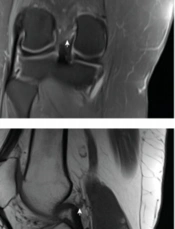
Patients underwent a preoperative physical examination and the demographic data were recorded. Clinical diagnosis of ACL tear was determined by positive findings on anterior drawer test, Lachmann’s test, and pivot shift test and of PCL tear by positive findings on posterior drawer test and posterior sag (Godfrey test). Assessment of the posterolateral structures was done with the tibial external rotation recurvatum and dial test. Collateral ligaments were evaluated using valgus/varus stress test with knee in full extension and 30˚ flexion. Distal neurovascular status was ascertained. X-ray of knee including stress X-rays were done to exclude any bony injury and to access the amount of tibial translation over femur. MRI was done to further substantiate the diagnosis.
In acute knee injuries, assessment of distal neurovascular status was done to rule out arterio-venous compromise. If required, Doppler study, arteriography or venography and a vascular surgery consultation was done. Radiography was done and any dislocation of knee was reduced closely and if required open reduction was done and maintained in knee brace with a towel or pad “bump” behind the gastrocnemius-soleus. Collateral ligament injuries were managed conservatively. Arthroscopic bicruciate reconstruction was done after a minimum duration of 5 weeks in these cases after initial management.
3.4. Operative Technique
All reconstructions were performed by a single surgeon using the same surgical technique. All the surgeries were performed under spinal anaesthesia with the patient positioned supine on the operating table under tourniquet control. The operating time was defined through the total tourniquet time of the involved limb. Iodine preparation and arthroscopy drapes were used for the limb involved. After performing a diagnostic arthroscopy through anteromedial, anterolateral and posteromedial portals and verifying cruciate ligaments tear; the semitendinosus (ST) and gracilis tendon were harvested from ipsilateral and if required (quadrupled graft diameter of gracilis less than 7 mm), gracilis from contralateral side through a 3 cm transverse oblique incision over the pesanserinus, using a closed tendon stripper. In ACL and PCL injuries, PCL was reconstructed using semitendinosus graft and ACL with gracilis graft of ipsilateral knee. If required (quadrupled graft diameter of gracilis less than 7 mm) gracilis tendon of contralateral knee was used. In ACL + PCL + PLC injuries, PCL reconstruction was done with semitendinosus graft of ipsilateral knee, PLC with semitendinosus of contralateral knee and ACL with gracilis tendon of either or both knees. Tendons were prepared for adequate length and diameter for ACL, PCL and if required for PLC. For ACL and PCL, the final prepared graft was quadruple. The average length of the graft for PCL and ACL was 8.2 cm (range 7.5 - 9 cm) and 8cm (range 7.5 - 8.5 cm) respectively. The average diameters of the graft on femoral and tibial side for PCL were 7.5 mm and 8 mm and for ACL were 7 mm and 7.5 mm. The average length and diameter of the graft for PLC was 17cm (range 16 - 18cm) and 6 mm (range 5.5 - 6.5 mm). After addressing associated injuries, femoral and tibial tunnels were created for ACL and PCL with appropriate drill guide and instruments. Tibial tunnel for PCL was created under image intensifier control along with direct view from posteromedial portal so as not to injure the popliteal vessels. Similarly, femoral tunnel for ACL was done through accessory AM portal in an anatomical fashion. After tunnel preparation the PCL graft was passed and fixed on the femoral side either by suspensory or interference fixation at 90˚ of knee flexion. Similarly ACL graft was fixed on the femoral side after graft passage. The postero-lateral reconstruction with a free ST graft was performed by Larson’s procedure before tibial fixation of both cruciate ligament grafts. With the knee in approximately 70˚ of flexion and an applied anterior tibial force to restore the anatomic tibial step-off, primary fixation of the PCL graft was achieved with a bio-absorbable screw of appropriate diameter or suture disk. Finally, in 30˚ of knee flexion, tension was applied to the distal end of the ACL graft, and was secured using a bio-absorbable screw or suture disk. Closure was done and compression bandage was applied. The knee was kept in full extension using a posterior tibial support (PTS) brace or long knee brace. Distal vascular status was reascertained. Toe and ankle movement was started on the same day as soon as the patient recovered from anaesthesia.
3.5. Rehabilitation
After surgery, all the patients were placed in a posterior tibial support (PTS) brace or long knee brace in full extension for 3 weeks, and then gradual increase in flexion of 30˚ weekly was performed to achieve 90˚ of flexion by 6 weeks. During the first 6 weeks, the patients were partial weight bearing with the assistance of crutches. Patients also performed isometric quadriceps exercises and straight leg raising exercises with the knee protected in the brace. After 6 weeks, the brace was discontinued and the knee range of motion exercises in addition to active assisted and full active range of motion exercises were started. The patients progressed from partial weight bearing to full weight bearing, and strengthening exercises for quadriceps, hamstring, and calf muscles were introduced. Patients were allowed to return to full activity when they achieved a minimum of 80% quadriceps muscle strength compared with the uninjured limb. The focus in the rehabilitation program was to protect the reconstructed PCL with no hamstring exercises allowed during the early rehabilitation period to prevent early overloading of the graft.
3.6. Clinical Assessment at Follow Up
Patients were followed up at regular intervals for evaluation and supervision of the rehabilitation process. For overall evaluation of the functional outcome of the procedure; range of motion, international knee documentation committee (IKDC), Lysholm and Tegner activity score were measured at the final follow up. Tegner activity level scale is a scale that aims to provide a standardized method of grading work and sporting activities. It is used in conjunction with Lysholm knee scoring scale. It consists of 10 levels starting from level 1 with sedentary work progressing to level 10 with competitive sports football, rugby. IKDC is standardized international documentation system for knee conditions designed for knee ligament injuries. It consists of three domains: 1) symptoms, including pain, stiffness, swelling, locking/ catching, and giving way; 2) sports and daily activities; and 3) current knee function and knee function prior to knee injury (not included in the total score). Number of items is 18 (7 items for symptoms, 1 item for sport participation, 9 items for daily activities, and 1 item for current knee function). The minimum score for each item is 0. The scoring of the numerical rating scales for items 2 and 3 is reversed so that 0 represents the highest level of symptoms and 10 represents the lowest level of symptoms. Possible score range 0 - 100, where 100 = no limitation with daily or sporting activities and the absence of symptoms. On the basis of these it is graded as A “normal”, B “nearly normal” C “abnormal” and D “severely abnormal”.
For the stability of the knee, Lachman test, Pivot shift test and posterior drawer test was done. Subjective evaluation was assessed by a numeric rating scale (NRS) from 0 (very unsatisfied) to 10 (very satisfied).
4. Results
Simultaneous ACL/PCL reconstruction was done in (17 males, 3 females) patients with hamstring tendon auto graft; the mean duration of follow up was 26 months (14 to 38 months). The mean age at time of surgery was 34 years (range 18 - 52 years). There were 9 right and 11 left knees. Eight patients with acute ACL and PCL injuries were operated after 5 weeks and in the remaining chronic cases, the mean time from injury to the reconstructive procedure was 10 months (range 6 to 24 months). The mechanism of injury was sports activities in 6 patients and road traffic accidents in 12 patients (6 motorcycle, 4 car accidents, 2 other) and working/recreational accidents in 2 patients. Demographic data are represented in Table 1.
Table 1.
Normal Distribution of Data for the Patientsa
| Variables | Number of patients |
|---|---|
| M/F | 17/3 |
| Mean age at surgery (range), y | 34 (18 - 52) |
| Mean duration of surgery (range), min | 110(100 - 130) |
| Mechanism of injury (sports/RTA/others) | 6/12/2 |
an = 20
The mean operating time (also the total tourniquet time) was 110 minute (range 100 - 130 minutes). 8 patients required partial menisectomies for associated meniscus tears. In 4 cases associated PLC structure injuries were found for which repair was done with semitendinosus graft.
In the complications we found acute- on- chronic thrombus in popliteal artery in one case in the immediate post operative period, which was dealt by vascular surgeon on the day of surgery and after that it was uneventful. Apart from this there were no other incidences of major complications in the perioperative and postoperative period, such as wound healing problems, thrombosis, pulmonary embolism, or infections.
The average duration of rehabilitation process was 8 weeks. The mean time to return to full-time work and to full sports was 8 weeks and 6.2 months. At the final follow-ups almost all the patients had full range of motion from 5˚ of hyperextension to 135˚ of flexion except in 2 patients, where a loss of < 5 degrees of flexion was demonstrated. Except for 1 patient who complained of mild pain at the donor site of the contralateral healthy knee, no patients complained of donor-site morbidity or dysfunction of the healthy leg. Clinical examination demonstrated that the Lachman test was negative (grade 0) in 18 patients (90%), two patients (10%) had grade 1 test results and in no case grade 2 test result found. On pivot shift testing 19 patients (95%) had a grade 0 test result, one patient (5%) had a glide and none had grade 2 test result. 2 (10%) patients demonstrated a mild posterior drawer at 90 degrees (1+) whereas no patient demonstrated any posterolateral corner instability.
At the final follow-ups the mean IKDC evaluation score was 90 points (range 81 - 94). 12 patients (60%) had a score of 100 points. The full IKDC assessment showed that sixteen patients (80%) had a normal overall IKDC grade (A). The remaining four patients (20%) were graded as “nearly normal” (B). No joint was “abnormal” or “severely abnormal” (grade C or D).
The evaluation of the Tegner activity level scale showed it was level 7 (range 4 - 9) at pre-injury and level 7 (range 5 - 9) postoperatively at final followup. The overall result of the Lysholm knee score was 89 (range 81 - 100) at follow-up. Functional outcome scores are represented in Table 2.
Table 2.
Functional Outcome Scores
| Variables Assessed | Values |
|---|---|
| Scores a | |
| Mean IKDC evaluation | 90 (81 - 94) |
| Tegner activity | 7 (4 - 9) |
| Lysholm knee | 89 (81 - 100) |
| NRS b | |
| Very satisfied | 16 |
| Satisfied | 4 |
| Dissatisfied | 0 |
aValues are presented as mean score (range).
bNumeric Rating Scale. Values are number of patients.
At the final follow-ups, seventeen patients (85%) had the opinion that ACL and PCL reconstructed knees had normal function and were able to return to their pre-injury level of activity while three patients (15%) had a decreased activity. Overall satisfaction rate of the patients with the operation was 8 if we consider a numeric rating scale of maximum 10 points. Sixteen patients (80%) were very satisfied (NRS, 8 - 10) and four patients (20%) were satisfied (NRS, 4 - 7) with the result of the operation. None were dissatisfied (NRS, 0 - 3).
5. Discussion
Owing to its anatomical structure, exposures to external forces and functional demands placed on it, the knee joint is one of the commonest joints to be injured. Knee injuries are on a rise due to increased involvement in sports, motor accidents, and workplace injuries which represent roughly 6% of acute injuries treated at emergency departments. Combined ACL and PCL with PLC structure injuries are complex injuries and require a systematic approach to evaluate and treat. A limited number of papers in the orthopaedic literature have reported results after simultaneous reconstruction of the cruciate ligaments (13, 14, 18, 19) with only a few studies describing an arthroscopically assisted approach; (16, 17, 20) and to our knowledge, none has used hamstring tendon graft solely.
In the present study we have shown that combined ACL and PCL injuries can be successfully treated with one-stage arthroscopic bi-cruciate ligament reconstruction together with reconstruction of the PLC structures if required using autogenous hamstring grafts. Statistically significant improvement of knee function was noted with both subjective criteria and objective measurement methods.
Wascher et al. (14) reviewed the results of 13 patients (9 acute, 4 chronic) who underwent simultaneous reconstruction of the cruciate ligaments using fresh-frozen Achilles or patellar tendon allograft and found 6 patients (5 abnormal, and 1 grossly abnormal) having abnormal IKDC rating. Mariani et al. (17) studied over 15 patients retrospectively who underwent arthroscopic reconstruction with hamstring and patellar tendon autograft, and observed, on final IKDC evaluation, 7 were graded B, 3 were graded C, and 1 patient was graded D. Fanelli and Edson (16) on evaluation of 35 patients (19 acute and 16 chronic) using both allograft and autograft tissue found a normal posterior drawer in 46% of knees and normal Lachmann test results in 94% of knees. Lo YP et al. (21) using hamstring and quadriceps tendon auto grafts reported 82% (9 of 11) of the patients normal or nearly normal (grade A or B) in IKDC rating. In our study with the mean IKDC score of 90 points, the full IKDC assessment showed that 16 patients (80%) had a normal overall IKDC grade (A), (20%) graded as “nearly normal” (B) and no joint was “abnormal” or “severely abnormal” (grade C or D). Stability tests were near to normal in almost 90% of cases with mild posterior laxity in 2 cases. If we compare these results, simultaneous arthroscopic ACL and PCL reconstruction with hamstring tendon autograft significantly improved stability in multiligamentous knee injuries with minimal residual laxity.
PLC instability generates increased force in cruciate ligament grafts which may lead to subsequent graft failure (17, 22). Failure to diagnose and treat an injury of the PLC structures in patients with a tear of the anterior or posterior cruciate ligament can result in failure of the reconstructed cruciate ligament. Due to this importance of PLC structure injuries on outcome, the 4 cases which were having associated PLC structure injuries, were repaired with semitendinosus graft. The technique used in the present study was initially described by Larson (23) which allows for near isometric reconstruction of the popliteofibular ligament and the lateral collateral ligament.
Colosimo et al. (24) reported an average postoperative Lysholm score of 87.7 (range: 49 - 100) with four of 11 patients having occasional mild pain, 2 occasional swelling, and 4 infrequent instability, 2 demonstrated a loss of flexion < 5 degrees. Zhao et al. (25) reported Lysholm score of the 9 chronic cases 91.8 ± 4.6 at the last follow-up. In the initial rehabilitation period, the knee was placed in full extension in a PTS brace with an inlay to the dorsal aspect of the tibia. Range of motion exercises were allowed only with the patient prone to prevent any tibial dropback. The brace was worn for 6 weeks day and night and continued during the night only in the later period. Initially, active hamstring exercises during the rehabilitation program were avoided, because of possible deleterious effects on the PCL graft. No case of arthrofibrosis was encountered in the post-operative period.
17 patients (85 %) were of opinion that ACL and PCL reconstructed knees had normal function and were able to return to their pre-injury level of activity while 3 patients had a decreased activity. Satisfaction rate with the operative results was greater than 90%. Simultaneous ACL and PCL reconstruction at a single setting also resulted in cost savings both on day-of-surgery charges as well as on postoperative rehabilitation. Economic aspects play a significant role in healthcare delivery in a country like ours. In addition to lower costs, a lesser duration of rehabilitation was needed, which resulted in less disruption to the lives of the patients and caregivers.
Both allograft and autografts have been used for the reconstruction of the cruciate ligaments. Advantages of allograft are lack of donor site morbidity, reduction of operating time, and the strength of the large grafts and disadvantages are inferior biomechanical properties, unavailability and the cost factor, delayed graft remodelling and possibility of disease transmission. The potential advantages of auto graft particularly of hamstring are lower morbidity, availability, and no weakening of the knee extensor apparatus so physiotherapy can be started soon after operation.
Overall, we found that combined ACL and PCL instabilities can be successfully treated with simultaneous arthroscopic ACL and PCL reconstruction using autogenous hamstring graft. It is a safe, reliable, cost-effective and patient compliant procedure for treating these injuries with favourable functional outcome.
Though the functional outcome of simultaneous bicruciate ligament reconstruction was good, one limitation of our study was the small study population size due to rarity of the injury. However, the patient group was comparable to that of other studies reporting results after arthroscopically assisted combined ACL/PCL reconstruction. In addition, all patients were treated with a uniform surgical technique by a single surgeon. A large-scale randomized trial is needed to verify the efficacy of the procedure.
Performing simultaneous arthroscopic ACL and PCL reconstructions using hamstring tendon auto grafts for combined ACL and PCL injuries is an optimal method that is effective and reproducible for a timely return of motion, strength, and function with favorable outcome. It is a safe, reliable, time saving and cost-effective option with better patient compliance without compromising the functional results.