1. Background
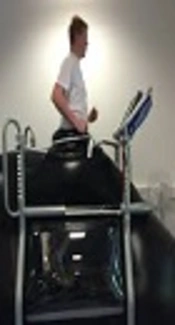
An anti-gravity treadmill is a device with a capability of unloading the body weight while standing on a treadmill. It has been used in rehabilitation of neurological and orthopedic patients and it’s shown to improve one’s function, ambulation, balance, and strength (1-5). However, there is limited literature available in its use in rehabilitation of post-operative knee patients.
Unloading of the body weight reduces pain level caused by weight-bearing (6). Pain is oftentimes a limiting factor in recovery from a surgical procedure. Thus, some researchers and clinicians believed that a use of anti-gravity treadmill could be beneficial in patients’ recovery process. Also, it has shown that unloading the body weight on anti-gravity treadmill reduces ground reaction force and knee force during weight-bearing activities (7-10). This enables patients who are limited to partial weight-bearing to stand without a use of crutches or cane. Takacs et al. conducted a study on a patient with multiple lower leg fractures and suggested that a use of anti-gravity treadmill could be useful in reducing pain, restoring function, and increasing range of motion (5). Another study has shown that patients after total hip arthroplasty were able to restore normal ambulation when anti-gravity treadmill was used for gait training earlier than those who did not use the treadmill (2).
While limited, the most past literature used walking or running as an activity when studying effects of anti-gravity treadmill. Even though ambulation is a normal daily activity function that has to be restored after lower extremity surgery, balance plays a critical role in performing daily activities such as walking. In this current study, single leg balance was used to measure one’s ability after knee surgery. To our knowledge, this is the first study to assess an effect of anti-gravity treadmill on balance immediately after knee surgery.
2. Objectives
The purpose of this study was to study an unweighing effect of anti-gravity treadmill on balance during an early phase of knee post-operative recovery. We hypothesized that a use of anti-gravity treadmill would have a positive effect on balance in patients in an early phase of post-operative knee rehabilitation and that they would be able to significantly improve their single leg stance length.
3. Methods
Forty-nine patients who underwent knee surgery at Emoto Knee and Sport Clinic were recruited for this study. All agreed to participate and provided signed informed consent prior to data collection. Each patient was tested for timed single leg stance (SLS) on a floor at 1 week and 2 week after surgery. After the first balance test, patients were placed in either AlterG group (AG) or control group (CG) based on patients’ comfort level. Those who experienced a “significant increase” in pain level during the first balance test were placed in AG. The others who felt “comfortable” with no or minimal pain or with no or minimal increase in pain were placed on CG. The subjects in AG underwent a balance exercise on AlterG daily for at least 5 days a week between the first and second balance tests with the pressure on AlterG adjusted to a pain-free or minimal pain level at the beginning of each balance exercise session. Those in CG underwent a balance exercise on a floor daily for at least 5 days a week between the balance tests. In each balance exercise session, subjects were asked to stand on a surgical leg with their knee slightly bent targeting to stay on their foot for 30 seconds. This was repeated 3 times with 30 second rest in between trials. A balance exercise was made more challenging by having a subject stand on a form pad when appropriate. This decision was made by a licensed physical therapist. At 2 week post-operatively, the subjects were tested again for SLS. The lengths of SLS were recorded and analyzed with student t-test. This study was approved by institutional review board of Emoto Knee and Sport Clinic prior to data collection.
4. Results
The total of 49 patients participated in this study. There were 24 subjects in CG and 25 in AG. Of 24 subjects in CG, 15 underwent total knee arthroplasty (TKA), 2 underwent anterior cruciate ligament reconstruction (ACLR), and 7 had arthroscopy. Seventeen of 25 subjects in AG had TKA, 3 had ACLR, and 5 had arthroscopy (Table 1). All patients were able to complete all exercise sessions and balance testes. The mean age was 63.0 years old (SD = 15.9) for CG and 66.1 years old (SD = 13.5) for AG (P = 0.23). The mean height was 157.1cm (SD = 9.7) for CG and 154.0 cm (SD = 11.6) for AG (P = 0.16). The mean weight was 56.6 kg (SD = 10.1) for CG and 58.6 kg (SD = 14.5) for AG (P = 0.28). The mean length of SLS at 1 week post-operatively was 38.6 seconds (SD = 20.3) for CG and 19.9 seconds (SD = 20.1) for AG (P = 0.001). At 2 weeks post-operatively, CG averaged 50.5 seconds (SD = 15.2) and AG averaged 35.0 seconds (SD = 20.4) with P value of 0.002. There was a statistical significance between groups in SLS both at 1 week and 2 week post-operatively. Each group improved by 11.8 seconds (CG) and 15.0 seconds (AG), however, the difference between 2 groups was not statistically significant (P = 0.17). Table 2 summarizes the results of the balance tests and the confidence interval (CI) of variables.
Table 1.
Surgical Procedures Undergone by Patients
| AlterG | Control | |
|---|---|---|
| TKA | 17 | 15 |
| ACLR | 3 | 2 |
| Other | 5 | 7 |
Abbreviations: ACLR, anterior cruciate ligament reconstruction; TKA, total knee arthroplasty.
Table 2.
Single Leg Stance Lengths at 1 Week and 2 Weeks Post-Operatively. The Numbers in Parenthesis are Standard Deviations
| Control | AlterG | P Value | 95% CI | ||
|---|---|---|---|---|---|
| Control | AlterG | ||||
| Age (years old) | 63.0 (15.9) | 66.1 (13.5) | 0.23 | 56.7 - 69.3 | 60.9 - 71.3 |
| Height (cm) | 157.1 (9.7) | 154.0 (11.6) | 0.16 | 153.3 - 160.9 | 149.5 - 158.5 |
| Weight (kg) | 56.6 (10.1) | 58.6 (14.5) | 0.28 | 52.6 - 60.6 | 53.0 - 64.2 |
| 1 week (seconds) | 38.6 (20.3) | 19.5 (20.1) | 0.001 | 30.5 - 46.7 | 11.7 - 28.3 |
| 2 week (seconds) | 50.5 (15.2) | 35.0 (20.4) | 0.002 | 44.5 - 56.5 | 27.0 - 43.0 |
| 2 week – 1 week | 11.8 (12.7) | 15.0 (10.6) | 0.17 | 6.8 - 16.8 | 10.9 - 19.1 |
Abbreviation: CI, confidence interval.
We also analyzed the test result of the subjects who underwent TKA excluding those with other procedures. There were 15 TKA patients in CG and 17 in AG. Difference in single leg stance at 1 week and 2 week post-operatively both reached statistical significance but not the difference between 2 balance tests (Table 3).
Table 3.
Single Leg Balance Test Results in TKA Patients. The Numbers in Parenthesis are Standard Deviations
| Control | AlterG | P Value | 95% CI | ||
|---|---|---|---|---|---|
| Control | AlterG | ||||
| Age (years old) | 71.4 (5.9) | 72.1 (8.2) | 0.72 | 68.4 - 74.4 | 68.3 - 75.9 |
| Height (cm) | 152.4 (7.2) | 147.6 (5.7) | 0.051 | 148.8 - 156.0 | 144.9 - 150.3 |
| Weight (kg) | 53.3 (8.6) | 54.1 (10.9) | 0.81 | 49.0 - 57.6 | 49.0 - 59.2 |
| 1 week (seconds) | 32.0 (19.5) | 7.3 (5.9) | 0.0002 | 22.2 - 41.8 | 4.5 - 10.1 |
| 2 week (seconds) | 46.6 (17.6) | 24.2 (15.2) | 0.0006 | 37.7 - 55.5 | 17.9 - 31.4 |
| 2 week- 1 week | 14.6 (12.1) | 16.9 (11.6) | 0.54 | 8.5 - 20.7 | 11.4 - 22.4 |
Abbreviations: CI, confidence interval; TKA, total knee arthroplasty.
5. Discussion
In this current study, AG improved on SLS from week 1 to week 2, however, improvement was not statistically significant when compared to that of CG. A similar trend was seen in TKA patients. Both CG and AG improved on SLS with no significant between-group difference. As hypothesized, the patients in AG significantly improved on their SLS, however, the improvement was not significantly different from that of CG.
A use of anti-gravity treadmill during weight-bearing has shown to have a positive effect on pain reduction and ground reaction force reduction (1, 6, 10). Post-operative pain is one of the most common complaints that patients have and also a limiting factor in a rehabilitation process. Patients often assess their progress by pain relief and functional restoration in addition to other factors. After surgery, weight-bearing can cause an increase in pain level and it limits patients from involving in weight-bearing activities such as standing and walking even though it can be safely done without doing any harm to a surgical site. In this study, we placed patients on CG or AG based on patients’ pain level during the 1st SLS test. This might have contributed to a significant difference in SLS between groups. Those in AG who experienced “significant” increase in pain averaged significantly shorter SLS than those in CG probably due to pain. However, all of those in AG were able to complete each balance exercise session with “minimal” pain on anti-gravity treadmill. We did not control a use of oral pain medication prescribed by a surgeon, which could have had an effect on pain perception in those patients.
An anti-gravity treadmill can also reduce the amount of force placed on lower extremities (7-10). This makes early weight-bearing after a lower extremity procedure less stressful and potentially safer to a surgical site, especially more aggressive rehabilitation early after knee surgery such as TKA has shown to improve patients’ performance outcomes more than conservative slow rehabilitation (4, 11). In addition, those patients limited to partial weight-bearing may be able to engage in such activities without using crutches or cane earlier on an anti-gravity treadmill, enabling them to restore functional performance sooner (4).
It is also important to note some other effects that unloading the body weight may have. It is shown that unweighing during walking and running may reduce muscle activities measured by EMG and change muscle activation pattern (12-14). The literature has also shown that a reduction in muscle EMG activities due to unweighing may be muscle specific. According to this study, unloading the body weight while running reduced EMG muscle activities in all measured muscle groups except for hip adductors during the swing phase and hamstrings in the stance phase of the running cycle (13). Past studies have shown that unweighing reduces the cardiorespiratory and metabolic demands (7, 8). They also suggested that cardiorespiratory and metabolic demands increased with increased walking or running speed and with lower unloading rate.
In an early phase of post-operative rehabilitation, healing that occurs at a surgical site is important. Promoting a healing process is one of the goals in a recovery process. When operated limbs are placed in an environment where the air pressure was altered, the health of healing tissue in that environment is a concern. Even though Cutuk et al. (15), suggested that there was no adverse cardiovascular effect during ambulating on unweighing device more studies are necessary to investigate what effects altered air pressure may have on healing tissue.
In our study, the patients in AG were able to improve their SLS as much as those in CG. An anti-gravity treadmill was used to perform balance exercise sessions in AG to minimize the pain level of each subject. A significant between-group difference in SLS at week 1 and week 2 was seen probably due to difference in perceived pain level. Even though pain level was not objectively measured in this current study, all subjects reported that they were able to perform each balance exercise session with no, “minimal”, or “comfortable” pain level. AG was able to improve on SLS as much as CG did. We felt that decreased pain perception from unloading the body weight played a significant role in improved SLS than a use of AlterG itself. When we compared both groups only with TKA patients, similar results were obtained. There were several limitations in this study. We did not control a use of oral pain medication given by a surgeon. This might have affected subjects’ pain perception and potentially SLS performance. We did not take an objective measurement of their pain perception such as visual analogue scale. We did not have a group of subjects who had an increased pain level during the 1st balance test do balance training on a floor due to a safety concern. Thus, we were unable to conclude whether improved SLS between tests in AG was due to decreased pain level during training or a use of AlterG by itself.
In conclusion, an anti-gravity treadmill may be beneficial in regaining balance when patients experience increased pain during weight-bearing. Unloading of the body weight may be an effective way to perform weight-bearing exercise while reducing the pain level caused by weight-bearing. More research is necessary to investigate effects of anti-gravity treadmill during acute recovery phase after knee surgery.