Full Text
Full text is available in PDF
Asian Journal of Sports Medicine
Sports Medicine Research Center, TUMS
Authors
The repetitive micro traumatic stresses placed on the athletes shoulder joint complex during the throwing motion challenge the surrounding tissues. The purpose of this study was to compare shoulder rotational strength, range of motion and proprioception between the throwing athletes and non-athletic persons.
Fifteen throwing athletes and 15 non-athletes participated in a nonrandom case control study. Strength of shoulder rotational movements was tested with a hand held dynamometer. The ranges of internal and external rotation of shoulder were measured by a standard goniometer. The ability of subjects to replicate the target position and kinesthetic sense was examined on the subjects right shoulder by using a continuous passive motion device. Independent and paired t tests were used to statistically analyze between and within group differences.
No significant difference was detected on the range of internal rotation between throwing athletes and non-athletic candidates (
The repetitive nature of overhead throwing and the high forces that it causes result in adaptive changes of the dominant extremity. Throwing can lead to mobility, strength and neural adaptation.
© 2012, Author(s). This open-access article is available under the Creative Commons Attribution 4.0 (CC BY 4.0) International License (https://creativecommons.org/licenses/by/4.0/), which allows for unrestricted use, distribution, and reproduction in any medium, provided that the original work is properly cited.
Parhizmeymandi N, Azimi R, Sanjari MA, Farsi A. Motor Correlation Between Upper and Lower Limbs in a Throwing Task: The Effect of Fatigue and Distance. J Motor Control Learn. 2026;8(1):e166980. doi: https://doi.org/10.69107/jmcl-166980
Ketabi S, Gustav Kersting U, Mohammadi H, Abdulrahim Allahdad H. The Relationship Between Shoulder Pain and Disability and Functional Stability Indices in Competitive Male Gymnasts: A Cross-sectional Study. J Motor Control Learn. 2026;8(1):e169839. doi: https://doi.org/10.69107/jmcl-169839
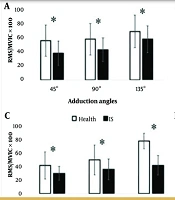
Hosseinimehr SH, Najafian Ghobadi Z. Electrical Activity of Selected Shoulder Girdle Muscles During Arm Abduction/Adduction in Athletes with and Without Shoulder Impingement Syndrome: Cross-sectional Study. J Motor Control Learn. 2025;7(2):e160567. doi: https://doi.org/10.5812/jmcl-160567
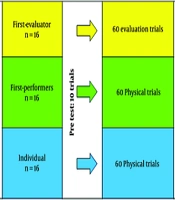
Niktabar E, Arab Ameri E, Tahmasebi Boroujeni S, Shirzad Eraghi E. The Effect of Priority Assignment the Role of Evaluator and Executive in Collaborative Training on the Acquisition of Kinematic and Accuracy of Dart Throwing Skill. J Motor Control Learn. 2024;6(1):e146823. doi: https://doi.org/10.5812/jmcl-146823
Moiz JA. Comparison of Dynamic Balance in Collegiate Field Hockey and Football Players Using Star Excursion Balance Test. Asian J Sports Med. 2013;4(3):34287. doi: https://doi.org/10.5812/asjsm.34287
Last Update: 2 weeks ago
Last Update: 2 weeks ago
Last Update: 2 weeks ago
Last Update: 6 hours ago
Last Update: 13 hours ago
Last Update: 5 days ago