
1. Background
Artistic gymnastics is a high-demand sport characterized by repetitive weight-bearing and suspension-based maneuvers, forced end-range joint loading, and high-velocity rotational skills. Despite the absence of direct player-to-player contact, the biomechanical stresses imposed during gymnastics expose athletes to a substantial risk of both acute and overuse musculoskeletal injuries (1). Given the distinctive loading patterns and injury mechanisms in this population, the concept of “gymnastics medicine” has recently emerged to promote sport-specific injury surveillance and targeted preventive strategies (2).
Epidemiological evidence consistently demonstrates sex-specific injury distributions in artistic gymnastics. In male gymnasts, the upper extremity, particularly the shoulder complex, is the most frequently injured anatomical region (3). Systematic reviews report injury rates ranging from 8.5 to 8.8 per 1000 exposure hours, with the shoulder accounting for approximately 36% to 54% of all injuries in male athletes (3, 4). Chronic overuse mechanisms predominate and are often related to repetitive suspension skills performed with extended elbows and forced flexion-rotation patterns (4). During these tasks, tensile forces transmitted through the shoulder may reach 6 to 8 times body weight, creating considerable mechanical demand on the glenohumeral joint (4).
The clinical presentation of shoulder symptoms in male gymnasts frequently includes subacromial pain syndromes, functional instability, or rotator cuff-related pathology (5, 6). Importantly, sport-specific adaptations complicate clinical interpretation. Increased glenohumeral laxity, which might be pathological in the general population, may represent a functional adaptation in elite gymnasts (4). Consequently, differentiating physiological adaptation from pathological instability remains challenging, and shoulder pain and disability are clinically relevant concerns that require multidimensional evaluation.
Although local shoulder pathology is well documented, contemporary biomechanical models emphasize the importance of the kinetic chain in upper-extremity function. The kinetic-chain concept proposes that efficient force generation and transfer depend on coordinated intersegmental control from the lower extremities through the trunk to the upper limb (7, 8). Core stability, defined as the capacity to control trunk position and motion relative to the pelvis, provides a proximal foundation for distal mobility and force production (8, 9). Deficits in proximal stability may alter force transmission, increase compensatory muscular demand, and elevate shoulder joint stress during weight-bearing or suspension-based skills (8, 9).
In overhead athletes, impaired trunk control has been associated with altered scapular mechanics, increased shoulder loading, and symptom development (10-12). Conversely, core endurance training has been linked to improvements in lumbopelvic control and upper-extremity functional performance (13, 14). However, findings across athletic populations remain inconsistent (15). Moreover, most previous studies have examined isolated components of the kinetic chain rather than simultaneously evaluating proximal and distal functional stability within a single analytical framework.
In male artistic gymnasts, the relationship between multisegmental functional stability and shoulder pain and disability remains insufficiently clarified. Given the repetitive closed-chain loading demands of gymnastics and the reliance on coordinated trunk and limb stability, it is plausible that shoulder symptoms may be associated with functional deficits across multiple segments of the kinetic chain. However, such relationships must be examined cautiously, without presuming causality, particularly in cross-sectional designs.
2. Objectives
The purpose of this cross-sectional study was to investigate the association between shoulder pain and disability and proximal core stability, upper-limb stability, and lower-limb functional stability among competitive male artistic gymnasts.
3. Methods
3.1. Study Design and Participants
This study used a cross-sectional correlational design to investigate the association between shoulder pain and disability and proximal and distal functional stability in competitive male artistic gymnasts. The study was conducted in accordance with the Declaration of Helsinki and was approved by the Institutional Research Ethics Committee. All participants provided written informed consent before participation.
An a priori power analysis was performed using G*Power software, version 3.1. Based on an anticipated moderate correlation effect size (r = 0.50), a significance level of α = 0.05, and statistical power (1 - β) of 0.80, the minimum required sample size was calculated as 26 participants. To account for potential dropouts and ensure adequate statistical power, 28 athletes were included.
Twenty-eight competitive male artistic gymnasts aged 22.86 ± 2.25 years were recruited from university-level and regional training centers in the Kurdistan Region of Iraq. Recruitment was conducted through direct contact with coaches and athletic directors. Participants were included consecutively if they met the eligibility criteria and agreed to participate.
3.2. Eligibility Criteria
Participants were required to meet the following inclusion criteria: age between 18 and 25 years, a minimum of three years of structured gymnastics training, participation in at least three training sessions per week, no history of systemic disease, no major surgery within the past year, and no severe musculoskeletal injury resulting in more than one week of training absence during the previous six months.
Participants were excluded if they had severe shoulder pain (VAS > 7/10) during testing, an acute traumatic shoulder injury within the previous three months, known neuromuscular or hormonal disorders, or were using medications affecting neuromuscular performance.
All assessments were performed in a controlled laboratory setting.
3.3. Screening and Pain Assessment
3.3.1. Visual Analog Scale
Current shoulder pain intensity was assessed using a 100-mm visual analog scale (VAS). The VAS consists of a horizontal line anchored by “no pain” (0 mm) and “worst imaginable pain” (100 mm). Participants marked the point representing their perceived shoulder pain during gymnastics activity. The VAS has demonstrated high reliability and validity for musculoskeletal pain assessment (16).
3.3.2. Shoulder Pain and Disability Index
Shoulder pain and disability were quantified using the Shoulder Pain and Disability Index (SPADI) (17). The SPADI consists of 13 items divided into two subscales: pain (5 items) and disability (8 items). Each item is scored on an 11-point numerical rating scale (0 - 10). The total score is calculated by averaging the items and converting the result to a 0 - 100 scale, with higher scores indicating greater pain and disability. The SPADI has demonstrated excellent internal consistency (Cronbach’s α > 0.90), test-retest reliability (ICC > 0.85), and responsiveness in individuals with shoulder disorders (17, 18). Participants were categorized into two groups based on SPADI scores: shoulder pain group, SPADI ≥ 30; and minimal/no pain group, SPADI < 30. This threshold was selected to identify clinically meaningful levels of shoulder symptoms consistent with previous research (18). Importantly, SPADI was treated as a continuous variable in the correlation and regression analyses.
3.3.3. Clinical Screening Tests
To confirm subacromial symptom provocation, two standardized clinical tests were administered.
3.3.3.1. Neer Impingement Test
3.3.3.2. Hawkins-Kennedy Test
The participant’s arm was flexed to 90° with the elbow flexed to 90°, followed by passive internal rotation. Pain during the maneuver was considered a positive test (19). These tests were used exclusively for clinical screening and confirmation of symptom reproduction and were not included as outcome variables in the statistical analyses. All screening procedures were conducted by a licensed physiotherapist who was blinded to the functional stability test results.
3.4. Functional Stability Assessments
All participants completed a standardized 10-minute dynamic warm-up before testing. Functional assessments were performed in a fixed sequence to ensure consistency across participants. A 2-minute rest interval was provided between trials to minimize fatigue effects.
3.4.1. Lower Quarter Y-Balance Test
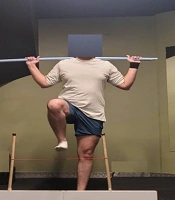
Lower-extremity dynamic stability was assessed using the Y-Balance Test (20, 21) (Figure 1). Participants stood barefoot on one leg at the center of the Y-shaped grid and performed maximal reach in three directions: anterior, posteromedial, and posterolateral. Each direction was performed twice, and the maximum reach distance was recorded in centimeters. Trials were repeated if balance was lost or the stance foot shifted. Reach distances were normalized to limb length using the following formula:

Figure 1.
Lower-limb functional stability test (Y-balance test)
Composite Score = (Sum of 3 directions / (3 × limb length)) × 100
3.4.2. Upper Quarter Y-Balance Test
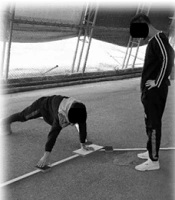
Upper-extremity dynamic stability was assessed using the Upper Quarter Y-Balance Test (22) (Figure 2). Participants assumed a push-up position with their hands placed at the center of the Y grid. While maintaining trunk and lower-limb stability, participants reached with the free hand in the medial, inferolateral, and superolateral directions. Each direction was performed twice, and the maximum reach distance was recorded. Scores were normalized to arm length using the following formula:

Figure 2.
Upper-limb functional stability test
Composite Score = (Sum of 3 directions / (3 × arm length)) × 100
Arm length was measured from the C7 spinous process to the distal tip of the middle finger with the shoulder abducted to 90°. The UQYBT has demonstrated high reliability (ICC > 0.85) in athletic populations (22).
3.4.3. Core Stability Assessment
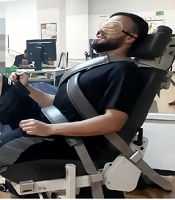
Core endurance was assessed using the McGill Core Endurance Test Battery (23, 24) (Figure 3). This battery includes four static endurance tests: trunk flexor endurance, trunk extensor endurance, right side plank, and left side plank. Participants were instructed to maintain each posture as long as possible without compensatory movement. The maximum hold time in seconds was recorded.

Figure 3.
McGill core stability
3.4.3.1. Trunk Flexor Endurance Test
Participants sat with the hips and knees at 90° and were supported at a 60° trunk angle. After the back support was removed, participants maintained the isometric position until failure.
3.4.3.2. Trunk Extensor Endurance Test
Participants lay prone with the pelvis secured to a table and the trunk unsupported. The time maintaining horizontal alignment was recorded.
3.4.3.3. Side Plank Test
3.5. Blinding and Standardization
The assessor who conducted the functional stability tests was blinded to participants’ SPADI scores and pain classification. Participants were instructed not to disclose their pain status during testing. All measurements were conducted at the same time of day to minimize circadian variability. The testing order was identical for all participants.
3.6. Statistical Analysis
Statistical analyses were performed using SPSS version 27.0 (IBM Corp., Armonk, NY, USA). Data distribution normality was assessed using the Shapiro-Wilk test. Homogeneity of variance was examined using Levene’s test. Descriptive statistics are presented as mean ± standard deviation. Pearson correlation coefficients with 95% confidence intervals were calculated to assess associations between SPADI scores and functional stability measures. To control for type I error due to multiple comparisons, the Holm-Bonferroni correction method was applied. Independent-samples t tests were conducted to compare functional stability measures between the shoulder pain and minimal/no pain groups.
Multiple linear regression analysis was performed to determine whether upper-limb stability, lower-limb stability, and core endurance independently explained variance in SPADI scores. Multicollinearity was assessed using variance inflation factors (VIF < 5 considered acceptable). The level of statistical significance was set at P < 0.05 (Table 1).
Table 1.
Comparison of Study Variables Between Groups (Independent t Test Results)
| Variables and Groups | Mean ± SD | K-S Sig. | Levene’s Sig. | t-Value | P-Value a |
|---|---|---|---|---|---|
| Core stability | 24.23 | 0.01 | |||
| Minimal/no pain | 93.02 ± 9.74 | 0.40 | 0.79 | ||
| Shoulder pain | 27.78 ± 2.56 | 0.68 | 0.83 | ||
| Lower-limb stability (dominant leg) | 29.84 | 0.01 | |||
| Minimal/no pain | 108.01 ± 3.01 | 0.72 | 0.85 | ||
| Shoulder pain | 70.64 ± 3.59 | 0.89 | 0.97 | ||
| Lower-limb stability (non-dominant leg) | 11.03 | 0.01 | |||
| Minimal/no pain | 101.21 ± 10.09 | 0.11 | 0.78 | ||
| Shoulder pain | 69.36 ± 3.86 | 0.08 | 0.75 | ||
| Upper-limb stability (affected side) | 23.28 | 0.01 | |||
| Minimal/no pain | 93.36 ± 3.93 | 0.41 | 0.83 | ||
| Shoulder pain | 52.64 ± 5.23 | 0.45 | 0.84 | ||
| Upper-limb stability (healthy side) | 20.80 | 0.01 | |||
| Minimal/no pain | 89.79 ± 3.62 | 0.95 | 0.88 | ||
| Shoulder pain | 48.21 ± 6.54 | 0.18 | 0.80 | ||
| Pain score (VAS) | 20.44 | 0.01 | |||
| Minimal/no pain | 9.29 ± 3.85 | 0.24 | 0.81 | ||
| Shoulder pain | 56.71 ± 7.78 | 0.07 | 0.66 | ||
| General disability (QuickDASH) | 21.33 | 0.01 | |||
| Minimal/no pain | 5.36 ± 2.76 | 0.08 | 0.77 | ||
| Shoulder pain | 47.41 ± 6.84 | 0.10 | 0.79 | ||
| Sports disability (QuickDASH-Sport) | 15.30 | 0.01 | |||
| Minimal/no pain | 11.61 ± 4.81 | 0.27 | 0.82 | ||
| Shoulder pain | 49.55 ± 7.93 | 0.06 | 0.61 |
a P < 0.05.
4. Results
Descriptive statistics for all study variables are presented in Tables 1 and 2. The Shapiro-Wilk test confirmed a normal distribution of SPADI scores and functional stability measures (P > 0.05), supporting the use of parametric analyses. No significant violations of homogeneity of variance were observed. Participants demonstrated a range of SPADI scores, reflecting variability in shoulder pain and disability, as well as in upper-limb stability, lower-limb stability, and core endurance performance (Figure 4).
Table 2.
Demographic Characteristics of Participants (Mean ± SD) (N = 14)
| Variables | Healthy G. | Shoulder Impingement G. | t-Value | P-Value |
|---|---|---|---|---|
| Age (y) | 22.86 ± 2.25 | 22.79 ± 1.85 | 0.10 | 0.92 |
| Height (cm) | 173.58 ± 6.17 | 172.43 ± 4.80 | 0.55 | 0.59 |
| Body mass (kg) | 66.61 ± 6.43 | 62.71 ± 6.12 | 1.67 | 0.11 |
| BMI (kg/m2) | 22.02 ± 1.36 | 21.04 ± 1.31 | 1.90 | 0.07 |
| Sports experience (y) | 5.71 ± 1.64 | 5.21 ± 1.19 | 0.94 | 0.36 |

Figure 4.
Correlations among all independent variables in the study. Participants 1 - 14: Gymnasts with shoulder pain and disability; participants 15 - 28: healthy gymnasts.
Pearson correlation analysis revealed statistically significant moderate negative associations between shoulder pain and disability (SPADI) and multiple functional stability measures (Table 3). Specifically, SPADI scores were negatively correlated with upper-limb functional stability (r = -0.62, 95% CI -0.81 to -0.32, P = 0.004), indicating that lower upper-extremity stability was associated with greater shoulder pain and disability. Core endurance also showed a significant negative correlation with SPADI (r = -0.55, 95% CI -0.76 to -0.22, P = 0.003), suggesting that reduced trunk endurance was associated with higher symptom severity. Lower-limb stability showed a weaker but statistically significant negative association with SPADI scores (r = -0.41, 95% CI -0.68 to -0.05, P = 0.030).
Table 3.
Pearson Correlation Coefficients Between Functional Stability Variables and Shoulder Pain and Disability (SPADI)
| Variables | r | 95% CI | P-Value a |
|---|---|---|---|
| Upper-limb stability - SPADI | -0.62 | -0.81 to -0.32 | 0.004 |
| Core endurance - SPADI | -0.55 | -0.76 to -0.22 | 0.003 |
| Lower-limb stability - SPADI | -0.41 | -0.68 to -0.05 | 0.030 |
| Upper-limb stability - Core endurance | 0.48 | 0.13 to 0.72 | 0.010 |
| Upper-limb stability - Lower-limb stability | 0.36 | 0.01 to 0.64 | 0.040 |
Abbreviations: r, Pearson correlation coefficient; CI, confidence interval; SPADI, Shoulder Pain and Disability Index.
a P < 0.05.
After applying the Holm-Bonferroni correction to control for multiple comparisons, the associations between SPADI and upper-limb stability and between SPADI and core endurance remained statistically significant, whereas the association with lower-limb stability was no longer statistically significant after adjustment. Additionally, moderate positive correlations were observed among functional stability variables, including associations between upper-limb stability and core endurance (r = 0.48, P = 0.010) and between upper- and lower-limb stability (r = 0.36, P = 0.040), indicating interrelationships among components of the kinetic chain.
Multiple linear regression analysis was performed to determine the independent contributions of functional stability variables to shoulder pain and disability. The overall regression model was statistically significant and explained 48% of the variance in SPADI scores (adjusted R2 = 0.48). Upper-limb stability (β = -0.44, P = 0.01) and trunk flexor endurance (β = -0.36, P = 0.03) emerged as independent predictors of SPADI scores, whereas lower-limb stability did not independently predict shoulder pain and disability after accounting for the other variables. Multicollinearity diagnostics indicated acceptable variance inflation factor values (VIF < 5), confirming the stability of the regression model.
5. Discussion
The shoulder joint is one of the most mechanically demanding structures in artistic gymnastics because it must simultaneously provide mobility, stability, and load transmission during weight-bearing and overhead tasks. The combination of repetitive loading, extreme ranges of motion, and high-force kinetic-chain demands makes the shoulder particularly vulnerable to pain and functional disability in gymnasts. Shoulder dysfunction may compromise strength, neuromuscular control, and movement coordination, ultimately affecting performance and injury risk.
The present study examined the association between shoulder pain and disability and functional stability across multiple body segments, including the core, upper limbs, and lower limbs. The findings indicated that gymnasts without shoulder symptoms demonstrated substantially greater core stability and limb functional stability than those experiencing shoulder pain and disability. In addition, moderate-to-strong correlations were observed between stability indices and pain and disability scores. These results support the concept that shoulder function in gymnastics should be understood within a whole-body functional framework rather than as an isolated joint problem.
Previous research examining relationships among shoulder pain, core stability, and limb function has produced inconsistent findings. Several studies have reported significant associations between shoulder pain and disability and core stability (26), between core stability and upper-limb functional stability and throwing velocity in handball players (27), between core stability and upper-limb performance in collegiate athletes (28), and between core stability and shoulder pain in badminton players (29). Similarly, upper-limb functional stability deficits in multiple directions have been associated with anterior shoulder instability in volleyball players (30). Collectively, these findings support the idea that proximal stability contributes to distal joint control and performance.
Conversely, other investigations have reported no meaningful relationship between trunk or limb stability and shoulder pain in overhead athletes (31), between core stability and Functional Movement Screen scores (18), between core stability and muscle activation patterns during landing in gymnasts (19), or between core and lower-limb stability and shoulder injuries in athletes (32). Such inconsistencies may reflect differences in study design, injury classification, measurement tools, training background, and participant characteristics. Another important explanation may be heterogeneity in pain severity across samples. Studies including participants with minimal symptoms may underestimate functional deficits compared with studies involving clearly symptomatic athletes.
The current study attempted to address this issue by defining shoulder symptoms using combined clinical and self-report criteria, including SPADI classification, VAS assessment, and positive Neer and Hawkins-Kennedy tests. These criteria ensured that participants in the symptomatic group presented with clinically meaningful shoulder pain and disability. As a result, the average disability and pain scores in this group reflected moderate-to-severe functional limitation. This methodological approach likely contributed to the clear between-group differences observed in core and limb stability measures.
The correlations identified in the present study should be interpreted cautiously. Because the study employed a cross-sectional correlational design, the results do not establish causation. Reduced core or limb stability may contribute to shoulder pain, but shoulder pain may also lead to decreased stability because of pain-related inhibition, altered motor control, or reduced training exposure. A bidirectional relationship is therefore plausible. This interpretation is consistent with neuromuscular control models suggesting that pain can modify movement patterns and muscle activation strategies.
Another issue concerns how performance tests were conducted in athletes experiencing shoulder pain. In the present study, testing was performed only when participants were able to safely complete the tasks without exacerbating symptoms. The functional stability tests used are submaximal and clinically accepted assessments designed to evaluate neuromuscular control rather than maximal strength or performance output. These tests are commonly used in both injured and uninjured athletic populations and are considered safe when administered under supervision. Nevertheless, pain-related movement adaptations may still influence performance outcomes, which should be acknowledged as a limitation.
The finding that core stability was associated with both upper- and lower-limb functional stability supports the kinetic-chain theory of athletic movement. The core functions as a central link that transfers forces between the lower and upper extremities. Efficient activation of trunk musculature allows forces generated by the lower limbs to be transmitted through the pelvis and trunk to the shoulder complex during dynamic movements. When proximal stability is insufficient, distal segments may compensate, increasing mechanical stress on the shoulder joint (10, 11).
One plausible mechanism explaining the relationship between core stability and shoulder pain involves force transmission efficiency. Weakness or delayed activation of core musculature may impair trunk stiffness and postural control, leading to increased shoulder loading during weight-bearing and overhead movements (10). This may result in altered joint mechanics, excessive strain on periarticular tissues, and eventual pain or disability. Another explanation involves neuromuscular coordination and proprioceptive control, both of which depend on adequate proximal stabilization (12, 34).
Core stability is also closely related to balance control, which plays a critical role in gymnastics performance. Deficits in trunk endurance or postural control may increase the mechanical demand placed on the shoulder complex during static holds, landings, and transitions between apparatus skills (12, 34). The Upper Quarter Y-Balance Test is particularly relevant in this context because it requires coordinated activation of the shoulder stabilizers, trunk musculature, and supporting limb while maintaining balance (34, 35). This integrated demand makes the test a useful functional indicator of upper-extremity stability.
Functional stability in sport should be considered a whole-body capability involving coordinated interactions among the trunk, upper extremities, and lower extremities. Movement efficiency depends on synchronized activation across the kinetic chain rather than isolated joint performance (34, 35). The strong association observed between core stability and limb stability in the present study supports this integrated perspective.
Training studies further support the importance of proximal stability in shoulder function. Core stability training has been shown to reduce pain and improve strength and range of motion in swimmers with shoulder pain syndrome (14). Improvements in balance, sprint performance, and neuromuscular control have also been reported after core training in athletes (33). Similar benefits have been documented in badminton players, including enhanced upper-limb strength and functional stability (15), and in gymnasts, in whom core training improved overall performance (11, 12). These findings provide a theoretical and practical basis for the relationships observed in the present study.
Functional stability training that integrates upper- and lower-limb control with trunk stabilization may be particularly important for gymnastics, in which many skills involve closed-chain shoulder loading and whole-body coordination. Such exercises improve neuromuscular efficiency, joint alignment, and muscular balance across the lumbar spine, pelvis, and hips (37, 38). Enhanced proprioceptive input and motor feedback allow rapid adjustments to perturbations, supporting dynamic stability (36).
Improved kinetic-chain coordination facilitates the efficient transfer of force and angular momentum from the lower limbs through the trunk to the upper limbs. This reduces compensatory stress on the shoulder and may decrease injury risk while improving performance efficiency (38). From a rehabilitation perspective, functional stability training may therefore be more beneficial than isolated strengthening approaches (39).
Functional stability exercises emphasize motor control, proprioception, and coordinated muscle activation patterns (39). Optimal shoulder stability allows smooth, pain-free movement throughout the range of motion while protecting the joint during dynamic tasks and unexpected perturbations (39, 40). Shoulder pain and disability may disrupt these mechanisms by causing muscle weakness, altered activation patterns, joint stiffness, and reduced balance capacity (40). Conversely, deficits in core and limb stability may predispose athletes to shoulder dysfunction.
5.1. Limitations and Recommendations
The findings of the present study should be interpreted in light of several limitations. First, the sample size was relatively small, which may limit generalizability. Second, the cross-sectional design precludes causal inference. Third, performance in functional tests may have been influenced by pain-related movement adaptations. Fourth, the exclusion of athletes with mild symptoms may have increased between-group differences and correlation strength. Future longitudinal and intervention studies with larger samples are needed to clarify causal relationships between core stability, limb functional stability, and shoulder pain in gymnasts.
Future research should examine these relationships using larger samples and longitudinal or intervention-based designs to better understand causal mechanisms. Investigating athletes from different sports disciplines, age groups, and competitive levels, as well as both male and female gymnasts, would further improve external validity. Including athletes with mild-to-moderate shoulder pain and disability may provide a more comprehensive understanding of functional stability deficits across the injury spectrum.
From a practical perspective, integrated training programs combining core stability exercises with upper- and lower-limb functional stability training may help maintain neuromuscular control during rehabilitation and potentially reduce the risk of recurrent shoulder injury.
5.2. Conclusions
The findings of the present study suggest that shoulder pain and disability in professional gymnasts are associated not only with impairments in upper-extremity functional stability but also with deficits in core stability and lower-limb functional stability. These results support a kinetic-chain perspective in which shoulder function depends on coordinated stability across multiple body segments.
Moderate negative correlations were observed between shoulder pain and disability and the three stability indices examined in this study. Although causal relationships cannot be inferred from this cross-sectional design, the findings indicate that athletes with shoulder symptoms demonstrate reduced functional stability throughout the body compared with healthy gymnasts.
From a practical standpoint, injury-prevention and conditioning programs for gymnasts should adopt an integrative approach that combines core stability training with upper- and lower-limb functional stability exercises. Such programs may improve neuromuscular control, movement coordination, and force transmission across the kinetic chain, potentially reducing mechanical stress on the shoulder joint.
AI Use Disclosure: The authors declare that no generative AI tools were used in the creation of this article.