
1. Background
Taekwondo is a Korean martial art that was introduced as an international Olympic sport in 2000 (1) and has recently become a well-known sport around the world with about 80 million athletes in 209 countries (2).
Physiological fitness profiles, such as aerobic capacity and body composition, attributed to a particular sport provide both athletes and coaches with crucial data which can be used in a large number of beneficial ways, e.g., to recognize an individual’s capabilities and to develop sport-specific programs that are prerequisites for prosperity.
Aerobic capacity is determined by maximum oxygen uptake (VO2max) as the most appropriate variable for determining sport performance of the athletes, and direct measurement of VO2max using Cardiopulmonary Exercise testing (CPET) is known as a gold standard for determining the cardiopulmonary capacity, which is the highest rate of oxygen consumption attainable during maximal exercise. In a study, Bridge et al. concluded that higher levels of aerobic fitness consistently supported the performance of the international taekwondo athletes and were effective in recovery between competitions (3). Therefore, determining the maximum aerobic capacity is an important index in selecting athletes and prescribing training (4). Moreover, anthropometry is recognized as one of the most important tools in examining physical features. Besides, it has been realized that the body composition of the athletes plays a vital role in their sport performance (5), and there are close associations between the body composition attributes and motor performance (6). Arabaci et al. (7) also suggested that abatement of body fat percentage and increase of fat-free mass could result in higher VO2max levels. Also, in a comparison drawn between the athletes attending Sydney Olympics 2000, younger age and lower body mass index (BMI) were observed in medalist athletes as compared to other athletes, and the elite female athletes were taller and had less body fat relative to other female athletes (8).
Most of the previous studies on physiological fitness features involved in combat sports have concentrated on male athletes. In these studies, aerobic capacity was measured by field tests and an estimation of equations (9, 10), and no detailed study has been reported in this area so far. Therefore, there is no complete, verifiable information on the aerobic capacity of female athletes, and the relationship between these factors and anthropometric indices has not been determined yet.
2. Objectives
Hence, the aim of this study is to describe the fitness characteristics of Iranian elite female taekwondo athletes and compare these factors with other female taekwondo athletes.
3. Methods
The present study was cross-sectional, and the statistical population included the entire elite female taekwondo athletes at championship level, as well as the entire female taekwondo athletes of the national team who were willing to participate in this study. All of the participants signed the consent form before beginning the research.
The whole process of this research was approved by the Ethics Committee of the Vice Chancellor for Research of Iran University of Medical Sciences with the code of ethics of IR.IUMS.FMD.REC1396.9411225003.
The CPET and body composition measurement were performed at the Sports Medicine Clinic of Rasoul-e-Akram and Imam Khomeini Hospitals. The study started on November 22, 2018 and finished on February 4, 2019.
3.1. Participants
Thirty three elite female taekwondo athletes at the age range of 16 to 34 years and the mean age of 20.12 ± 4.19 years participated in this study. Twelve of them were members of the national team, and the remaining 21 participated in championships. The inclusion criteria were as follows: (1) being an elite taekwondo athlete; (2) being a member of national team or Pro League teams; (3) being female; (4) willingness to attend the research; and (5) having no problem with taking exercise testing (10). The exclusion criteria were as follows: (1) unwillingness to continue the research; (2) failure in completing the testing and evaluation programs due to any reasons, e.g., sports injuries that might be aggravated through the processes of testing and evaluation; and (3) displaying symptoms that require terminating the exercise testing. Based on the filled out questionnaire, in which confidentiality of all information was insured, we asked about all supplements and drugs used. Moreover, all participants were supervised by their coach and team general manager.
3.2. Measures and Calculations
After obtaining permission from the Taekwondo Federation, the researcher met the athletes at the national team’s camp, explained the research objectives, and obtained their consent to participate in this study. The participants were then instructed on how to fill out the checklist containing demographic information and sports activities including weekly exercise hours and a weekly exercise program. The entire process of the research was done by Dr. Maryam Ghanbarnasab (M.GH). Thereafter, conduction of CPET evaluation was done and double checked by two sports medicine specialists, i.e., Dr. Sara Lotfian and Dr. Ahmad Nazari. The main researcher of this study, i.e., Haleh Dadgostar (HD), supervised all parts of the research.
3.3. Body Impedance Analyzer (BIA)
Through a body composition analyzer, the athletes were asked to put aside their metal objects, and after emptying their bladder, they were requested to stand on a bioelectric impedance analyzer (TANITA, BC 418 segmental body model, japan) to have their body composition, e.g., fat mass, fat-free mass (FFM), etc. registered. From the obtained test results, the FFM and BMI were recorded for further analysis.
3.4. Cardiopulmonary Exercise Testing (CPET)
To carry out CPET, at first, a physical examination was performed on the athletes, and their medical histories were gained to ensure that there were no symptoms indicating the conditions that prohibit exercise testing, i.e. absolute contraindications to exercise testing (11). The participants were reminded of the necessary conditions needed to be met prior to the incremental exercise testing as follows: (1) not to eat food, drink coffee, or smoke tobacco three hours before the test; (2) to wear walking or running shoes; (3) to wear comfortable clothes, preferably button-front ones; and (4) to continue taking their medications, if any (11). To conduct CPET, the resting heart rate and blood pressure were initially measured, and the participants were asked to stand on the treadmill. Next, the heart rate monitor (GARMIN, prop65, made in Taiwan, strap made in China) was attached to their chest, the CPET mask (mask: Rudolph inc. U.S.A, CPET: COSMED Quark RMR P/N: A-362-315-001 Qty 1, ITALY) was fixed on their face, and they were requested to breathe normally. All participants performed a Bruce protocol to volitional exhaustion, and VO2 plateau criterion was also incorporated. The Bruce test protocol has been considered as the standard, most widely used test for research; thus, given its accuracy and reliability in athletes, we used this testing procedure in our research. Afterwards, the Bruce protocol test was started and continued until any conditions of testing termination occurred. These conditions included chest pain and any symptoms of angina, systolic blood pressure lower than or equal to 10 mmHg with an increase in test intensity or decreased systolic blood pressure to less than that measured before the test, no increase in the heart rate with an increase in test intensity, physical appearance of severe fatigue, shortness of breath, wheezing, cramp or claudication, dizziness, imbalance, nausea, cyanosis, pallor, significant changes in the heart rhythm, and ST segment depression more than 1 mm to the extent that the participant requests to discontinue the test (11).
To determine VO2@AT%, the following two methods were applied and adjusted. For the first method, ventilatory threshold (Tvent) was assessed via a two-compartment linear model of the dependence of VC E on VC O2 applying a computer algorithm to find a two-line regression intersection point (12). In the second method, ventilatory threshold 1 was assigned as the lowest point of the ventilator equivalent (VE/VO2) and fraction of expired oxygen (FE/O2) prior to its progressive increase (3).
The VO2max was selected as the primary outcome. Anaerobic threshold (AT), RER, MET, training time (week), HR max in CPET, fat mass, FFM, and BMI were examined as secondary outcomes.
3.5. Statistical Analysis
All data analysis was performed via SPSS for Windows (version 22). Means and standard deviations were used for descriptive purposes. The Kolmogorov-Smirnov test was used to verify the normal distribution curve. Pearson’s correlation analysis was used to examine the associations between the variables, and the results were considered statistically significant at P < 0.05.
4. Results
4.1. Cardiopulmonary Exercise Testing (CPET) and Anthropometric Indices
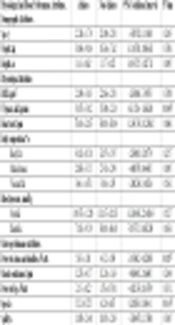
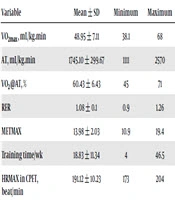
Mean, standard deviation, minimum, and maximum of anthropometric indices for all participants are shown in Tables 1 and 2.
Table 1.
Mean, Standard Deviation, Minimum, and Maximum of Anthropometric Indices
| Variable | Mean ± SD | Minimum | Maximum |
|---|---|---|---|
| Age | 20.12 ± 4.19 | 16 | 34 |
| Weight | 60.01 ± 10.03 | 44.5 | 84.1 |
| Height | 169.86 ± 6.74 | 157 | 185 |
| BMI | 20.89 ± 2.57 | 17.16 | 25.2 |
| Fat mas, % | 22.54 ± 5.44 | 14.6 | 33.1 |
| FFM | 46.31 ± 5.91 | 37.9 | 59.5 |
Table 2.
Mean, Standard Deviation, Minimum, and Maximum of Cardiopulmonary Indices
| Variable | Mean ± SD | Minimum | Maximum |
|---|---|---|---|
| VO2max, mL/kg.min | 48.95 ± 7.11 | 38.1 | 68 |
| AT, mL/kg.min | 1745.10 ± 299.67 | 1111 | 2570 |
| VO2@AT, % | 60.43 ± 6.43 | 45 | 71 |
| RER | 1.08 ± 0.1 | 0.9 | 1.26 |
| METMAX | 13.98 ± 2.03 | 10.9 | 19.4 |
| Training time/wk | 18.83 ± 11.34 | 4 | 46.5 |
| HRMAX in CPET, beat/min | 191.12 ± 10.23 | 173 | 204 |
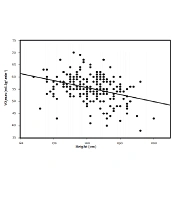
Correlation results: Correlation results demonstrated that VO2max was negatively correlated with body fat percentage (r = -0.50, P = 0.003), BMI (r = -0.40, P = 0.02), and weight (r = -0.35, P = 0.044). As a result, the higher the body fat percentage, BMI, and weight, the lower the VO2max. In addition, it was found that the age factor was negatively correlated with HRMAX in CPET test (r = -0.46, P = 0.007) and exercise hours per week (r = -0.37, P = 0.031). Thus, the younger the athlete, the higher the HRMAX and the longer the duration of her training per week. The results of the relationship between anthropometric and cardiopulmonary indices signified a direct and significant relationship between height (P = 0.005, r = 0.48), weight (P = 0.001, r = 0.56), FFM (P = 0.000, r = 0.63), and BMI (P = 0.43, P = 0.013) and AT.
5. Discussion
The present study aimed to investigate the cardiorespiratory fitness and body composition of elite female taekwondo athletes. The obtained results showed that the rate of VO2max in the CPET was about 50 mL/kg.min, and BMI was reported in a normal range.
The rates of VO2max and VO2@AT% of the participants in the present study were determined to be 49 mL/kg.min and 60%, respectively. Araujo et al. (3) investigated the CPET indices of male taekwondo athletes using a RAMP protocol on treadmill and reported a VO2 peak of 49.60 mL/kg.min and VO2@AT of 86%. Cubrilo et al. (13) appraised 20 national male taekwondo athletes through CPET, and their results were as follows: VO2max = 44 mL/kg.min and VO2@AT = 87%. In another study, Kim et al. (14) reported that the increase of VO2max after one year of intensive training was not statistically significant. On the other hand, Monks et al. (15) reported improved cardiorespiratory fitness of taekwondo athletes resulting from a high intensity interval training Also, Fong and Ng (16) came to this conclusion that taekwondo training could be beneficial for cardiorespiratory fitness. According to the above-mentioned studies and the other ones (17), the VO2max level of the athletes in the present study is similar to that of the other elite taekwondo athletes; however, the VO2@AT% index is significantly lower, even considering the studies which measured the cardiorespiratory fitness of female taekwondo athletes. In a study done by Heller et al. (12) on 12 elite female taekwondo athletes, VO2max and VO2@AT were obtained 42 mL/kg.min and 78%, respectively, and similar results were gained in the study conducted by Markovic et al. (18). The reason for this difference does not merely lie in the difference in the gender of the studied participants; indeed, diverse measurement procedures and AT calculation might be influential, yet it seems necessary to investigate the causes of this difference in Iranian female taekwondo athletes. Given that the lower levels of lactate threshold can increase the level of mistakes made by the athletes, coaches are required to heed this index and endeavor for its improvement to enhance the efficiency and reduce mistakes of the athletes in the final rounds of competitions.
BMI and body fat percentage of the participants were determined to be 21 kg.m2 and 23%, respectively. The obtained BMI was similar to the BMI reported in the studies done by Nikolaidis et al. (8), Jafari (9), and Bridge et al. (17). Although different body fat percentages have been reported for female taekwondo athletes in the above-mentioned studies, each of them is less than what was measured in ours. For example, in the study conducted by Nikolaidis et al. (8), the body fat percentage of female taekwondo athletes aged between 18 and 33 years, was reported 19%, or in another study done by Heller et al. (12) on the athletes with black belts, it was reported 15%. Body fat percentage of female taekwondo athletes in the national team was reported 11.2% in Turkey (19) and 15.4% in Kazakhstan (20). Our findings were even higher than what was reported as the mean body fat percentage of the national taekwondo team athletes of Iran in 2006 (equal to 7%), despite the same measurement method (i.e., BIA) being applied to determine body fat percentage (9). In a prospective study by Kim et al. (14), a significant increase of body weight and fat percentage was reported in 8 female taekwondo athletes following one year of high intensity training. There seems to be a trend of body fat percentage increase, as in several studies conducted in other countries, the recent ones reported higher body fat percentages (17). While the body fat percentage of female taekwondo athletes reported in most studies is still below 20%, for male taekwondo athletes, however, the body fat percentage reported in most studies is usually less than that of the females (5, 17). For example, Arabaci et al. (7) reported that the mean body fat percentage of elite male taekwondo athletes was 7%, which seemed to be gender-dependent.
The result of the correlation analysis revealed that VO2max and maximum MET in CPET test were negatively correlated with body fat percentage, weight, and BMI. As a result, the heavier the athlete and the higher her body fat percentage, the lower the VO2max and the maximum MET of the CPET test. These findings were comparable to those of Gao et al. (7). In line with the findings of the present study, the Brazilian taekwondo athletes of the national team were also younger than the athletes at championship level (21). The mean height of the female taekwondo athletes in Iran was reported slightly higher than that of their counterparts in the study of Nikolaidis et al. (4). In a study conducted by Santos et al., the mean height of Brazilian female taekwondo athletes was reported as 163 cm, which was far less than the mean height of national female taekwondo athletes in Iran (equal to 174 cm) (21).
It was also found that HRMAX was higher in the participants who were taller or practiced more per week. Furthermore, it was revealed that the younger the female taekwondo athletes, the longer their training per week and the higher their HRMAX.
5.1. Conclusions
In general, the present study revealed that Iranian elite female taekwondo athletes had acceptable aerobic fitness but perhaps less anaerobic ability as compared to other taekwondo elites worldwide. Although BMI and body fat percentage of elite female taekwondo athletes in our research were in normal range, their body fat percentage was determined higher than that of other elite female taekwondo athletes globally. Therefore, it is recommended that measures be taken to improve their body composition.
5.2. Limitations
As a cross-sectional study, the causal relationship could not be established between athletes’ aerobic fitness and taekwondo training. Body fat percentage was measured using a commercial BIA.
It is recommended that future studies be designed based on longitudinal studies to follow athletes’ training effects on aerobic and anaerobic parameters and find strategies to improve these items.