1. Background
The demographic structure of Nigeria, like many nations globally, is experiencing a significant shift toward an aging population (1). This transition poses a critical challenge for the healthcare system, particularly in providing adequate home care for older adults. The need for well-trained home care workers is becoming increasingly urgent as traditional family-based care models face constraints due to economic pressures and the changing social fabric of Nigerian society (2-7). This study, therefore, focuses on the multifaceted aspects of training home care workers to care for older adults in Nigeria.
In many African cultures, including Nigeria, older adults have traditionally been cared for within the extended family structure (5, 8-10). However, rapid urbanization and economic migration have eroded these traditional support systems, creating a care gap that must now be filled by professional home care services (11-14). Some evidence from Nigeria indicates that the quality of these services heavily depends on the quality of training provided to home care workers (15-18). Despite the growing demand for home care, a significant lack of standardized training programs exists, contributing to disparities in the quality of care across the country.
2. Objectives
This study is an important step toward understanding the perspectives of home care workers, particularly their motivations for joining training programs and the impact of such training on their professional development. It also highlights the critical role of these workers in the healthcare system and advocates for improved training as a way to enhance the quality of life for older adults in Nigeria. Through this study, we aim to spark a dialogue among policymakers, healthcare providers, and the wider community about the importance of investing in the training of home care workers, not only as an economic necessity but also as a commitment to the dignity and well-being of the aging population.
The research addressed the following questions: What motivates individuals to participate in home care worker training programs, and how do these motivations influence their engagement and outcomes? How do home care workers perceive the impact of specialized training on their professional development and competency in caring for older adults?
3. Methods
The Geriatric Center at University College Hospital, Ibadan, Nigeria, hosted the seventh edition of a comprehensive two-week training program for aspiring home care workers. Established in 1957, the hospital inaugurated West Africa's first purpose-built geriatric center (CTAGC) in 2012, which includes various service areas and specialty units (19). The training program aimed to equip participants with essential knowledge and skills for elderly care and was supported by the NSCC and the Nigerian government. The program’s goal was to establish a certification process to produce highly skilled home care workers for older adults, demonstrating Nigeria's commitment to improving care standards for the elderly. This study examined the perspectives of trainees, investigating their motivations for joining and assessing the training’s impact on their professional development and caregiving approaches.
3.1. Training Content/Procedures
The two-week training program was designed to address common health concerns in both Nigeria and more advanced countries. It targeted individuals with a Bachelor's degree from accredited Nigerian universities who were interested in elderly home care. A specialized version of the program was available for medical professionals, including primary care physicians, internists, and family doctors seeking specialization in geriatric care (20). The training followed adult learning principles and included lectures, practical sessions, multimedia videos, and discussions, along with small group workshops on elderly care solutions. Participants were evaluated with pre-course and post-course tests, each comprising 20 multiple-choice questions. A follow-up assessment will be conducted 10 years post-training to evaluate the implementation of learned practices and frameworks.
3.2. Course Outline
The course covered a wide range of geriatric care topics, including patient care, evaluation, rehabilitation, pharmacology, common syndromes, lung diseases, musculoskeletal issues, ENT problems, eye diseases, neurology, cancer care, dental health, kidney diseases, urinary tract concerns, gynecological care, infectious diseases, endocrine disorders, digestive system issues, heart conditions, psychiatric conditions, and surgical considerations for older patients. These topics were spread across 42 lecture subjects (Box 1).
Box 1.
Course Outline
| Course Outline |
|---|
| Course overview |
| Interactions with the participants |
| Inductions with the board of hospital |
| CARE-introduction, care of older adults |
| Common health problems and recognition of red flags in the care of older adults |
| Management of difficult clients (violence and aggression) |
| Prevention of pressure sore |
| Types of care |
| Model of report/caldecott principle |
| Use of equipment facilitating care |
| Management of the home environment |
| Assisting in drug administration for the elderly |
| Manual handling of clients |
| Drawing up a care plan |
| Basic food hygiene and feeding of frail elderly |
| Care of the older person in the community |
| Safeguarding vulnerable clients |
| Record and record keeping |
| Infection control |
| Privacy/confidentiality/dignity of clients |
| Teamwork and lone worker policy |
| Social care for elderly |
| Health and safety at work |
| Attitude to work/time keeping |
| Care of neuro-disability clients |
| Your rights and the law |
| Care of terminally ill clients |
| Practical sessions in the clinic, ward, and offices |
| Dental management in older adults |
| Feeding methods, application of pad, inco sheets, and emergencies/vital signs |
3.3. Study Design
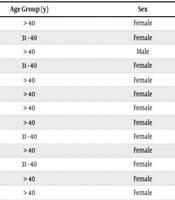
This study employed a descriptive qualitative research design to gain in-depth insights into the experiences and perceptions of home care workers who completed the two-week training program. Using a purposive sampling technique, 20 participants were selected based on data saturation principles. Semi-structured interviews served as the primary data collection method (Table 1). An interview guide with open-ended questions was used to explore participants' motivations for joining the training, their perceptions of the program, and the training’s impact on their professional development. All interviews were conducted face-to-face, and participants were informed about the study's purpose, their voluntary participation, confidentiality, and their right to withdraw at any time. All participants had tertiary education and a basic understanding of English. Informed consent was obtained from each participant before the interviews.
Table 1.
Demographic Characteristics of Participants
| Participant | Age Group (y) | Sex | Ethnicity |
|---|---|---|---|
| 1 | > 40 | Female | Yoruba |
| 2 | 31 - 40 | Female | Igbo |
| 3 | > 40 | Male | Yoruba |
| 4 | 31 - 40 | Female | Others |
| 5 | > 40 | Female | Yoruba |
| 6 | > 40 | Female | Yoruba |
| 7 | > 40 | Female | Yoruba |
| 8 | > 40 | Female | Yoruba |
| 9 | 31 - 40 | Female | Yoruba |
| 10 | > 40 | Female | Yoruba |
| 11 | 31 - 40 | Female | Yoruba |
| 12 | > 40 | Female | Yoruba |
| 13 | > 40 | Female | Yoruba |
| 14 | > 40 | Female | Yoruba |
| 15 | 31 - 40 | Female | Igbo |
| 16 | < 30 | Female | Yoruba |
| 17 | 31 - 40 | Female | Yoruba |
| 18 | > 40 | Female | Yoruba |
| 19 | < 30 | Male | Yoruba |
| 20 | 31 - 40 | Female | Yoruba |
3.4. Data Analysis
The study’s data analysis focused on understanding home care workers' motivations for training and the impact on their professional development. All audio-recorded interviews were transcribed verbatim to ensure accuracy. Thematic analysis was employed to identify patterns and themes within the data (Table 2). The research team immersed themselves in the transcripts, generating initial codes to capture key concepts and ideas relevant to the workers' experiences. A person in the research team (O. O.) who is an expert in NVivo software, facilitated the systematic organization and analysis of these codes, streamlining the identification of recurring themes. An iterative process followed, where commonalities were identified, and related codes were clustered into overarching themes. These themes were critically reviewed, refined, and validated through discussion among the research team. The workers' perspectives were prioritized to ensure their motivations, challenges, and perceptions were authentically represented. Finally, the themes were clearly defined, named, and documented in the analysis report, with illustrative quotes from the interviews providing concrete examples to support the findings.
Table 2.
Themes, Sub-themes, and Few Interview Quotes
| Theme and Sub-theme | Interview Quote |
|---|---|
| Motivations for participation | |
| Desire for career advancement | “I enrolled in the training program because I want to advance in my career. I believe specialized training will open up more opportunities for me and allow me to provide better care for my clients.” Participant 8: Age 45, female; “I really to possibility of getting a job in oversea countries like US, and UK”. (participant 12: Age 47, male) |
| Personal growth | “I'm always looking to improve myself, both personally and professionally. Participating in this training program is a way for me to learn new skills and grow in my role as a caregiver.” (participant 3: Age 55, male) |
| Commitment to providing quality care | “I'm passionate about providing the best care possible for my clients. This training program helps me stay updated on the latest techniques and best practices in home care.” (participant 14: Age 38, female) |
| Impact of training programs | |
| Enhanced skillset and knowledge | “The specialized training I received has really expanded my skillset. I feel more confident in handling complex situations and providing specialized care for older adults.” (participant 6: Age 42, female) |
| Increased confidence in providing care | “Before the training, I often doubted myself when faced with challenging situations. But now, I feel much more confident in my abilities and can approach caregiving with a greater sense of assurance.” (participant 19: Age 38, male) |
| Improved patient outcomes | “I've noticed that since completing the training program, the quality of care I provide has improved. My clients seem to be more satisfied, and I've seen positive changes in their health and well-being.” (participant 6: Female, age 40) |
4. Results
After inviting trainees from different parts of Nigeria, twenty individuals who participated in the two-week training program were interviewed about their experiences and motivations for obtaining a certificate in home care for older adults. Table 1, outlines the demographic characteristics of the participants from the training.
Table 1 indicates that the participant group consists of 20 individuals, predominantly female (18) and mostly of Yoruba ethnicity (17). The age distribution shows that 11 participants are over 40 years old, 7 are between 31 - 40 years old, and 2 are under 30. Among the males, there are only 2 participants, one from the Yoruba ethnicity and one from another ethnicity. The majority of participants are Yoruba females over 40 years old.
Table 2 indicated the themes, sub-themes, and a few interview quotes that emerged from the participants' interviews. We noted two main themes and six sub-themes from the interview transcript. Additionally, a few quotes from the participants' expressions were also noted and reported in the Table 2. The summary of Table 2 is that participants in the training program were motivated by career advancement, personal growth, and a commitment to providing quality care. They aimed to gain new skills and enhance job opportunities, including positions abroad. The training significantly improved their skillsets and knowledge, increasing their confidence in handling complex caregiving situations. Participants noted that the quality of care they provided improved, leading to better patient outcomes and higher client satisfaction. Overall, the training program fostered professional development and positively impacted the participants' caregiving abilities.
Box 1 focused on the course outline, hovering around a comprehensive introduction to the care of older adults, covering key topics such as common health issues, management of difficult clients, and prevention of pressure sores. Box 1 also covers practical training in using care equipment, manual handling, drug administration, and developing care plans. Participants learned about food hygiene, feeding techniques, and safeguarding vulnerable clients. We also emphasize professional practices like record-keeping, infection control, privacy, and teamwork. Legal aspects, such as rights and laws, are also covered.
- Theme one: Motivations for participation: Desire for career advancement: Participants expressed a strong desire to advance in their careers as home care workers. They saw specialized training programs as a means to open up new opportunities, perhaps in overseas countries, and improve their professional standing. For instance, two of the participants highlighted:
“I enrolled in the training program because I want to advance in my career. I believe specialized training will open up more opportunities for me and allow me to provide better care for my clients.” (participant 8: age 45, female)
“I really like the possibility of getting a job in overseas countries like the US and UK.” (participant 12: Age 47, male)
Personal growth and development: Many participants viewed training programs as a pathway for personal growth and development. They saw learning new skills and gaining knowledge as essential for improving themselves both personally and professionally. A participant emphasized:
“I'm always looking to improve myself, both personally and professionally. Participating in this training program is a way for me to learn new skills and grow in my role as a caregiver.” (participant 3: Age 55, male)
- Commitment to providing quality care: Passion for providing the best possible care was a significant motivator for participants. They recognized the importance of staying updated on the latest techniques and best practices in home care to deliver high-quality services. A participant stated:
“I'm passionate about providing the best care possible for my clients. This training program helps me stay updated on the latest techniques and best practices in home care.” (participant 14: Age 38, female)
- Theme two: Impact of training programs: Enhanced skillset and knowledge: Participants reported that specialized training expanded their skillset and knowledge base. They felt more equipped to handle complex situations and provide specialized care for older adults. One of the participants noted:
“The specialized training I received has really expanded my skillset. I feel more confident in handling complex situations and providing specialized care for older adults.” (participant 6: Age 42, female)
Increased confidence in providing care: Completing training programs led to increased confidence among participants in their caregiving abilities. They felt better prepared to tackle challenging situations and approached caregiving with a greater sense of assurance. Excerpts from one of the participants revealed:
“Before the training, I often doubted myself when faced with challenging situations. But now, I feel much more confident in my abilities and can approach caregiving with a greater sense of assurance.” (participant 19: Age 38, male)
Improved patient outcomes: Participants observed positive changes in patient outcomes following the completion of training programs. They noted improvements in client satisfaction and health outcomes, attributing these changes to the enhanced skills and knowledge gained through training. A 40-year-old male home care worker observed:
“I've noticed that since completing the training program, the quality of care I provide has improved. My clients seem to be more satisfied, and I've seen positive changes in their health and well-being.” (participant 6: Age 40, male)
5. Discussion
The study underscores the influence of specialized training programs on home care workers, highlighting both the enhancement of professional skills and the personal motivations driving participation. The dual themes of participation motivations and training impact depict a narrative of ambition, personal growth, and dedication to caregiving excellence in Nigeria (19, 21, 22). Findings indicate that motivations for enrolling in specialized training are multifaceted, including career advancement, personal development, and commitment to high-quality care. Participants' desire for career progression suggests that specialized training is viewed as a stepping stone to higher professional levels and potential opportunities abroad (23, 24). This aligns with research showing that career advancement opportunities can significantly enhance job satisfaction and retention in healthcare (25, 26).
Furthermore, the focus on personal growth underscores participants' intrinsic motivation to enhance their competence and professional status. This is especially significant in Nigeria's home care services, where workers frequently encounter challenging and dynamic caregiving scenarios. Additionally, a strong dedication to delivering high-quality care acts as a primary motivator for many trainees. They acknowledge that keeping up with current techniques and best practices is essential for providing top-quality care to older adults in Nigeria (17). The reported enhancements in skills, knowledge, and confidence following training indicate the effectiveness of specialized programs in empowering home care workers (19, 20).
Participants' accounts of feeling more equipped and assured in their caregiving roles resonate with the literature on the positive impacts of training on healthcare workers' confidence and competence. This enhanced self-efficacy not only benefits caregivers themselves but also translates into improved patient outcomes—a finding corroborated by participants observing better client satisfaction and well-being following the training (17, 27, 28). The noted improvements in patient outcomes, including increased satisfaction and well-being, suggest that the benefits of specialized training extend beyond the professional development of caregivers. They also contribute significantly to the quality of care received by clients (20), thereby highlighting the potential of such training programs to elevate overall standards in home care services.
Specialized training programs are crucial for the personal and professional growth of home care workers. By cultivating a workforce that is confident, skilled, and dedicated, these programs enhance caregivers' career paths and improve client care quality. Future research should examine the long-term effects of training on career advancement and patient outcomes, as well as the potential for scaling and customizing programs to meet diverse needs in the home care sector.
5.1. Recommendations
The findings recommend standardized, comprehensive training programs for home care workers across Nigeria and other African nations to ensure consistent care quality, regardless of geographic or socio-economic differences. There is a critical need for policy interventions prioritizing geriatric care training within the broader healthcare framework. Governments and healthcare policymakers must acknowledge the growing demand for elderly care services and allocate resources to develop and implement these training programs. These initiatives should aim to improve care quality and elevate the status of home care workers within the healthcare sector. Investing in geriatric care infrastructure, including training facilities and resources, is essential for addressing the needs of the aging population. This includes utilizing technology and innovative teaching methods to enhance training programs and broaden their accessibility.
5.2. Conclusions
The study underscores the critical importance of specialized training for home care workers in addressing the challenges posed by an aging population in Nigeria. It reveals that such training not only empowers caregivers with enhanced skills and knowledge but also instills a sense of confidence, leading to improved care outcomes for older adults. Participants' motivations—ranging from personal growth and career advancement to a genuine commitment to providing quality care—highlight the multifaceted benefits of such programs. Furthermore, the observed positive impacts on patient outcomes affirm the value of investing in specialized training for the geriatric care workforce.