
1. Background
Traumatic injuries remain a leading cause of morbidity and mortality worldwide, accounting for the primary deaths among individuals aged 1 - 44 years(1, 2). Post-traumatic infection contributes substantially to mortality in initial survivors(3), facilitated by skin barrier disruption, contamination, and devitalized tissue that promote bacterial growth(4).
Standard wound management entails irrigation, debridement, and tetanus prophylaxis(5). However, systemic antibiotic prophylaxis for simple, uncomplicated wounds is debated (6, 7). Routine administration risks antimicrobial resistance, adverse reactions, and costs without proven benefits (8, 9). Evidence emphasizes meticulous wound care—irrigation and debridement—as the cornerstone of infection prevention (10, 11).
Guidelines from the Surgical Infection Society and World Society of Emergency Surgery advise against routine prophylaxis for simple, uncontaminated lacerations in healthy patients (12, 13), reserving it for high-risk cases (e.g., contaminated, crush, or puncture wounds; or immunocompromised hosts) (14, 15). Despite this, regional studies indicate over-prescription in emergency departments (EDs) (16, 17). Systematic reviews in Western settings confirm minimal benefits for low-risk wounds, exacerbating resistance, a World Health Organization priority (18, 19).
Several regional studies have examined the prescription patterns of prophylactic antibiotics in traumatic wounds, highlighting a high prevalence of unnecessary use. Basir Ghafouri et al. assessed antibiotic prophylaxis in 296 patients with simple traumatic wounds presenting to Shohada-ye Haft-e Tir Hospital in Tehran. They evaluated wound characteristics including appearance, location, cause, size, time since injury, and visible contamination prior to repair, determining antibiotic indication per emergency medicine guidelines. They found 90.5% received antibiotics but only 19.6% had valid indications. All indicated patients received antibiotics; however, 210 (71%) received antibiotics without indication, showing widespread over-prescription (18).
Katsetos et al. retrospectively reviewed 323 patients with oral cavity lacerations, finding 62% received antibiotics (topical, systemic, or both). Of 58 followed patients, 6 (10.3%) developed infections. The study showed frequent prophylactic antibiotic use in oral lacerations with significant infection differences between treated and untreated groups (20).
Sirijatuphat et al. prospectively analyzed 600 trauma patients at Siriraj Trauma Center, reporting 85.3% antibiotic use despite indication in only 38.6%. Infection occurred in 1%, and appropriate prescribing was 40.5%. Clinical guideline adherence could safely reduce unnecessary use (21).
Gholami et al. analyzed 190 emergency patients receiving antibiotics at a Tehran academic center, with ceftriaxone being most prescribed (71.2%). 40.5% of prescriptions had errors including unnecessary use and wrong dosing, showing significant inaccuracy (22).
Hecker et al. identified 30% of antibiotic treatment days as unnecessary in hospitalized patients, mainly due to prolonged duration and use without infectious symptoms, highlighting misuse (17).
Hajebi et al. (23) reviewed 2137 patients at Taleghani Hospital, Tehran, where 49.9% of surgical prophylaxis exceeded 48 hours. Cephalosporins dominated usage. Prolonged prophylaxis in elective surgery represented irrational use (23). These studies reveal widespread antibiotic overuse for traumatic wounds in Iran, underscoring the need for stewardship programs, clinician education, and adherence to guidelines to combat antimicrobial resistance.
2. Objectives
In Iran, there is a scarcity of research evaluating adherence to these guidelines. Therefore, this study was conducted to determine the rate and patterns of antibiotic prescription for the management of simple traumatic wounds in the EDs of Abadan and Khorramshahr hospitals from 2020 to 2021.
3. Methods
3.1. Study Design and Setting
This retrospective, descriptive, cross-sectional study involved systematic review of patient records from the EDs of two tertiary teaching hospitals in Abadan and Khorramshahr, southwestern Iran. The study covered cases presenting between March 2020 and March 2021. This design was chosen to capture antibiotic prescribing patterns and wound management practices for patients with simple traumatic wounds during this period.
3.2. Study Population and Eligibility
The study included all patients who presented to the ED with simple traumatic wounds and received outpatient treatment. Simple wounds were defined as non-bite, non-puncture injuries without involvement of underlying fractures, tendons, nerves, or blood vessels. To ensure cohort homogeneity and reduce potential confounding, patients with complex wounds—including open fractures, crush injuries, bite wounds requiring specialized care, or other severe trauma—were excluded. Further exclusion criteria included prior history of immunodeficiency, organ transplantation, diabetes mellitus, hematologic malignancies, or chronic corticosteroid therapy due to their known impact on wound healing and infection risk.
3.3. Sample Size Calculation and Sampling Procedure
A minimum sample size of 400 patients was calculated based on parameters from previous similar research by Basir Ghafouri et al. (18), targeting 95% confidence and a 3% margin of error. Patient records were randomly selected from the hospital electronic data system using simple random sampling to minimize selection bias and enhance representativeness.
3.4. Data Collection Instrument and Process
Data extraction was carried out using a standardized, pretested abstraction form designed to maintain consistency and minimize inter-rater variability. Variables recorded included demographics (age, sex), wound characteristics (type—laceration, abrasion, anatomical site of injury, presence or absence of visible contamination), and details of wound management emphasizing antibiotic prescription status, type of antibiotic used, and whether single or combination therapy was administered. Multiple trained researchers performed data collection independently and routinely cross-checked data to ensure accuracy.
3.5. Variable Measurement
All variables were classified primarily as categorical descriptors based on retrospective extraction from the clinical documentation recorded by ED clinicians at the time of patient care. Demographic fields were recorded as either categorical or continuous variables as per the hospital’s administrative data. Wound classification and contamination status derived from clinicians’ notes without direct or instrumented measurement. Antibiotic usage variables were categorized from prescription records.
3.6. Data Management and Statistical Analysis
Collected data were managed and analyzed with SPSS Statistics, version 21.0 (IBM Corp., Armonk, NY, USA). Descriptive statistics summarized patient and wound characteristics and antibiotic use patterns through frequencies and percentages. Associations between categorical variables such as gender, wound location, contamination, and antibiotic prescribing patterns were evaluated with chi-square or Fisher’s exact tests, depending on expected counts. Statistical significance was set at P < 0.05. Findings were interpreted in line with contemporary antimicrobial stewardship principles.
3.7. Ethical Considerations
This study received approval from the Institutional Review Board and Ethics Committee of Abadan University of Medical Sciences (IR.ABADANUMS.REC.1400.156). Additional permissions were obtained from participating hospitals. All data were anonymized to protect patient privacy and confidentiality. As a retrospective chart review, no direct patient contact was involved, adhering to ethical guidelines concerning human data research.
4. Results
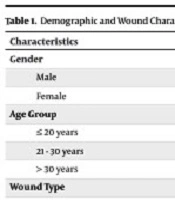
A total of 400 patient records featuring uncomplicated traumatic wounds were incorporated into the analysis. Table 1 provides a summary of the demographic and clinical characteristics of the study cohort. The predominant gender among patients was male (81.0%, n = 324), with most individuals falling within the 21 - 30 year age range. The most commonly observed type of wound was laceration, with injuries to the extremities, specifically the hands and feet, being the most prevalent, representing over half of the total cases.
Table 1.
Demographic and Wound Characteristics of the Study Population (N = 400) a
| Characteristics | Values |
|---|---|
| Gender | |
| Male | 324 (81) |
| Female | 76 (19) |
| Age Group | |
| ≤ 20 years | 135 (33.8) |
| 21 - 30 years | 150 (37.5) |
| > 30 years | 115 (28.7) |
| Wound Type | |
| Laceration | 340 (85) |
| Abrasion | 45 (11.2) |
| Other | 15 (3.8) |
| Wound Location | |
| Hands and feet | 210 (52.2) |
| Head and neck | 130 (32.5) |
| Trunk | 60 (15) |
a Values are expressed as No. (%).
Prophylactic antibiotics were prescribed in 98.5% of cases (394 out of 400 patients). Table 2 outlines the details of antibiotic use. Cephalexin was the most frequently prescribed agent. Among patients who received antibiotics, 87.0% were treated with a single agent, while 13.0% received a combination of antibiotics. Statistically significant associations were observed between antibiotic prescription and gender, wound location, and the presence of visible contamination.
Table 2.
Antibiotic Prescription Patterns and Associated Factors a
| Variables | Values | P-Value |
|---|---|---|
| Overall prescription rate | - | |
| Prescribed | 394 (98.5) | |
| Not prescribed | 6 (1.5) | |
| Types of antibiotic prescribedb | - | |
| Cephalexin | 369 (93.6) | |
| Cefazolin | 17 (4.3) | |
| Other | 8 (2.1) | |
| Number of antibioticsb | - | |
| Mono therapy | 343 (87) | |
| Combination therapy | 51 (13) | |
| Associated factors | - | |
| Gender | - | 0.018 |
| Male vs. female | ||
| Wound location | - | < 0.001 |
| Extremities vs. others | ||
| Visible contamination | - | 0.003 |
| Present vs. absent | ||
| Age group | - | 0.076 |
| Wound type | - | 0.081 |
a Values are expressed as No. (%)
b Percentages calculated based on the 394 patients who received an antibiotic prescription.
Monotherapy was the overwhelmingly prevalent strategy, used in 87% of cases (Table 2 P = 0.002). This approach was most common in the 21 - 30 year old group, in males, and for cuts, though these differences were not statistically significant. In contrast, monotherapy use for hands/feet wounds was significantly higher (P = 0.000 for first antibiotic, P = 0.008 for second), possibly due to a perceived higher infection risk.
Monotherapy was also significantly more common in non-contaminated wounds (P = 0.003 for first, P = 0.021 for second; Table 2). Notably, 87% of these non-contaminated wounds still received prophylaxis, suggesting potential overprescribing. Combination therapy was rare, accounting for only 13% of cases, and was typically reserved for contaminated wounds or complex locations.
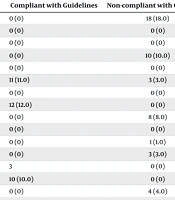
Table 3 illustrates the distribution of the primary antibiotic prescribed across key variables among the 394 patients who received antibiotics. Cephalexin was the dominant choice overall (93.7%), with variations by subgroup. For instance, it was most frequently prescribed in the 21 - 30 years age group (39.3%), males (81.8%), lacerations (53.7%), hands and feet locations (95.7%), and absent contamination (96.7%). P-values indicate statistical significance for associations with gender, wound location, and contamination, but not for age group or wound type.
Table 3.
Distribution of Primary Antibiotic by Key Variables (N = 394 Prescriptions) a
| Variables | Cephalexin | Cefazolin | Ceftriaxone | Clindamycin | P-Value |
|---|---|---|---|---|---|
| Age groups | 0.076 | ||||
| ≤ 20 years | 105 (28.5) | 7 (41.2) | 2 (100) | 0 | |
| 21 - 30 years | 145 (39.3) | (23.5) | 0 | 4 (66.7) | |
| > 30 years | 119 (32.2) | 6 (35.3) | 0 | 2 (33.3) | |
| Gender | 0.018 | ||||
| Male | 302 (81.8) | 15 (88.2) | 2 (100) | 2 (33.3) | |
| Female | 67 (18.2) | 2 (11.8) | 0 | 4 (66.7) | |
| Wound type | 0.081 | ||||
| Laceration | 198 (53.7) | 2 (11.8) | 0 | 0 | |
| Abrasion | 41 (11.1) | 4 (23.5) | 0 | 2 (33.3) | |
| Crush | 63 (17.1) | 4 (23.5) | 0 | 4 (66.7) | |
| Fall | 35 (9.5) | 3 (17.6) | 0 | 0 | |
| Trauma | 18 (4.9) | 2 (11.8) | 0 | 0 | |
| Foreign body | 14 (3.8) | 2 (11.8) | 2 (100) | 0 | |
| Wound location | < 0.001 | ||||
| Hands and feet | 353 (95.7) | 7 (41.2) | 2 (100) | 6 (100) | |
| Head and neck | 8 (2.2) | 4 (23.5) | 0 | 0 | |
| trunk | 8 (2.2) | 6 (35.3) | 0 | 0 | |
| Contamination | 0.003 | ||||
| Present | 12 (3.3) | 4 (23.5) | 2 (100) | 0 | |
| Absent | 357 (96.7) | 13 (76.5) | 0 | 6 (100) |
a Values are expressed as No. (%).
5. Discussion
The excessive and inappropriate use of antibiotics is a paramount global health threat, directly fueling the escalating crisis of antimicrobial resistance (19, 24). Our study sheds light on a critical facet of this problem within our local context, revealing an alarming rate (98.5%) of prophylactic antibiotic prescription for simple traumatic wounds in the EDs of two major hospitals in southwestern Iran. This finding indicates that prescribing is overwhelmingly routine and non-selective, representing a significant deviation from contemporary evidence-based guidelines that explicitly advise against this practice for uncomplicated wounds in immunocompetent patients (12, 25).
The near-universal prescription rate we observed not only confirms but exceeds the high rates reported in other Iranian studies. For instance, Basir Ghafouri et al. reported a 90.5% prescription rate, noting that only 19.6% of those prescriptions had a valid clinical indication (18). The disparity between our finding and theirs underscores that this is a pervasive and potentially worsening issue in the region. This profound gap between established evidence and clinical practice points to an urgent need for multifaceted interventions, including targeted educational programs for physicians and the robust implementation of antimicrobial stewardship programs (ASPs) specifically tailored to the fast-paced ED environment (26, 27).
The choice of cephalexin as the predominant antibiotic (92.2% overall) is pharmacologically sound when prophylaxis is truly indicated. First-generation cephalosporins like cephalexin provide excellent coverage against common skin pathogens such as Staphylococcus and Streptococcus species (28, 29). This suggests that when physicians decide to prescribe, their drug selection is appropriate. The critical issue, therefore, is not the choice of agent but the fundamental lack of a clear indication for any prophylactic antibiotic in the vast majority of these simple wound cases.
Our detailed subgroup analyses revealed that cephalexin prescribing peaked in the 21 - 30-year age group, males, lacerations, extremity wounds, and clean wounds, reflecting trauma epidemiology rather than risk-based decision-making. Significant associations persisted across gender, location, and contamination for both primary and secondary agents, yet the near-100% prescription rate in low-risk subgroups underscores habitual rather than selective use. Combination therapy (13%), though less common, followed similar patterns, with cefazolin predominant as the second agent.
The underlying reasons for this pervasive over-prescription are likely multifactorial. They may include a lack of awareness of current guidelines, perceived pressure from patients for a prescription, defensive medicine practices due to medico-legal concerns, and time constraints in the busy EDs setting that favor prescribing over patient education on proper wound care. Addressing this will require a cultural shift alongside structural and educational interventions.
5.1. Limitations
The interpretations of this study must be considered in the context of its limitations. First, the retrospective design inherently relies on the accuracy, consistency, and completeness of documentation in medical records, which may introduce information bias. Second, we could not assess the quality of crucial wound management steps, such as the adequacy of irrigation or debridement, which are critical confounding factors known to be the cornerstone of infection prevention. The absence of this data limits our ability to fully contextualize the prescribing decisions. Third, and perhaps most significantly, the lack of follow-up data means we cannot determine the actual incidence of wound infections in this cohort. Consequently, we are unable to evaluate the clinical outcome or the purported "benefit" of this widespread prescribing practice, nor can we identify the true infection risk in our population, which is essential for crafting relevant local guidelines.
5.2. Conclusions
This study identified a near-universal and likely inappropriate rate of prophylactic antibiotic prescription for simple traumatic wounds in the studied EDs, a practice that stands in stark contrast to international evidence-based guidelines. This represents a significant opportunity for quality improvement and a compelling call to action for enhanced antimicrobial stewardship. To bridge this gap between evidence and practice, we recommend a concerted effort to:
-Develop and implement clear, easy-to-follow local prescribing guidelines for traumatic wound management.
-Initiate targeted educational interventions for ED physicians, focusing on the evidence against routine prophylaxis and emphasizing the primacy of meticulous wound care.
-Conduct prospective studies that include patient follow-up to definitively assess the clinical necessity and impact of this prescribing practice, and to identify the true risk factors for infection in our patient population.
Such steps are urgently needed to promote the rational use of antibiotics, curb the development of resistance, and ensure patient safety in our emergency care setting.