
1. Context
Ovarian cancer is among the most common and lethal gynecologic malignancies and remains a major challenge in oncology. It is frequently diagnosed at advanced stages, which markedly reduces the likelihood of sustained remission and long-term survival (1, 2). Despite notable advances in diagnostic and therapeutic approaches, 5-year survival rates remain low in many countries (3). Therefore, examining the factors that influence remission is essential for developing more effective therapeutic and management strategies.
From a clinical perspective, age, performance status, comorbidities, and nutritional status play critical roles in treatment tolerance and the likelihood of achieving remission (4). Younger patients with better baseline performance status generally respond more favorably to therapy, whereas chronic illnesses and malnutrition can adversely affect treatment outcomes (5). Moreover, metabolic indicators such as body mass index and inflammatory markers have been identified as important predictors of therapeutic response (6).
Genetic and molecular determinants also contribute substantially to remission outcomes. BRCA1/2 mutations, p53 alterations, and PI3K/AKT pathway activity are among the most important biomarkers associated with remission and recurrence risk (7, 8). Studies have shown that patients carrying BRCA mutations respond more effectively to poly(ADP-ribose) polymerase inhibitors and have a higher likelihood of achieving durable remission (9). These findings underscore the importance of molecular profiling in guiding targeted and personalized therapies (10).
Therapeutically, chemotherapy remains the standard of care in ovarian cancer, particularly platinum-based regimens, which have historically achieved the highest remission rates. However, drug resistance in recurrent cases remains a major obstacle. In recent years, targeted therapies, such as poly(ADP-ribose) polymerase inhibitors and agents acting on the PI3K/AKT/mTOR pathway, have demonstrated promising results, especially in molecularly defined subgroups (11). Immunotherapy, particularly checkpoint inhibitors, has also produced durable responses in selected patients. Combination strategies, such as chemotherapy plus immunotherapy or chemotherapy plus targeted agents, have shown synergistic effects, improving remission rates and mitigating resistance.
Metabolic and psychosocial factors further influence remission outcomes. Nutritional status, metabolic indicators, and CA-125 kinetics have been linked to treatment tolerance and early response (4-6). Psychosocial dimensions, including social support, anxiety, depression, and resilience, play critical roles in adherence, emotional stability, and quality of life. Patients with strong support networks and greater resilience often demonstrate better adherence to therapy and improved survivorship experiences. These findings emphasize that psychosocial and metabolic domains should be integrated into comprehensive ovarian cancer management strategies.
Given the complexity and multidimensional nature of factors influencing remission in ovarian cancer, a comprehensive and structured review is needed. This study was designed to examine and synthesize existing evidence across clinical, genetic, therapeutic, metabolic, and psychosocial domains, thereby providing a holistic view of the determinants of remission. The significance of this work lies in its potential to establish a foundation for integrated management strategies that combine targeted therapies with metabolic interventions. Ultimately, such an approach may contribute to improved treatment outcomes and enhanced quality of life for patients living with ovarian cancer.
2. Evidence Acquisition
2.1. Study Design and Timeframe
This scoping review was designed to evaluate factors influencing remission in patients with ovarian cancer. The methodological framework proposed was adopted to ensure rigor and transparency. Studies published between January 2000 and December 2024 were included, encompassing nearly 25 years of clinical, genetic, therapeutic, metabolic, and psychosocial research. This timeframe was selected to capture both foundational studies and recent advances in targeted therapies and integrative management approaches.
2.2. Eligibility Criteria
The inclusion criteria were intentionally broad to encompass diverse study designs and ensure comprehensive coverage. Eligible studies included peer-reviewed original research articles, systematic reviews, meta-analyses, and clinical trials published in English between 2000 and 2024. Studies were required to focus on remission outcomes in ovarian cancer and to address at least one of the following domains: clinical, genetic or molecular, therapeutic, metabolic, or psychosocial factors. Only human studies involving adult female patients were considered. Exclusion criteria included non-English publications, case reports, editorials, letters, and conference abstracts without full data. Studies focusing on cancers other than ovarian cancer, as well as animal or in vitro studies without direct clinical relevance, were excluded to maintain clinical applicability.
2.3. Search Strategy
A systematic search was conducted across five major databases: PubMed/MEDLINE, Scopus, Web of Science, Embase, and the Cochrane Library. Search terms combined controlled vocabulary (MeSH) and free-text keywords related to "ovarian cancer," "remission," "clinical factors," "genetic mutations," "therapeutic outcomes," "metabolic indicators," and "psychosocial determinants." Boolean operators (AND, OR) were used to refine results, and search strategies were tailored for each database to maximize sensitivity and specificity (Table 1).
Table 1.
Search Strategy and Criteria for Databases
| Database | Years Covered | Search Terms | Inclusion Criteria | Exclusion Criteria |
|---|---|---|---|---|
| PubMed/MEDLINE | 2000 - 2024 | ("ovarian cancer" OR "epithelial ovarian carcinoma") AND ("remission" OR "response") | English, human studies, remission-related outcomes | Case reports, non-English, animal studies |
| Scopus | 2000 - 2024 | ("ovarian cancer" AND "remission factors") | Clinical, genetic, therapeutic, psychosocial domains | Editorials, letters, conference abstracts |
| Web of Science | 2000 - 2024 | ("ovarian neoplasm" AND "remission determinants") | Peer-reviewed articles, systematic reviews, meta-analyses | Non-peer-reviewed, non-English |
| Embase | 2000 - 2024 | ("ovarian carcinoma" AND "treatment response" OR "remission") | Clinical trials, observational studies | in vitro, animal studies |
| Cochrane Library | 2000 - 2024 | ("ovarian cancer" AND "remission outcomes") | Randomized controlled trials, systematic reviews | Narrative reviews, non-English |
2.4. Screening and Selection Process
All retrieved records were imported into EndNote reference management software for deduplication. Titles and abstracts were screened independently by two reviewers, and full-text articles were assessed for eligibility according to the inclusion and exclusion criteria. Discrepancies were resolved through discussion or consultation with a third reviewer. This multistep process ensured consistency and minimized bias in study selection.
2.5. Data Extraction
A standardized data extraction form was developed to collect detailed information from each study. Extracted variables included study design, population characteristics, sample size, remission outcomes, clinical predictors, genetic and molecular markers, therapeutic interventions, metabolic indicators, and psychosocial factors. Data extraction was performed independently by two reviewers to ensure accuracy and consistency, with cross-checking to resolve discrepancies.
2.6. Quality Assessment
Although scoping reviews do not typically require formal quality appraisal, the methodological rigor of the included studies was assessed to provide context for interpreting the findings. Tools such as the CASP checklists for qualitative studies and the Cochrane risk-of-bias tool for randomized trials were applied. This step enabled identification of strengths and limitations in the evidence base and highlighted areas in which findings were robust or required cautious interpretation.
2.7. Data Synthesis
Extracted data were synthesized narratively across five domains: clinical, genetic and molecular, therapeutic, metabolic, and psychosocial. Patterns, similarities, and differences across studies were identified, and findings were mapped to illustrate the breadth of evidence. The synthesis aimed to highlight research gaps, provide a comprehensive overview of determinants of remission, and establish a foundation for integrated management strategies in ovarian cancer.
3. Results
3.1. Study Selection Process
In this scoping review, 1,450 records were identified through comprehensive database searches of PubMed/MEDLINE, Scopus, Web of Science, Embase, and the Cochrane Library. After deduplication, 1,300 unique records were retained for title and abstract screening. Of these, 1,150 records were excluded for not meeting the inclusion criteria, including a non-ovarian cancer focus, non-English language, case reports or editorials, and animal or in vitro studies. The remaining 150 full-text articles were assessed for eligibility. Following full-text review, 132 articles were excluded because of insufficient remission-related outcomes, nonhuman populations, or lack of relevant clinical, genetic or molecular, therapeutic, metabolic, or psychosocial data. Ultimately, 18 studies met all eligibility criteria and were included in the final synthesis. This process aligns with the PRISMA flow framework, ensuring transparent reporting of identification, screening, eligibility assessment, and inclusion (Figure 1).
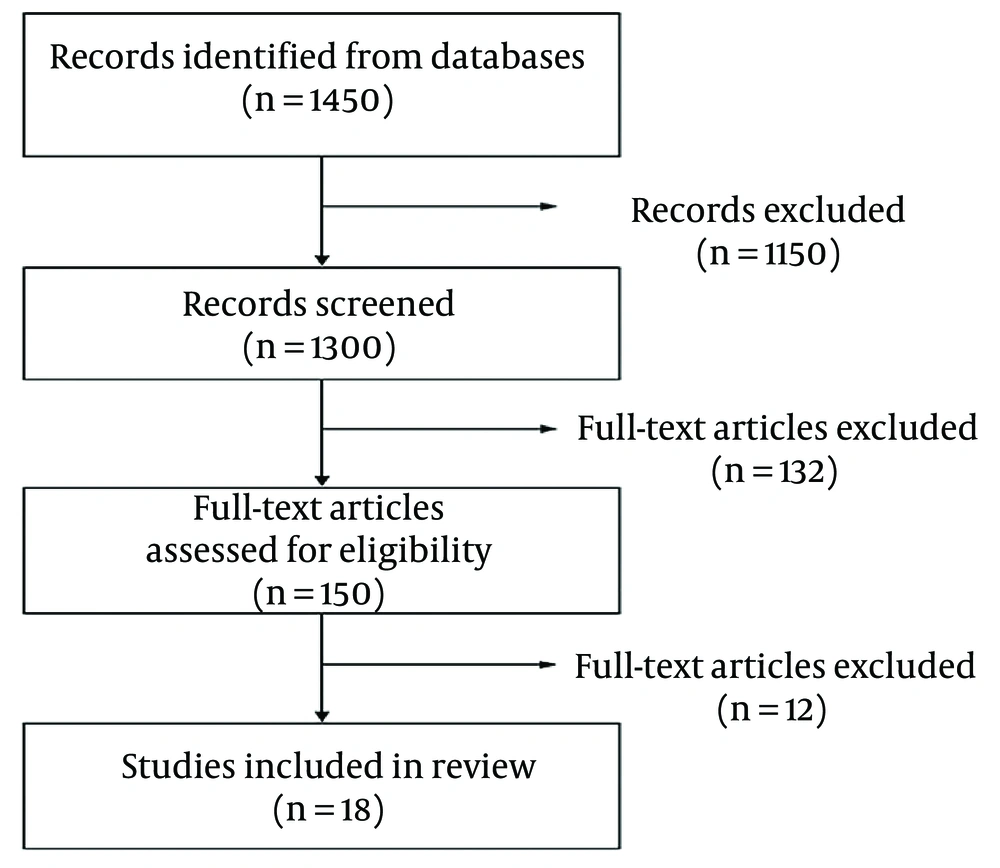
Figure 1.
Study selection process
3.2. Clinical Factors
Clinical determinants play a pivotal role in predicting remission outcomes in ovarian cancer. Across the included studies (17, 19, 21, 24, 25), patient age, performance status, comorbidities, and nutritional status were consistently associated with treatment tolerance and the likelihood of remission. Younger patients with good baseline performance status demonstrated higher remission rates, whereas those with multiple comorbidities or poor nutritional indices, such as a low Prognostic Nutritional Index or a high neutrophil-to-lymphocyte ratio, had reduced chemotherapy tolerance and poorer outcomes. Biomarkers such as CA-125 kinetics (21) and systemic inflammation scores (25) were also identified as reliable predictors of remission and progression. These findings highlight the importance of integrating clinical and metabolic assessments into treatment planning to optimize remission outcomes (Table 2).
Table 2.
Clinical Factors Associated with Remission in Ovarian Cancer
| Clinical Factor | Evidence Source | Key Findings |
|---|---|---|
| Age and performance status | Vergote et al. (17) | Younger patients with ECOG 0 - 1 had higher remission rates than older, frail patients. |
| Treatment regimen (dose-dense vs standard) | Clamp et al. (19) | Weekly dose-dense paclitaxel improved remission in selected patients but increased toxicity. |
| CA-125 kinetics | Petereit et al. (21) | Early decline in CA-125 strongly predicted remission and progression-free survival. |
| Prognostic Nutritional Index | Nitschmann et al. (24) | Low Prognostic Nutritional Index was associated with poor chemotherapy tolerance and reduced remission probability. |
| Systemic Inflammation Score | Zhang et al. (25) | High Systemic Inflammation Score correlated with worse remission outcomes and shorter progression-free survival. |
3.3. Genetic and Molecular Factors
Genetic and molecular determinants are central to predicting remission and treatment response in ovarian cancer. Evidence from the included studies (12-14, 16, 20, 22) indicates that BRCA1/2 mutations and other homologous recombination defects are strongly associated with enhanced sensitivity to platinum-based chemotherapy and poly(ADP-ribose) polymerase inhibitors, resulting in higher remission rates. Alterations in p53 and activation of signaling pathways such as PI3K/AKT/mTOR contribute to disease progression and drug resistance. Comprehensive genomic profiling from The Cancer Genome Atlas project (16) highlighted distinct molecular subtypes of ovarian cancer, each with unique remission outcomes. These findings underscore the importance of integrating molecular diagnostics into clinical decision-making to optimize remission strategies (Table 3).
Table 3.
Genetic and Molecular Factors Associated with Remission in Ovarian Cancer
| Genetic/Molecular Factor | Evidence Source | Key Findings |
|---|---|---|
| BRCA1/2 mutations | Pujade-Lauraine et al. (12) | BRCA mutations were strongly associated with improved remission under poly(ADP-ribose) polymerase inhibitor therapy. |
| BRCA plus bevacizumab combination | Ray-Coquard et al. (13) | Olaparib plus bevacizumab improved remission in BRCA-mutated and homologous recombination deficiency-positive patients. |
| Rucaparib maintenance (homologous recombination deficiency-positive) | Coleman et al. (14) | Homologous recombination deficiency-positive patients had longer remission duration with rucaparib maintenance. |
| Integrated genomic profiling (The Cancer Genome Atlas) | The Cancer Genome Atlas Research Network (16) | Molecular subtypes involving BRCA, p53, and PI3K/AKT were linked to distinct remission outcomes. |
| Homologous recombination gene mutations (GOG-218) | Norquist et al. (20) | Homologous recombination deficiency mutations predicted better remission and survival under platinum plus bevacizumab. |
| BRCA/homologous recombination deficiency impact on survival | Siamakpour-Reihani et al. (22) | BRCA1/2 and homologous recombination deficiency defects correlated with prolonged remission and survival benefit. |
3.4. Therapeutic Factors
Therapeutic strategies remain the cornerstone of achieving remission in ovarian cancer. Evidence from the included studies (15, 17-19, 23) highlights the evolving roles of chemotherapy, targeted therapies, and multimodal approaches. Standard platinum-based chemotherapy remains effective, but resistance continues to be a major challenge. The addition of bevacizumab to frontline chemotherapy (15) improved remission rates and progression-free survival, particularly in high-risk patients. Trials comparing neoadjuvant chemotherapy with primary surgery (17) demonstrated that both approaches can achieve remission, although patient selection is critical. Innovative strategies such as hyperthermic intraperitoneal chemotherapy (18) have shown promising results in extending remission duration. Dose-dense chemotherapy regimens (19) improved remission outcomes in selected populations, albeit with increased toxicity. Finally, the AURELIA trial (23) confirmed that bevacizumab combined with chemotherapy significantly enhanced remission in platinum-resistant ovarian cancer. Collectively, these findings emphasize the importance of tailoring therapeutic approaches to patient profiles and integrating targeted agents to overcome resistance (Table 4).
Table 4.
Therapeutic Approaches and Remission Outcomes in Ovarian Cancer
| Therapeutic Approach | Evidence Source | Key Findings |
|---|---|---|
| Bevacizumab plus chemotherapy (GOG-218) | Burger et al. (15) | Improved remission and progression-free survival in frontline treatment. |
| Neoadjuvant chemotherapy vs primary surgery | Vergote et al. (17) | Both strategies were effective; remission depended on patient selection and disease stage. |
| Hyperthermic intraperitoneal chemotherapy after cytoreductive surgery | van Driel et al. (18) | Extended remission duration and improved survival in advanced cases. |
| Dose-dense paclitaxel regimen (ICON8) | Clamp et al. (19) | Higher remission rates in selected patients, but with increased toxicity. |
| Bevacizumab in platinum-resistant disease (AURELIA) | Pujade-Lauraine et al. (23) | Combination therapy improved remission compared with chemotherapy alone. |
3.5. Metabolic and Psychosocial Factors
Metabolic and psychosocial determinants significantly influence remission outcomes and long-term quality of life in patients with ovarian cancer. Evidence from the included studies (11, 24-26) indicates that nutritional status, systemic inflammation, and psychosocial support are critical components of treatment success. Patients with a low Prognostic Nutritional Index or an elevated neutrophil-to-lymphocyte ratio (24) were less likely to achieve remission and had poorer chemotherapy tolerance. Similarly, a high systemic inflammation score (25) correlated with reduced progression-free survival. From a psychosocial perspective, studies reported that social support and psychological resilience (26) were associated with improved immune function and better treatment adherence. Nutritional and psychosocial interventions (11) therefore represent essential adjuncts to medical therapy, supporting not only remission but also improved patient well-being (Table 5).
Table 5.
Metabolic and Psychosocial Factors Associated with Remission in Ovarian Cancer
| Factor | Evidence Source | Key Findings |
|---|---|---|
| Nutritional status (Prognostic Nutritional Index) | Nitschmann et al. (24) | Low Prognostic Nutritional Index predicted poor chemotherapy tolerance and reduced remission probability. |
| Systemic inflammation score | Zhang et al. (25) | High systemic inflammation score correlated with worse remission outcomes and shorter progression-free survival. |
| Social support and natural killer cell activity | Lutgendorf et al. (26) | Strong social support improved immune response and remission outcomes. |
| Psychosocial issues in survivors | Gardino et al. (11) | Anxiety, depression, and lack of resilience negatively affected remission and quality of life. |
4. Conclusions
4.1. Clinical Determinants
This scoping review provides a comprehensive synthesis of the clinical, genetic and molecular, therapeutic, metabolic, and psychosocial factors influencing remission in ovarian cancer. By integrating evidence from 18 high-quality studies, several key themes emerged that have direct implications for clinical practice and future research.
Clinical characteristics such as age, performance status, and comorbidities remain fundamental predictors of remission. Younger patients with favorable baseline performance status demonstrated higher remission rates, whereas frail patients with multiple comorbidities were less likely to tolerate intensive therapy (17, 19). Biomarkers such as CA-125 kinetics have proven to be reliable indicators of treatment response and progression (21). In addition, nutritional indices such as the Prognostic Nutritional Index and markers of systemic inflammation, including the neutrophil-to-lymphocyte ratio and systemic inflammation score, were consistently associated with remission outcomes, underscoring the importance of incorporating metabolic assessments into clinical decision-making (24, 25).
4.2. Genetic and Molecular Factors
Genetic profiling has transformed ovarian cancer management. The presence of BRCA1/2 mutations and other homologous recombination defects significantly enhanced sensitivity to platinum-based chemotherapy and poly(ADP-ribose) polymerase inhibitors, leading to prolonged remission (12-14, 20, 22). Data from The Cancer Genome Atlas project further highlighted the heterogeneity of ovarian cancer by identifying molecular subtypes with distinct remission trajectories (16). These findings underscore the need for routine genetic testing and molecular stratification to personalize therapy.
4.3. Therapeutic Strategies
Therapeutic advances have reshaped remission outcomes. The addition of bevacizumab to frontline chemotherapy improved progression-free survival and remission rates, particularly in high-risk patients (15). Trials comparing neoadjuvant chemotherapy with primary surgery demonstrated that both approaches can achieve remission, although patient selection is critical (17). Innovative modalities such as hyperthermic intraperitoneal chemotherapy extended remission duration in advanced cases (18). Dose-dense chemotherapy regimens improved remission in selected populations, albeit with increased toxicity (19). In platinum-resistant disease, the AURELIA trial confirmed that bevacizumab combined with chemotherapy significantly enhanced remission compared with chemotherapy alone (23). Collectively, these findings highlight the importance of tailoring therapeutic approaches to patient profiles and integrating targeted agents to overcome resistance.
4.4. Metabolic and Psychosocial Influences
Beyond biological and therapeutic factors, metabolic and psychosocial determinants play crucial roles in sustaining remission. Malnutrition and systemic inflammation were consistently linked to poorer remission outcomes and reduced treatment tolerance (24, 25). Psychosocial factors, including anxiety, depression, and lack of resilience, negatively affected remission and quality of life (11). Conversely, strong social support was associated with improved immune function and better adherence to therapy, ultimately enhancing remission outcomes (26). These findings emphasize the need for holistic patient care that integrates psychosocial and nutritional interventions alongside medical treatment.
4.5. Strengths and Limitations
The strength of this review lies in its comprehensive scope, integrating diverse domains of remission determinants. However, limitations include heterogeneity across study designs, variability in outcome definitions, and the predominance of studies from high-income countries, which may limit generalizability. Future research should focus on standardized outcome measures, inclusion of diverse populations, and evaluation of integrative interventions that combine genetic, therapeutic, metabolic, and psychosocial strategies.
4.6. Implications for Practice and Research
This synthesis indicates that remission in ovarian cancer is not determined solely by therapeutic interventions but is shaped by a complex interplay of clinical, molecular, metabolic, and psychosocial factors. Personalized treatment strategies that incorporate genetic testing, targeted therapies, nutritional optimization, and psychosocial support are essential to maximize remission outcomes. Future studies should aim to refine predictive models that integrate these domains, thereby guiding clinicians in tailoring interventions to individual patient profiles.
4.7. Final Conclusions
Remission in ovarian cancer is a multifactorial outcome shaped by clinical, genetic, therapeutic, metabolic, and psychosocial dimensions. Clinical predictors such as age, performance status, and treatment tolerance remain fundamental, whereas genetic insights, particularly BRCA mutations and homologous recombination defects, have transformed therapeutic decision-making. Advances in targeted therapies, including poly(ADP-ribose) polymerase inhibitors and bevacizumab, alongside innovative approaches such as hyperthermic intraperitoneal chemotherapy, have expanded the potential for durable remission. Concurrently, nutritional status and systemic inflammation highlight the importance of metabolic health, and psychosocial resilience underscores the role of patient support in sustaining treatment success.
Taken together, these findings emphasize that remission is not solely dependent on medical interventions but requires a holistic, personalized approach. Integrating molecular diagnostics with tailored therapies, optimizing nutritional and metabolic conditions, and strengthening psychosocial support can maximize remission outcomes and improve quality of life. Future research should focus on refining predictive models that combine these diverse domains, ensuring that ovarian cancer management continues to evolve toward precision medicine and comprehensive patient care.