
1. Background
Food security, a fundamental pillar of sustainable development, is a prerequisite for health, social justice, and human development. Without sustainable, adequate, and safe access to food, development programs in education, employment, and poverty reduction cannot achieve their intended outcomes (1).
Food insecurity is defined as limited or uncertain availability of nutritionally adequate and safe foods, or a limited or uncertain ability to acquire acceptable foods in socially acceptable ways (2). In middle-income countries such as Iran, food insecurity is driven more by income inequality, economic instability, unemployment, and declining household purchasing power than by an absolute shortage of food. Estimates indicate that approximately 2.7 million people in Iran are deprived of adequate nutrition (3).
Pregnant women are among the groups most vulnerable to food insecurity (4, 5). Pregnancy is associated with increased requirements for energy, protein, and micronutrients, and any disruption in access to safe and healthy food can have short- and long-term consequences for both the mother and the fetus (6). Evidence indicates that food insecurity is associated with an increased risk of gestational diabetes, inadequate gestational weight gain, preterm birth, and miscarriage (7, 8, 9). Studies conducted in Iran have reported that the prevalence of food insecurity among pregnant women exceeds 40% (2, 7).
2. Objectives
This brief report describes the dimensions of food insecurity among pregnant women in Abadan, Iran, and presents practical strategies for integrating food security screening, nutritional support, economic empowerment, health education, and intersectoral referrals into maternal health planning.
3. Methods
In 2025, a study supported by the Vice-Chancellor for Education, Research, and Technology of Abadan University of Medical Sciences was conducted among 385 pregnant women attending comprehensive health service centers in Abadan. The study was approved under Ethics Code IR.ABADANUMS.REC.1404.006.
Food insecurity was assessed using the Household Food Insecurity Access Scale, a validated questionnaire whose validity and reliability have been previously confirmed in Iran (10).
4. Results
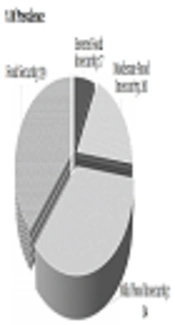
The results showed that 53.8% of pregnant women experienced some degree of food insecurity, and 6.2% experienced severe food insecurity. In other words, approximately 1 in 2 pregnant women in Abadan were exposed to food insecurity.
The study also showed that the most important predictors of food insecurity among pregnant women in Abadan were low maternal education, the husband’s unemployment, a history of miscarriage, and inadequate gestational weight gain. After adjustment for confounding variables, low household income emerged as the strongest predictor of food insecurity.
5. Discussion
The findings indicate that food insecurity among pregnant women in Abadan is not only a nutritional problem but also a public health, social, and developmental challenge. The high prevalence of food insecurity among pregnant women suggests that routine prenatal care should include systematic assessment of household food access, economic vulnerability, and nutritional risk.
5.1. Public Health Dimensions
Food insecurity can lead not only to malnutrition but also to chronic diseases, metabolic disorders, and increased healthcare costs (6). Therefore, addressing food insecurity during pregnancy should be regarded as a preventive health intervention with potential benefits for both maternal and child health.
5.2. Pregnancy Outcomes
Evidence shows that an inadequate diet is associated with an increased risk of miscarriage and adverse pregnancy outcomes (9, 11). Food insecurity is also associated with insufficient gestational weight gain (12, 13). Weight gain below recommended levels may serve as an indirect indicator of suboptimal nutrition during pregnancy (14).
5.3. Intergenerational Cycle of Poverty
Food insecurity during pregnancy can contribute to low birth weight, increased medical costs, and reduced future human capital. Consequently, food insecurity may transmit poverty and vulnerability to the next generation.
5.4. Policy Gaps
Despite the implementation of prenatal care programs in health centers in Abadan, regular food-security screening has not been systematically integrated into routine care. In addition, targeted food-support packages for low-income pregnant women are not implemented in a structured manner, systematic linkages between health centers and municipal support institutions are weak, and economic empowerment programs for at-risk families remain limited.
5.5. Proposed Implementation Strategies
5.5.1. Integrating Food-Security Screening Into Prenatal Care
Food-security screening should be incorporated into routine prenatal care. The Household Food Insecurity Access Scale can be administered during the first prenatal visit and repeated in the third trimester. Food-security status should also be recorded in the Electronic Health Record system to support follow-up and referral.
5.5.2. Targeted Nutritional Support
A targeted Pregnancy Nutrition Basket should be allocated to pregnant women at risk of food insecurity. This basket should include protein sources, dairy products, legumes, and dietary supplements. Electronic purchasing cards for healthy foods should also be provided to women with a household income below 20 million Tomans. Coordination with the Relief Committee, the State Welfare Organization, and local charities can strengthen the implementation of this support package.
5.5.3. Economic Empowerment of Families
Food insecurity among pregnant women is strongly influenced by household economic conditions. Sustainable employment opportunities should be created for unemployed spouses, income-generating skills training should be provided for homemakers, and access to supportive microloans should be facilitated for at-risk households.
5.5.4. Nutrition and Healthy Lifestyle Education
Group workshops should be conducted for pregnant women. These workshops should focus on low-cost but nutritious diets, management of gestational weight gain, and prevention of malnutrition-related miscarriage. Simple, practical educational packages should also be developed for use in health centers.
5.5.5. Establishing an Intersectoral Referral System
A clear protocol should be developed for referring food-insecure pregnant women to support agencies. In addition, a Maternal Food Security Committee should be established at the governorate level to coordinate health, welfare, municipal, and charitable support.
5.6. Cost-Benefit Considerations
Investment in food security for pregnant women can reduce pregnancy complications and hospitalization costs, decrease the rate of low-birth-weight deliveries, improve future human capital, and reduce the economic burden on the healthcare system. Investment in nutritional prevention may lead to substantial savings in future medical expenses.
5.7. Conclusions and Key Policy Message
In Abadan, more than half of pregnant women face food insecurity, and the primary driver is household economic status. This issue is not merely an individual health problem but a developmental and intergenerational threat. Food security among pregnant women should be treated as an urgent priority in urban and health planning. Integrating routine screening, targeted economic and nutritional support, and intersectoral cooperation can substantially reduce the prevalence of food insecurity over the next 3 to 5 years.