Fulltext
The full text of this article is available on PDF.
Image Credit:Educ Res Med Sci
Authors
Introduction: Today, due to the speed and amount of science production in the world, knowledge processing and learning is changing. In this regard, independent learning using new instructional methods interactively with a specific goal in order to dominate the content and assignments with self-regulation strategies is of great importance. This study is aimed to evaluate interactive e-learning role on medical students’ learning in psychology courses.
Methods: This study is a experimental research project, in which 68 medical students were selected through available sampling method as the statistical sample. Heppner questionnaire was used to evaluate problem-solving skills, and a teacher-made test was used to evaluate independent learning. After intervention, data analysis was conducted using SPSS software and independent t-test and covariance.
Results: In general, there was no significant statistical difference between the groups’ pre-test scores (P=0.40). However, covariance analysis on the groups’ pre-test and post-test evaluations showed a significant difference regarding the superiority of the experimental group compared to the control group in problem-solving. In addition, students’ mean scores in the teacher-made test in the control group was higher than that of the experimental group, and there was a significant statistical difference between the two groups (P=0.003).
Conclusion: Using interactive e-learning method for theoretical instruction of some medical courses provides more opportunities for teachers and students to learn the lessons at patients’ bedside, and learning this skill by students enables them to benefit from scientific subjects. Hence, more appropriate infrastructure allows utilization of this method in some topics of medical field.
© 2016, Educational Research in Medical Sciences. This open-access article is available under the Creative Commons Attribution-NonCommercial 4.0 (CC BY-NC 4.0) International License (https://creativecommons.org/licenses/by-nc/4.0/), which allows for the copying and redistribution of the material only for noncommercial purposes, provided that the original work is properly cited.
Daryazadeh S, Yavari M, Madani S, Taghavi-Ardakani A, Azadchahr MJ, et al. Correlation Between the E-learning Attitude and Academic Achievement of Medical Students in Clinical Levels. Educ Res Med Sci. 2021;10(2):e120391. doi: https://doi.org/10.5812/erms.120391
Foroutan A, Yazdani S, Noori S. A New Approach to Information Technology Instruction for Medical Students. J Med Edu. 2006;9(2):e105306. doi: https://doi.org/10.22037/jme.v9i2.726
Gilavand A, Shirali F, Khajeali N. Investigating the Role of e-Learning Skills in the Satisfaction and Academic Success of Medical Students During the COVID-19 Pandemic. Educ Res Med Sci. 2023;12(2):e138629. doi: https://doi.org/10.5812/ermsj-138629
Yadegarynia D, Alavi-Moghaddam M, Gholami-Khojin R, Ghofrani H, Arabnia A, et al. THE EFFECT OF PROBLEM-BASED LEARNING ON EDUCATION AND RECALL OF MEDICAL STUDENTS IN A COURSE OF BASIC IMMUNOLOGY IN COMPARISON WITH LECTURE-BASED LEARNING. J Med Edu. 2002;1(4):e104968. doi: https://doi.org/10.22037/jme.v1i4.911
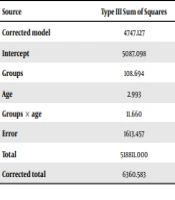
Najafi M, Heidari Shahreza MA, Ketabi S. The Effect of an Online Teaching Platform on Self-concept and Self-regulation of Medical Students at Kashan University of Medical Sciences. Educ Res Med Sci. 2022;11(2):e121396. doi: https://doi.org/10.5812/erms-121396
More by these authors
Last Update: 4 days ago
Last Update: 4 days ago
Last Update: 4 days ago
Last Update: 7 hours ago
Last Update: 10 hours ago
Last Update: 5 days ago