1. Background
Acute lymphoblastic leukemia (ALL), continues to be the leading cause of childhood cancer, constituting approximately 30% of all childhood cancers (1). Furthermore, ALL is a biologically, clinically, and etiologically heterogeneous disease, and in spite of considerable investigations, the causes are not fully recognized. The incidence of pediatric leukemia has been linked to several environmental, maternal, and paternal characteristics (2). The p53 transcription factor, encoded by the p53 tumor suppressor gene, is an important regulator of the cellular stress responses (3). Among the genetic alterations, the tumor suppressor protein, P53, is a principal mediator of multiple cellular functions, including growth arrest, senescence, and apoptosis in response to cellular damage (4, 5). The activity of P53 may either be inactivated or be attenuated in a vast majority of human cancers through mutations in the P53 gene or aberrant expression of proteins acting in the P53 pathway, such as MDM2 (6). The human MDM2 is mapped on chromosome 12q14.3-15. The MDM2 coded by the Murine Double Minute 2 (MDM2) gene, is a key negative regulator of P53. Besides its direct inhibition of the transcriptional activity of P53, MDM2 also functions as an E3 ubiquitin ligase responsible for the ubiquitination and proteolytic degradation of p53 (7, 8). Previous studies have proposed associations between MDM2 (mouse double minute 2 homolog) polymorphisms and risk of cancer (9-11). Several studies evaluated the associations between 40-bp ins/del variant of MDM2 and the risk of various cancers (12-15). To the best of our knowledge there are no data regarding the association between 40-bp ins/del polymorphism in the constitutive promoter of MDM2 gene and childhood ALL risk.
2. Objectives
The present study aimed to determine the possible association between 40-bp ins/del polymorphism and ALL in a sample of Iranian population.
3. Patients and Methods
This case-control study was performed on 75 children diagnosed with ALL and 115 age and sex matched healthy children in Zahedan, southeast of Iran. The study design and the enrolment procedure have been previously described in detail (16-18). Clinical data including age, sex, hemoglobin (Hb), white blood cell (WBC) and platelet count at diagnosis, and the status of organomegaly, lymphadenopathy (LAP) and cerebrospinal fluid (CSF) are summarized in Table 1. The project was approved by the local ethics committee of Zahedan University of Medical Sciences, and an informed consent was obtained from the parents of cases and controls. Extraction of DNA from peripheral whole blood was done using the salting out method.
Table 1.
Genotypic and Allelic Frequencies of 40-bp ins/del Polymorphism of MDM2 in Acute Lymphoblastic Leukemia Patients and Control Subjects a
| MDM2 40-bp ins/del | ALL, No. (%) | Control, No. (%) | OR (95%CI) | P Value |
|---|---|---|---|---|
| Codominant | ||||
| ins/ins | 35 (46.7) | 60 (52.2) | 1.00 | - |
| ins/del | 27 (36.0) | 41 (35.6) | 1.29 (0.59-2.14) | 0.745 |
| del/del | 13 (17.3) | 14 (12.2) | 1.59 (0.59-3.77) | 0.372 |
| Dominant | ||||
| ins/ins | 35 (46.2) | 60 (56.1) | 1.00 | - |
| ins/del del/del | 40 (53.3) | 55 (47.8) | 1.25 (0.69-2.23) | 0.552 |
| Recessive | ||||
| ins/ins ins/del | 62 (82.7) | 101 (87.8) | 1.00 | - |
| del/del | 13 (17.3) | 69 (12.2) | 1.51 (0.67-3.43) | 0.395 |
| Alleles | ||||
| ins | 97 (64.7) | 161 (70.0) | Ref. | - |
| del | 53 (35.3) | 69 (3.0) | 1.28 (0.82-1.97) | 0.312 |
a Abbreviations: ALL, acute lymphoblastic leukemia; ins, insertion; del, deletion; OR, odd ratio; CI, confidence interval.
3.1. Genotyping
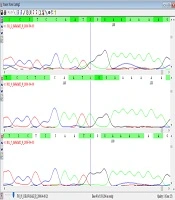
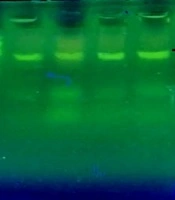
Genotyping of the 40-bp ins/del polymorphism of MDM2 was done using forward 5`-GACCACTATGTTTAAGGAAG-3` and reverse 5`-TGACTCACCTACTTTCCCAC-3` primers by the polymerase chain reaction (PCR) method as described previously (15). In each 0.20 mL PCR tube, 1 µL of genomic DNA (100 ng/mL), 1 µL of each primer and 10 µL of 2X Prime Taq Premix (Genet Bio, Korea) and 7 µL of ddH2O were added. The PCR cycling conditions were as follows; initial denaturation at 95°C for five minutes, followed by 30 cycles of 30 seconds at 95°C, 25 seconds at 59°C, 30 seconds at 72°C, with a final extension at 72°C for 10 minutes. The product sizes for INS and Del allele were 287 and 247 bp, respectively.
3.2. Statistical Analysis
Statistical analysis was performed using the SPSS version 18 software. Data were analyzed by independent sample t-test and X2 test. The association between MDM2 ins/del polymorphism and ALL was calculated by computing the odds ratio (OR) and 95% confidence intervals (95% CI) from logistic regression analyses. A P value of less than 0.05 was considered statistically significant.
4. Results
The study group involved 75 ALL patients (43 male and 32 female; age: 6.5 ± 3.4 years) and 115 healthy subjects (56 male and 59 female; age: 7.2 ± 3.9 years). No significant difference was found between the groups concerning age and sex (P = 0.243 and 0.181, respectively). The genotype and allelic frequencies of MDM2 ins/del polymorphism in cases and controls are shown in Table 1. The results showed that neither the overall chi-square comparison of cases and control subjects (X2 = 1.13, P = 0.569) nor the logistic regression analysis (which was calculated in each model of inheritance) indicated any association between MDM2 I/D and ALL ;codominant (OR = 1.29, 95% CI = 0.59-2.14, P = 0.745, ins/del vs ins/ins; OR = 1.59, 95% CI = 0.59-3.77, P = 0.372, del/del vs ins/ins), dominant (OR = 1.25, 95% CI = 0.69-2.23, P = 0.552, ins/del + del/del vs ins/ins) and recessive (OR = 1.51, 95% CI = 0.67-3.43, P = 0.395, del/del vs ins/ins + ins/del). In addition, no association was found between the deletion allele and ALL (OR = 1.28, 95% CI = 0.82-1.97, P = 0.312). The genotype frequency of the MDM2 ins/del polymorphism was examined for the Hardy-Weinberg equilibrium (HWE), separately, in cases and controls. The genotype in controls (X2 = 2.63, P = 0.105) and cases (X2 = 3.37, P = 0.067) were in HWE. In ALL patients the MDM2 ins/del genotype was not associated with age of onset, sex, white blood cell (WBC), hemoglobin, platelet, organomegaly, lymphadenopathy and cerebrospinal fluid (CSF) involvement (data not shown).
5. Discussion
In the present study we investigated the impact of 40-bp ins/del polymorphism of MDM2 on the risk of childhood ALL in a sample of Iranian population. The results showed no association between MDM2 ins/del polymorphism and ALL in our population. Functional polymorphisms in promoter regions of genes can affect gene expression (19). The human MDM2 gene is an oncogene overexpressed in different types of malignancies (20-22). The MDM2 protein is thought to display tumorigenic activity by binding to the p53 tumor-suppressor protein and inhibiting its function. Recently we found that 40-bp ins/del polymorphism in the promoter of MDM2 gene increased the risk of breast cancer in Zahedan, southeast Iran (15). No association between MDM2 40-bp ins/del polymorphism and risk of breast cancer was found in a Chinese population (14). While an association between 40-bp ins/del polymorphism in the MDM2 gene and lung and hepatocellular carcinoma (HCC) has been reported in a Chinese population (12, 13). A meta-analysis performed by Zhuo et al. (23) indicated a significant association between MDM2 T309G polymorphism and risk of leukemia. They performed subgroup analysis by ethnicity and found that the G allele may increase leukemia susceptibility among Asians but not Caucasians. Liu et el. (24) found that SNP309 G/G genotype was associated with an increased risk of chronic myeloid leukemia (CML). They found higher MDM2 mRNA expression in the G/G genotype compared with T/T and T/T + T/G genotypes. Chen et al. (25) found that MDM2 309 GG as well TG genotypes increased the risk of adult ALL. It has been shown that the response of ALL cells to berberine is strongly associated with both MDM2 expression levels and p53 status. The ALL cell lines with both MDM2 overexpression and a wild type p53 phenotype were found to be very sensitive to berberine, while cell lines lacking MDM2 expression without wt-p53 did not respond to berberine (26). It has been shown that SNP309 T > G polymorphism (rs2279744), which is located in the intronic promoter of the MDM2 gene increased the risk of colorectal cancer in an Asian population (27). Recently a meta-analysis performed by Zhao et al. (28) showed that MDM2 rs2279744 (T309G) variant increased the risk of endometrial cancer. It has been shown that the MDM2 rs2279744 (T309G) variant significantly decreases the age of onset for ALL in Caucasian and African pediatric population (1). In conclusion, our finding showed that 40-bp ins/del polymorphism in promoter of MDM2 gene was not associated with a risk of ALL in a sample of Iranian population. Larger sample sizes with different ethnicities are required to validate our findings.