1. Background
Among organizational resources, human capital is the most vital, since through their capabilities and planning, employees can mobilize other resources, including financial assets, in pursuit of organizational goals. In today’s dynamic and challenging context, educational institutions seeking to remain at the forefront of academic, research, and administrative activities must rely on a healthy workforce with strong professional relationships (1). In this regard, organizational envy and organizational silence are two interrelated psychosocial phenomena that can significantly undermine organizational performance and employee job satisfaction. Organizational envy often emerges when employees compare themselves with colleagues in terms of achievements, rewards, or social recognition, leading to dissatisfaction and unhealthy competition. This feeling may result in reduced cooperation, increased interpersonal conflict, or even deliberate obstruction of colleagues’ efforts (2, 3). A common form of workplace envy is passive–aggressive behavior, where employees avoid direct confrontation but indirectly hinder the progress of others (4). The primary outcome of envy in organizations is the disruption of relationships and erosion of cohesion, which can ultimately threaten organizational foundations (5, 6).
Organizational silence, on the other hand, refers to a condition in which employees deliberately withhold their opinions, concerns, or suggestions. This silence may stem from fear of negative consequences, a belief that their input is ineffective, or a lack of trust in management. Such silence not only impedes continuous improvement but also contributes to job dissatisfaction, diminished motivation, and increased turnover intentions (7). A culture of fear and mistrust is among the main drivers of organizational silence. In hospitals, where responsibilities are highly sensitive and workload is intense, employees may avoid voicing concerns due to fear of reprimand or even job loss (8). This silence can have serious consequences, such as the delayed reporting of issues directly related to patient safety. Furthermore, it may foster deceptive practices, resource misuse, and deliberate discrimination, ultimately endangering both employees and clients (9). Jafary et al. in a study showed that factors affecting organizational silence among middle managers of the university were categorized into organizational factors (organizational structure and process, organizational communication, organizational culture) and individual factors (psychological factors, communication skills, and demographic factors) (10).
Investigating the relationship between organizational envy and organizational silence can contribute to a better understanding of internal employee interactions and their effects on organizational dynamics, particularly when employees perceive unfairness or lack of appreciation for their efforts (11, 12). In such contexts, envious employees may withhold ideas or suggestions, fearing negative reactions or further discrimination. This silence indirectly weakens teamwork, reduces creativity and innovation, and decreases overall organizational effectiveness. Given the complexity and sensitivity of hospital environments, identifying factors that contribute to these phenomena and exploring their relationship can provide valuable insights for improving human resource management and enhancing healthcare quality. Moreover, a better understanding of this relationship can help hospital managers adopt effective strategies to mitigate negative behaviors, foster collaboration, and strengthen staff communication (13, 14). This study, by elucidating the interaction between the fear of speaking up and comparison-induced dissatisfaction within critical settings such as hospitals, furnishes managers with more precise diagnostic tools. This allows them to design and implement targeted interventions aimed at enhancing communication, increasing trust, and ultimately promoting patient safety and the quality of healthcare delivery. Given that psychological and social constructs such as organizational silence and organizational envy have been brought together and measured concurrently for the first time within the complex social environment of hospitals, this intersection represented a significant gap in the literature. This study seeks to be innovative by opening a new avenue of research in this specific domain.
2. Objectives
The present study aimed to investigate the explanation of the relationship between organizational envy and organizational silence among employees in the educational hospitals.
3. Methods
3.1. Study Design and Respondents
This descriptive cross-sectional and applied study was conducted among administrative and clinical staff (nurses, physicians, and paraclinical) of four educational hospitals in Yazd city (Afshar, Shahid Sadoughi, Shuhada Mehrab, and Shahid Rahnemoun). Using the Krejcie and Morgan table, a sample size of 297 respondents was determined. The sampling method was such that initially, each hospital was considered as a stratum, and based on its proportion in the research population, the sample size for each was subsequently selected through simple random sampling.
3.2. Ethical Consideration
The study was approved by the Ethics Committee of Shahid Sadoughi University of Medical Sciences, Yazd (IR.SSU.SPH.REC.1403.171), and informed consent was obtained from all respondents.
3.3. Data Collection
Upon securing the requisite ethical approval, researchers personally attended the hospitals. They began by presenting an overview of the research topic and title, followed by detailed instructions on how to complete the survey instrument for participants. Any ensuing ambiguities were addressed synchronously through face-to-face clarification. Data were collected using two structured questionnaires. To assess the validity of the organizational silence questionnaire, content, construct, and convergent validity methods were utilized in a previous study (4). Furthermore, the reliability of this instrument was confirmed by calculating Cronbach’s alpha coefficient, which was reported as 0.828 for the organizational silence questionnaire (4). The validity and reliability of the organizational envy questionnaire had been previously examined and confirmed; the reliability coefficient for this instrument was calculated as 0.955 using Cronbach’s alpha. To assess validity, the content validity method and the external model and convergent validity were used (15). It should be noted that each of the two questionnaires consisted of six items, formatted on a 5-point Likert scale ranging from “strongly disagree” (1 point) to “strongly agree” (5 points). The total scores therefore ranged from a minimum of 6 to a maximum of 30.
3.4. Statistical Analysis
Data were analyzed using SPSS26. Descriptive statistics (mean, SD) and independent t-tests, one-way ANOVA, and Pearson correlation coefficient were used to describe and analyze data. Furthermore, linear regression analysis (both univariate and multivariate) was conducted to examine the predictive role of organizational envy on organizational silence, controlling for demographic variables. It should be noted that to measure the normality of the data, the Kolmogorov-Smirnov test was used, which showed that the data are normally distributed. Also, the significance level was considered to be 95% (α = 0.05).
4. Results
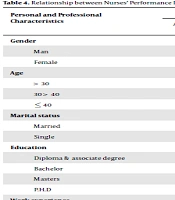
According to Table 1, the findings indicate that the majority of respondents were in the 31–39 years age group (39%). In addition, most employees were married (79.1%), and those with more than 15 years of work experience had the highest frequency (36%).
Table 1.
Demographic Characteristics of the Respondents
| Variables and Category | Frequency (%) |
|---|---|
| Gender | |
| Male | 106 (35.7) |
| Female | 191 (64.3) |
| Age (y) | |
| ≤ 30 | 77 (26) |
| 31 - 39 | 116 (39) |
| 40 - 49 | 94 (31.6) |
| ≥ 50 | 10 (3.4) |
| Marital status | |
| Married | 235 (79.1) |
| Single | 62 (20.9) |
| Work experience (y) | |
| < 5 | 78 (26.2) |
| 5 - 9 | 56 (18.9) |
| 10 - 15 | 56 (18.9) |
| > 15 | 107 (36.0) |
The results indicated no significant difference in organizational silence between men and women (P = 0.455) or among different age groups (P = 0.741), although employees over 50 years reported the lowest mean scores. Marital status showed no significant impact (P = 0.151). However, the relationship between organizational silence and work experience was significant (P = 0.012), with employees having 5 - 9 years of work experience showing significantly higher organizational silence than those with more than 15 years of experience (post hoc test). Regarding organizational envy, men (15.92 ± 3.91) scored significantly higher than women (14.95 ± 3.65) (P = 0.039). Other demographic variables, including age, marital status, and work experience, showed no statistically significant differences. Overall, work experience was the main demographic factor influencing organizational silence, while gender was the only significant factor related to organizational envy (Table 2).
Table 2.
| Independent Variables and Categories | Organizational Silence | P-Value | Organizational Envy | P-Value |
|---|---|---|---|---|
| Gender | 0.455 | 0.039 c | ||
| Male | 19.70 ± 3.91 | 15.92 ± 3.911 | ||
| Female | 19.41 ± 4.30 | 19.95 ± 3.65 | ||
| Age (y) | 0.741 | 0.750 | ||
| ≤ 30 | 19.13 ± 3.20 | 15.08 ± 3.49 | ||
| 31 - 39 | 19.37 ± 3.85 | 15.22 ± 3.90 | ||
| 40 - 49 | 19.11 ± 3.90 | 15.58 ± 3.82 | ||
| ≥ 50 | 17.70 ± 4.52 | 16.40 ± 4.29 | ||
| Marital Status | 0.151 | 0.916 | ||
| Married | 19.03 ± 3.81 | 15.31 ± 3.82 | ||
| Single | 19.80 ± 3.53 | 15.25 ± 3.57 | ||
| Work Experience (y) | 0.012 c | 0.430 | ||
| < 5 | 19.23 ± 3.44 d | 15.24 ± 3.88 | ||
| 5 - 9 | 20.58 ± 3.43 § e | 15.14 ± 3.90 | ||
| 10 - 15 | 18.96 ± 3.86 d | 14.73 ± 3.68 | ||
| > 15 | 18.56 ± 3.95 ¥ e | 15.72 ± 3.65 |
a Values are presented as mean ± SD.
b For two-level categorical variables, independent t-tests were used, and for variables with three or more levels, one-way ANOVA was conducted. Significant ANOVA results were followed by Bonferroni post hoc tests.
c Significant at the 0.05 level.
d Does not differ from either “§” or “¥”.
e Significant differences: § and ¥.
According to the results, the Pearson correlation coefficient between organizational silence and organizational envy was 0.217, which was found to be statistically significant (P = 0.001). This finding indicates a positive and significant relationship between the two variables. In other words, higher levels of organizational envy among employees are associated with increased organizational silence. Furthermore, linear regression analysis showed that organizational envy was a significant positive predictor of organizational silence. In the univariate model, organizational envy was significantly associated with organizational silence (β = 0.217, P = 0.001). This association remained significant after adjusting for demographic variables (β = 0.216, P = 0.001). Detailed results of the regression analyses are presented in Table 3.
Table 3.
| Model | Predictor | B | Std. Error | β | t | Sig. |
|---|---|---|---|---|---|---|
| Univariate regression | Organizational envy | 0.217 | 0.057 | 0.217 | 3.820 | 0.000 |
| Multivariate regression (adjusted) | Organizational envy | 0.216 | 0.057 | 0.216 | 3.786 | 0.000 |
a Multivariate model adjusted by Gender, Age, Marital Status, and Work Experience.
b Significant at the 0.05 level.
c Dependent variable: Organizational Silence.
5. Discussion
One of the noteworthy findings was the presence of a positive yet relatively weak relationship between organizational silence and organizational envy. This indicates that higher levels of envy among employees correspond to greater tendencies toward silence. Prior studies provide theoretical support for this connection. For instance, Rahmannejad et al. (1) suggested that when employees perceive their opinions as being disregarded, they may experience negative emotions such as envy, which in turn reinforces silence. Similarly, Ghaedamini Harouni et al. (16) demonstrated that withholding opinions and accumulating unexpressed emotions can lead to envy and other harmful outcomes. Together, these studies affirm that envy and silence are interrelated phenomena, reflecting underlying emotional and communication barriers within organizations. Nevertheless, it should be noted that the relationship between organizational envy and silence, although significant, was relatively modest. This suggests that other organizational and psychological variables may also contribute to the emergence of silence. Therefore, future research should consider exploring additional factors such as organizational culture, leadership style, job satisfaction, and organizational trust to achieve a more comprehensive understanding of the antecedents and dynamics of organizational silence. Investigating these elements could provide deeper insight into the mechanisms that foster silence and guide interventions aimed at improving transparency, participation, and emotional well-being among hospital staff.
The results are consistent with those reported by Ghaedamini Harouni et al. (16), who found that factors such as work experience significantly affect individuals’ propensity to voice opinions and participate in organizational activities. Similarly, Rahmannejad et al. (1) observed that employees with more extensive work experience possess a deeper analytical understanding of organizational processes and are consequently less likely to remain silent. Similarly, Pinder and Harlos (17), in their classic study on organizational silence, suggested that the longer an individual’s tenure in the organization, the greater their understanding of power structures and relationships, leading to a reduced likelihood of organizational silence. Furthermore, Morrison and Milliken (18) argued that organizations with an open structure and a participatory culture are less prone to the emergence of silence, whereas hierarchical and authoritarian environments tend to reinforce it. These findings are consistent with the present research and indicate that work experience and organizational culture play a crucial role in mitigating silence. In this regard, evidence shows that social capital significantly influences mental health (19). Eskandari et al. also demonstrated in their study that based on global experiences, policymakers will face challenges in implementing future hospitals, including human resources and communication, and strategies such as creating a committed attitude and using successful steering groups to facilitate and create opportunities for strategic communication to continue progress and movement are required (20).
Conversely, the present study revealed that gender was the only demographic variable significantly associated with organizational envy, while age, marital status, and work experience did not display notable associations. This outcome aligns with the findings of Rahmannejad et al. (1) and Ghaedamini Harouni et al. (16), who identified gender differences as relevant predictors of envy within organizational contexts.
5.1. Practical Recommendations
1. Focus on empowering experienced employees: The knowledge and experience of employees with over 15 years of tenure should be leveraged as a positive role model for mitigating organizational silence. Facilitating mentoring sessions or advisory committees led by these individuals can significantly motivate younger staff to speak up.
2. Examination of gender-based reward structures: Given that envy was reported more frequently among male employees, the organization must carefully scrutinize promotion processes, resource allocation, and the recognition of achievements to ensure that no implicit bias leads to feelings of deprivation and envy within any gender group.
3. Establishment of secure communication channels: Considering the positive correlation, establishing confidential and secure communication mechanisms is crucial. These channels should serve the dual purpose of reducing organizational silence while simultaneously providing a venue for the constructive management of envy.
5.2. Limitations
This study is subject to several limitations. First, due to workload, time constraints, and limited motivation, some respondents were initially reluctant to complete the questionnaires; however, this was partly addressed through follow-up and clarification of the study’s importance. Second, the reliance on self-reported data may have introduced response bias, despite assurances of confidentiality and anonymity. Finally, the study sample was restricted to administrative and clinical staff of educational hospitals in Yazd, limiting the generalizability of the findings to other regions and non-governmental hospitals.
5.3. Conclusions
The most significant factor influencing organizational silence is work experience. This finding strongly suggests that the experience and knowledge accumulated over time enhance employees’ self-confidence and sense of security in expressing their opinions and feedback. This conclusion indicates that investing in professional development and retaining experienced employees directly contributes to the reduction of silent behaviors within the organization. In the context of organizational envy, only gender was identified as a significant factor. This highlights the necessity of a closer examination of the cultural contexts and reward structures within the organization regarding this gender disparity. The presence of a positive and significant, albeit weak, correlation between organizational silence and organizational envy indicates that these two phenomena can coexist in the work environment, even if one is not the primary driver of the other. In other words, an environment where individuals are more inclined toward silence may also be predisposed to envy.