
1. Background
There are very hot areas in the world; the ability to work in these conditions directly depends on overcoming heat stress (1, 2). The exposure to heat can cause different problems in almost every work place, especially during the warm months (3). Heat stress in a high temperature depends on sex, clothing, and metabolic levels (4). Clothing plays a considerable role in evaluating, controlling, and reducing heat stress in workplaces. Clothing affects the transmission of heat between skin and surrounding environment and accordingly affects the human heat balance. Inappropriate clothing leads to heat stress by increasing body weight and limiting physical movements inducing an increase in the metabolic value of workload (5, 6). Heat stress index is widely used in order to evaluate heat strain in workplaces (7, 8).
physiological strain index (PSI), established and evaluated by Moran in 1998, is based on only two physiologic parameters, heart rate (HR) and core temperature (rectal temperature or Tre), which adequately depict the combined strain reflected by the cardiovascular and thermoregulatory systems (9). The assessment of PSI is based on Tre and HR (9). Results from various studies indicate that there is a significant difference between the PSI and the heat stress in different climatic conditions, humidity levels, different kinds of clothing including protective clothing, different activities, sex, and age (10-13). In a study by Ashley et al. (4) the heat strain at the critical wet bulb globe temperature (WBGT) index and the effects of sex, clothing, and metabolic rate on heat strain were evaluated. The results showed a significant difference between sexes in PSI, HR, and Tre. Women exhibited a higher thermal stress in the similar climatic conditions of heat stress at critical WBGT (4). Generally, women showed higher HR (14, 15), skin temperature (12, 16), and Tre (17) in the hot-dry climatic condition than men did in similar climatic conditions. Most of the measures and indices of the heat stress are developed in western countries. However, the percentages of skin surface area covered by clothing as well as the amount of coverage over the body have no significant difference between men and women in these countries. Therefore, in the process of developing such indices, including heat stress, sex factor is not included. A large number of the employed population in the workplaces include Muslim women who are working with the exposure to hot climatic conditions while their skin surface area might be covered by different clothing (according to the beliefs of Islam); these women have different clothing requirements than men do in Islamic countries. Therefore, it seems that the investigation of the applicability of the WBGT index in Muslim women should be considered, especially in extreme weather conditions leading to heat stress.
2. Objectives
The purpose of this study was to determine the association between WBGT and PSI in Muslim women in hot-dry condition in the climate chamber.
3. Patients and Methods
3.1. Subjects
A total of 30 healthy young Muslim women volunteered to participate in the study. The characteristics of the subjects (means ± standard deviation [SD]) were as follows: age, 21.64 ± 2.88 years; height, 162.76 ± 5.57 cm; weight, 55.45 ± 6.08 kg; and body mass index (BMI) 20.99 ± 2.55 kg/m2.
Subjects were informed of the nature of the study and potential risks of exposure to a hot condition. All subjects signed an informed consent.
3.2. Protocols
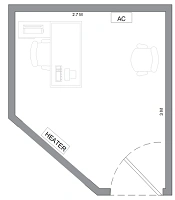
The study was conducted in a climatic chamber (length, 4.5 m; width, 3.5 m; and height, 3 m) located in the Isfahan University of Medical Sciences, Department of Occupational Health Engineering, Isfahan, Iran. None of the participants had a history of medical disorders. The participants had to abstain from coffee or caffeine 12 hours before test. Moreover, they had to have a normal BMI and not being at the ovulation and menstruation (18). The subjects’ clothing was selected considering the characteristics of common Islamic clothing (IC) worn by Iranian women (uniform, pants, and scarf). To avoid interfering factors, the participants’ clothing was provided by the researchers from the same model and materials. The details related to the materials used in the Iranian female clothing including the weights of individual garments and ensembles, fabric composition, and body surface area coverage are presented in Table 1.
To determine the intrinsic clothing insulation, Icl was used that refers to the intrinsic or basic clothing insulation and can be defined as the insulation from the skin surface to the clothing surface.
Table 1.
Characteristics of Various Iranian Female Clothing Materials Used a
| Ensemble type | |||||||
|---|---|---|---|---|---|---|---|
| Clothing ensembles | Covered BSA, % | Weight, g/m2 | The Density of Warp Yarns, /cm | The Density of Weft Yarns, /cm | Icl | Fiber:Content | |
| Clo | M2℃/W (square meter centigrade per watts) | ||||||
| Islamic clothing summer | 253.46 | 34 | 24 | 0.80 | 0.123 | 13.7:Viscose, 86.3% | |
| Pants | 45 | ||||||
| Uniform | 61 | ||||||
| Scarf | 12 | ||||||
| Socks | 7 | ||||||
aAbbreviations: BSA, body surface area; Clo, clothing.
3.3. Environmental Conditions
Heat exposure was performed in two separate trials, a hot-dry condition (WBGT, 32℃ ± 0.1℃) for 50 minutes without physical activity (passive exposure) and a hot-dry condition (WBGT, 30℃ ± 0.1℃) for 60 minutes with walking on treadmill with speed of 4.8 km/h and 0% grade (21) (10 minutes of rest in 25 minutes) (activity exposure),
It should be noted that environmental condition without the heat radiation and the temperature was controlled. The threshold limit value of heat conditions based on the WBGT index, which was 28℃ for the non-acclimated individuals with a light activity, was considered 32℃ in this study in order to provide more stressful conditions.
3.4. Measurements
Oral temperature and HR were continuously monitored and recorded at five-minute intervals during the rest and heat exposure. The HR was monitored and recorded online through polar belt electrodes (Polar Electro RS100, Finland) (22, 23). Moreover, a portable personal heat stress monitor (personal temperature monitor, Questemp ii, quest electronics, USA, Underwriters Laboratories Inc), to measure ear body temperature was used via the ear of the person (19). The WBGT index was measured by heat stress monitor (Casella Microtherm heat stress monitor, USA Casella) (20, 24).
3.5. Statistical Analysis
The data were analyzed using descriptive statistics and Pearson correlation by SPSS16 (SPSS Inc, Chicago, Illinois, the United States). Data are presented as means ± SD. This study was approved by the Medical Ethics Committee of the Faculty of Medical Science at the Isfahan University and all subjects signed an informed consent form in accordance with the Helsinki Declaration.
4. Results
4.1. Subject characteristics
A total of 30 subjects completed the study. The physiologic characteristics including mean and SD are presented in Table 2 for HR and ear temperature at two trials (sitting and light workload).
| Measured Values | |
|---|---|
| Heart rate (resting), beat/min | 78.52. ± 0.12.10 |
| Heart rate (sitting), beat/min | 69.74. ± 0.98 |
| Heart rate (light workload), beat/min | 110.78 ± 17.9 |
| Ear temperature (sitting), ℃ | 36.70 ± 0.36 |
| Ear temperature (light workload), ℃ | 36.71 ± 0.27 |
a It is assumed that the maximal allowable elevation of heart rate is to be 110 (25).
b Data are presented as Mean ± SD.
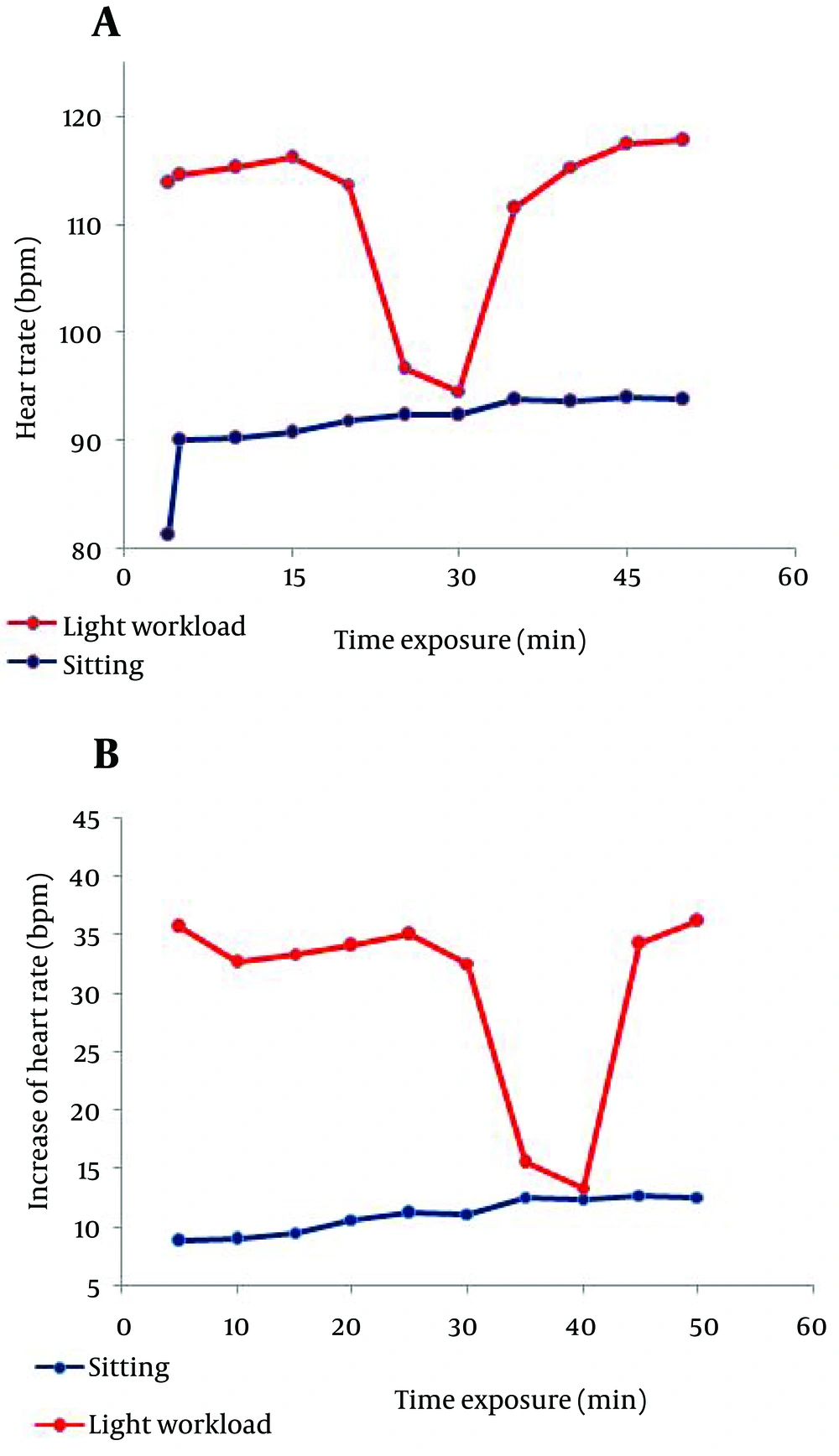
Figure 1.
In hot/dry climatic condition (Blue line, 32℃ ± 0.1℃) and light workload (red line, 30℃ ± 0.1℃).
The relationship between HR and time exposure during sitting and light workload was found as the HR progressively increased with sitting workload and environmental heat load, but the national institute for occupational safety and health (NIOSH) related to HR were not exceeded (25) (mean, 110 beat/min). Moreover, the HR progressively increased with light workload and environmental heat load, and after starting activity, the average HR reached to higher than 110 beat/min. After 25 minutes resting, the average HR illustrated a significant reduction, but after starting up again, it showed a significant increase (Figure 1).
There was an association between ear temperature and time exposure during sitting and light workload, so that the average ear temperature progressively increased with sitting workload and environmental heat load; however, it was not associated with the ear temperature (average of 37.5℃ (100.40℉) (26). In addition, the average oral temperatures progressively increased over time with light workload and environmental heat load, but but the NIOSH related to oral temperature was not exceeded (Figure 2).
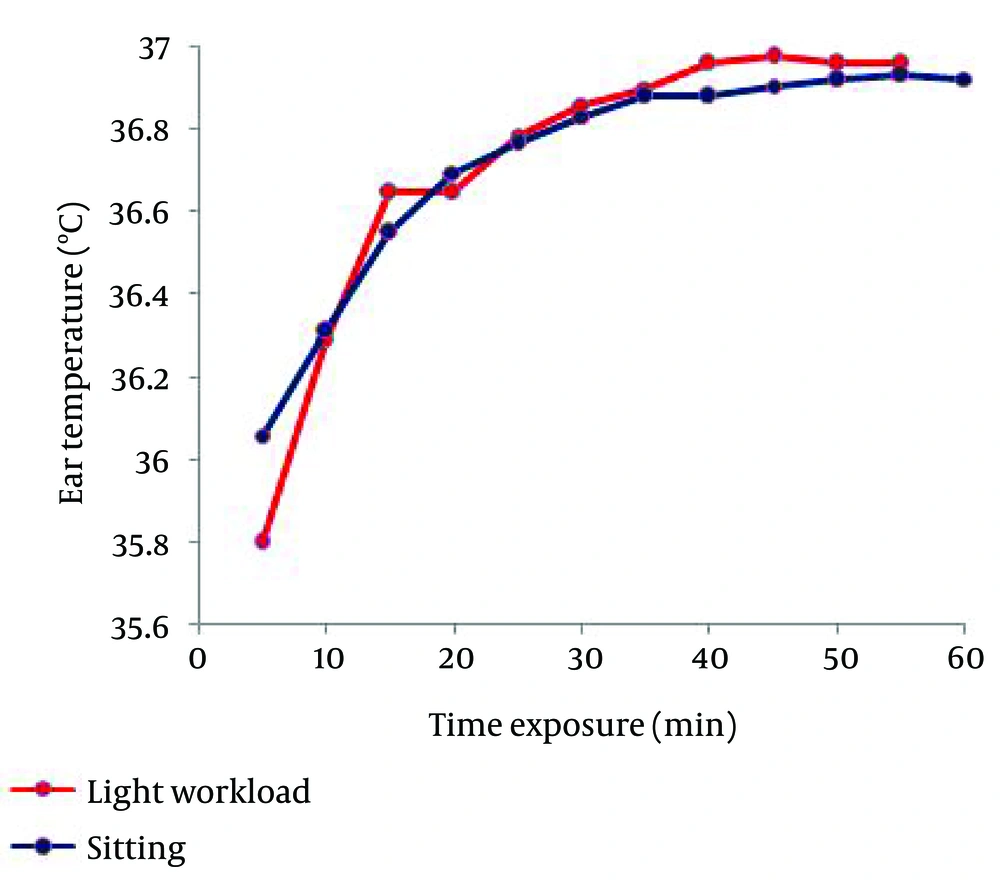
Figure 2.
In hot/dry climatic condition (blue line, 32℃ ± 0.1℃) and light workload (red line, 30℃ ± 0.1℃).
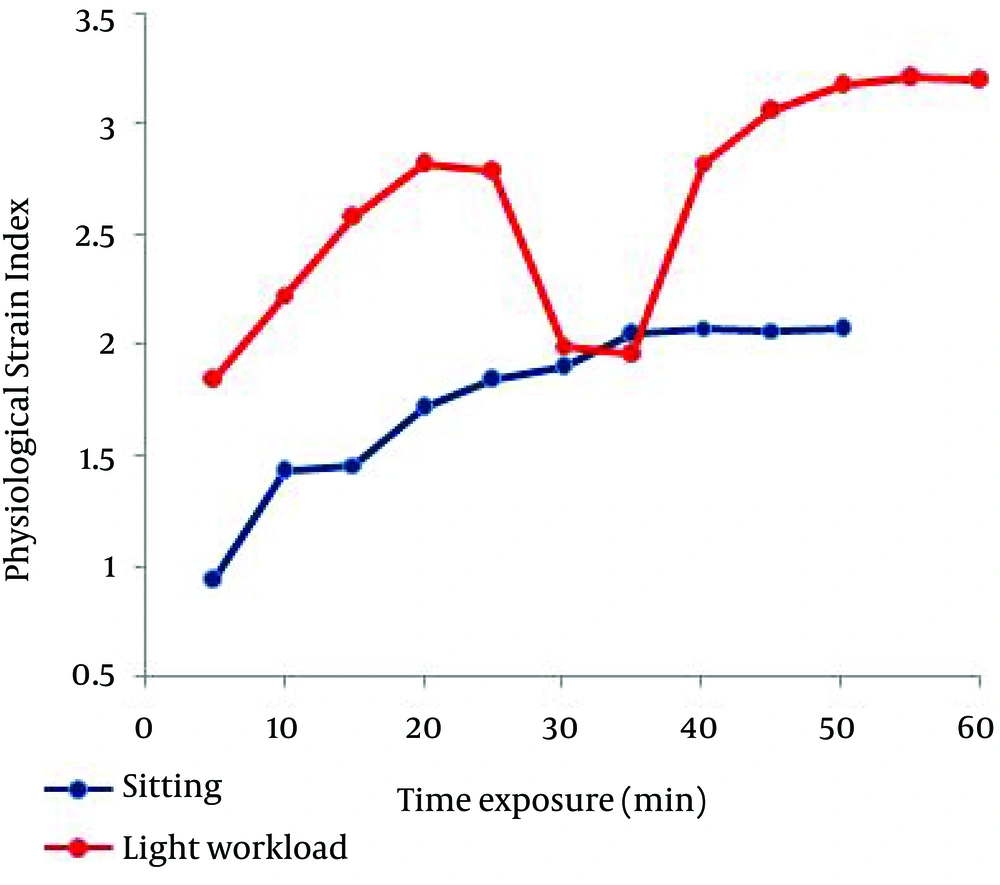
Figure 3.
(Blue line, 32℃ ± 0.1℃) and light workload (red line, 30℃ ± 0.1℃).
The PSI is an equation that uses the measured basal HR and body temperature (25). There was an association between PSI and the time exposure while sitting and light workload; the average PSI progressively increased with sitting workload and environmental heat load, but heat strain was in low range (< 3). In addition, the average PSI progressively increased over time with the light workload and environmental heat load after 25 minute and gradually decreased with the beginning of resting. The average PSI showed an increasing trend when the process started again. However, it was in the low range (< 3) (Figure 3).
5. Discussion
The aim of this study was to determine the association between WBGT and PSI in Muslim women in hot-dry condition in the climate chamber. The results indicated that despite choosing two heat conditions with WBGT indices of 30℃ and 32℃ for sitting and light activity, respectively, which were both higher than threshold limit value (28℃) for non-acclimatized individuals, the physiological parameters of the subjects did not exceed the standard value. As it can be inferred from the Figure 1, with the beginning of the light activity, the HR of the participants showed an increasing trend and after starting the rest stage (25-35 minutes) and without any physical activity, it decreased. After the 35th minute at the same time of beginning the heart activity, the HR of the subjects raised up again. However, the HR of participants with the sitting activity was constant.
Moreover, Figure 2 represents that the ear temperature at both 32℃ without any physical activity and at 30℃ with a light activity had similar increasing trend without any statistically significant difference. The ear temperature, however, did not exceed 38℃ that is considered allowable limit.
As it can be seen from Figure 3, the PSI, calculated from both HR and the depth temperature (oral temperature), had an increasing trend in the participants in the beginning of the light activity and it decreased when the rest stage started (25-35 minutes) without any physical activity. After the 35th minute and at the same time when the activity started again, the PSI was increased. The PSI of the participants with a sitting activity, however, showed a constant trend.
Furthermore, the results showed that none of the physiologic parameters (ear temperature and HR) exceeded threshold limit value in the participants with hijab (uniform, pants, and scarf) when 30℃ was considered as standard temperature and when it was 2℃ higher than the standard temperature (32℃). The Iranian women with hijab, therefore, are able to do their activities in such climatic conditions without receiving any extreme heat strain and no correction coefficient is needed for the international standard thermometer temperature index (WBGT).
Davis et al. assessed the heat stress, sweat rate, cooling response, and physiologic factors associated with the IC in different surrounding environments. This study was performed on eight female athletes. They participated in a three-stage exercise of moderate activity with IC in order to acclimate the temperature for small environments and with IC in large different environments. The result revealed that in such condition, people with IC would show less acclimatization with increasing air temperature in the covered environments (27). In addition, the extracted results from this study showed that with constant conditions implemented for both climatic features and IC factor during two stages of sitting workload and light workload, the incidence of the heat strain observed in the subjects would increase over time.
In a study by Al-Ajmi et al. on thermal insulation and clothing area, the factors of typical clothing ensembles for males and females were evaluated using thermal manikins. Some limitations were found in surface clothing factor among people with IC (Icl) (28). Another study was performed by Jon-Kyle Davis et al. on the fluid balance, heat stress, and exercise response in women’s Islamic athletic clothing. This research showed that the amount of sweat rate was significantly different in the surface skin of ICs that was higher than those with soccer uniform (SC) (P < 0.05 ((27). On the other hand, Jon-Kyle Davis et al. reported that the clothing factor can be an important factor in inducing the heat strain. Comparing HR and core temperature, they also reported no significant difference between the women in SC (27) and the women in IC. Although the results of our study showed an increase in HR and ear temperature in hot-dry condition during two stages (sitting and light workload) throughout the study, it was not exceeded the national institute for occupational safety and health(NIOSH) and american conference of governmental industrial hygienists (ACGIH). (2, 25, 26).
The findings of this study showed that the HR and ear temperature measured in both sitting and light workload in the hot-dry condition were less than the values of threshold limit established by the NIOSH and ACGIH. However, comparing different HR and ear temperatures during rest and activity showed a significant increase in incidence of the heat strain. Therefore, the correction factor for the WBGT index should be used when performing work in a hot-dry temperature conditions. Clothing factor progressively increases the level of heat stress. The present study suggests an implementation of a similar protocol for the males under the hot-dry conditions.