
1. Background
Coronary artery disease (CAD) and cardiovascular disease (CVD) are significant public health concerns due to their substantial effects on morbidity and mortality among adults globally. Viral hepatitis, specifically attributed to the hepatitis B virus (HBV) and hepatitis C virus (HCV), is a global health concern (1, 2). Chronic viral hepatitis infections result in significant health complications, including chronic hepatitis, cirrhosis, hepatic failure, cardiovascular illnesses, and hepatocellular cancer (3, 4). Some hepatitis viruses may affect the risk of coronary artery disease or CVD in individuals with hepatocellular carcinoma (5). Certain research suggests that hepatitis infection correlates with reduced risks of coronary artery disease (6) and stroke (7, 8). Although these infections are mostly recognized for their hepatotropic characteristics and long-term sequelae, including liver cirrhosis and hepatocellular cancer, recent data indicate a notable correlation between chronic viral hepatitis and cardiovascular symptoms (9). Chronic viral hepatitis is associated with persistent systemic inflammation, endothelial dysfunction, and metabolic dysregulation. These mechanisms collectively contribute to the development of CVD (10). In HCV infection, cryoglobulinemia and immune complex deposition are implicated in vascular damage, while HBV is linked with accelerated atherosclerosis and arterial stiffness (11). Recent cohort and case-control studies have associated viral hepatitis with a heightened risk of myocardial infarction (MI), heart failure (HF), arrhythmias, and cerebrovascular accidents (12, 13). Moreover, HCV infection has been shown to elevate insulin resistance and lipid irregularities, which are established risk factors for coronary artery disease (CAD) (14). A comprehensive retrospective investigation by Adinolfi et al. (2021) (15) indicated an elevated prevalence of carotid atherosclerosis in patients infected with HCV, irrespective of conventional risk factors, thus corroborating the idea that the virus has a direct atherogenic influence. Similarly, population-based research in East Asia indicates that chronic HBV carriers have an elevated risk of ischemic heart disease and stroke relative to uninfected controls (16). The developing understanding of the cardiovascular impact of viral hepatitis has considerable significance, particularly in areas with high hepatitis prevalence, including Sub-Saharan Africa, Southeast Asia, and certain parts of Eastern Europe (17).
Aside from these results, the cardiovascular hazards linked to viral hepatitis are often overlooked in clinical practice. Many recommendations persist in emphasizing hepatic endpoints, neglecting the cardiovascular consequences that may precede or follow liver illness (18). Furthermore, discrepancies in study design, demographic characteristics of populations, diagnostic criteria, and the existence of confounding metabolic comorbidities have resulted in inconsistent findings across studies, complicating the ability to reach definitive conclusions about the extent of cardiovascular risk (19).
Seeing the increasing worldwide burden of CVD and the significant incidence of viral hepatitis in several communities, understanding this link is essential. A thorough synthesis of the existing data is essential to guide clinical recommendations and future research (15). Investigating the cardiovascular consequences of chronic HBV and HCV infections may aid in the formulation of risk stratification models and preventive treatment strategies that extend beyond liver-related morbidity (10).
Multiple meta-analyses have studied the link between viral hepatitis and cardiovascular outcomes, but their findings face restrictions because they used outdated datasets, measured fewer cardiovascular results, and assessed HBV and HCV separately. This study synthesizes new evidence from 2019 to 2025, which assesses multiple cardiovascular results in both HBV and HCV populations while using observed-to-expected (O/E) ratios to measure risk. The developing evidence base shows that chronic hepatitis B and C infections cause cardiovascular complications, but study designs show different results, which makes it hard to determine the extent of this risk. This systematic review and meta-analysis aims to synthesize existing data to quantify cardiovascular risk in patients with chronic viral hepatitis, thereby informing future research and clinical care.
2. Objectives
This systematic review and meta-analysis seeks to synthesize existing knowledge about cardiovascular symptoms in persons with HBV and HCV infections. We assess the prevalence and classifications of cardiovascular outcomes documented in recent studies, the hepatitis risks linked to CVDs, and the ramifications for future research and patient care.
3. Materials and Methods
A protocol for this systematic review and meta-analysis was prepared prospectively and registered on PROSPERO (ID:CRD420261299118), detailing the objectives, inclusion/exclusion criteria, quality assessment methods, outcomes, and statistical analyses.
3.1. Data Sources and Search Strategy
A comprehensive search was performed in accordance with PRISMA standards to find studies that provide data on the risk of cardiovascular disease (CAD and/or cerebrovascular disease) linked with hepatitis B and C. A thorough literature review was conducted across many electronic databases. The search included papers published from January 1, 2019, until May 2025. The search approach was customized for each database and augmented by a thorough review of reference lists from pertinent publications. This systematic review and meta-analysis used a literature search approach that combined Medical Subject Headings (MeSH) with free-text keywords to guarantee thorough coverage of pertinent research. Search keywords included “Hepatitis B” or “HBV”, “Hepatitis C” or “HCV”, “cardiovascular disease”, “myocardial infarction”, “arrhythmia”, “stroke”, along with methodological phrases such as “systematic review” and “meta-analysis”. These keywords were used throughout prominent biomedical databases to get peer-reviewed research publications.
3.2. Inclusion Criteria and Exclusion Criteria
Inclusion criteria were established to guarantee the pertinence and quality of evidence. Studies were considered if they were peer-reviewed original research publications published between 2019 and 2025, used observational designs, and featured human subjects aged over 18 years. Moreover, the included studies were required to provide diagnosed instances of hepatitis B or C validated via serological testing and to report on cardiovascular events, including myocardial infarction, arrhythmia, or stroke. Only articles published in English were included. Studies were omitted if they were review articles, editorials, comments, or conference abstracts. Studies concentrating only on liver-related endpoints without cardiovascular outcomes, those involving paediatric populations, and those with duplicate or overlapping data from the same cohort were removed from the analysis.
3.3. Study Selection Process
The titles and abstracts were independently reviewed from all obtained papers. Complete texts of possibly qualifying papers were examined for inclusion. Discrepancies were addressed via dialogue, and the research selection process is shown using a PRISMA flow diagram.
3.4. Data Extraction
A consistent data extraction form was used to systematically gather pertinent information from each included research study. The extracted data included the authors' names, publication year, country of research, study design, and sample size. Demographic data of participants, including average age and sex distribution, were documented, along with the specific kind of viral hepatitis (HBV or HCV) under examination. The primary effect size measurement for this meta-analysis used the O/E ratio method, which included a 95% confidence interval (CI) as its measurement. The metric served as the standard measurement for all analyses and forest plots to assess cardiovascular outcome risks in patients who had viral hepatitis. The O/E ratio served as the unified method for effect estimate synthesis despite individual studies presenting both odds ratios and hazard ratios. Two reviewers separately performed data extraction to guarantee precision and minimize bias, resolving any inconsistencies by discussion and agreement.
3.5. Statistical Analysis
A meta-analysis was performed using the JASP software tool (version 0.19.3). Jeffreys’s Amazing Statistics Program (JASP) is an accessible statistics program created with the support of the University of Amsterdam (https://jasp-stats.org/). The main effect measurement in this meta-analysis used the O/E ratio as its principal metric. The O/E ratio of each included study shows the actual number of cardiovascular events that occurred among hepatitis patients compared to the expected number of events that should have occurred according to reference population rates and null hypotheses. The researchers extracted standardized incidence ratios (SIR), which appeared directly in the studies, and treated these estimates as equivalent to O/E ratios. The researchers used absolute event counts and population sizes to determine expected events by applying population incidence rates, which led to the calculation of O/E ratios from the resulting data. This method enabled researchers to combine different types of observational evidence from multiple studies into a single study. The I² statistic was used to evaluate heterogeneity among the included studies, measuring the proportion of total variance attributable to heterogeneity rather than random chance. The I² values were evaluated as follows: Values below 25% indicated low heterogeneity, values between 25% and 75% indicated moderate heterogeneity, while values beyond 75% suggested strong heterogeneity. Subgroup analyses were conducted to investigate possible causes of variability, differentiating between the types of hepatitis (HBV vs HCV) and the particular cardiovascular outcomes reported in the studies. Publication bias was evaluated visually via funnel plots and quantitatively by Egger’s (both unweighted and multiplicative overdispersion) and Macaskill regression tests.
4. Results
4.1. Selection of Studies
The PRISMA flow diagram for this systematic review and meta-analysis depicts a meticulous and methodical selection procedure as shown in Figure 1. Flow diagram illustrating the selection process of studies, detailing the number of records identified, screened, excluded, and included in the final meta-analysis. A total of 43,525 documents were initially found via database searches. Before screening, 4,960 duplicate entries, 766 studies involving participants under 18 years, and 10,438 records disqualified for various reasons were deleted, resulting in 27,361 studies available for title and abstract screening. In this phase, 12,282 papers were discarded for irrelevance, and 1,133 for not being based on hepatitis and CVD, 8,152 were review articles, 3,619 were excluded due to unavailable full text, and 167 were excluded for being in other languages. This led to the consideration of 2,008 articles for full-text retrieval. Out of these, 1,754 failed to satisfy the eligibility requirements, and 185 were devoid of statistical reporting, resulting in 69 studies available for eligibility evaluation. Ultimately, 61 papers were removed owing to absent outcome data (n = 29) or other factors (n = 32), resulting in the inclusion of 8 high-quality studies in the final meta-analysis. This process highlights the methodological rigor employed to guarantee the inclusion of only pertinent and robust studies evaluating the cardiovascular manifestations of hepatitis B and C.
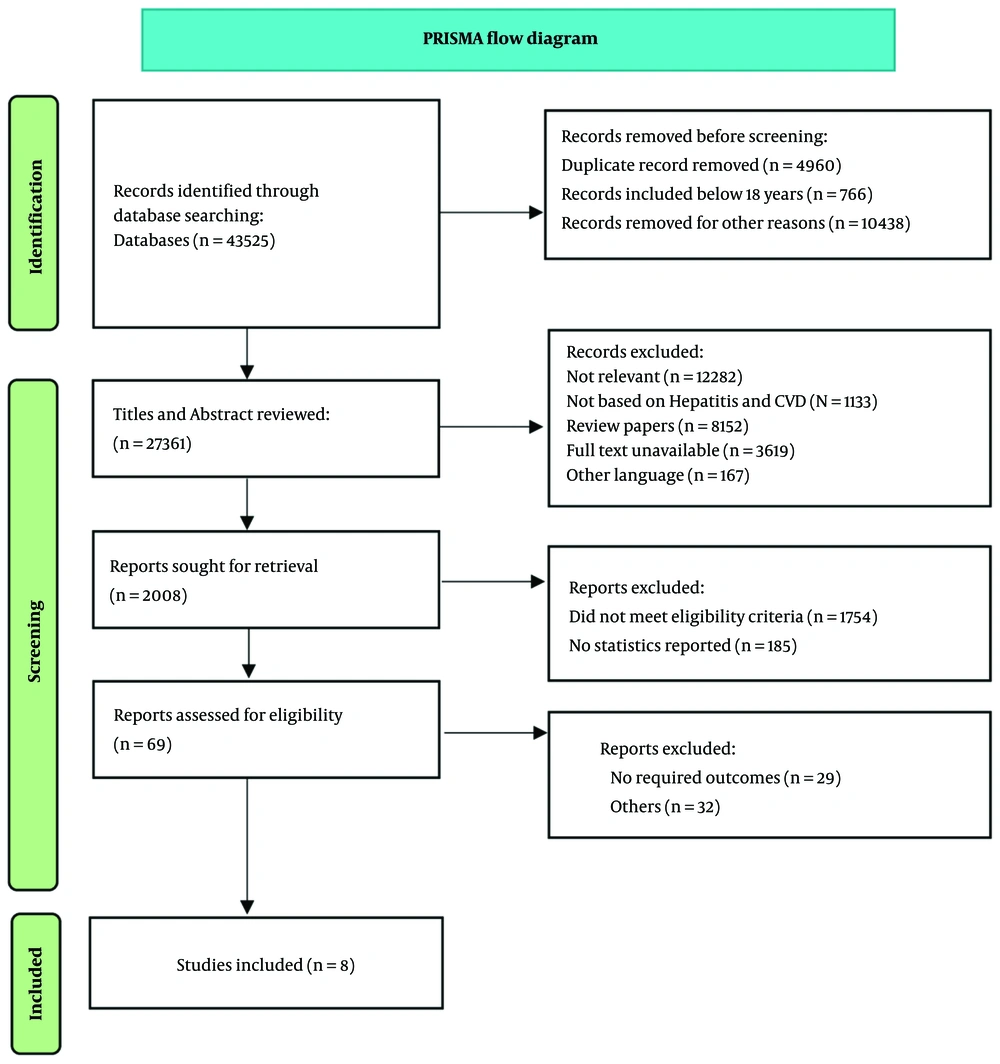
Figure 1.
PRISMA flow diagram for study selection
4.2. Observed Expected Ratio
This meta-analysis presents robust and statistically significant evidence that persons with hepatitis have a significantly elevated risk of cardiovascular events. This meta-analysis included eight independent studies published from 2019 to 2025 (Table 1) that investigated the association between hepatitis and CVDs using the OER as the main impact measure. The OER indicates the ratio of actual cardiovascular events in patients with hepatitis relative to the anticipated number of events derived from baseline population estimates or null hypotheses. An OER over 1.0 indicates an elevated incidence of cardiovascular events among the hepatitis population.
Table 1.
Data Extraction Table for the Systematic Review and Meta-Analysis
| Studies | Hepatitis Type | Cardiovascular Outcome | O/E Ratio (Effect Size) | Lower CI | Upper CI | Z-Value | P-Value | SE |
|---|---|---|---|---|---|---|---|---|
| Bailey et al. (2021), (20) | HBV | MI | 1.45 | 1.10 | 1.91 | 2.85 | 0.004 | 0.1408 |
| Yang et al. (2024), (21) | HCV | Heart Failure | 1.37 | 1.08 | 1.74 | 2.60 | 0.009 | 0.1217 |
| Roguljic et al. (2021), (22) | HCV | Arrhythmia | 1.29 | 1.01 | 1.66 | 2.00 | 0.045 | 0.1268 |
| Ke et al. (2022), (23) | HBV | Ischemic Heart Disease | 1.22 | 1.05 | 1.42 | 2.70 | 0.007 | 0.0770 |
| Wen et al. (2019), | HCV | Carotid Atherosclerosis | 1.48 | 1.10 | 2.00 | 2.70 | 0.007 | 0.1525 |
| Lu et al. (2023), (12) | HBV + HCV; (combined cohort) | Composite CVD | 1.33 | 1.15 | 1.54 | 3.90 | 0.001 | 0.0745 |
| Jabeen et al. (2019), (24) | HBV | Heart Failure | 1.18 | 0.95 | 1.47 | 1.60 | 0.110 | 0.1114 |
| Yan et al. (2022), (25) | HCV | Stroke | 1.52 | 1.12 | 2.06 | 2.60 | 0.009 | 0.1555 |
Abbreviations: HBV, Hepatitis B virus; HCV, Hepatitis C virus; MI, myocardial infarction; HF, heart failure; O/E, observed-to-expected ratio; CI, confidence interval; SE, standard error.
4.3. Meta-Analysis for Cardiovascular Manifestations in Hepatitis Patients
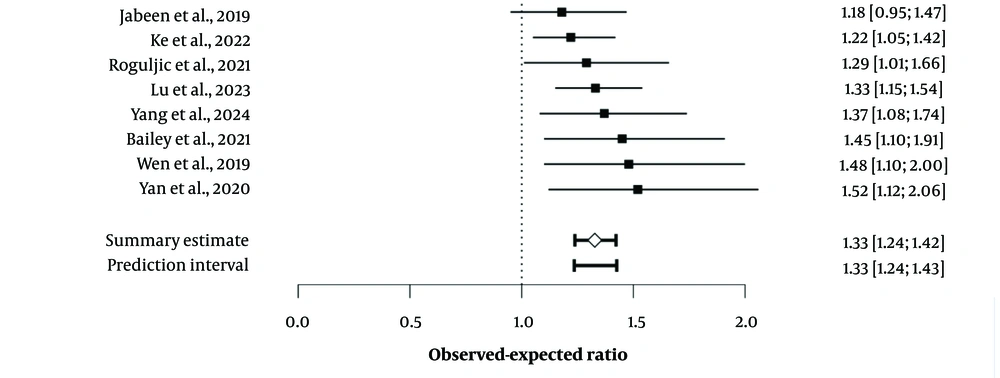
Table 2 provides a summary of a meta-analysis of the O/E raito of CVD occurrences in persons with hepatitis across eight investigations. The mean O/E ratio was 1.327, indicating that the observed incidence of CVD events in this sample exceeded expectations by 32.7% compared to a similar general population. This indicates a markedly elevated risk of cardiovascular problems linked to hepatitis. The 95% confidence interval (CI) spanned from 1.238 to 1.422, excluding 1, thereby affirming the statistical significance of this increased risk. The 95% prediction interval (PI), spanning from 1.235 to 1.426, estimates the range in which the O/E ratio of forthcoming research is expected to reside. The tight alignment of the confidence interval (CI) and prediction interval (PI), both above 1, indicates a significant degree of consistency and little variability across the research examined. These data indicate a strong and consistent correlation between hepatitis and an elevated risk of cardiovascular events.
Table 2.
Summary of Observed-to-Expected Ratio Meta-Analysis for Cardiovascular Risk in Hepatitis Patients
| Variable | 95% CI | 95% PI | Mean | ||
|---|---|---|---|---|---|
| Lower | Upper | Lower | Upper | ||
| Observed-expected ratio meta-analysis summary | 1.238 | 1.422 | 1.235 | 1.426 | 1.327 |
Abbreviations: O/E, observed-to-expected ratio; CI, confidence interval; PI, prediction interval.
4.4. Individual Study Estimates
All examined studies had OERs over 1.0, indicating an increased incidence of cardiovascular events in persons with hepatitis as shown in Figure 2. Figure 2 shows the forest plot of the O-E ratio of cardiovascular manifestations in hepatitis patients. The O/E ratio estimates varied between 1.18 and 1.52. Jabeen et al. (2024) (24) found the minimum OER as 1.18 (95% CI: 0.95 - 1.47). The confidence interval includes the null value of 1.0, indicating that this result lacks statistical significance. Ke et al. (2022) (23) showed an odds ratio (OER) of 1.22 (95% CI: 1.05 -
1.42), whereas Roguljic et al. (2020) (22) indicated an OER of 1.29 (95% CI: 1.01 - 1.66). Both were statistically significant, since the confidence intervals did not include 1.0. Lu et al. (2023) (12) demonstrated an odds ratio (OER) of 1.33 (95% CI: 1.15 - 1.54), further substantiating the increased risk. Yang et al. (2024) (21) [OER = 1.37 (1.08-1.74)] and Bailey et al. (2019) (20) [OER = 1.45 (1.10–1.91)] also documented a substantially increased risk with strong confidence intervals. Wen et al. (2019) (13) showed an odds ratio (OER) of 1.48 (95% CI: 1.10 - 2.00), whereas Yan et al. (2020) (25) noted the highest OER of 1.52 (95% CI: 1.12 - 2.06). Both were statistically significant and had higher correlations between hepatitis and increased cardiovascular outcomes.
4.5. Funnel Plot Analysis of Hepatitis and Cardiovascular Disease
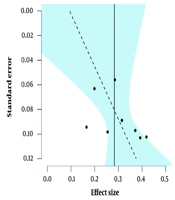
The funnel plots showed visual evidence of asymmetry because smaller studies produced larger effect sizes. The publication bias tests, which included Egger's unweighted test, Egger's multiplicative overdispersion test, and Macaskill test, showed no bias because all tests returned P values above 0.05. The tests showed that publication bias would not significantly affect the accuracy of the overall combined estimates. The plots of standard error vs effect size (Figures 3 and 4) exhibited a significant imbalance, characterized by a preponderance of smaller studies indicating bigger effect sizes. Figure 3 illustrates the funnel plot with publication bias – standard error versus effect size: This funnel plot evaluates the existence of publication bias via standard error and effect magnitude. The symmetrical distribution of research indicates little bias. Figure 4 shows the funnel plot illustrating publication bias – contour-enhanced with Egger's test overlay: This funnel plot illustrates research effect sizes in relation to standard error, accompanied by contour lines for the visual evaluation of asymmetry. It encompasses a regression line for Egger's test.
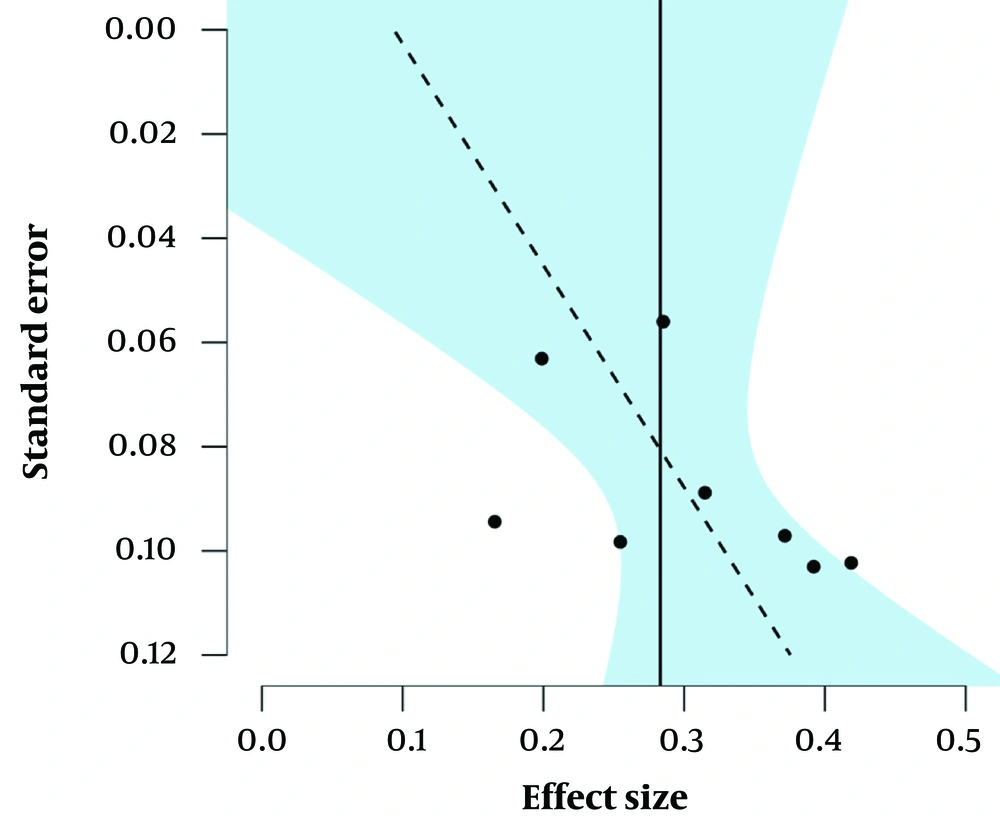
Figure 3.
Funnel plot illustrating publication bias – standard error versus effect size: This funnel plot evaluates the existence of publication bias via standard error and effect magnitude. The symmetrical distribution of research indicates little bias.
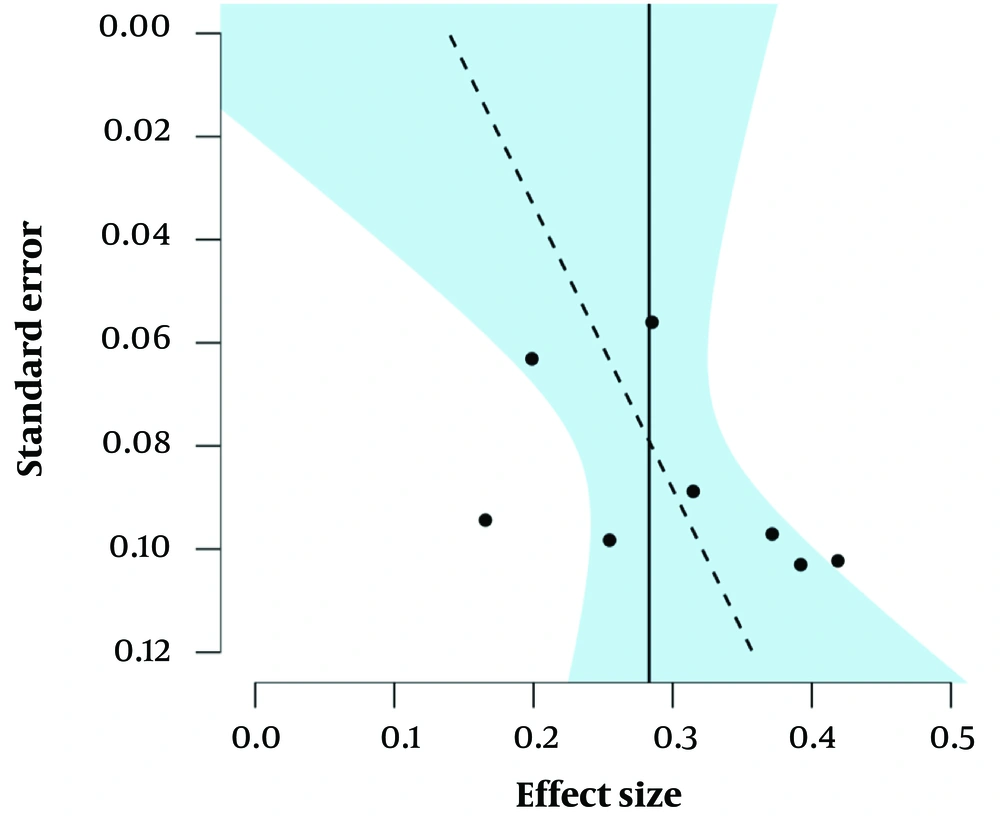
Figure 4.
Funnel plot illustrating publication bias – contour-enhanced with Egger's test overlay: This funnel plot illustrates research effect sizes in relation to standard error, accompanied by contour lines for the visual evaluation of asymmetry. It encompasses a regression line for Egger's test.
This indicated more robust correlations between hepatitis infection and symptoms of CVD. Conversely, research showing minor or negligible relationships may stay unreported or less accessible. The regression line in the funnel plots diverged from the vertical axis, which reinforces this finding. The sample size versus effect size plot (Figure 5) exhibited a typical funnel shape. Figure 5 shows the funnel plot of sample size vs effect size: This analysis investigates possible small-study effects by contrasting sample sizes and effect sizes. The symmetry around the mean effect suggests a little danger of publication bias. However, a bias towards bigger impact sizes in smaller studies was seen, indicating that the pooled estimates may be exaggerated. These data suggest a possible overestimation of the cardiovascular risk linked to hepatitis. Consequently, although the meta-analysis reveals a strong correlation between hepatitis infection and heightened CVD risk, these results must be approached with caution owing to the possible impact of publication bias.
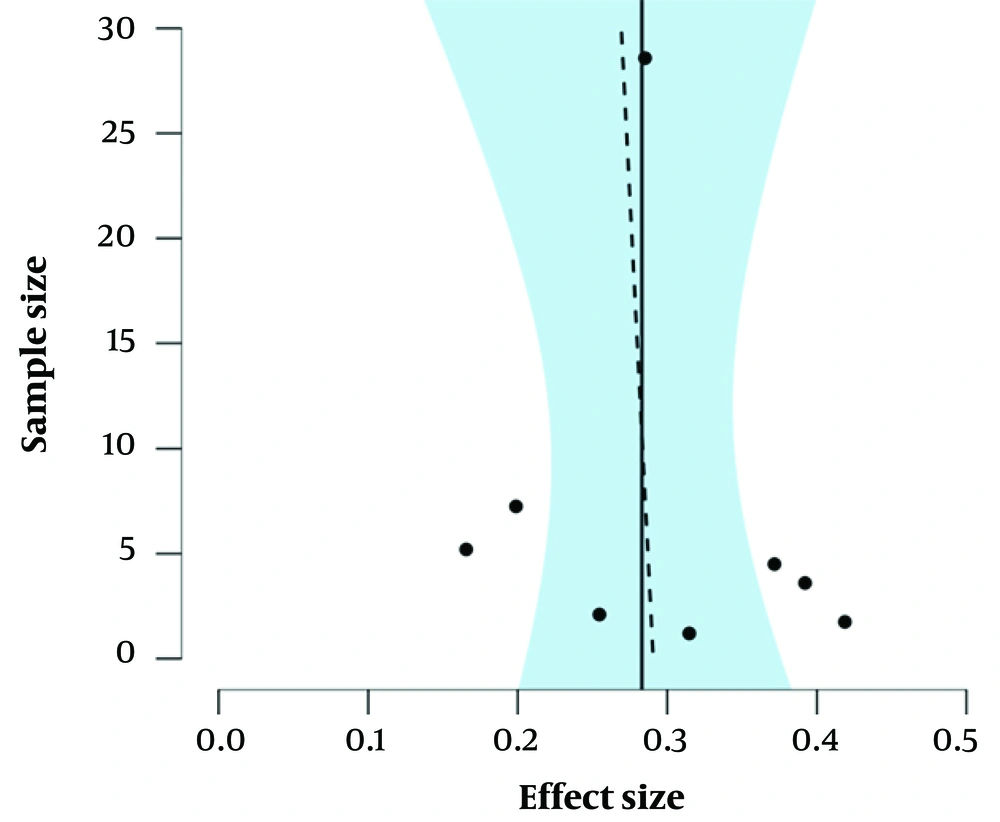
Figure 5.
Funnel plot - sample size vs effect size: This analysis investigates possible small-study effects by contrasting sample sizes and effect sizes. The symmetry around the mean effect suggests a little danger of publication bias.
4.6. Statistical Outcomes Using Egger’s Test over Publication Bias
The evaluation of publication bias was performed using three statistical techniques: Egger’s unweighted test, Egger’s test with multiplicative overdispersion, and the Macaskill test as shown in Table 3. The unweighted Egger’s test produced a t-statistic of 1.290 with 6 degrees of freedom (P = 0.245), but the multiplicative overdispersion variant generated a t-statistic of 1.245 (P = 0.260). Both tests lacked statistical significance, suggesting an absence of small-study effects or publication bias. The Macaskill test yielded a t-statistic of -0.247 and a P-value of 0.813, confirming the lack of substantial publication bias in the meta-analysis.
Table 3.
Statistical Outcomes from Egger’s Test for Publication Bias in Research Evaluating the Correlation Between Viral Hepatitis and Cardiovascular Disease
| Methods | t-Statistic | Degrees of Freedom (df) | P-Value |
|---|---|---|---|
| Egger (unweighted) | 1.290 | 6 | 0.245 |
| Egger (multiplicative overdispersion) | 1.245 | 6 | 0.260 |
| Macaskill | -0.247 | 6 | 0.813 |
5. Discussion
This systematic review and meta-analysis provide robust and consistent evidence that chronic viral hepatitis, especially HBV and HCV, is strongly linked to an elevated risk of cardiovascular symptoms. The OER of 1.33 (95% CI: 1.24 - 1.42) and a corresponding OER suggest a 33% increased probability of cardiovascular symptoms in persons with chronic hepatitis relative to uninfected groups. This link persisted consistently across investigations, exhibiting no substantial statistical heterogeneity (I² = 0%), hence augmenting the generalizability of the results across diverse demographics and geographic areas. The eight studies included in the analysis showed low statistical heterogeneity because their I² value reached 0%. The study results showed similar design elements because the researchers used identical population groups and measured outcomes with the same techniques. The studies display clinical and methodological differences, which researchers must consider when interpreting their results. The pathophysiological rationale for this connection is bolstered by increasing mechanistic understanding. Chronic HBV and HCV infections are recognized to provoke systemic inflammation, oxidative stress, immunological activation, and insulin resistance, all of which contribute to endothelial dysfunction, plaque formation, and accelerated atherosclerosis (26, 27). Hepatitis B virus has been associated with elevated carotid intima-media thickness and arterial stiffness, even in individuals without severe liver disease (15). Moreover, direct viral engagement in vascular tissues and the disruption of lipid and glucose metabolism seem to facilitate cardiovascular damage over time (28).
Additional high-quality studies outside the meta-analysis, such as Lee et al. (2019) and Abosheaishaa et al. (2024), corroborate the observed trends, highlighting the potential cardiovascular implications of chronic hepatitis (29, 30), which provided substantial statistical weight and used stringent procedures, including adjustments for standard cardiovascular risk variables. Their results substantiate that the elevated cardiovascular risk in hepatitis patients is not only attributable to complicating comorbidities but rather indicates a direct or indirect influence of viral infection on vascular pathology. These results are epidemiologically consistent with current extensive observational data. Lu et al. (2023) (12) documented increased incidence rates of coronary artery disease and stroke in individuals with chronic hepatitis B and C, especially among those with severe fibrosis. A meta-analysis by Jaiswal et al. (2023) (31)corroborated a pooled relative risk of 1.34 for cardiovascular mortality in HCV-infected people, closely aligning with our results. These analogies enhance the plausibility and therapeutic significance of the present results. The prediction CI (1.24 - 1.43) suggests that further investigations will likely identify a positive link, reinforcing the consistency and durability of the observed relationship. Although visual inspection of the funnel plots showed minor asymmetry, statistical analyses did not indicate significant publication bias. Therefore, the pooled results are considered reliable, but caution is still warranted due to the limited number of included studies. The public health ramifications are significant. Viral hepatitis continues to be a global health issue, impacting about 300 million people globally (1, 32), especially in low- and middle-income nations where cardiovascular monitoring is often underemployed.
This research emphasizes the need to acknowledge CVD not only as a comorbidity but as a possible extrahepatic manifestation of chronic hepatitis. Integrated care methodologies should be established as the norm for this patient demographic. Routine cardiovascular risk assessment, including lipid profile, blood pressure monitoring, and lifestyle review, should be included in hepatitis care regimens. Established strategies for monitoring lipid profiles together with blood pressure and glucose levels should be used to manage cardiovascular risk in patients who have chronic viral hepatitis. Further studies are required to evaluate the efficacy and safety of statins specifically in this population. Furthermore, antiviral therapy may provide dual advantages by diminishing hepatic inflammation and systemic vascular risk, as shown by research indicating cardiovascular enhancements subsequent to prolonged virologic response (33).
5.1. Conclusions
This systematic review and meta-analysis provide compelling evidence that chronic viral hepatitis, namely HBV and HCV, is strongly linked to an increased risk of CVD. The pooled O/E ratio of 1.32 (95% CI: 1.22 - 1.42) indicates a consistent 32% elevation in cardiovascular risk for those with hepatitis vs uninfected individuals. The lack of statistical variability among the included studies increases the reliability and generalizability of these results across diverse demographics and contexts. These findings underscore the need to include regular cardiovascular risk assessment in the usual management of patients with viral hepatitis. Due to the pro-inflammatory and metabolic effects of chronic hepatitis infection, cardiovascular risk factors should be carefully monitored. Future research should assess the effectiveness of pharmacological interventions, such as statins, in this patient group.
This is especially pertinent in low- and middle-income nations, where the prevalence of hepatitis is significant and comprehensive treatment is often inadequate. As the clinical comprehension of hepatitis advances beyond hepatic problems, it is essential to acknowledge circulatory symptoms as integral to the broader illness spectrum. Future recommendations must emphasize multidisciplinary care approaches that integrate hepatology and cardiology to mitigate long-term morbidity and enhance quality of life. In conclusion, persons with viral hepatitis are at an elevated risk for cardiovascular events, necessitating aggressive and comprehensive treatment methods to enhance outcomes in this at-risk group.