
1. Introduction
Breast cancer remains the most frequently diagnosed malignancy among women worldwide, with approximately 2.3 million new cases reported annually (1). Despite remarkable advances in early detection and treatment modalities that have substantially improved survival rates, the disease continues to impose an enormous burden on patients beyond the clinical domain (2). An increasingly recognized, but often overlooked, consequence of breast cancer diagnosis and treatment is the profound economic impact on patients and their families, termed “financial toxicity” (3).
Financial toxicity, defined as the objective financial burden and subjective financial distress experienced by patients as a result of cancer care, has emerged as a critical patient-reported outcome that significantly affects quality of life, treatment adherence, and even survival (4, 5). This concept encompasses multiple dimensions, including out-of-pocket expenses, loss of income due to reduced work capacity, depletion of savings, and the psychological distress associated with these financial hardships (6). Among patients with breast cancer, the financial burden may be particularly pronounced because of the protracted nature of treatment, which often extends over months to years and involves multiple therapeutic modalities (7).
Emerging evidence indicates that financial toxicity is not merely an economic inconvenience but a clinically significant concern with tangible health implications. Studies have documented associations between financial hardship and medication non-adherence, treatment discontinuation, and increased psychological distress among cancer patients (8, 9). Alarmingly, recent research has indicated that financial toxicity may independently predict mortality, with financially distressed patients experiencing worse survival outcomes (10). This relationship between economic hardship and clinical outcomes has led to growing recognition of financial toxicity as a legitimate adverse effect of cancer treatment that warrants systematic assessment (11).
The prevalence of financial toxicity and the factors contributing to it among breast cancer patients are not fully understood across different healthcare settings. Existing studies have reported widely varying estimates, ranging from 28% to 73%, likely reflecting differences in measurement instruments, healthcare financing systems, and patient populations (12, 13). Furthermore, although several patient-level factors, including younger age, lower socioeconomic status, and lack of insurance coverage, have been associated with increased financial burden, the relative contribution of these determinants across settings remains unclear (14). Notably, most available evidence originates from high-income countries, leaving substantial knowledge gaps regarding financial toxicity in low- and middle-income countries, where an increasing share of the global breast cancer burden resides (15).
Despite the growing literature on financial toxicity in cancer care, to our knowledge, no systematic review and meta-analysis has comprehensively synthesized the global evidence specifically focused on patients with breast cancer. Previous reviews have either examined financial toxicity across all cancer types without cancer-specific analyses or have used narrative synthesis without quantitative pooling of prevalence estimates (16, 17). This gap limits our ability to define the true scope of financial toxicity among breast cancer patients worldwide and to identify vulnerable subgroups that may benefit most from targeted interventions. Therefore, this systematic review and meta-analysis aimed to comprehensively synthesize the global evidence on the prevalence and determinants of financial toxicity among patients with breast cancer.
2. Methods
2.1. Study Design
This systematic review and meta-analysis was conducted to evaluate the global prevalence and determinants of financial toxicity among patients with breast cancer using the Comprehensive Score for Financial Toxicity (COST). The study protocol adhered to the Preferred Reporting Items for Systematic Reviews and Meta-Analyses (PRISMA) 2020 statement (18).
2.2. Search Strategy and Information Sources
A comprehensive systematic search was conducted in PubMed/MEDLINE, Scopus, Web of Science, Embase, the Cochrane Library, and CINAHL, as well as gray literature sources, including Google Scholar, conference proceedings (ASCO, ESMO), and the reference lists of relevant studies, from inception through October 2025. The search strategy combined MeSH terms and keywords related to: 1) breast cancer ("breast neoplasms", "breast carcinoma"); 2) financial toxicity ("financial toxicity", "COST", "Comprehensive Score for Financial Toxicity", "FACIT-COST"); and 3) outcomes ("prevalence", "determinants", "predictors"). Boolean operators and truncation symbols were used to optimize search sensitivity. Only studies published in English were included.
2.3. Eligibility Criteria
The inclusion criteria were as follows: 1) original observational or interventional studies; 2) studies involving patients diagnosed with breast cancer at any stage; 3) use of the Comprehensive Score for Financial Toxicity (COST) instrument (19) to assess financial toxicity; 4) reporting sufficient quantitative data, including mean COST scores, prevalence estimates based on predefined cutoffs, or effect sizes for determinants of financial toxicity; and 5) publication in English or availability of an English translation.
The exclusion criteria were as follows: 1) reviews, editorials, commentaries, case reports, and study protocols; 2) studies that used measures of financial toxicity other than the COST instrument; 3) studies involving mixed cancer populations without breast cancer-specific COST data; 4) studies with insufficient extractable data; and 5) duplicate datasets.
2.4. Study Selection
Retrieved records were imported into EndNote 20, and duplicates were removed. Two independent reviewers conducted title and abstract screening followed by full-text assessment. Discrepancies were resolved through discussion or adjudication by a third reviewer. Inter-rater reliability was calculated using Cohen's kappa. The selection process is documented in a PRISMA flow diagram.
2.5. Data Extraction
Using a standardized Excel form, two reviewers independently extracted: 1) study characteristics (authors, year, country, design, sample size); 2) population demographics (age, race, marital status, education, employment, insurance); 3) clinical factors (stage, treatments, time since diagnosis); 4) COST data (version used, mean scores with SD, medians with IQR, prevalence using cutoffs such as COST < 26 for moderate-to-severe financial toxicity (20)); and 5) determinants with effect sizes (OR, RR, β coefficients, 95% CI, P values) from multivariable models, when available. Authors were contacted to obtain missing data.
2.6. Quality Assessment
Study quality was independently assessed by two reviewers using design-specific appraisal tools: the Joanna Briggs Institute (JBI) checklist for cross-sectional studies (21), the Newcastle-Ottawa Scale (NOS) for cohort and case-control studies (22), and the Cochrane Risk of Bias 2.0 (RoB-2) tool for randomized trials (23). Each study was rated as having a low, moderate, or high risk of bias according to the criteria of the corresponding instrument. Any discrepancies between reviewers were resolved through discussion and consensus.
2.7. Statistical and Thematic Analysis
Data were analyzed using Stata version 17. For the meta-analysis, pooled prevalence estimates of financial toxicity and corresponding 95% confidence intervals were calculated using a random-effects model to account for heterogeneity across studies. Heterogeneity was quantified using I2 and τ2 statistics, and publication bias was assessed using funnel plots and Egger’s regression test. In addition, for the qualitative synthesis, relevant determinants and predictors of financial toxicity were extracted and iteratively coded into themes and subthemes, providing a structured framework of influencing factors across studies.
3. Results
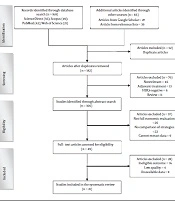
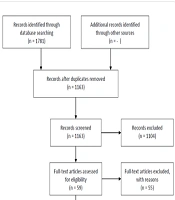
Figure 1 presents the PRISMA flow diagram illustrating the study selection process for this systematic review and meta-analysis of financial toxicity among patients with breast cancer. A total of 263 records were initially identified, including 226 records from database searching and 37 additional records from other sources (e.g., reference lists and gray literature). After duplicates were removed, 149 unique records remained; 107 were screened based on title and abstract, and 42 were excluded due to irrelevance, non-original research, or insufficient data. A total of 56 full-text articles were assessed for eligibility. Of these, 26 studies were excluded for the following reasons: not using the COST instrument, lack of breast cancer-specific data, insufficient data, or high risk of bias. Ultimately, 30 studies met the inclusion criteria and were included in the qualitative synthesis (systematic review), of which 12 studies with sufficient data were included in the quantitative synthesis (meta-analysis).
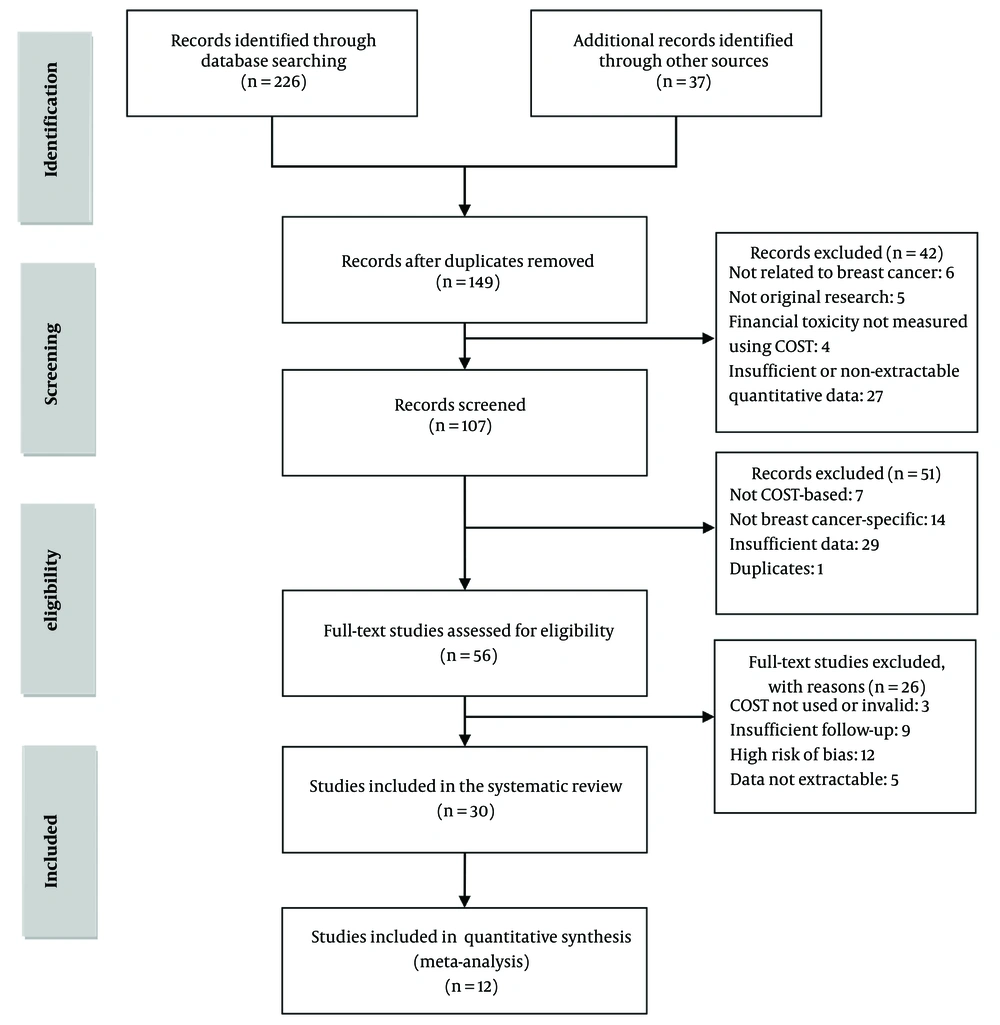
Figure 1.
PRISMA flow diagram of systematic review and meta-analysis on financial toxicity in breast cancer patients
Table 1 summarizes the key characteristics of the 30 studies included in this systematic review and meta-analysis of financial toxicity among patients with breast cancer. The data presented include the author and year of publication, country, study design, population or sample description, sample size, mean age (SD), follow-up duration or time points, primary study objectives, and study quality/risk of bias.
Table 1.
Characteristics and Quality of Studies Included in the Systematic Review of Financial Toxicity in Breast Cancer Patients
| Author (References) | Year | Country | Study Design | Population / Sample Description | Sample Size (n) | Age Mean (SD) | Follow-up Duration / Time Points | Study Objective | Quality / Risk of Bias |
|---|---|---|---|---|---|---|---|---|---|
| Kuang et al. (24) | 2025 | China | Prospective cohort | Women with breast cancer post-surgery from four public hospitals | 378 | 48.9 (9.97) | Baseline (T1), 3 months (T2), 6 months (T3), 12 months (T4) | To examine longitudinal associations between financial toxicity and symptom burden in Chinese breast cancer patients | Moderate (NOS) |
| Stephens et al. (25) | 2024 | USA | Phase I Clinical Trial | African American breast cancer patients receiving radiation therapy; age ≥ 18, post-resection | 38 | Not reported a | Baseline (pre-radiation therapy) | To assess the impact of chemotherapy on financial toxicity among African American breast cancer patients | Some concerns (RoB-2) |
| Kasliwal et al. (26) | 2025 | USA | Phase I Clinical Trial | African-American adult breast cancer patients undergoing adjuvant radiation therapy, guided by patient navigator | Not reported | Not reported | Baseline (pre-radiation therapy) | To evaluate the correlation between individual financial toxicity (FT) and familial FT using COST-FACIT | Some concerns (RoB-2) |
| Kuang et al. (27) | 2025 | China | Multicenter longitudinal study | Women with breast cancer post-surgery from four tertiary hospitals | 378 | 48.9 (9.97) | Baseline (T1), 3 months (T2), 6 months (T3), 12 months (T4) | To identify trajectories and predictors of financial toxicity over time among breast cancer patients | Moderate (NOS) |
| Yang et al. (28) | 2025 | China | Cross-sectional dyadic study | Young breast cancer patients (<40 years) and their family caregivers at four hospitals | 196 dyads | Not reported | Not reported | To investigate the association among financial toxicity, fear of cancer recurrence (FCR), and depression in young breast cancer patient-family caregiver dyads | Moderate (JBI) |
| Gharzai et al. (29) | 2025 | Not reported | Secondary analysis of survey data | Patients with cancer (690 breast cancer) recruited via web-based survey from a philanthropic organization | 711 (690 breast cancer) | Not reported | Not reported | To validate a single-item measure (item 12 of COST) for screening financial toxicity in breast cancer patients | Moderate (JBI) |
| Durbin et al. (30) | 2025 | USA | Prospective cohort (early-phase clinical trial participants) | Early-phase cancer clinical trial participants, various cancer types including breast | 197 | Median 63.4 (range 31.8 - 88.6) | Baseline (time of treatment) | To describe financial toxicity in early-phase clinical trial participants and assess associations with patient characteristics and patient-reported outcomes | Moderate (NOS) |
| Gharzai et al. (29) | 2024 | USA | Cross-sectional survey | Women with stage 0-IV breast cancer treated at Memorial Sloan Kettering Cancer Center | 8512 | Not reported | Surveys collected between 06/2022 - 05/2023 | To characterize disparities in financial toxicity by age and race among women with breast cancer | Low (JBI) |
| Mathew et al. (31) | 2024 | India | Prospective cross-sectional study | Primary caregivers of patients with cancer undergoing curative treatment at a tertiary cancer center | 403 | 83.8% <50 years | March-June 2023 | To assess financial toxicity and coping strategies among caregivers of cancer patients in a lower-middle-income country | Moderate (JBI) |
| Thom et al. (32) | 2024 | USA | Quality improvement screening program | Patients with cancer (breast, gastrointestinal, gynecologic, thoracic) at an urban comprehensive cancer center | 38,249 responders | Not reported | 2022 - 2023 | To assess financial toxicity and health-related social needs among patients with cancer receiving radiation therapy compared with other treatments | Moderate (JBI) |
| Li et al. (33) | 2024 | China | Cross-sectional dyadic study | Breast cancer patients and their caregivers | 405 dyads | Not reported | Not reported | To evaluate the mediating effect of social support on the relationship between financial toxicity and fear of cancer recurrence in breast cancer patient-caregiver dyads | Moderate (JBI) |
| Chen et al. (34) | 2024 | China | Multicentre cross-sectional study | Young and middle-aged women with breast cancer from four hospitals | 538 (521 valid responses) | Not reported | Not reported | To assess financial toxicity and its association with family resilience and negative emotions in breast cancer patients | Moderate (JBI) |
| Mollica et al. (35) | 2024 | USA | Cross-sectional registry analysis | Individuals with metastatic solid tumors participating in the Cancer Experience Registry | 484 | Not reported | Not reported | To describe financial toxicity, identify associated characteristics, and examine relationships between FT and compensatory behaviors in metastatic cancer patients | Moderate (JBI) |
| Wu et al. (36) | 2023 | USA | Cross-sectional survey | Patients with breast cancer recruited from Ciitizen platform, Breastcancer.org, and patient advocacy groups | 669 | 51.6 | Not reported | To assess financial toxicity and COVID-19-related economic stress in breast cancer patients during the pandemic | Moderate (JBI) |
| Lin et al. (37) | 2023 | China | Cross-sectional | Post-chemotherapy breast cancer patients admitted to three general hospitals in East China | Not reported | Not reported | Not reported | To explore the correlation between financial toxicity, social support, and social functioning, and to examine their interaction in post-chemotherapy breast cancer patients | Moderate (JBI) |
| Saeki et al. (38) | 2023 | Japan | Cross-sectional comparative study (patients vs physicians) | Breast cancer patients attending research facilities; physicians who are members of the Japanese Breast Cancer Society | Patients: 1558; Physicians: 825 | NR | NR | To quantify FT among breast cancer patients in Japan using the Japanese COST; to compare patient vs physician perspectives; to identify factors associated with FT; to evaluate adequacy of information support for medical expenses | Moderate (JBI) |
| Liu et al. (39) | 2022 | China | National cross-sectional survey | Female breast cancer patients (stage 0-IV) recruited from 33 public tertiary cancer hospitals across 31 provinces | 627 | Median age 48 (range 26 - 84); Mean (SD): NR | Single time-point (Jan-Mar 2021) | To quantify financial toxicity among Chinese female breast cancer patients and identify associated factors and coping strategies | Moderate (JBI) |
| Corkum et al. (40) | 2022 | USA | Retrospective cross-sectional study (single institution) | Adult female surgical breast cancer patients surveyed between Jan 2018 and Jun 2019 | 568 | NR | Single time-point (survey + chart review) | To examine associations between geospatial factors (rurality, Area Deprivation Index) and financial toxicity among surgical breast cancer patients | Moderate (JBI) |
| Yusuf et al. (41) | 2022 | USA | Prospective observational study | Women with stage I-III breast cancer completing RT; evaluated within 1 month after radiation therapy | 108 | NR | Single time-point (within 1 month of RT completion) | To quantify FT in women receiving RT, identify predictors of FT, assess correlation between FT and QoL, and evaluate whether RT duration affects FT | Moderate (NOS) |
| Shim et al. (42) | 2022 | South Korea | Cross-sectional study (psychometric validation) | Disease-free breast cancer survivors completing COST-K and QLQ-C30 at a tertiary hospital | 4,297 | NR | Single time-point (Nov 2018-Apr 2019) | To validate the Korean version of COST (COST-K) and evaluate FT among disease-free breast cancer survivors | Low (JBI) |
| Benedict et al. (43) | 2022 | USA | Cross-sectional survey | Breast and gynecologic cancer survivors; 74% breast cancer; evaluated FT, distress, and QOL | 273 | 54.65 (12.08) | Mean 3.42 years (SD 4.20) post-diagnosis | To evaluate subjective FT experiences and associations with distress and quality of life | Low (JBI) |
| Boukovalas et al. (44) | 2021 | USA | Cross-sectional comparative study with propensity score matching | Female patients, stage 0-II breast cancer, unilateral BCT vs unilateral mastectomy | 294 total; 72 matched pairs; 55 pairs with COST data | NR | Cross-sectional (single time point) | To compare FT between BCT vs mastectomy and identify determinants of FT | Moderate (JBI) |
| Susilowati & Afiyanti (45) | 2021 | Indonesia | Cross-sectional study | Indonesian breast cancer survivors recruited by consecutive sampling | 109 | NR | Cross-sectional (single time point) | To identify the correlation between socio-demographic factors and financial toxicity among women with breast cancer in Indonesia | Moderate (JBI) |
| Sidey-Gibbons et al. (46) | 2021 | USA | Survey-based study + ML model development | Breast cancer patients undergoing therapy at MD Anderson; data collected pre-treatment | 611 total; ML test sample = 203 | NR | Single time point / pre-treatment | To develop and validate ML algorithms predicting financial toxicity risk before treatment initiation | Moderate (JBI) |
| Coroneos et al. (47) | 2021 | USA | Single-institution cross-sectional retrospective survey | Female breast cancer patients (>18 years) who underwent lumpectomy or mastectomy (2018 - 2019) | 532 | Mean age 58 (SD NR) | Single time point / post-surgery | To examine the association between FT and quality of life (BREAST-Q, SF-12) and satisfaction among surgical breast cancer patients | Moderate (JBI) |
| Williams et al. (48) | 2021 | USA | Choice-based conjoint analysis / Cross-sectional study | Nationwide sample of women with breast cancer receiving assistance from the Patient Advocate Foundation | 220 | Median age 58 (IQR 49 - 66), Mean/SD NR | Single time point | To quantify treatment preferences and evaluate their association with financial toxicity using the COST tool | Moderate (JBI) |
| Offodile et al. (49) | 2021 | USA | Cross-sectional survey | Adult female breast cancer patients undergoing lumpectomy or mastectomy (2018 - 2019) | 571 | NR | Single time point | To identify patient- and treatment-level factors associated with financial toxicity after surgical treatment for breast cancer | Moderate (JBI) |
| Wan et al. (50) | 2021 | USA | Cross-sectional survey | Women ≥ 18 years with metastatic breast cancer receiving care at 2 academic hospitals (2017 - 2019) | 95 | NR | Single time point | To examine the relationship between shared decision-making (SDM) preferences and financial toxicity in metastatic breast cancer patients | Moderate (JBI) |
| Jing et al. (51) | 2020 | China | Cross-sectional | Women with stage 0-III breast cancer admitted to a tertiary hospital in Taiyuan (Jan-May 2019) | 166 | NR | Single time point | To assess financial toxicity and identify patient and cancer factors associated with FT | Moderate (JBI) |
| Stephens et al. (52) | 2025 | USA | Prospective cohort (Phase I clinical trial) | African-American women with early-stage breast cancer receiving adjuvant RT; all paired with a navigator (NAVAH trial) | 40 | NR | Pre-RT and 1-month post-RT | To assess longitudinal impact of adjuvant RT on financial toxicity among African-American breast cancer patients | Some concerns (RoB-2) |
a Missing data are reported as 'Not reported'. Where possible, missing information was obtained by contacting the original study authors; otherwise, data were not available.
Table 2 presents a synthesized categorization of all determinants and predictors of financial toxicity identified across the studies included in this systematic review and meta-analysis. Determinants were grouped into major thematic domains, including sociodemographic characteristics, healthcare and clinical factors, economic and financial drivers, psychosocial influences, health literacy and support systems, coping and behavioral responses, and decision-making preferences. Under each theme, relevant subthemes and specific predictors are listed, along with corresponding reference numbers indicating the studies in which these associations were reported. This structured framework illustrates the multidimensional and interrelated nature of financial toxicity in breast cancer populations and highlights the most frequently cited risk and protective factors across the literature.
Table 2.
Summary of Themes, Subthemes, and Determinants of Financial Toxicity Among Breast Cancer Patients Identified Across Included Studies
| Themes and Subthemes | Determinant/Predictor | Reference |
|---|---|---|
| Sociodemographic Factors | ||
| Age | Younger age associated with higher FT | 30-32, 35, 37, 39, 40, 41, 43, 44, 52 |
| Older age protective against FT | 35, 39, 40, 41, 52 | |
| Income | Low household income, income less than 60,000 USD, moderate to low income, is associated with higher FT | 30, 31, 35, 37, 40, 41, 44, 46, 52 |
| High income is protective against FT | 39, 45, 52 | |
| Education | Lower education associated with higher FT | 30, 43, 44 |
| Marital Status | Married individuals have lower FT; single individuals have higher FT | 41, 42, 43 |
| Employment | Unemployment or disability is associated with worse FT | 30, 40, 42, 44, 50 |
| Retired individuals experience lower FT | 40, 42 | |
| Race / Ethnicity | Black, Asian, Hispanic, and non-Asian minority individuals have higher FT | 31, 37, 38, 45, 52 |
| Household Structure | Larger household size and higher number of dependents are associated with higher FT | 37, 40, 47 |
| Living alone associated with higher FT | 37 | |
| Religion | No religious belief is associated with higher FT | 35 |
| Social Support | Low social support is associated with worse FT | 36, 39, 52 |
| Healthcare & Clinical Factors | ||
| Cancer Stage | Advanced or late-stage cancer is associated with higher FT | 32, 37, 39, 41, 45, 52 |
| Treatment Type | Prior chemotherapy is associated with higher FT | 25 |
| Neoadjuvant therapy is associated with higher FT | 47 | |
| Active treatment associated with higher FT | 44 | |
| Radiation Therapy | Radiation therapy alone or combined with chemotherapy is associated with worse FT | 33 |
| No difference in FT based on radiation duration | 53 | |
| Surgery Type | Lumpectomy associated with lower FT compared with mastectomy | 42, 45 |
| Targeted Therapy | History of targeted therapy associated with higher FT | 40 |
| Reconstruction | Autologous reconstruction associated with higher FT | 47 |
| Disease Burden | Higher physical and psychological symptom burden is associated with higher FT | 24, 27 |
| Metastatic disease associated with higher FT | 37 | |
| Time Since Diagnosis | Less than one year since diagnosis is associated with higher FT | 36 |
| Economic & Financial Drivers | ||
| Out-of-Pocket Costs | Significant medication costs are associated with higher FT | 42, 50 |
| Increased non-medical spending associated with higher FT | 52 | |
| Difficulty affording basic expenses associated with higher FT | 27 | |
| Employment Change | Work reduction or work cessation associated with higher FT | 44, 50 |
| Insurance | Supplemental insurance associated with lower FT | 41, 45, 50 |
| Income Stability | Being the primary wage earner associated with FT | 46 |
| Employment type (disabled or unemployed higher FT; retired lower FT) | 42 | |
| Income Stability | A higher credit score is associated with lower FT | 50 |
| Transportation & Food Insecurity | Higher transportation or food insecurity is associated with higher FT | 33 |
| Neighborhood Factors | Higher area deprivation index is associated with higher FT | 41 |
| Psychosocial Factors | ||
| Mental Health | Depression severity strongly associated with FT | 28, 37 |
| Family Resilience | Low family resilience associated with higher FT | 35 |
| Psychosocial Patterns | High self-blame and low acceptance are associated with higher FT | 30 |
| Caregiver Influence | Caregiver FT influences patient fear of cancer recurrence; patient fear of cancer recurrence influences caregiver depression | 28, 34 |
| Health Literacy & Support Systems | ||
| Cost-Related Health Literacy | Low cost-related health literacy is associated with worse FT trajectories | 27 |
| Physician Support | Better physician understanding and support are associated with lower FT | 39 |
| Patient Navigation | Patient navigation support influences FT patterns over time | 25, 53 |
| Coping Strategies & Behavioral Factors | Skipping medications, delaying treatment, or considering quitting treatment are used as coping strategies | 32, 40, 52 |
| Treatment Modification | ||
| Financial Coping | Borrowing money, using savings, taking loans, and restructuring spending as financial coping strategies | 32, 33, 52 |
| Decision Style | Patient-driven decision-making is associated with worse FT | 49, 51 |
| Shared decision-making is associated with lower FT | 51 |
Among the 30 studies included in the systematic review, 12 provided quantitative data suitable for meta-analysis. These studies were conducted in various countries, including the United States, China, and South Korea, and included a total of 9,376 patients with breast cancer, with mean or median ages ranging from 48 to 63 years. Study designs included cross-sectional, cohort, and early-phase clinical trials, with patients assessed at different stages of treatment (post-surgery, during chemotherapy or radiotherapy, and metastatic disease). All studies used validated versions of the COST instrument to measure financial toxicity (FT), with several applying a cut-off of < 26 to define moderate-to-severe FT. Reported prevalence estimates of FT varied widely across studies, ranging from 24% to 64%, highlighting the substantial global burden of financial toxicity among patients with breast cancer.
Figure 2 summarizes the prevalence estimates from the 12 studies (n = 9,376 patients with breast cancer) included in this meta-analysis. Individual study estimates are displayed as black squares, with the area of each square proportional to the study weight; horizontal lines represent the 95% confidence intervals. The studies are ordered chronologically from earliest (top) to most recent (bottom).
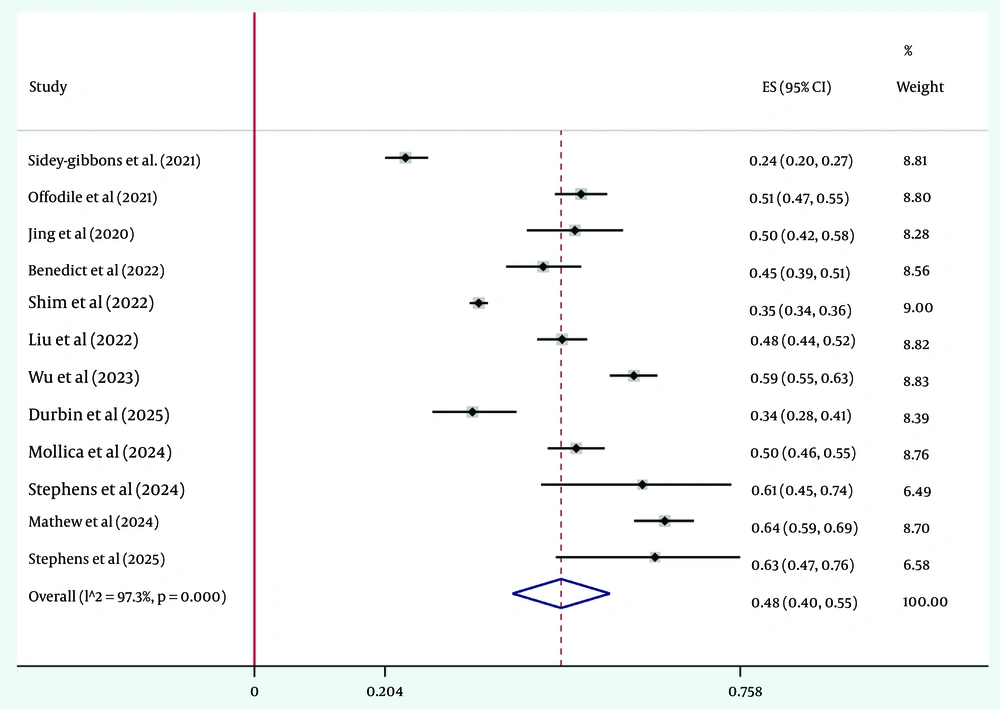
The forest plot reveals considerable variation in the reported prevalence of financial toxicity, ranging from 0.24 (Sidey-Gibbons et al., 2021) to 0.64 (Mathew et al., 2024). The pooled prevalence, derived using a random-effects model due to significant heterogeneity (I2 = 97.3%, τ2 = 0.07, χ2 = 404.68, df = 11, P < 0.001), was 0.48 (95% CI: 0.40 - 0.55). This estimate is represented by the center of the blue diamond, with the lateral tips indicating the confidence limits. The dashed red vertical line denotes the pooled estimate, whereas the solid red line indicates the line of no effect.
This overall estimate of 48% confirms that financial toxicity is a substantial issue for nearly half of all patients with breast cancer globally. The high heterogeneity indicates that the magnitude varies considerably across contexts, highlighting the need to examine determinants such as country income level, the healthcare system, and insurance status to explain these differences.
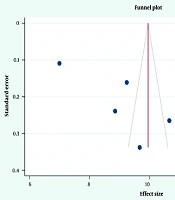
Prevalence (effect size) is plotted against the standard error (inverse of precision). In the absence of bias, points should scatter symmetrically around the pooled prevalence (vertical solid line at 0.48). The plot shows a generally symmetrical distribution, with most studies lying within the pseudo 95% confidence limits (dashed lines). One small study with lower prevalence appears slightly outside the funnel on the left, but no systematic absence of small studies reporting low or high prevalence is evident (Figure 3).
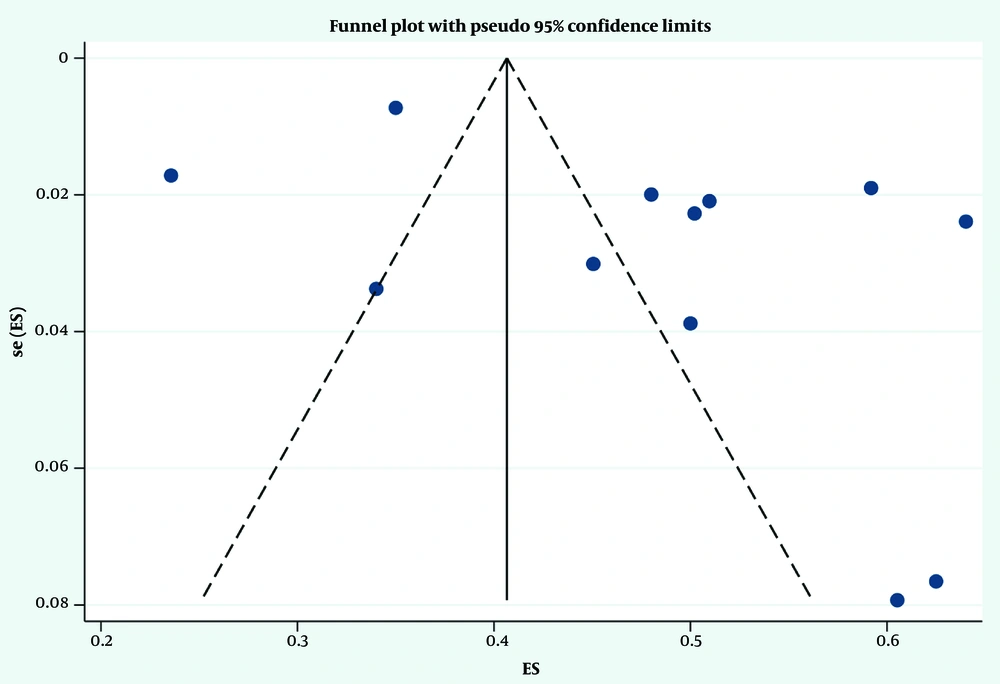
Figure 3.
Funnel plot with pseudo 95% confidence limits assessing publication bias in the 12 included studies on financial toxicity among breast cancer patients.
Standardized effect estimates (SND of effect estimate) are plotted against precision (inverse of standard error). The red regression line has a non-significant intercept (Egger’s test: bias coefficient = 1.94, 95% CI -0.68 to 4.56, P = 0.132), indicating no statistically significant asymmetry. The intercept being close to zero and the P value > 0.05 support the absence of significant small-study effects or publication bias (Figure 4).
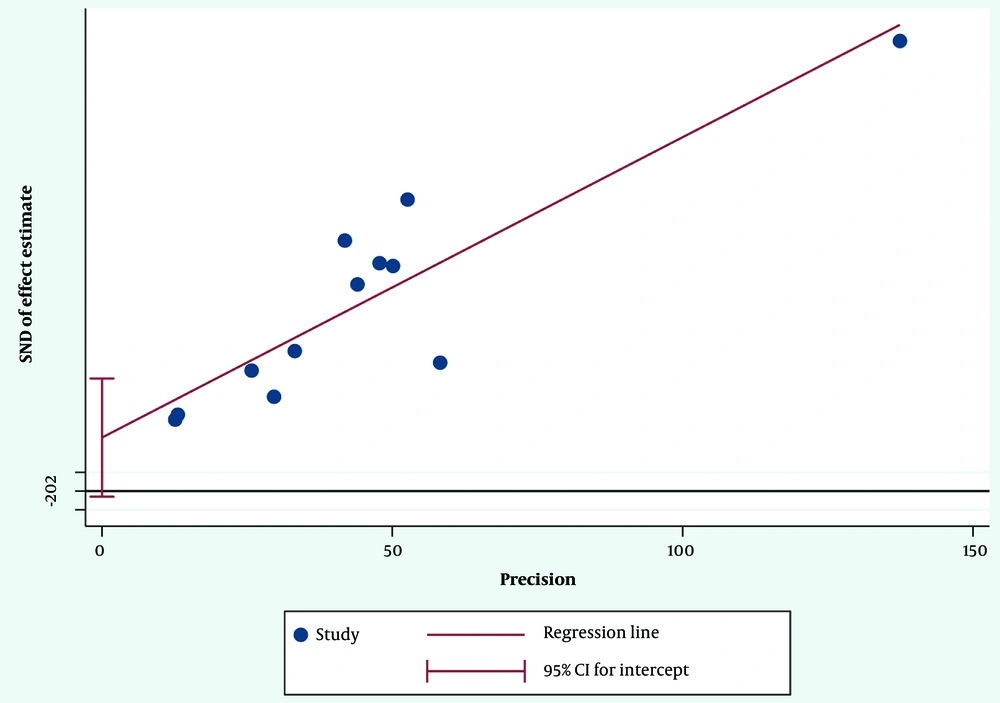
Figure 4.
Egger’s regression plot for detection of small-study effects.
4. Discussion
This systematic review and meta-analysis provides the first comprehensive synthesis of global evidence on financial toxicity among breast cancer patients. Our analysis showed that nearly half (48%, 95% CI: 40 - 55%) of breast cancer patients worldwide experience financial toxicity, as measured by the validated COST instrument. This high prevalence, coupled with substantial heterogeneity across studies (I2 = 97.3%), underscores financial toxicity as a pervasive and clinically significant adverse effect of cancer care that varies considerably across healthcare contexts. The multidimensional determinants identified, spanning sociodemographic, clinical, economic, psychosocial, health literacy, coping behaviors, and decision-making domains, highlight the complex interplay of factors contributing to financial burden in this population (53, 54).
The substantial heterogeneity observed across studies represents an important methodological consideration. This variability is likely attributable to several factors, including differences in healthcare systems (ranging from high-income countries with comprehensive insurance coverage to low- and middle-income settings with high out-of-pocket expenditures), heterogeneity in patient populations (e.g., socioeconomic status, insurance coverage, and employment conditions), variation in the timing of financial toxicity assessment (during active treatment versus survivorship), and differences in clinical characteristics, such as cancer stage and treatment modalities. In addition, although all included studies used the COST instrument, differences in the application of cutoff values and the interpretation of scores may have further contributed to between-study variability.
Importantly, due to the limited number of included studies (n = 12), subgroup analyses and meta-regression were not feasible, as a sufficient number of studies per covariate is required to ensure statistical robustness. Therefore, the observed heterogeneity could not be further explored quantitatively. Taken together, these findings suggest that the pooled prevalence should be interpreted with caution and that financial toxicity is highly context-dependent across different healthcare settings.
The observed prevalence is consistent with recent systematic reviews examining financial toxicity across cancer populations, although the substantial heterogeneity reflects important variations in healthcare financing systems and patient populations (39, 55). Notably, studies from low- and middle-income countries reported higher prevalence estimates than those from high-income countries, suggesting that healthcare system characteristics and social safety net programs play critical roles in mitigating financial toxicity (7, 15). The protracted nature of breast cancer treatment—often requiring years of adjuvant therapy, surveillance, and management of late effects—creates sustained financial pressure that can deplete savings, increase debt, and compromise long-term financial security (56, 57).
Our thematic synthesis identified younger age, lower income, unemployment, advanced cancer stage, and receipt of chemotherapy as consistent predictors of financial toxicity. Younger patients are particularly vulnerable due to limited accumulated savings, competing financial obligations, employment disruption, and the absence of Medicare coverage in countries such as the United States (29, 58). The association between chemotherapy and financial toxicity likely reflects both the high cost of systemic agents—particularly novel targeted therapies and immunotherapies—and indirect costs associated with treatment administration and complication management (8, 59). Psychosocial factors, including low social support and depression, emerged as important correlates, reflecting a likely bidirectional relationship in which financial strain precipitates psychological distress, while pre-existing mental health conditions may impair patients' ability to navigate financial assistance programs (28, 34).
The clinical implications of financial toxicity extend beyond economic hardship to encompass tangible effects on treatment adherence, quality of life, and survival. Multiple studies have documented associations between financial burden and medication nonadherence, with higher out-of-pocket costs leading to prescription abandonment and treatment discontinuation (60, 61). For breast cancer patients specifically, nonadherence to adjuvant endocrine therapy—often driven by medication costs—has been associated with increased risk of recurrence and mortality (62, 63). Financial toxicity also has profound effects on patient-reported outcomes, with patients experiencing financial burden reporting worse physical, emotional, and social functioning (9, 14). Alarmingly, extreme financial distress manifested as bankruptcy has been identified as an independent predictor of mortality, with bankruptcy filers experiencing 79% higher mortality than non-filers (10).
Addressing financial toxicity requires coordinated efforts at multiple levels of the healthcare system. Policy-level interventions, including expanding insurance coverage, limiting out-of-pocket costs, and implementing value-based pricing frameworks, are essential to reduce financial burden (64, 65, 66). Healthcare system interventions, such as financial navigation programs that connect patients with counselors who assist with insurance optimization and identification of assistance programs, have demonstrated feasibility and acceptability (67, 68). Financial toxicity screening using brief validated instruments can facilitate early identification and intervention for at-risk patients (28, 32). Provider-level interventions focused on enhancing oncologist engagement in cost conversations and incorporating patient out-of-pocket costs into treatment decision-making may help normalize cost considerations as a component of high-quality cancer care (69, 70).
The burden of financial toxicity in low- and middle-income countries deserves particular emphasis, as these settings face unique challenges related to limited insurance coverage, high out-of-pocket payment systems, and delayed diagnosis, resulting in more advanced-stage disease requiring intensive treatment (71, 72). Strategies to address financial toxicity in LMICs must be tailored to local contexts and include expanding universal health coverage with inclusion of cancer care, strengthening primary healthcare systems to enable earlier diagnosis, and implementing innovative financing mechanisms such as social health insurance schemes (73, 74, 75).
Our findings are broadly consistent with prior evidence from broader oncology populations. For example, a recent meta-analysis by Ehsan et al. (55) reported a high prevalence of financial toxicity across various cancer types, with particularly higher estimates observed in low- and middle-income countries. While their study included diverse cancer populations and used different measurement tools, the overall pattern of substantial financial burden aligns with our findings in breast cancer patients.
However, differences in reported prevalence may be partly attributable to variations in assessment instruments, as our study focused exclusively on the COST measure, whereas other meta-analyses have incorporated heterogeneous tools and definitions of financial toxicity. These methodological differences, along with variations in healthcare systems and socioeconomic contexts, should be considered when comparing prevalence estimates across studies.
Several limitations warrant consideration. First, the high heterogeneity limits the precision of our pooled prevalence estimate and suggests substantial variation across settings. Second, most included studies employed cross-sectional designs, precluding definitive conclusions about causal relationships. Third, most studies were conducted in high-income countries, particularly the United States, limiting generalizability to LMICs where the financial toxicity burden may be substantially higher. Finally, our focus on the COST instrument, while enhancing methodological consistency, may have excluded relevant studies using other financial toxicity measures.
Financial toxicity affects nearly half of breast cancer patients globally, with multidimensional determinants spanning sociodemographic, clinical, psychosocial, and healthcare system factors. Addressing this pervasive problem requires coordinated policy reforms, healthcare system interventions, and provider-level initiatives. Future research should focus on rigorous evaluation of interventions, understanding and addressing disparities, standardization of measurement approaches, and development of tailored strategies for diverse healthcare contexts, particularly in LMICs where the burden is greatest.
4.1. Conclusions
This systematic review and meta-analysis demonstrates that financial toxicity affects nearly half of all breast cancer patients, representing a major public health challenge that demands urgent attention. Financial toxicity is not merely an economic issue but a clinical outcome with profound implications for treatment adherence, quality of life, psychological well-being, and potentially survival. The determinants of financial toxicity are multidimensional, spanning sociodemographic characteristics, clinical factors, healthcare system features, psychosocial influences, and patient behaviors.
Addressing financial toxicity requires coordinated efforts across multiple levels. At the clinical level, routine screening, cost communication, financial navigation, and value-based treatment selection can help identify and support at-risk patients. At the policy level, insurance reforms, pharmaceutical pricing controls, employment protections, and health equity initiatives are needed to reduce the structural drivers of financial burden. At the research level, intervention studies, longitudinal investigations, mechanistic research, and global health studies will build the evidence base for effective solutions.