Fulltext
The Full text is available in PDF.
International Journal of Cancer Management
The Official Journal of Cancer Research Center (CRC), Shahid Beheshti University of Medical Sciences
Authors
Background: Optical mammography is a new diagnostic method that uses Nearinfrared for detection of functional abnormalities and shows tissue activities by measuring absorption and scattering of Near-infrared light. This study aims to evaluate the safety and effectiveness of this technology.
Methods: Cochrane Library (Issue 10, 2012) and Medline (Nov 2012) were searched using free text and Mesh. Studies that compared optical mammography with other diagnostic methods and used outcomes such as sensitivity, specificity and safety were included.
Results: Twelve studies were included in this review. A multicenter RCT showed that among 875 biopsied lesions, suspicion index led to 97% sensitivity, 14% specificity, 95% negative predictive value and 24% positive predictive value. In terms of oxygenation index, the included studies found that the process should be used with various wavelengths compared to single wavelength technique (690, 750, 788, 856 nm or 683, 912, 975nm). In terms of sensitivity and specificity, Diffuse Optical Tomography Computer Aided Detection is capable of distinguishing healthy tissues from malignant ones with 89% sensitivity and 94% specificity. Also, this technology could show increased blood flow around the tumor tissue compared to the healthy tissue effectively. Included studies did not report any information about the effects of technology on changing the treatment process or the final health outcomes.
Conclusion: Optical mammography is a safe, noninvasive, non-ionized diagnostic technology that can be used as a diagnostic supplement alongside conventional mammography for differentiating benign and malignant tumors. Women with higher breast density should be screened at younger ages and with more persistence than those who have lower densities.
© 2013, Author(s). This open-access article is available under the Creative Commons Attribution 4.0 (CC BY 4.0) International License (https://creativecommons.org/licenses/by/4.0/), which allows for unrestricted use, distribution, and reproduction in any medium, provided that the original work is properly cited.
Mehnati P, Jafari Tirtash M, Zakerhamidi MS, Mehnati P. Assessing Absorption Coefficient of Hemoglobin in the Breast Phantom Using Near-Infrared Spectroscopy. I J Radiol. 2016;13(4):e31581. doi: https://doi.org/10.5812/iranjradiol.31581
Mokhtari M, Amirdosara M, Goharani R, Zangi M, Tafrishinejad A, et al. The Predictive Power of Near-Infrared Spectroscopy in Improving Cognitive Problems in Patients Undergoing Brain Surgeries: A Systematic Review. Anesth Pain Med. 2022;12(1):e116637. doi: https://doi.org/10.5812/aapm.116637
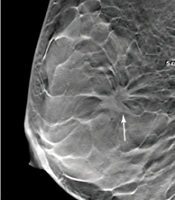
Xu H, Zeng W, Fu Z, Cui Q. Diagnostic Value of Digital Breast Tomosynthesis Combined with Magnetic Resonance Imaging for Breast Cancer in Dense Breast Tissues. I J Radiol. 2021;18(4):e114976. doi: https://doi.org/10.5812/iranjradiol.114976
Refahi S. Brain Near-Infrared Spectroscopy (NIRS). I J Radiol. 2017;14(Special Issue):e48049. doi: https://doi.org/10.5812/iranjradiol.48049
Godazandeh G, Alizadeh-Navaei R, Shamshirian A, Heydari K, Shojaee L. Diagnostic Value of Intraoperative Frozen Section in Breast-Conserving Surgery: A Systematic Review and Meta-analysis. Int J Cancer Manag. 2021;14(11):e114082. doi: https://doi.org/10.5812/ijcm.114082
Last Update: 1 week ago
Last Update: 1 week ago
Last Update: 1 week ago
Last Update: 3 hours ago
Last Update: 6 hours ago
Last Update: 5 days ago