Int J Cardiovasc Pract

Image Credit:Int J Cardiovasc Pract

D-dimer Levels as a Prognostic Inpatient Mortality Indicator in COVID-19 Patients: Insights from a Cross-Sectional Study

Author(s):
Rama BozorgmehrRama Bozorgmehr1, 2, Negar ShamsNegar Shams1, Hassan AkbarniakhanyHassan Akbarniakhany1, Toktam AlirezaeiToktam Alirezaei3, Amirhosein MahmoodiAmirhosein Mahmoodi1, Hamed HesamiHamed Hesami4,*
1Clinical Research Development Unit, Shohadae-e Tajrish Hospital, Shahid Beheshti University of Medical Sciences, Tehran, Iran
2Clinical Research Development Center, Shahid Modarres Educational Hospital, Shahid Beheshti University of Medical Sciences, Tehran, Iran
3Research Center of Artificial Intelligence in Health, Shohada-e Tajrish Hospital, Shahid Beheshti University of Medical Sciences, Tehran, Iran
4Rajaie Cardiovascular Medical and Research Center, Iran University of Medical Sciences, Tehran, Iran

International Journal of Cardiovascular Practice:Vol. 10, issue 2; e162064
Published online:Sep 13, 2025
Article type:Research Article
Received:Aug 13, 2025
Accepted:Aug 16, 2025
How to Cite:Bozorgmehr R, Shams N, Akbarniakhany H, Alirezaei T, Mahmoodi A, et al. D-dimer Levels as a Prognostic Inpatient Mortality Indicator in COVID-19 Patients: Insights from a Cross-Sectional Study.Int J Cardiovasc Pract.2025;10(2):e162064.https://doi.org/10.5812/intjcardiovascpract-162064.

Abstract

Background:

Since the COVID-19 pandemic's start in December 2019, which was brought on by the SARS-CoV-2 beta coronavirus, this virus has claimed the lives of millions of people worldwide. D-dimer is a specific biomarker that shows enhanced activity of the body's fibrinolytic enzymes and activation of the coagulation cascade.

Objectives:

In this study, we determined that by measuring the amount of D-dimer and finding its relationship with the mortality rate in patients with COVID-19 hospitalized in Shohada-e Tajrish Hospital.

Methods:

This cross-sectional study involved all COVID-19 patients at Shohada-e Tajrish Hospital's emergency department (April 2020 - March 2021). Extracted data included demographics, clinical status, underlying conditions, and lab results from electronic medical records. Inclusion criteria: Age > 18, positive COVID-19 PCR. Lab tests were done on admission and during hospitalization. D-dimer levels were measured using Siemens immunoassay (cutoff 0.5 µg/mL, considering 2000 ng/mL based on previous studies).

Results:

This study at Shohada-e Tajrish Hospital with 230 patients (average age 62.61 ± 15.67) formed two groups based on D-dimer levels: ≥ 2.0 µg/mL (average age 67.83 ± 16.73) and < 2.0 µg/mL (average age 57.34 ± 16.2). The D-Dimer ≥ 2.0 µg/mL group had higher addiction and smoking rates, linked to increased mortality in addicted patients. COVID-19 symptoms were similar, while underlying disorders and some lab markers varied. Mortality was higher in the D-Dimer ≥2.0 µg/mL group, with no difference in hospital stay duration.

Conclusions:

The study finds that while D-dimer levels aid in categorizing COVID-19 patients' mortality, they aren't a precise marker. Elevated D-dimer signifies greater mortality risk influenced by age, gender, breathlessness, and underlying conditions. Monitoring helps detect complications early, reducing COVID-19 mortality via prevention. Larger, comprehensive studies are necessary for stronger insights.

1. Background

Since the COVID-19 pandemic's start in December 2019, which was brought on by the SARS-CoV-2 beta corona virus. Worldwide, this virus has claimed the lives of millions of people (1). Iran was one of the first nations affected by this pandemic, with more than 7 million coronavirus cases and more than 140000 casualties (2). The most typical symptoms of this illness include sore throat, fever, muscle pain, coughing, and respiratory involvement (3). Other symptoms of the disease that have been seen include cardiovascular complications (4) Neurological symptoms (5). Hematological finding (6) and biochemical changes like changes in some biomarkers including D-dimer (7).

D-dimer is a specific biomarker that shows enhanced activity of the body's fibrinolytic enzymes and activation of the coagulation cascade (8). However, it has high sensitivity but low specificity because it increases in cases such as malignancy, pregnancy, and various infections (9-11).

On the other hand, the increase in inflammation and hypoxia caused by the COVID-19 disease can cause changes in the coagulation profile, including an increase in D-dimer and PT. Increased D-dimer has been linked to mortality and the severity of the COVID-19 disease, according to earlier research (12-14).

2. Objectives

This study aimed to determine the association of D-dimer with the mortality rate in patients with COVID-19 hospitalized in Hospital. it is possible to reduce the mortality rate of patients hospitalized in the COVID-19 ward by Choosing appropriate treatment.

3. Methods

3.1. Study Population and Design

The present research is a cross-sectional study, includes all known COVID-19 patients who visited or were referred to the emergency department of tertiary hospital (Shohada-e Tajrish Educational Hospital) from April 2020 to March 2021.

All patient with positive polymerase chain reaction (PCR) who had respiratory and non-respiratory symptoms and signs, are enrolled in the study.

3.2. Data Collection

Demographic information (age and gender of the patient), clinical information [length of hospital stay (LOHS)], having an underlying disease, discharge or death and laboratory data (routine tests have been done at the time of hospitalization, blood clotting profile and D-dimer) were extracted from the electronic medical records of the patients. the inclusion criteria were age above 18 and positive COVID-19 PCR, confirmed using real‐time polymerase chain reaction (RT‐PCR) of throat swab samples. The blood samples for laboratory tests were collected on admission and during the hospitalization. D-dimer were detected using IMMULITE 2000 Immunoassay System system from Siemens company with cutoff 0.5 µg/mL. However, we took into consideration the cut-off of 2000 ng/mL for D-dimer based on other studies in this area of research (15).

3.3. Ethics Statement

This study was approved by the research ethical committee of the Shahid Beheshti University of Medical Sciences (code: IR.SBMU.RETECH.REC.1400.557) and written informed consent was obtained from all participants before participation. The researchers acquired written informed consent and followed the recommendations in Helsinki Declaration.

3.4. Statistical Analysis

All quantitative variables expressed in the form of mean and standard deviation. Chi-squared test, Fisher exact test, and Student’s t-test were used for nonparametric and parametric analysis, respectively. Statistically significant level was considered as P-value < 0.05 in all analysis. All statistical analyses were performed using IBM SPSS V22 software (SPSS, Chicago, IL, USA).

4. Results

In This Cross-sectional study ,230 patients with an average age of 62.61 ± 15.67 have participated in this descriptive study that was carried out in during 12 months. Among them, 57.82% were men and 42.18% were women. Patients were divided into two groups D-dimer ≥ 2.0 µg/mL with an average age of 67.83 ± 16.73 and D-dimer > 2 µg/mL with an average age of 57.34 ± 16.2.

The research had 230 patients in all, of whom 152 were discharged from the hospital and 78 passed away. The demographic features of the two patient groups, including age and sex, did not significantly differ (P > 0.05). Although the deceased patients' average age is much older than that of the discharged patients, there is no significant difference in terms of gender.

The analysis of 3 indicators of addiction status and smoking and alcohol consumption revealed that the number of smokers and addicts in D-dimer ≥ 2.0 µg/mL group patients were significantly higher than the other group, while the Alcohol Consumption Index did not show a significant difference. But in the study of the death rate, Mortality is significantly higher in addicted people, while there is no significant difference in terms of mortality in smokers and alcoholics.

In the examination of the symptoms caused by the covid disease, it has been shown that in the group D-dimer more than 2 µg/mL coughs in 62 cases, dyspnea in 71 cases, fever in 40 cases, and malaise in 53 cases, and in the other group, respectively, 73,79,65 and 50 cases where there is no significant difference between these two groups.

When the two groups' underlying disorders were compared, the blood pressure in the group with D-dimers greater than 2 µg/mL was 47 against 38 for D-dimers less than 2 µg/mL. diabetes 29 cases against 27, IHD 22 cases against 13, CVA 13 cases against 7, malignancy 18 cases against 2, CKD 8 cases against 4, CABG 7 cases against 6 and COPD 7 cases against 3 for D-dimers less than 2 µg/mL .and there was no significant difference between these two groups.

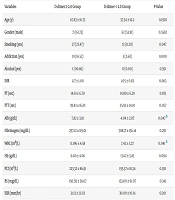
In the analysis of laboratory indicators, serum albumin level and white blood cell count in D-dimer ≥ 2.0 µg/mL group were significantly higher than the other group. But other laboratory indicators including coagulation profile and CRP had no significant difference between the two groups. This is while PT Index, Albumin, White blood cells and CRP were significantly higher in deceased patients than in other groups of patients. Details of this comparison based on D-dimer levels and mortality are provided in Tables 1 and 2, respectively.

Table 1.Comparing Patients Based on D-dimer Levels a
VariablesD-dimer ≥ 2.0 GroupD-dimer < 2.0 GroupP-Value
Age (y)67.83 ± 16.7357.34 ± 16.20.1928
Gender (male)71 (61.73)62 (53.91)0.5582
Smoking (yes)27 (23.47)13 (11.30)0.047
Addiction (yes)19 (16.52)3 (2.60)0.009
Alcohol (yes)1 (00.86)0 (0.00)0.391
INR1.17 ± 1.001.05 ± 0.830.063
PT (sec)14.61 ± 6.7014.80 ± 6.290.193
PTT (sec)39.83 ± 16.0135.93 ± 14.100.057
Alb (g/dL)7.82 ± 3.914.04 ± 2.070.047 b
Fibrinogen (mg/dL)297.12 ± 119.01308.71 ± 136.140.291
WBC (109/L)11.196 ± 4.587.42 ± 3.270.041 b
Hb (g/dL)11.60 ± 4.0613.62 ± 5.830.094
PLT (109/L)223.32 ± 86.91193.57 ± 81.340.130
BS (mg/dL)150.59 ± 58.67153.00 ± 61.070.341
ESR (mm/hr)31.13 ± 12.0330.00 ± 10.610.201
CRP (mg/dL)38.37 ± 18.9331.44 ± 17.04CRP
Hospitalization days11.85 ± 4.098.54 ± 3.830.057
Death (yes)62 (53.91)16 (13.91)0.001 a

a Values are presented as mean ± SD or No. (%).

b Significant P-value.

Table 2.Comparing Patients Based on Mortality a, b
VariablesDischarge GroupDeath GroupP-Value
Age (y)54.41 ± 16.270.81 ± 16.730.044 c
Gender (male)92 (60.52)41 (52.56)0.152
Smoking (yes)22 (14.47)18 (23.07)0.091
Addiction (yes)11 (7.23)11 (14.10)0.047
Alcohol (yes)0 (0.00)1 (1.28)0.391
INR1.00 ± 0.711.22 ± 1.090.054
PT (sec)14.73 ± 6.2914.68 ± 6.740.18
PTT (sec)33.81 ± 14.0041.85 ± 16.270.040 c
Alb (g/dL)3.92 ± 2.217.94 ± 4.080.041 c
Fibrinogen (mg/dL)334.18 ± 136.14271.65 ± 119.010.11
WBC (109/L)7.83 ± 3.6410.78 ± 4.010.041 c
Hb (g/dL)13.62 ± 5.8311.60 ± 4.060.087
PLT (109/L)193.57 ± 81.34223.32 ± 86.910.13
BS (mg/dL)153.00 ± 61.07150.59 ± 58.670.341
ESR (mm/hr)30.00 ± 10.6131.13 ± 12.030.201
CRP (mg/dL)26.49 ± 17.0443.32 ± 18.930.036 c

a Values are presented as mean ± SD or No. (%).

b The mortality in the D-Dimer ≥ 2.0 µg/mL group was significantly higher than in the D-dimer > 2.0 µg/mL group, in the analysis of the mortality rate in two groups. Although the average length of hospital stay (LOHS) in the D-dimer ≥ 2.0 µg/mL group was longer, it was not significantly different from the other group.

c Significant P-value.

5. Discussion

D-dimer is a fibrin breakdown product that can be used to diagnose thrombotic diseases because high levels show that secondary fibrinolysis and hypercoagulability are happening in the body. Patients with COVID-19 have been reported to have high coagulability (16, 17). In individuals with severe COVID-19, venous thromboembolism occurs 25% of the time, while pulmonary embolism is detected in 30% of COVID-19 patients (18-20). Patients with ischemic stroke from COVID-19 also had higher blood levels of D-dimer (21). The following are some potential causes of elevated D-dimer values in COVID-19 patients:

(1) Infection can induce pro-inflammatory cytokines to be released, resulting in an inflammatory storm. Notably in individuals with severe COVID-19, pro-inflammatory cytokines including IL-2, IL-7, G-CSF, IP-10, MCP-1, MIP-1A, TNF-α levels in plasma are increased. T-cells, macrophages, and natural killer cells multiply rapidly and are strongly activated, which is accompanied by the overproduction of immune or non-immune defense cells and the release of more than 150 inflammatory cytokines and chemical mediators (22-24). These may cause endothelial cell dysfunction leading to damage to the microvascular system and abnormal activation of the coagulation system, systemic small vessel vasculitis, and extensive microthrombosis.

(2) Various levels of hypoxia are seen in COVID-19 patients. Increased oxygen consumption caused by inflammation can result in thrombosis. Absolute oxygen demand increases during abnormal hemodynamics, which stimulates molecular and cellular pathways and leads to thrombosis (25-28).

(3) Severe infection or acute inflammation caused by sepsis can affect blood coagulation, such as increasing the level of plasminogen activator inhibitor 1 (PAI-1) and excessive fibrinolysis that eventually activates the coagulation cascade (29, 30).

After grouping the patients based on the D-dimer level, we found that shortness of breath, diabetes, high blood pressure, and cerebrovascular disease can affect the D-dimer level; however, this difference between the two groups was not significant (P > 0.05). There were more male patients in this study than female patients, and smoking history is more prevalent in male patients, which might have an impact. High blood pressure and coronary heart disease may increase the risk of mortality in COVID-19 patients. The relationship with COVID-19 and high blood pressure may be due to ACE2. Pericytes express significant quantities of ACE2 in the heart, according to a recent study. Viral infections can harm pericytes, which can result in capillary cell dysfunction and microvascular malfunction. This seems to explain some of the potential reasons for acute coronary syndrome in COVID-19 patients (31). Cerebrovascular disease and diabetes are risk factors that affect prognosis. Diabetic COVID-19 patients have higher levels of D-dimer, higher inflammatory markers, and worse prognosis than non-diabetic patients (32). Also, this study demonstrated that COVID-19 patients with other underlying illnesses had greater D-dimer levels and a poorer prognosis, although the difference was not statistically significant (P > 0.05). When compared to healthy and discharged patients, those who died with COVID-19 infection were substantially older than other patients, according to an analysis of epidemiological and clinical markers in the current study (P < 0.05). Moreover, this group of COVID-19 patients had significantly higher WBC, Alb, PT, and CRP indices than the other group. The average age of mortality brought on by the novel coronavirus was 69.8 years in Yang et al.'s study, which is consistent with the current findings. Statistics show that old age is a risk factor for both contracting and passing away from this disease (33). Most of the patients had at least one underlying disease, notably the patients who passed away, which is consistent with the findings of earlier research (34). All of the individuals who passed away in the Li et al. research had underlying illnesses including diabetes, cardiovascular disease, and high blood pressure. This holds true for the current investigation as well (35). Many studies have demonstrated the inflammatory nature of the infection induced by COVID-19, which results in a spike in CRP and serum albumin levels in patients and is closely associated with the severity of the sickness, in light of what was previously mentioned (36-39). Inflammatory conditions alter the amount of immunological markers on the one hand, and coagulation pathways on the other (40).

5.1. Conclusions

The findings of this clinical trial demonstrated that the clinical categorization of COVID-19 patients can utilize D-dimer blood level; however, this is not a precise and reliable biomarker. For patients with COVID-19, the level of D-dimer may be the best indication of the probability of mortality. After being grouped based on D-dimer value, age, male gender, and symptoms like shortness of breath and underlying illnesses like high blood pressure and diabetes have become effective factors on D-dimer value, which impacts patients' prognoses. Patients with COVID-19 are more susceptible to death due to the aforementioned risk factors. Therefore, it can be said that even though the D-dimer measurement test is not considered to be a reliable indicator of a patient's death probability, dynamic monitoring of D-dimer levels allows for the early detection of thrombotic complications, the implementation of preventative measures to lower the risk of thromboembolism and the risk of bleeding in secondary fibrinolysis of DIC, and ultimately the decrease of the COVID-19 mortality rate. While the statistical population and the examined indicators were both small, future research that generalizes by employing a bigger population and looking at additional factors would undoubtedly provide the circumstances for producing far more robust conclusions.
Acknowledgments

Footnotes

References

  • 1.
    Ciotti M, Ciccozzi M, Terrinoni A, Jiang WC, Wang CB, Bernardini S. The COVID-19 pandemic. Crit Rev Clin Lab Sci. 2020;57(6):365-88. [PubMed ID: 32645276]. https://doi.org/10.1080/10408363.2020.1783198.
  • 2.
    Worldometers. Coronavirus Tracker is no longer being updated. 2024. Available from: https://www.worldometers.info/coronavirus/country/iran.
  • 3.
    Ali I, Alharbi OML. COVID-19: Disease, management, treatment, and social impact. Sci Total Environ. 2020;728:138861. [PubMed ID: 32344226]. [PubMed Central ID: PMC7175909]. https://doi.org/10.1016/j.scitotenv.2020.138861.
  • 4.
    Clerkin KJ, Fried JA, Raikhelkar J, Sayer G, Griffin JM, Masoumi A, et al. COVID-19 and Cardiovascular Disease. Circulation. 2020;141(20):1648-55. [PubMed ID: 32200663]. https://doi.org/10.1161/CIRCULATIONAHA.120.046941.
  • 5.
    Ellul MA, Benjamin L, Singh B, Lant S, Michael BD, Easton A, et al. Neurological associations of COVID-19. Lancet Neurol. 2020;19(9):767-83. [PubMed ID: 32622375]. [PubMed Central ID: PMC7332267]. https://doi.org/10.1016/S1474-4422(20)30221-0.
  • 6.
    Terpos E, Ntanasis-Stathopoulos I, Elalamy I, Kastritis E, Sergentanis TN, Politou M, et al. Hematological findings and complications of COVID-19. Am J Hematol. 2020;95(7):834-47. [PubMed ID: 32282949]. [PubMed Central ID: PMC7262337]. https://doi.org/10.1002/ajh.25829.
  • 7.
    Rostami M, Mansouritorghabeh H. D-dimer level in COVID-19 infection: a systematic review. Expert Rev Hematol. 2020;13(11):1265-75. [PubMed ID: 32997543]. https://doi.org/10.1080/17474086.2020.1831383.
  • 8.
    Fang P, Du L, Cai D. Evaluation of plasma D-dimer for the diagnosis in Chinese patients with hepatocellular carcinoma: A meta-analysis. Medicine (Baltimore). 2020;99(12). e19461. [PubMed ID: 32195943]. [PubMed Central ID: PMC7220415]. https://doi.org/10.1097/MD.0000000000019461.
  • 9.
    Kline JA, Williams GW, Hernandez-Nino J. D-dimer concentrations in normal pregnancy: new diagnostic thresholds are needed. Clin Chem. 2005;51(5):825-9. [PubMed ID: 15764641]. https://doi.org/10.1373/clinchem.2004.044883.
  • 10.
    Knowlson L, Bacchu S, Paneesha S, McManus A, Randall K, Rose P. Elevated D-dimers are also a marker of underlying malignancy and increased mortality in the absence of venous thromboembolism. J Clin Pathol. 2010;63(9):818-22. [PubMed ID: 20671046]. https://doi.org/10.1136/jcp.2010.076349.
  • 11.
    Schwameis M, Steiner MM, Schoergenhofer C, Lagler H, Buchtele N, Jilma-Stohlawetz P, et al. D-dimer and histamine in early stage bacteremia: A prospective controlled cohort study. Eur J Intern Med. 2015;26(10):782-6. [PubMed ID: 26586287]. https://doi.org/10.1016/j.ejim.2015.10.024.
  • 12.
    Zhang L, Yan X, Fan Q, Liu H, Liu X, Liu Z, et al. D-dimer levels on admission to predict in-hospital mortality in patients with Covid-19. J Thromb Haemost. 2020;18(6):1324-9. [PubMed ID: 32306492]. [PubMed Central ID: PMC7264730]. https://doi.org/10.1111/jth.14859.
  • 13.
    Lippi G, Favaloro EJ. D-dimer is Associated with Severity of Coronavirus Disease 2019: A Pooled Analysis. Thromb Haemost. 2020;120(5):876-8. [PubMed ID: 32246450]. [PubMed Central ID: PMC7295300]. https://doi.org/10.1055/s-0040-1709650.
  • 14.
    Gungor B, Atici A, Baycan OF, Alici G, Ozturk F, Tugrul S, et al. Elevated D-dimer levels on admission are associated with severity and increased risk of mortality in COVID-19: A systematic review and meta-analysis. Am J Emerg Med. 2021;39:173-9. [PubMed ID: 33069541]. [PubMed Central ID: PMC7489326]. https://doi.org/10.1016/j.ajem.2020.09.018.
  • 15.
    Berger JS, Kunichoff D, Adhikari S, Ahuja T, Amoroso N, Aphinyanaphongs Y, et al. Prevalence and Outcomes of D-Dimer Elevation in Hospitalized Patients With COVID-19. Arterioscler Thromb Vasc Biol. 2020;40(10):2539-47. [PubMed ID: 32840379]. [PubMed Central ID: PMC7505147]. https://doi.org/10.1161/ATVBAHA.120.314872.
  • 16.
    Edler C, Schröder AS, Aepfelbacher M, Fitzek A, Heinemann A, Heinrich F, et al. Dying with SARS-CoV-2 infection—an autopsy study of the first consecutive 80 cases in Hamburg, Germany. Int J Legal Med. 2020;134(4):1275-84. https://doi.org/10.1007/s00414-020-02317-w.
  • 17.
    Lax SF, Skok K, Zechner P, Kessler HH, Kaufmann N, Koelblinger C, et al. Pulmonary Arterial Thrombosis in COVID-19 With Fatal Outcome : Results From a Prospective, Single-Center, Clinicopathologic Case Series. Ann Intern Med. 2020;173(5):350-61. [PubMed ID: 32422076]. [PubMed Central ID: PMC7249507]. https://doi.org/10.7326/M20-2566.
  • 18.
    Manne BK, Denorme F, Middleton EA, Portier I, Rowley JW, Stubben C, et al. Platelet gene expression and function in patients with COVID-19. Blood. 2020;136(11):1317-29. [PubMed ID: 32573711]. [PubMed Central ID: PMC7483430]. https://doi.org/10.1182/blood.2020007214.
  • 19.
    Moores LK, Tritschler T, Brosnahan S, Carrier M, Collen JF, Doerschug K, et al. Prevention, Diagnosis, and Treatment of VTE in Patients With Coronavirus Disease 2019: CHEST Guideline and Expert Panel Report. Chest. 2020;158(3):1143-63. [PubMed ID: 32502594]. [PubMed Central ID: PMC7265858]. https://doi.org/10.1016/j.chest.2020.05.559.
  • 20.
    Spiezia L, Boscolo A, Poletto F, Cerruti L, Tiberio I, Campello E, et al. COVID-19-Related Severe Hypercoagulability in Patients Admitted to Intensive Care Unit for Acute Respiratory Failure. Thromb Haemost. 2020;120(6):998-1000. [PubMed ID: 32316063]. [PubMed Central ID: PMC7295272]. https://doi.org/10.1055/s-0040-1710018.
  • 21.
    Merkler AE, Parikh NS, Mir S, Gupta A, Kamel H, Lin E, et al. Risk of Ischemic Stroke in Patients with COVID-19 versus Patients with Influenza. medRxiv. 2020. https://doi.org/10.1101/2020.05.18.20105494.
  • 22.
    Fajnzylber J, Regan J, Coxen K, Corry H, Wong C, Rosenthal A, et al. SARS-CoV-2 viral load is associated with increased disease severity and mortality. Nat Commun. 2020;11(1):5493. [PubMed ID: 33127906]. [PubMed Central ID: PMC7603483]. https://doi.org/10.1038/s41467-020-19057-5.
  • 23.
    Liao D, Zhou F, Luo L, Xu M, Wang H, Xia J, et al. Haematological characteristics and risk factors in the classification and prognosis evaluation of COVID-19: a retrospective cohort study. Lancet Haematol. 2020;7(9):e671-8. [PubMed ID: 32659214]. [PubMed Central ID: PMC7351397]. https://doi.org/10.1016/S2352-3026(20)30217-9.
  • 24.
    Zietz M, Zucker J, Tatonetti NP. Testing the association between blood type and COVID-19 infection, intubation, and death. medRxiv. 2020. https://doi.org/10.1101/2020.04.08.20058073.
  • 25.
    Cuker A, Tseng EK, Nieuwlaat R, Angchaisuksiri P, Blair C, Dane K, et al. American Society of Hematology living guidelines on the use of anticoagulation for thromboprophylaxis in patients with COVID-19: May 2021 update on the use of intermediate-intensity anticoagulation in critically ill patients. Blood Adv. 2021;5(20):3951-9. [PubMed ID: 34474482]. [PubMed Central ID: PMC8416320]. https://doi.org/10.1182/bloodadvances.2021005493.
  • 26.
    Nopp S, Moik F, Jilma B, Pabinger I, Ay C. Risk of venous thromboembolism in patients with COVID-19: A systematic review and meta-analysis. Res Pract Thromb Haemost. 2020;4(7):1178-91. [PubMed ID: 33043231]. [PubMed Central ID: PMC7537137]. https://doi.org/10.1002/rth2.12439.
  • 27.
    Oldenburg J, Klamroth R, Langer F, Albisetti M, von Auer C, Ay C, et al. Diagnosis and Management of Vaccine-Related Thrombosis following AstraZeneca COVID-19 Vaccination: Guidance Statement from the GTH. Hamostaseologie. 2021;41(3):184-9. [PubMed ID: 33822348]. https://doi.org/10.1055/a-1469-7481.
  • 28.
    Talasaz AH, Sadeghipour P, Kakavand H, Aghakouchakzadeh M, Kordzadeh-Kermani E, Van Tassell BW, et al. Recent Randomized Trials of Antithrombotic Therapy for Patients With COVID-19: JACC State-of-the-Art Review. J Am Coll Cardiol. 2021;77(15):1903-21. [PubMed ID: 33741176]. [PubMed Central ID: PMC7963001]. https://doi.org/10.1016/j.jacc.2021.02.035.
  • 29.
    Dutch C, Thrombosis C, Kaptein FHJ, Stals MAM, Grootenboers M, Braken SJE, et al. Incidence of thrombotic complications and overall survival in hospitalized patients with COVID-19 in the second and first wave. Thromb Res. 2021;199:143-8. [PubMed ID: 33535120]. [PubMed Central ID: PMC7832218]. https://doi.org/10.1016/j.thromres.2020.12.019.
  • 30.
    Leentjens J, van Haaps TF, Wessels PF, Schutgens REG, Middeldorp S. COVID-19-associated coagulopathy and antithrombotic agents-lessons after 1 year. Lancet Haematol. 2021;8(7):e524-33. [PubMed ID: 33930350]. [PubMed Central ID: PMC8078884]. https://doi.org/10.1016/S2352-3026(21)00105-8.
  • 31.
    Elalamy I, Gerotziafas G, Alamowitch S, Laroche JP, Van Dreden P, Ageno W, et al. SARS-CoV-2 Vaccine and Thrombosis: An Expert Consensus on Vaccine-Induced Immune Thrombotic Thrombocytopenia. Thromb Haemost. 2021;121(8):982-91. [PubMed ID: 33946120]. [PubMed Central ID: PMC8322589]. https://doi.org/10.1055/a-1499-0119.
  • 32.
    Zu ZY, Jiang MD, Xu PP, Chen W, Ni QQ, Lu GM, et al. Coronavirus Disease 2019 (COVID-19): A Perspective from China. Radiology. 2020;296(2):E15-25. [PubMed ID: 32083985]. [PubMed Central ID: PMC7233368]. https://doi.org/10.1148/radiol.2020200490.
  • 33.
    Yang F, Shi S, Zhu J, Shi J, Dai K, Chen X. Analysis of 92 deceased patients with COVID-19. J Med Virol. 2020;92(11):2511-5. [PubMed ID: 32293741]. [PubMed Central ID: PMC7262332]. https://doi.org/10.1002/jmv.25891.
  • 34.
    Ullah H, Ullah A, Gul A, Mousavi T, Khan MW. Novel coronavirus 2019 (COVID-19) pandemic outbreak: A comprehensive review of the current literature. Vacunas. 2021;22(2):106-13. [PubMed ID: 33078061]. [PubMed Central ID: PMC7556786]. https://doi.org/10.1016/j.vacun.2020.09.009.
  • 35.
    Li X, Wang L, Yan S, Yang F, Xiang L, Zhu J, et al. Clinical characteristics of 25 death cases with COVID-19: A retrospective review of medical records in a single medical center, Wuhan, China. Int J Infect Dis. 2020;94:128-32. [PubMed ID: 32251805]. [PubMed Central ID: PMC7128884]. https://doi.org/10.1016/j.ijid.2020.03.053.
  • 36.
    Du Y, Tu L, Zhu P, Mu M, Wang R, Yang P, et al. Clinical Features of 85 Fatal Cases of COVID-19 from Wuhan. A Retrospective Observational Study. Am J Respir Crit Care Med. 2020;201(11):1372-9. [PubMed ID: 32242738]. [PubMed Central ID: PMC7258652]. https://doi.org/10.1164/rccm.202003-0543OC.
  • 37.
    Wang D, Hu B, Hu C, Zhu F, Liu X, Zhang J, et al. Clinical Characteristics of 138 Hospitalized Patients With 2019 Novel Coronavirus-Infected Pneumonia in Wuhan, China. JAMA. 2020;323(11):1061-9. [PubMed ID: 32031570]. [PubMed Central ID: PMC7042881]. https://doi.org/10.1001/jama.2020.1585.
  • 38.
    Wu Z, McGoogan JM. Characteristics of and Important Lessons From the Coronavirus Disease 2019 (COVID-19) Outbreak in China: Summary of a Report of 72 314 Cases From the Chinese Center for Disease Control and Prevention. JAMA. 2020;323(13):1239-42. [PubMed ID: 32091533]. https://doi.org/10.1001/jama.2020.2648.
  • 39.
    Zheng F, Tang W, Li H, Huang YX, Xie YL, Zhou ZG. Clinical characteristics of 161 cases of corona virus disease 2019 (COVID-19) in Changsha. Eur Rev Med Pharmacol Sci. 2020;24(6):3404-10. [PubMed ID: 32271459]. https://doi.org/10.26355/eurrev_202003_20711.
  • 40.
    Huang C, Wang Y, Li X, Ren L, Zhao J, Hu Y, et al. Clinical features of patients infected with 2019 novel coronavirus in Wuhan, China. Lancet. 2020;395(10223):497-506. [PubMed ID: 31986264]. [PubMed Central ID: PMC7159299]. https://doi.org/10.1016/S0140-6736(20)30183-5.

Crossmark
Crossmark
Checking
Share on
Cited by
Metrics

Purchasing Reprints

  • Copyright Clearance Center (CCC) handles bulk orders for article reprints for Brieflands. To place an order for reprints, please click here (   https://www.copyright.com/landing/reprintsinquiryform/ ). Clicking this link will bring you to a CCC request form where you can provide the details of your order. Once complete, please click the ‘Submit Request’ button and CCC’s Reprints Services team will generate a quote for your review.
Search Relations

Author(s):

Related Articles