
1. Context
The discussion section is the most important and the most creative section of your paper for telling your story (1-4). It is similar to the closing argument in a courtroom (5) in which, “the story of your research” or “the narrative connecting key findings and producing a larger picture” are presented (1). “The proof of the pudding” of the paper is in the discussion (6) and many readers want to know what the results mean rather than what they show (5). This section interprets the results for readers and provides the meaning and implications of the findings (2). In the discussion section, the significance of the study is stated, important results are contextualized, related research (both similar and controversial) is discussed, strengths and weaknesses of the study are elucidated, the implications and future perspectives/recommendations are presented, and last but not least, the take-home message is stated (1, 2, 5).
The discussion section is the most interesting part for readers to digest and the most difficult for authors to produce (4, 6). A poor discussion can hurt the paper (5); hence, the writing of this section needs more effort than other parts of the manuscript (7). However, many a time the weakest part of a manuscript is its discussion (8). Following our previous reports on the introduction (9), materials and methods (10), and results (11) sections, this review aims to provide recommendations on the structure and functions of the discussion section in a hypothesis-testing paper.
2. Functions of the Discussion
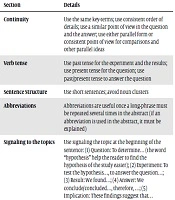
The main function of the discussion section is to answer the research question (6, 12) and to use the results for supporting the answer (6) (Table 1). The purpose of a discussion is to relate the results observed with facts, interpret their meaning, justify their importance and contributions to current scientific literature, and provide specific suggestions for future research (3, 13). The discussion puts the results into a broader context and indicates their implications for theoretical and practical purposes (14). In analogy, this section acts as the global positioning system (GPS) (7, 15) to show the reader how far we moved with this study on the science road (7).
| Function | Explanation |
|---|---|
| To answer the questions of the study | Use the same words and key terms in the introduction |
| To explain how the results support the answers | State the relevant results after stating answers |
| To explain how the answers fit in with the existing knowledge on the topic | Present the meaning of the results and contributions of the study in the field |
3. Contents of the Discussion
Answers to the question(s), accompanying supports, explanations, and defense of the answers are the components of a discussion section in a hypothesis-testing paper (12). Answers are not the same as the results but are a generalization of the results and should be limited to the study population (12). Results (of your study or others’) are used to support the answer (12), which need to be explained by reasoning provided on that topic (12).
The discussion also contains statements about the significance and/or novelty of the study, contextualized important results, related research (with both similar and opposite findings), arguments about unexpected results, strengths/weaknesses of the study, implications and future perspective/recommendations, and the take-home message (2, 6, 12).
4. Organization of the Discussion
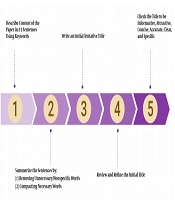
There is no fixed format for writing the discussion section (16), which essentially has a beginning, a middle, and an end (12) (Figure 1). Typically, at the beginning, i.e. the first paragraph(s), a summary of the key findings, viz. primary outcome(s), is presented (2, 7), trying to answer the question(s) and supporting your answers with results (12). The middle part of the discussion is related to the interpretation of the results, as well as the strengths and limitations of the study (2, 6). The order of the topics in the middle section is dictated by the science or they are organized from the most to the least important related to the answer (12). At the end of the discussion (the last paragraph), the conclusion and take-home message are presented (2, 6) by restating the answer to the question, indicating the importance of the study, or both (12). Rarely are figures and tables used (2, 6) for reporting complex mechanisms and information from many sources, respectively (2). For supporting the story, a reference to a figure or table can be made (16). In some journals, the results and discussion are presented in combination although, if possible, they are better to be presented separately (15).

Figure 1.
Organization of the discussion section in a hypothesis-testing paper illustrating step-by-step and overview techniques in the middle part of the discussion
4.1. Starting the Discussion Section (First Paragraph)
The beginning of the discussion section deserves the most prominent position (power position) in the discussion section (5, 12), picking up where the introduction leaves off (5). The first paragraph of this section should directly and explicitly answer the questions presented in the introduction in addition to highlighting and explaining the new findings of the study (5, 13, 16). Answering the questions is the main task of the discussion (12); answers can be given in the first sentence (strongest position) or after restating the question or presenting a brief context (12). According to “serial position effect”, topics mentioned at the start and end of a paragraph are more likely to be remembered than those in the middle (1); the start of a paragraph should, therefore, present the important novel findings (1).
The discussion section usually begins with a clear summary of the key findings, regarding primary outcome(s), in particular, not details of all observations (2, 7, 8, 13); this essence/gist of results is most helpful for readers who go to the discussion often without reading methods and results (2). Authors are advised to avoid beginning the discussion with a summary of the results (12); such summaries are only appropriate for studies with a huge amount of results; for studies with short discussions, it is frustrating for readers to have to read the results again (7). Alternatively, the discussion can begin by presenting the important conclusions of the study or explaining why the study is important. The discussion should not begin with a second introduction or secondary information (12).
4.2. The Middle Part of the Discussion Section
This part of the discussion is a series of subsections, each presented in one or more paragraphs related to the answer. After answering the question, the authors need to provide a chain of topic sentences for continuing the discussion; topics are organized according to the scientific logic or in the order of the most to the least important, based on their relation to the answer (12).
The middle part of the discussion section is organized using two techniques, the step-by-step- and the overview technique. In the step-by-step technique, a topic sentence is used at the beginning of each paragraph to introduce one step in the story. In the overview technique, a topic sentence is used at the beginning of each subsection (2 - 3 paragraphs) to introduce the topic or the message of the subsection; then, both a transition and a topic sentence at the beginning of each paragraph within the subsection are used to move from one paragraph to the next (12). The overview technique makes the story of the discussion easy to follow, informing the reader in advance about the following two or more paragraphs (12).
After the first paragraph, authors need to describe how the answer is supported by their results (5); they should, hence, provide a description of how findings support or contradict previous reports (2, 7). The authors should avoid trying to refer to all published papers in the field (7, 8), discussing only the most relevant papers (8). To discuss the findings, authors need to consider multiple explanations to convince readers that their results are the most plausible available (17). Comparing the results with those of low-quality or predatory journals is contextually meaningless (3). The results should not be presented in the discussion in detail and only a gist of the findings is enough (2, 16). In addition, authors are recommended not to emphasize the uniqueness of their results but to let them speak for themselves (8).
When comparing their results with those of others, authors should avoid criticizing every study in the field in detail (2). The discussion should be fair (impartial and free from bias) and balanced, representing all sides of a story (5). Authors need to give all the information required to help readers judge the value of their contribution, not just any information that could overlook some data (7, 18). When authors give credit to their work, they should be factual not boastful (5).
In the interpretation of results, authors should go beyond the data, but not too far, and provide insights, a task that is more than a mere comparison of their results with those of literature available (4, 14, 19). Using a wide-angled perspective and a broader context relevant to the findings, a bigger picture can be presented, displaying how much the study has added to current knowledge (7, 16).
If the results are congruent with most data, authors should state them briefly and simply (7). They should, however, be aware that consistency between their results and data available may only be due to shared biases (14). Any controversial findings should be highlighted and possible explanations for differences must be discussed (16). A result different to those of other reports, which may be due to different effects of biases across the studies (14), does not necessarily indicate that there is a mistake or error (2) and it may just need an explanation (16), e.g. differences in sensitivity or specificity of the tests used (2) or differences in populations (2). In addition, authors need to discuss the reliability/validity of the findings and then explain these discrepancies to ascertain whether it is an important step forward in this specific field (7).
Unexpected findings, which may sow the seed for future research, should be honestly reported and authors should, if possible, attempt to elaborate on them (2, 5, 6, 16). Avoiding discussion of unexpected results is a common pitfall in writing a discussion (2). Plausible explanations for unexpected results, their potential causes, and implications for future research should be provided (4). If there is no reason for differences in findings, it should be clearly acknowledged (13).
Presenting findings that have not been described in the methods or results section is a common pitfall of the discussion, which readers find perplexing (2, 7). Only findings reported in the result section should be discussed (2). Authors are not supposed to write a discussion about what they had hoped to find but did not; and the discussion should remain result-driven (4).
4.2.1. Strengths
Strengths could be related to the study objectives, participants, or methods, e.g. the use of more sensitive or more specific tests for screening or diagnosis, adequateness of sample size, low drop-out rate, the use of clinically relevant endpoints, and the use of methods for minimizing biases (2).
Claiming that yours is the first study of its kind does not augment the importance of the contribution and cannot always be reliably confirmed (7); statements including “for the first time” and “wholly explains” may inflate the actual worth of the results (12, 13) and such claims are better avoided (6). It is always possible that the finding has been reported in a language other than English (6, 12).
4.2.2. Limitations/Weaknesses
A discussion should provide a balanced evaluation of strengths and limitations (19). No study is perfect and every study has its limitations (2, 4, 20), which should be acknowledged (6, 16). Limitations are usually presented in the penultimate paragraph of the discussion section (21). Limitations are useful to comprehend the findings, placing them in the context of current knowledge, formulating new research questions, and translating the importance of potential errors (20).
Authors need to elaborate on limitations by discussing attempts made to minimize errors and clarifying why they could not be eliminated or controlled further (2). They should also discuss the impact of limitations on findings and show how the results can still be valid and accurate (2, 5, 16). Limitations should be reported in a way that future studies could be improved, by not having to repeat them (16, 20). Over-reaching or under-reaching in suggesting future research should be avoided (7). In the discussion, ambiguous points should be highlighted and specific suggestions demonstrated by the completed project for further research be provided (3, 4). Explicit recommendations for specific to further studies are allowed, whereas general statements for the need for further research are better avoided (16, 19).
4.3. The End of the Discussion Section (Conclusion)
Conclusion, in the final paragraph of the discussion, ends the discussion section, summarizing the main points of the study and linking them to the objectives (16, 21). The tone and content of the conclusion should be consistent with the rest of the manuscript (13).
There are two ways to end a discussion: (1) re-state the answer to the question(s) (5, 12) and (2) indicate the importance of the work (5, 12). One can use both approaches in the conclusion section (12). Conclusions should be strong, clear, and concise (3, 13) and focus on the main question addressed in the study (16); they must be supported by the data (2, 21) and should clearly state whether findings support the hypothesis or not (2).
The importance of the work may be presented by stating its possible applications (the most certain), recommendations (slightly less certain), implications (still less certain), and speculations (the least certain) (5, 12); these include clinical implications and recommendations for practice change (13). Both theoretical and practical consequences of the results can be addressed (3) without exaggerating the importance of the study (2). In addition, authors should avoid over-inflating the generalizability of the findings (2). Claiming importance for results that fail to reach statistical significance should also be avoided (7).
Authors need to discuss how their study can be applied to existing and future studies (5); however, the applicability of the results should be presented in a realistic way (19). Recommendations should be realistic and meaningful (7). Sometimes, authors are too close to their work and tend to downplay or ignore the lessons that can be learned from the findings (7).
Since the improvement of patient care is the fundamental goal of all medical research, implications of the study should be included in the discussion (13). Implications of the work for future research or practice should be provided keeping in mind that one study rarely provides sufficient evidence for a change (7). Speculations are similar to implications but are more tentative; however, reasonable speculations for suggesting a relationship between ideas are useful and need to be included in the discussion section (12). Too much or too little speculations is a common pitfall in discussions (2).
The discussion can be closed with one or two sentences as the take-home message, viz. the main conclusion made based on the study findings. The final sentences should provide a strong finish (5). Making broad claims, strong statements (8), and conclusions such as “more work is needed to be done” should preferably be avoided (6).
5. Metadiscourse in the Discussion
The discussion should have a meaningful beginning and ending and must follow the thread of the story (3) in a way that readers can follow the authors’ train of thought without having to decode the manuscript (13). Metadiscourses establish logical connections between different parts of a text and are used for making the text structure and purposes more explicit (22). Metadiscourses roadmap the organization of a paper (22). Textual functions of metadiscourse include guiding the reader through the text, signaling the sequence, providing connections between ideas, and organizing discourse through topic shifts (23, 24). Metadiscourse in an academic text can be interactive (helping guide readers through the text) or interactional (engaging readers in the argument) (25). For our current issue, signals and transitions (two types of interactive discourse) need more attention.
Different signals are used in the discussion section to guide readers. To answer the question at the beginning of the discussion section, “a signal to answer,” e.g. this study shows that ..., our results indicate that ..., in this study, we found/have shown that ..., are used. “A signal of the end”, e.g. in summary, we have shown that ..., in conclusion, this study shows that ..., can be used before restating the answer to the question at the end of this section (12). Signals are also used in other parts, e.g. the signal “It is recommended that” is used to announce the recommendations (12).
Transition words, phrases, or clauses are used as bridges between parts of a paper (12). Transition words indicate where we are in the story (e.g. first, second, third, ..., finally) (12). Later paragraphs in a subsection of a discussion need stronger transitions compared to the first paragraph, the topic sentence of which comes immediately after the subsection topic sentence (12). There are two ways to make a transition stronger: (1) repeating more key terms from the subsection topic sentence along with transition words and (2) using transition phrases (e.g. despite these limitations, ...) or transition clauses (e.g. the evidence is that ...) (12), both of which repeat key terms (12). A transition clause is stronger than a transition phrase because it contains a verb (12). A topic sentence that contains a transition word, phrase, or clause is named a transition topic sentence and reminds us what the story is about (12).
Table 2 provides some useful phrases/clauses to help authors to organize paragraphs of a discussion section more effectively.
Table 2.
Useful Phrases and Clauses to Organize Paragraphs in the Discussion Section
| Aim | Phrases/Clauses |
|---|---|
| To provide general explanation | In order to (to introduce an explanation) |
| In other words/to put in another way (to state something in a different way), that is/that is to say (to add further details) | |
| To provide further information to support something | Moreover, furthermore, what’s more, likewise, similarly, another key point/fact to remember, as well as (instead of also/and), not only but also (to highlight one piece of information more than the first one), coupled with (to state two or more issues simultaneously), first, .../second, .../third, ... (to organize in a logical order), |
| To state contrast | However, on the other hand, by contrast/in comparison, then again (to cast doubt on an assertion), yet |
| To acknowledge a defect of an evidence or add a proviso | Despite this/in spite of this (to outline a point that stands regardless of a defect in evidence), provided that/on condition that, in view of/in light of (to refer to a new revelation or a piece of information that affects some situation), nonetheless/nevertheless |
| To provide an example | For instance, to give an illustration |
| To highlight important findings | Interestingly, curiously, remarkably, inexplicably, crucially, critically |
| To state acceptability of findings | As expected, anticipated, predicted, hypothesized |
| To outline undesired/unexpected findings | Our findings failed to account for/justify/explain/give an explanation for/give a reason for |
| Contrary to expectations, unlike other research | |
| Surprisingly, unfortunately, disappointingly, regrettably | |
| To express opinion/probability | To the best of our knowledge, as far as we know, we believe, in our opinion |
| It would seem/appear | |
| It would lend itself well to, it may be useful for | |
| To restate results | Our findings suggests/would seem to suggest/imply/highlight/underline/indicate/support the idea/point towards the idea/investigate/give an account of |
| To conclude | In conclusion, to sum up, in summary, taken together, altogether, obviously, overall, ultimately |
| To suggest for future work | It is desirable for future work, it warrants further investigation |
| It should be addressed/considered/investigated in future work |
6. Scientific Explanation in the Discussion
The most challenging part of a discussion is to decide which aspects of the study are more important and help readers understand that judgment (7). The discussion, regarding the results, should be both stimulating and convincing (5). Writing the discussion needs logical and analytical thinking for critical appraisal, as well as synthesis and interpretation of the findings (2, 13). Thinking relies on two major systems: (1) the intuitive, quick approach and (2) the more conscious, analytical, and slower approach. Intuitive thinking is automatically triggered when encountering a problem. Analytical thinking (hypothetico-deductive reasoning) may confirm or reject the spontaneous solutions emerging from intuitive thinking (26).
Discussion is not a place for flowery, colorful descriptions (16); scientific explanation is a shift from the description to the explanation in science and is necessary for a robust understanding. Scientific explanation, as an attempt to move beyond description of observable phenomena, often seeks the underlying causes of an observation; explanations may be used for explication (clarification), causation, or justification. Causal explanation is the principle kind of explanation in science. Scientific explanation refers to how or why something happens and its components include claims, evidence, and reasoning; claims being justified using evidence and reasoning (27).
Factors that may affect scientific explanation (judgments of explanatory power) are prior credibility of an explanatory hypothesis, ‘causal framing of the hypothesis’, ‘perceived generalizability of the explanation’, and ‘statistical relevance of the hypothesis-evidence’ (28).
6.1. Reasoning
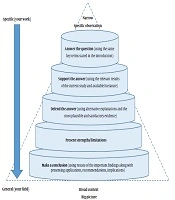
Although both inductive and deductive reasoning are used in discussions, the former is more dominant; in discussions, inductive reasoning is used to reach implications from findings of a specific study for general populations (2), indicating that the flow of information has a focused and precise narrow to broad shape, like an inverted cone (5, 13). In the first paragraph, authors need to answer the question(s) and thereafter, describe how the answer is supported by their results (5). The scope of the discussion is then broadened by describing how their results are supported by other reports (5). Toward the end of the discussion, the “bigger picture” should be considered (5).
Inductive reasoning uses existing observations or knowledge to make probabilistic predictions about novel situations. Therefore, unlike deduction, induction is knowledge-rich, as deduction depends on premises, not other background knowledge. Induction includes categorization, probability judgment, analogical reasoning, scientific inference, and decision-making. Inductive reasoning addresses how knowledge is generalized from the known to the unknown (29).
6.2. Contextualization
According to Merriam-Webster, contextualization means, “to place in a context” and context means “the parts of a discourse that surround a word or passage and can throw light on its meaning”. In the discussion section, all relevant contexts are taken into account (7). Study results are placed in the context of past and future research, clinical evidence, and theory (7). Authors must look forward and backward to indicate how much this study has moved the science forward and where the field should go next (7). Contexts of the study include the scientific, clinical, social, political, and epistemological arenas to which the study may contribute (7). In each context, the strengths and limitations of the study should be indicated (3).
6.3. Models of Scientific Explanation
6.3.1. Deductive-Nomological (D-N) or Covering Law
This model uses deductive reasoning for explaining that an event is expected to be the logical result of a law; one example is Boyle’s law for explaining the relationship between volume and pressure of a gas and the other is the negative feedback regulation for secretion of most hormones in endocrinology. The advantage of this model is that it fosters algorithmic reasoning (a step-by-step analysis of the process). The problem with this model is that few covering laws exist and that this model does not develop conceptual reasoning or theory-building abilities (27).
6.3.2. Statistical-Probabilistic
Statistical models of scientific explanation are used to provide an account for phenomena that are not covered by law. For example, if there is a high incidence of a particular type of cancer in a small town, statistical explanations are put together from correlations between data. However, emphasizing statistics may mask the actual underlying explanation for the event (e.g. vitamin C consumption and recovery from cold) (27). Probabilistic explanations show why an event that had likely occurred (30).
6.3.3. Causal Explanation
Scientific explanation is most convincing when the underlying causes of a phenomenon are provided. The “cause” model of scientific explanation is a preferred model because causation enhances explanatory power; a good example is a bacterium that causes an infectious disease (27). Casual conclusions have much higher relevance to etiology, prevention, and intervention (14).
For concluding causality, three criteria should be met; first, temporal precedence (17) i.e. cause must be prior to the response/effect (14, 31); second, observed covariance (17); and third, theoretical explanation (17), which is the hardest criterion to meet because of the need to eliminate alternative explanations (17).
From the epidemiological point of view, three essential properties were initially defined for a cause, i.e. ‘association’, ‘time order’, and ‘direction’, indicating that change in an outcome is a consequence of change in exposure in an ascending hierarchy (32); further criteria including ‘specificity’, ‘consistency’, and ‘coherence’ were then added to improve judging causality in a given association (33). Based on data available, Hill defined nine criteria for transmuting an association into causality (34). These are (i) ‘strength of association’ (or effect size) which makes the association between the exposure and outcome closer to causality in the case of high magnitude; although labeling an association as ‘strong’ seems to be subjective, defensible mathematical criteria enable scientists to clearly elucidate strong versus weak associations (35). (ii) ‘Consistency’ might be supported by multiple and repetitive epidemiologic studies; (iii) ‘specificity’ of an association, is defined as the exposure that causes only one outcome. (iv) ‘Time order’ or ‘temporality’ refers to the exposure-preceding outcome. (v) ‘Biological gradient’ is a dose-response association between exposure and outcome. (vi) ‘Biological plausibility’ is defined as the interaction of epidemiology with biology to support an exposure-outcome relationship. (vii) ‘Coherence’ implies a cause-and-effect story in the background of current knowledge and (viii) ‘experiment’ describes experimental-originated relation of the cause-and-effect. As defined by Merriam-Webster, (ix) ‘analogy’ means “a comparison of two otherwise unlike things based on the resemblance of a particular aspect”.
Authors should be aware that they are in Plato’s cave and cannot see the sun (truth) directly but they can describe the shadows carefully and compare the observed notes from diverse perspectives (17). This emphasizes the uncertainty of human perception of the world (36).
The primary concern of intervention studies is with causality, i.e. treatment effect. For drawing causality, control and treatment groups should be well matched at least for relevant variables. “Randomization is a royal road to causal inference in intervention research”. Some believe there is “no causation without manipulation” i.e. manipulation/intervention is essential for causation (31). The higher the level of evidence, the greater the probability of causality (cause and effect) (37), assuming that association equals causality is dangerous (7).
6.4. Generalization
Generalization is ‘deriving a general conception/principle from particulars’ or ‘giving general applicability to something’; it is also defined as “an act of reasoning that involves drawing broad inferences from particular observations” (38). Generalization of findings of a research to diverse populations and periods has been proposed to be a goal of science (39).
In a scientific paper, different levels of generalization may be used; in “results section”, lower-levels of generalization are needed and statements are quite specific and closely based on data, whereas in the abstract/summary, space limitation may lead to a high level of generality. In the discussion section, a moderate level of generalization is usually used (22).
To generalize their findings, authors should be cautious about the type of their study; case-studies and qualitative studies are often criticized for generating results that are less generalizable than those of large-sample, quantitative researches (40). Some authors believe that generalization is highly dependent on random sampling, and is warranted if subjects are randomly sampled from the entire population to which the findings can be applied (41). From the three models of generalization, proposed by Firestone (42), the statistical model, i.e. classic sample-to-population generalization, is mostly applicable for qualitative studies; however, other models including analytic generalization and transferability (case-to-case translation) can also be adopted (38).
To enhance generalized inferences, some methodological strategies have been proposed i.e. replication in sampling, replication of study, pragmatic trials (a balanced model of internal and external validity), integration of evidence (systematic review, meta-analysis), and “thick description”; the last term, refers to comprehensive descriptive information on the research setting, study participants, and observed processes or interventions, enabling readers to make the optimum judgment regarding the proximity of study context to target environment (38). Some formulae have been developed to generalize a causal effect from a study sample to a well-defined target population. To be able to generalize the study results objectively, the target population, study population characteristics (exchangeability), details of the intervention (treatment versions), and patterns of interference need to be carefully considered (43). Beyond methodological strategies, the understanding of and engagement with the data and thinking conceptually and reflexively (38) help authors reach and provide an analytical generalization of the findings.
6.5. Criteria for Good Scientific Explanation
Criteria for good scientific explanation (explanatory virtues) include empirical support, simplicity, precision, conservatism, generality, testability, fruitfulness, consilience, and analogy (30, 44). Empirical support is an important explanatory virtue, as good explanations are those that are supported by the facts. “How-actually explanations” provide an account for the questioner of how an event must have occurred whereas “how-possibly explanations” lack adequate empirical support but meet other explanatory criteria, providing an account for the questioner of how an event could have occurred. “How-possibly explanations,” if plausible, play a role in the development of theories and concepts. An explanation lacks adequate empirical support if it is supported only by speculative evidence (30).
7. Other Considerations for Writing the Discussion
7.1. Length
Although most journals have no page limits for discussion (2), the discussion section should be kept brief (16), being neither too long nor too short (3). The length of the discussion section should not exceed the sum of other parts (introduction, materials and methods, and results) (3), the typical length of the discussion section is 3 - 4 pages, 6 - 7 paragraphs (3), or ~10 paragraphs (45), and 1000 - 1500 words (45). Each page is considered one page in a word processor, with conventional margins, 1.5-line spacing, and a font size of 11; each paragraph regularly contains 130 words on average and should not exceed 200 words (3).
7.2. Tense
For answering the question at the beginning of the discussion, the verb should be in the present tense, as the answer should be true for the study population (12). For the signal of the answer, if the subject is study or results, the present tense is used and if the subject is “we”, present perfect, or past tense can be used (12). In this section, present tense is used for presenting general knowledge and universally accepted facts (3, 37). The active voice is better for recommendations and the passive voice is recommended for summary (3). Overall, the active voice should predominate although a few selected sentences in the passive form can be used (2, 46).
7.3. Literature Review
A literature review is a summary of studies related to a particular area of research. Before beginning to write the discussion, an updated literature review should be available with some studies selected to be quoted (2). The discussion section should contain references to validate the current work and credit the work of others (6, 13). The number of references in the discussion section ranges between 10 - 20 (45). In a literature review, authors need to use a synthetic approach, not just list the information, i.e. they need to connect information from different sources and reach an overall understanding (47). Repeating the same information in introduction and discussion (2) and unnecessary historical details (2, 3) should be avoided.
8. Conclusions
The discussion section, the most creative and important part of a paper, is expected to inform readers how far we have moved on after this study on the science road. The main function of the discussion is to answer the question(s). In a hypothesis-testing paper, answer to the question(s) and accompanying support, explanation, and defense are components of the discussion. Organization of the discussion section is similar to an inverted cone, i.e. goes from narrow to broad and ends in the “bigger picture” (Figure 2). The most important dos and don’ts of writing a discussion section are provided in Box 1. Using analytical thinking, the discussion section goes beyond description and scientifically explains the findings of the study in different contexts.
| Do’s |
|---|
| Underline the significance of the findings |
| Clarify contributions of the study to filling the gap of knowledge |
| Provide related literature to show how the findings can be supported (or rejected) |
| Be creative to offer alternative explanations to illuminate unexpected findings |
| Discuss in the context provided in the introduction |
| Clarify distinguished facts from speculations |
| Generate new hypothesis rather than providing simple descriptions |
| Deal appropriately with the complex bias issues (e.g. external validity, selection bias, potential misclassifications) |
| Close the discussion with a brief revisiting of the most important findings in terms of their implications and impact along with a new perspective |
| Don’ts |
| Reiterate or over-interpret the findings |
| Make one-sided or biased interpretations |
| Discuss findings without supporting data (in results, tables, or figures) |
| Ignore any unexpected findings |
| Misinterpret non-significant findings as true null results |
| Ignore data available in the literature negating/counteracting the findings |
| Distort the magnitude or direction of available literature to confirm the findings |
| Provide ambiguous comments for future studies, e.g., “there is a need for further research” |
| Generalize implications excessively |
| Close the last paragraph using over assertive statements |

Figure 2.
The cone shaped discussion section and its contents in a hypothesis-testing paper