
1. Background
A significant proportion of prisoners use drugs, especially in low-and middle-income countries (1-4). The number of prisoners who use drugs (PWUDs), and consequently, the prevalence of drug dependence in prisons has grown by incarcerating drug-related offenders and arresting them because of drug-related crimes that they commit because of the dominant decriminalization approach to substance use disorders (5, 6). Substance use disorders (SUDs), are the most common mental health problems among prisoners (7). A systematic review estimated the prevalence of illicit drug abuse in prisoners in the year before imprisonment to range from 11 to 57% (8). The SUDs raise the probability of some harmful consequences, such as HIV/AIDS (9), psychiatric disorders (10), mortality, and recidivism after release from prison (11). Imprisonment favors multiple health care needs because of increased at-risk populations and risk-conductive environments, including poor infrastructure, violence, and overcrowding (12-15). Due to sharing needles inside prisons as a major risk factor, the prevalence of HIV and hepatitis B and C virus infection in inmates who use drugs is higher than the general population (16, 17). Engagement in violence and illegal activities is another harmful activity associated with drug use in prisons (18). Taking these health needs into consideration, the provision of harm reduction programs in prisons is the principal for the reduction of SUDs (19, 20).
Harm reduction programs (21) reduce infectious diseases (22-24), criminal activities, reoffending, and drug use (25). Harm reduction programs, including opioid substitution therapy, provision of information and education, voluntary counseling and testing for blood-borne diseases, providing condoms, hepatitis virus screening, antiretroviral treatment, and needle-syringe programing (26), have been implemented in the broader community internationally and with less quality and standards in prison settings (21-24). Approximately 1.23% (24.4% among men who inject drugs) of Iranian prisoners are HIV-positive (27, 28).
Since 2000, harm reduction programs for PWUDs have been started in the central prison of Kermanshah, west of Iran, as a pilot, and then they were established in most Iranian prisons since 2003 (29). The programs comprise methadone maintenance treatment, needle-syringe programming, and antiretroviral treatment implemented as a triangular clinic (30) for PWUDs and people with HIV/AIDS (24, 31-33). Although there are studies investigating harm reduction programs from the perspective of prison staff and officials (34-37), this is one of few studies that investigated PWUDs’ experience on the effect of implemented harm reduction programs in prisons.
2. Objectives
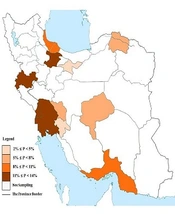
The aim of this study was to qualitatively investigate the implementation and achievements of harm reduction programs in the prison of Sanandaj. The city of Sanandaj, Kurdistan Province, is located in west of Iran, with 62.3% and 32% of men and women prisoners being substance users, respectively (38).
3. Materials and Methods
Design: This was a qualitative cross-sectional study using various information sources. The programs were evaluated by a checklist and group discussions with service providers and recipients. The data were analyzed by directed content analysis.
Sampling: The purposive sampling method was used. Based on the saturation criteria, a face-to-face session of focused group discussion with 11 prison staff and authorities and three face-to-face sessions with 13 PWUDs were conducted in February 2018. After expressing the aims of the study, one of the PWUDs was excluded from the study.
All of the PWUDs participating in the study were male, and most of them were married (85%). The mean age of the participants was 31 years. The educational background of the participants was different. More than half of them were educated in high school (69%). Most participants were employed before entering the prison (69%). All the participants were Iranian. The average length of the prisoners’ stay in Sanandaj Central Prison was 11 months.
Inclusion criteria:
(1) Male drug user prisoners who were over the age of 18 years old and received or did not receive services from the triangular clinic or were on the waiting list for receiving treatment.
(2) Harm reduction staff and authorities of Sanandaj prison who had experience about services of triangular clinic.
(3) Participants were required to speak in Persian.
Exclusion criteria:
(1) Participants who did not want to participate in the study,
(2) Participants who were not physically and mentally ready for participating in a group discussion.
Data collection: The focus group discussions with service providers and authorities and service recipients were held separately in a confidential environment in the prison. The discussions were audio recorded, and informed consent was obtained from each participant. We used a semi-structured questionnaire with the main questions being about participating in predefined harm reduction programs and its outcomes. Before commencing the group discussions, the researcher explained about the goals and reasons for doing the study. Focus group discussions were conducted by SE and MBSZ. MBSZ is an associate professor in Addiction Studies and has publications related to drug user prisoners. SE is a PhD graduate in Addiction Studies and is working in MSF for homeless drug users. They had no relationship with the participants. Also, they had experience about conducting qualitative research (39). The researcher took notes during group discussions. The two researchers coded the data separately. Also, according to the checklist, we evaluated the prison services as a complementary method to augment the findings of the focus group discussions.
Data analysis: The tape-recorded of the group discussions were transcribed verbatim anonymously and coded by the two researchers separately. Given the predefined categories (harm reduction programs) (26), directed content analysis was used to analyze the data. The MAXQDA 12 software was used to manage the data.
4. Results
4.1. Utilization of Harm Reduction Programs for Prisoners Who Are Drug Users
The harm reduction programs included opioid substitution therapy, providing information-education, voluntary counseling, and testing, providing condoms, hepatitis C virus (HCV) screening program, antiretroviral treatment, needle syringes programing, and prevention measures for piercing/tattooing (35, 40).
The findings showed that the programs were delivered to PWUDs through the triangular clinic.
4.1.1. Opioid Substitution Therapy
In the screening unit, all prisoners were initially screened for mental disorders, and low threshold methadone was prescribed for SUDs. After screening, PWUDs who needed MMT were kept in a separate ward and were evaluated by the physician of the triangulate clinic. Each client had an electronic file related to the dosage and the schedule of delivery of methadone, doctor visit, and psychological counseling. They held some meetings with the prisoner’s family to increase the prisoner’s adherence to the treatment. After being released from the prison, according to financial issues of the PWUDs, they were referred to public or private MMT clinics in Sanandaj with a letter of referral.
Participant 2: “Here, if we had addiction, the physician visited us. The psychologist made a file for us. After that prisoner who undergo methadone are referred to the clinic daily at 8:00 in groups of 10 to 20. In addition, there is a possibility to use counseling by the psychologist.”
Participant 8: “After being released from the prison, those who are homeless and rejected from the family are referred to free public centers and treated. Those who are well-off will be introduced to private clinics.”
The buprenorphine maintenance treatment has also been launched since 2010. In this program, prisoners who took buprenorphine out of the prison and those who were suggested by the doctor were admitted to this maintenance or detoxification treatment.
General physician: “people who have taken B2 [buprenorphine] outside, their treatments will be continued here. Since 1391 [2010], we have been continuing to treat these people who had received B2 from outside, which is the same as BMT as a maintenance treatment. Also, for some people who used opium and now have withdrawal symptoms and do not meet the criteria for receiving methadone, we start detoxification plan with B2.”
4.1.2. Blood Borne Virus Testing-Counseling and Antiretroviral Treatment
The program has been stared since 2016. High-risk behaviors checklist is used in the screening unit. If PWUDs have high-risk behaviors, they are referred to the triangular clinic after receiving their verbal consent. After admission to the triangular clinic, pre and posttest of HIV and HCV was provided. Treatment for HIV infection was available, but the prison could not afford the expenses of PCR and HCV treatment. Some patients did not accept the voluntary counseling and testing because of stigmatization.
Psychologist: “As soon as everyone enters the prison, they must have a consultation called a pre-test consultation with us (psychologist), and if they have high-risk behaviors, a rapid test can be performed there with their consent. Some of them prefer not to do rapid test because they fear their situation in the prison and to be rejected by others. For those who accept to do rapid testing, the result will be announced to them through counseling after the test. Treatment of HIV in positive cases start for free. Our problem was doing PCR to treat people who are HCV-positive, and we did not do it because tests and medication are expensive. We started this program in September 2016, and it is still going on."
4.1.3. Providing Information and Education
A unit for educating prisoners, their families, staff, and law enforcement officers about HIV/AIDS, hepatitis C, tuberculosis, and the prevention of addiction was established.
The head of education and research center: “Trainings for prisoners and their families, soldiers and, staff are more related to HIV, hepatitis C, tuberculosis, and addiction prevention. For example, the addiction prevention program for the wives of addicted prisoners was held for three years. Also, we added a program called the nature of methadone about its side effect and difference with drugs for prisoners recently.”
4.1.4. Providing Condoms
A file is filled for inmates with sexually transmitted infections as a part of triangular clinic services. An infectious diseases specialist visited them. Also, preventive measures such as condoms were recommended and distributed in the private meeting room for couples.
The head of mental health center: "We have files for prisoners with sexual disorders. Our infectious diseases specialist visits clients periodically and explains the ways of disease transmission. These prisoners are referred to triangular clinics. The use of condoms is advised and distributed at private meeting rooms."
4.1.5. Needle-Syringes Programing
Due to the availability of free methadone, there was no need to access syringes. Also, the amount of disposal of injection equipment was minimized.
Participant 5: “We don’t need syringes. I have not even seen a syringe inside the wards because there was no need for syringes as we can take methadone for free.”
4.1.6. Reported Achievement of Harm Reduction Programs
Decrease of violence and self-injury, reduction of illegal drug injection and shared syringes, and decline of HIV-positive new comers were reported by the participants as the strength of the harm reduction programs.
Participant 11: “With the implementation of methadone therapy, self-injury, violence, and particularly, injecting drug use declined significantly. In the past, we witnessed the use of injectable drugs by sharing a syringe, but this has now fallen sharply due to the free availability of methadone.”
5. Discussion
The study was aimed to qualitatively investigate the implementation of harm reduction programs for PWUDs in Sanandaj prison. The literature shows that various studies have been conducted on the prevalence of infectious diseases in prisons (41). There are not enough studies available examining the effectiveness of harm reduction programs in prisons (34-36, 42). In particular, studies have examined the research question from the perspectives of experts, prison officials, and service recipients. This is one of the few studies that investigated the contexts and achievements of harm reduction programs in prisons.
Opioid substitution therapy, voluntary counseling and testing, and antiretroviral treatment were emphasized in this study. The opioid substitution program as a gold standard treatment reduces injection, use of co-injection equipment, and the risk of infectious diseases. By prescribing low-threshold methadone upon entry into the prison in the screening unit, withdrawal symptoms were also minimized (43-45). Several studies similarly showed that the implementation of the opioid substitution program reduced illicit drug use, and hence, the tension of PWUDs and drug-related crimes (44). Despite the benefits of methadone maintenance treatment that were clear to Sanandaj prison experts (46), doubt of the families of the prisoners regarding the effectiveness of treatment was one of the crucial impediment to adherence to the treatment (47, 48). Accordingly, the information and education of families of PWUDs about the opioid substitution program has been initiated recently in Sanandaj prison. Also, studies showed that continuing the opioid substitution program for PWUDs after being released from jail is a cost-effective choice (49). More extensive post-release opioid substitution treatments for PWUDs are of considerable importance.
Those HIV-positive substance users who were on the antiretroviral treatment outside the prison continued taking antiretroviral treatment in the Sanandaj prison. Also, those substance users with high-risk behaviors had voluntary counseling and testing about infectious diseases. However, HIV-positive inmates had immediate access to their treatment without interruption. Participation in antiretroviral treatment in prisons can be affected by the fear of stigmatization. Community-based HIV/AIDS interventions using peer models (50) and prison education for prisoners and their families (22) are effective measures to increase engagement in the treatment. Similarly, evidence suggests that legal and authorities’ support and well-funded harm reduction programs in prisons can improve the health outcomes of HIV-positive prisoners (21).
The prevalence of HCV in prisoners is higher than the general population because of its high-risk environment (21). Although HCV screening using voluntary counseling and testing is implemented in the Sanandaj prison, risk-based screening alone cannot identify the accurate prevalence of HCV infection (51). The provision of opioid substitution treatment and needle and syringe program had a strong protective effect against the risk of HCV acquisition (52).
Some European countries utilize needle syringes program in prisons as a cost-effective harm reduction measure (53, 54). At the same time, the program has stopped shortly in some prisons, such as Hamburg's prisons (42). In some countries, this program has only been implemented in a limited number of prisons (55). There are few studies focused on the positive results of the needle syringes program (56, 57). A study showed that one of the factors affecting the implementation of the needle syringes program was the dominant attitude and conditions among prison managers or staff (58). The needle syringes program has been implemented permanently in some Iranian prisons, which showed that the use of opioid substitution therapy in prisons had decreased retention in the needle syringes program (42). Consequently, the needle syringes program was one of the harm reduction measures that was launched in Sanandaj prison for PWUDs. Consistent with our findings, in a study of PWUDs who had a history of using MMT, PWUDs had the least retention in the needle syringes program (42). PWUDs who are under MMT possibly do not inject drugs anymore and no longer need access to sterile injection equipment. Other possible reasons could be the kind of drugs used and comparable previous experience outside the prison. However, further research is needed on this issue.
Little research has been conducted on the effectiveness of harm reduction measures in prisons, and our qualitative findings indicated potentially tangible changes inside the prison, including the reduction of violence and self-injury, substance use, sharing syringes, and HIV outbreak rate, which requires additional research to clarify these results quantitatively. These results are important in the prevention of HIV. This finding was evidenced in other countries (21, 45) and was a part of global trend about the reduction of new infections and AIDS-related mortality (59). Studies found that the opioid substitution treatment improves financial needs of PWUDs to their families (43), their social live (34), payment of bribes to staff, and expenses of drugs (59). The benefits can cause less tension, better management, less drug-related crimes, and possibly, less violence and self-injury in prisons (44).
The implementation of a strict ban on entering of drugs to prisons is a reason for some prisoners to utilize high-risk methods of drug use and behaviors such as injections, self-injury, or violence. Sharing syringes and needles is a major cause of transmission of HIV and hepatitis viruses among drug users. The main harm reduction programs implemented in Sanandaj prison were methadone maintenance treatment, voluntary counseling and testing, and antiretroviral treatment that led to decrease the illicit drug use, the outbreak of new HIV cases, sharing injection equipment, violence, and self-injury. The study pointed to the critical need to develop quantitative studies to evaluate the effects of harm reduction programs in prisons and extension of the programs after being released from prisons to reduce the harms regarding SUDs in prisons and the community.
One of the limitations of the study is using qualitative methodology and purposive sampling, and therefore, inability to generalize the findings. To make the findings transferable, conducting similar studies in other Iranian prisons is critical. Also, there is a need to evaluate the effectiveness of harm reduction programs in the prison of Sanandaj and other prisons in Iran.