
1. Background
Substance abuse is a problem that affects the brain and behavior of people, and it can disrupt their ability to control drug consumption (1). Impulsivity is one of the most critical indicators of behavior in addicts; despite its importance, it has not been studied (2). Impulsivity is to act without thinking and evaluating. There are many reasons why people use the substance. For example, substance abuse brings exciting effects and impulses to the user, so the user feels false excitement and happiness (3).
Impulsivity is evident among users of several abused substances, such as alcohol, cocaine, and amphetamines. It is considered a risk factor for the future prevalence of substance abuse and alcohol addiction (4). Excitement is distributed along a sequence, and many people are in the middle of this sequence. Some people are on the boundaries of this sequence, which we call high and low excitement seekers. The most crucial feature of high-excitement seekers is that they tend to gain new experiences and take risks to gain those experiences. Unlike low-excitement seekers, high-excitement seekers always look for new motivations in their environment. They can pay a high price to gain those motivations, for example, putting their social reputation or physical health and life at risk (5). Negative emotions and the inability to properly manage them are also considered crucial triggers in substance abuse.
Meanwhile, one of the variables that make people vulnerable to addiction and substance abuse is sensation seeking, which has been investigated in various kinds of research as one of the factors underlying the tendency toward substance abuse (6). In the past 50 years, many efforts and investigations have been made to identify the relationship between substance abuse and personality structures (7). Among all these features, excitement-seeking is the most important one (8). Sensation seeking is defined as a personality trait and a request with bio-neural origin qualified with seeking varied, novel, complex, and intense feelings and experiences. Zuckerman (9) believes that sensation-seeking can manifest itself in people's behavior in different forms and pleasures, and people show it differently based on their sex and experience. Sensation-seeking people do anything to meet their optimal needs; hence, they communicate not to affect others but to stimulate them. In this regard, recent research shows that one of the critical factors in vulnerability to substance abuse, alcohol abuse, and addiction is the high level of excitement (10).
2. Objectives
The current research aimed to examine if emotion regulation training based on the Gross model is effective on impulsivity and sensation seeking in substance-dependent individuals on methadone maintenance therapy in Ilam province.
3. Materials and Methods
3.1. Statistical Population
This quasi-experimental study used a pretest, posttest, and follow-up design with a control group. The statistical population of this research included all addicts treated with methadone in addiction treatment clinics in Ilam city who visited between 2019 and 2021, the total number of whom was 420 individuals. After identifying all people in the community, 60 people were randomly selected and randomly divided equally into two groups (i.e., control and experiment). Then, emotion regulation training based on the Gross model was implemented in the experimental group. In the process of sampling, inclusion criteria were as follow: Being male, aged between 30 and 60 years, undergoing methadone maintenance therapy, having DSM-IV-TR criteria of substance dependency, having at least primary education (i.e., diploma), and living in the west of Iran (Ilam city). And the exclusion criteria included: People with severe psychiatric disorders such as schizophrenia and major depression (based on medical evaluation) or a physical illness that prevented them from attending ER sessions and non-use of other psychological treatment during the examination and the absence of more than two sessions.
3.2. Research Tools
In the current research, the tool for data collection consisted of the following.
3.2.1. Impulsivity Questionnaire of Barratt (2004)
The questionnaire measuring impulsivity contained 30 questions and assessed three aspects of impulsivity (i.e., cognitive, motor, and non-planning). The test was designed as a multiple test with its highest score of 120. The scores between 52 and 71 were considered the normal range of impulsivity; the scores higher than 72 signified the highest impulsivity; and the scores lower than 52 indicated the status in which the patients were controlled previously or their responses were not honest. The validity and reliability of this questionnaire were previously confirmed (11).
3.2.2. Zukerman Sensation-Seeking Questionnaire (1996)
Zukerman sensation-seeking scale (short form) includes 14 binary correct items so that every participant could answer just one part of each item. The raw marks of the subject are determined based on the scoring key. The internal consistency of this questionnaire was reported as 0.83 (9).
3.3. Procedure
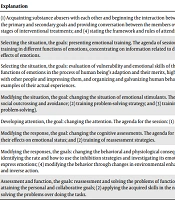
For this study, the data of all addicts in addiction treatment centers during 2020 - 2021 were gathered. Then, we asked the officials of these centers to cooperate with us to do the research as best as possible. In the next step, 60 qualified people were selected randomly and divided into two groups. Thirty people were in the control group and 30 people in the experimental group. Then, we used the emotion regulation training protocol based on the Gross model (a suggested method for emotion regulation training). This protocol is made by James Gross and is used to train people to manage and regulate their excitement. Different levels of emotion regulation training were done in groups during eight sessions of 90 minutes each. First, two briefing sessions were held for subjects to become familiar with research plan and understand the importance of the research and their cooperation. They also completed the Zuckerman impulsivity scale. Then, they were randomly divided into control and experimental groups. After that, we asked the experimental group members to take part in all sessions. Finally, the emotion regulation protocol was done for the experimental group. There was no intervention for the control group. After finishing all sessions, the two groups were assessed by the posttest method. Finally, data were collected. We used SPSS version 26 software to analyze data. We also used Multi-variable Covariance Analysis (MANCOVA). The confidence level for hypothesis testing with high statistical power was 95%. Table 1 briefly explains emotion regulation training sessions based on the Gross model.
Table 1.
Summary of the Content of ER Training Based on the Gross Model
| Session | Explanation |
|---|---|
| 1st | (1) Acquainting substance abusers with each other and beginning the interaction between the counselor and the members of the group; (2) stating the primary and secondary goals and providing conversation between the members over personal and collaborative goals; (3) stating the logic and stages of interventional treatments; and (4) stating the framework and rules of attending in the group sessions. |
| 2nd | Selecting the situation, the goals: Presenting emotional training. The agenda of sessions: Recognizing emotion and provocative situations via training in different functions of emotions, concentrating on information related to different dimensions of emotion and the long- and short-term effects of emotions. |
| 3rd | Selecting the situation, the goals: Evaluation of vulnerability and emotional skills of the members. The agenda of the session: Addressing different functions of emotions in the process of human being's adaption and their merits, highlighting the role of emotions in establishing a relationship with other people and impressing them, and organizing and galvanizing human behaviors among the members and putting forward some examples of their actual experiences. |
| 4th | Modifying the situation, the goal: Changing the situation of emotional stimulants. The agenda of the session: (1) preventing the individuals from social outcrossing and avoidance; (2) training problem-solving strategy; and (3) training interpersonal skills (conversation, self-expression, and problem-solving). |
| 5th | Developing attention, the goal: Changing the attention. The agenda for the session: (1) stopping rumination and anxiety; and (2) training attention. |
| 6th | Modifying the response, the goal: Changing the cognitive assessments. The agenda for the session: (1) identifying the incorrect assessments and their effects on emotional status; and (2) training of reassessment strategies. |
| 7th | Modifying the responses, the goals: Changing the behavioral and physiological consequences of a given emotion. The agenda for the session: (1) identifying the rate and how to use the inhibition strategies and investigating its emotional consequences; (2) confronting; (3) training how to express emotions; (4) modifying the behavior through changes in environmental enhancers; and (5) training emotional discharging, relaxation, and inverse action. |
| 8th | Assessment and function, the goals: Reassessment and solving the problems of function. The agenda for the session: (1) assessing the rate of attaining the personal and collaborative goals; (2) applying the acquired skills in the natural conditions out of the session; and (3) reviewing and solving the problems over doing the tasks. |
3.4. Ethical Consideration
Written informed consent was obtained from all participants. The Ethics Committee of the Ilam University of Medical Sciences approved the present study on 07/15/2019 with the code of IR.MEDILAM.REC.1398.065.
4. Results
According to Table 2, shows the demographic statistics of the research, including age group, educational group, marital status, native and non-native. According to this table, the largest age group is 31 - 40 years old. And the first educational group is related to sub-diploma and has a diploma. Also, most of the research participants are single and native.
Table 2.
Descriptive Statistics of the Research Population
| Variables | Frequency |
|---|---|
| Age | |
| 20 - 30 | 7 |
| 31 - 40 | 38 |
| 41 - 50 | 15 |
| Educational level | |
| Diploma | 37 |
| Associate degree | 17 |
| Bachelor degree | 6 |
| Marital status | |
| Single | 43 |
| Married | 17 |
| Inhabitance in Ilam | |
| Inhabitant | 52 |
| Non-inhabitant | 8 |
Table 3, shows the mean, standard deviation of the lowest and highest scores of impulsivity and sensation seeking in people who are leaving emotional regulation training materials based on the Gross process model in the pre-test and post-test stages. According to this table, the average score of the impulsivity variable in the post-test stage. It is 19.11 and the average score of excitement seeking variable in the post-test stage is 52.11.
Table 3.
Mean, Standard Deviation (SD), and Highest Scores of Impulsivity and Sensation Seeking in Individuals Withdrawing Substance Abuse Based on the Gross Model at the Pretest and Posttest
| Variables | Intervention | Test's Stage | Mean | SD | Minimum | Maximum |
|---|---|---|---|---|---|---|
| Impulsivity | ER training | Pretest | 23 | 1.74 | 20 | 26 |
| Posttest | 19.11 | 1.84 | 16 | 22 | ||
| Sensation seeking | Pretest | 55.5 | 3.51 | 50 | 63 | |
| Posttest | 52.11 | 3.51 | 47 | 60 |
According to Table 4, the amount of F in MANCOVA for impulsivity and sensation seeking in different groups of ER training based on the Gross model was F = 123.6 and F = 97.99, respectively. This result revealed that ER training could lead to a significant difference between the control and experimental groups in terms of impulsivity and sensation seeking; hence, the hypothesis of this research is confirmed. In order to verify the other hypothesis of this research and to find the potential differences between dependent variables, the Bonferroni post hoc test was used, and the results are summarized in Table 4.
Table 4.
The Results of Multivariate Analysis of Covariance (MANCOVA)
| Variables | DF | SS | MS | F | P-Value | Etta Value |
|---|---|---|---|---|---|---|
| Impulsivity | 2 | 181.4 | 90.7 | 123.6 | 0.001 | 0.84 |
| Sensation seeking | 2 | 132.25 | 66.62 | 97.99 | 0.001 | 0.8 |
As shown in Table 5, the modified mean and SD of the impulsivity variable were 18.86 and 0.20 in the experimental group receiving ER training based on the Gross model and 22.7 and 0.21 in the control group, respectively. The modified mean and standard deviation in the variable of sensation seeking were 52.57 and 0.19 in the experimental group and 55.88 and 0.2 in the control group, respectively. Moreover, the data presented in Table 5 compare both groups regarding impulsivity and sensation-seeking using the Bonferroni post hoc test.
Table 5.
Modified Mean, Standard Deviation (SD), Minimum, and Maximum Scores in Different Groups at Different Stages
| Variables and Groups | Mean | SD | Minimum | Maximum |
|---|---|---|---|---|
| Impulsivity | ||||
| ER training | 18.86 | 0.2 | 18.44 | 19.27 |
| Control | 22.7 | 0.21 | 22.27 | 23.14 |
| Sensation seeking | ||||
| ER training | 52.57 | 0.19 | 52.17 | 52.97 |
| Control | 55.88 | 0.2 | 55.46 | 56.29 |
5. Discussion
In the current study, emotion regulation training based on the Gross model effectively reduced impulsivity and sensation seeking in drug users treated with methadone. This research was designed to determine the effectiveness of emotion regulation (ER) training based on the Gross model in impulsivity and sensation seeking. The population of this research included substance-dependent individuals on methadone maintenance treatment. A significant difference was found between the control and experimental groups regarding impulsivity due to ER training. The results of MANCOVA showed that ER training based on the Gross model significantly reduced the rate of impulsivity in the experimental group on the posttest stage. Such a difference indicates that ER training could lead to different results in impulsivity at pre-and posttest stages compared to the controls. The high statistical power of this research suggests its high statistical precision and sample size adequacy. Regarding the results of impulsivity presented in Table 5, ER training remarkably influenced the reduction of impulsivity in substance abusers.
Impulse behaviors constitute the cornerstone of many psychological disorders, such as attention-deficit hyperactivity disorder, conduct disorder, impulse control disorder, substance abuse, bulimia, suicidal behavior, personality disorder, and learning disability. The results of this research were in agreement with those obtained by many previous researchers (4, 7, 10, 12-15). By studying the effect of ER and impulsivity on substance-dependent people, Nadimi (16) found that individuals lacking ER gained higher scores on cognitive and avoidant aspects of impulsivity. This study revealed a strong relationship between a lack of ER and impulsivity. As a result, ER could play a significant role in individuals exposed highly to addiction. In this regard, Szasz et al. (17) evaluated the effect of ER on smoking obsession, negative emotions, and attention bias. They concluded that people who received ER training demonstrated lower levels of obsession, negative emotion, and attention bias toward cigarette smoking. These findings illustrated the higher efficiency of ER strategies in the reduction of smoking problems as compared to other interventions.
In other research evaluating the effect of ER training on substance abusers with low and high reactivity, it was revealed that the abuser with high reactivity exhibited more negative emotions than those with low reactivity utilizing positive emotions. As a result, many factors, such as reactivity, increased impulsivity, and negative emotions, can be considered risk factors for substance abuse.
In order to clarify the theories behind setting up this research, like those explained in the social perspective of impulsivity and social learning theory (5), people usually acquire their behaviors from their family members and the environment around them. Based on the behaviors acquired previously, they react promptly to their favorite demands, and accordingly, these behaviors influence themselves and others around them. Impulsivity is part of the personality traits in people expressing high reactivity during facing events. As a result, the role of impulsivity in substance abuse has been documented in previous research (18). In such studies, individuals using provocative substances and alcohol obtained higher scores on impulsivity and lower scores on inhibiting control. The ability to control emotions enables people to utilize appropriate coping strategies when the risk of abusing substances is high. People with higher ER can easily predict the request of others, understand the unwanted pressures of others, and control their emotions. They are more resistant to the temptation to abuse substances (19).
In another survey, by attending ER training sessions and employing ER strategies, substance abusers could control their emotions and tends to use substances; accordingly, they could reduce their impulsivity (20). Sometimes, impulsive behaviors are considered risky, including a wide range of behaviors with little-attracted attention. These behaviors are premature and qualified with high risk and causal manifestation. Furthermore, they usually emerge without an appropriate thought or program; accordingly, they are accompanied by increased risk during performing them (10). In general, impulsive behaviors bring about some incorrect responses and need further concentration and better organization. Given the effect of ER training on impulsivity in substance abusers, the abusers show impulsivity under different conditions because of abusing substances severely; thus, these people cannot adequately control their emotions. In brief, the training of ER based on the Gross model can play a significant role in the control and inhabitations of impulsive behaviors in abusers, and our research confirmed the effectiveness of ER in impulsivity.
Nowadays, impulsivity is conceptualized as a cognitive dimension accompanied by a lack of cognitive inhibition and low or incomplete decision-making (3). It is known that impulsivity is one of the characteristics of different types of addiction, so some people manifest impulsively in all situations, while others show it just in specific situations (17). One of the factors mainly affecting abusing substances is reactivity. High reactivity leads to employing negative ER strategies, which paves the way for using more substances abusively. People who cannot control their impulsivity may jeopardize their lives by abusing more substances (21).
People with low ER often resort to substance abuse while facing negative emotions. Considering different disorders of substance abuse, it is assumed that people with low ER may resort to using substances to alleviate their negative emotions. Many substances are employed for curing substance abuse; these substances are used to reduce the incompatible methods of ER and enhance compatible methods of ER (20). Given the relationship between some factors, such as impulsivity and components of addiction severity, serving as factors affecting the results of treatment and as powerful predictors of success and failure of treatment, it is necessary to seek other interventional treatments besides methadone, such as ER training based on the Gross model to control tendency toward abusing substances. There was a significant difference between control and experimental groups regarding sensation seeking substance abusers receiving ER training based on the Gross model and curing by methadone in Ilam province. The results of MANCOVA revealed that training ER based on the Gross model reduced the score of sensation seeking in the interventional group on the posttest stage. These findings agree with those obtained by other researchers (10, 13, 14, 22).
In this regard, Azami et al. (11) found that sensation seeking is one of the risk factors affecting substance abuse tendency and relapsing. They suggested that ER strategies be employed to control sensation seeking because they reduce sensation seeking in substance-dependent individuals. In order to explain the results of ER training on sensation seeking, it can be said that sensation-seeking in people is a trait pushing them to gain new sensational experiences and curiosity. In addition, sensation-seeking people generally intend to experience using provocative substances out of curiosity, even for the first time. This status galvanizes them to use them more and more, paving the way for addicting them to these substances Nadimi (16) also showed that ER training strategies decreased experience-seeking, disinhibition, sensitivity to uniformity, and total sensation-seeking trait in substance abusers. Compared to others, people with a high sensation-seeking believe that anything is worth trying at least once. This attitude, along with risk seeking and novelty seeking, causes them to take risky action and use more substance even in the lowest provocative condition. It is believed that these people are largely prone to be addicted to a substance.
5.1. Conclusions
Substance abuse and its consequences are the most critical public health problems worldwide. In Iran, the number of substance abusers is estimated at 1.8 to 3.3 million people. People with high sensation-seeking and impulsivity are more at risk of substance dependence. The results of the present study showed that emotion regulation training could lead to a reduction in the level of sensation-seeking and impulsivity in drug addicts. As a result, it is suggested that different emotion regulation training sessions be implemented in different age groups of substance abusers in addiction treatment centers to reduce the level of sensation seeking and impulsivity of substance abusers. Also, research with other samples and groups, according to gender and social classes, should be done in this field.
Among the limitations of this study, the following can be mentioned: (1) selecting the statistical population and research samples from addiction treatment centers in the west of Iran (Ilam city); (2) using a self-report questionnaire; (3) lack of research background and foreign and domestic studies.