
1. Background
The use of smokeless tobacco is a public health problem worldwide (1, 2) with a history that dates back to Asian countries nearly 2,000 years ago (3, 4). India is the world-leading in the production and consumption of smokeless tobacco. Asian countries such as Pakistan, Bangladesh, Nepal, and other countries are in the next rank (5). The consumption of these substances is also increasing in European, American, and African countries, and even Australia (6). According to previous studies, smokeless tobacco is used in a hundred and forty countries around the world. There are three hundred million consumers in the world, of whom 206 million (68.7%) abode in India (7). In addition, the use of smokeless tobacco in Iran is more commonplace in Sistan and Baluchistan province and mainly in Chabahar city, where 11% to 45% of adolescents and students are estimated to be consumers (8-14). Smokeless tobacco consists of substances such as tobacco and various additives consumed by chewing, sucking, or sniffing (15). In general, different types of smokeless tobacco are available in handmade and industrial forms. Many studies have reported that the use of these substances can cause various diseases and increase mortality (16).
Unfortunately, few interventions have been performed to address the problem in affected areas, and usually, the interventions performed have been the least effective without promising outcomes (17). One of the reasons for the ineffectiveness of these interventions is the lack of basic and in-depth information about the causes and risk factors of using smokeless tobacco (18, 19). Most of the time, researchers try to use the same methods to prevent smoking, as well as to reduce smokeless tobacco consumption, but in this case, no significant success has been achieved (20-25). Due to the high prevalence of using smokeless tobacco and the lack of appropriate effective interventions in this area, we need to acquire first-hand information and design more targeted interventions regarding this phenomenon (8, 10, 26).
2. Objectives
Our goal was to explain the reasons for and factors associated with smokeless tobacco consumption based on the grounded theory approach. Conducting such qualitative research is critical to assembling primary information for designing more effective and purposeful interventions in the future (8-10, 12, 13, 26-28).
3. Patients and Methods
3.1. Qualitative Approach and Research Paradigm
According to the objectives of the research, a qualitative approach based on the grounded theory revised by Strauss and Corbin in 2008 was used (29). This method emphasizes systematic analysis to discover the processes behind social interactions; it is completely systematic, analytical, and interpretive, through which the researcher seeks to discover new concepts.
3.2. Researcher’s Characteristics and Reflexivity
In order to prevent the personal opinions of the researcher from influencing the data and interpretations, the researcher was helped by creating self-awareness and reflecting on the research subject, which determined the new data, the next step, and the direction of the research.
Given that the grounded theory approach primarily uses unstructured interviews, the researcher must have basic and general questions for the interviews; then, more questions will be provided to continue the interviews that will move toward a semi-structured framework. We used techniques such as asking questions, constant comparisons, and writing memos to gather data. The data were analyzed based on the grounded theory presented by Corbin and Strauss in 2008 (29, 30).
3.3. Study Setting
Our participants included all adult (age 18 to 64 years) native residents of Chabahar city, who had a history of consuming of one of the types of smokeless tobacco, such as Pan, Pan Parage, Gotkah, BT, Nass, Supari, or other types, for at least one month. People who quit using smokeless tobacco were also among our sample. Individuals were completely free to participate in the study. In this study, purposeful sampling was used so that people who used smokeless tobacco were purposefully selected, and then a theoretical sampling method was used. Demographic characteristics of the participants have been listed in Table 1.
Table 1.
Demographic Information of Interviewees
| Participant No. | Gender | Age | Level of Education | Occupation | Marriage | Number of Children | Interview Location | Interview Duration | Frequency of Consumption Per Day | Type of Consumption | Duration of Use |
|---|---|---|---|---|---|---|---|---|---|---|---|
| 1 | Male | 27 | Senior high school | Carpenter | Single | - | City center area | 25 | 5 | Pan Parag | 10 |
| 2 | Male | 30 | Senior high school | worker | Married | 4 | City center area | 25 | 2 | Pan | 13 |
| 3 | Male | 30 | Junior high school | Three-wheel motorcycle driver | Married | 2 | City center area | 26 | 20 | Pan; gutkha | 10 |
| 4 | Male | 26 | Junior high school | Worker | Single | - | City center area | 20 | 6 | Gutkha | 9 |
| 5 | Male | 20 | Junior high school | Worker | Single | - | Suburb | 15 | 7 | Naswar | 5 |
| 6 | Male | 55 | Illiterate | Farmer | Married | 4 | Village | 30 | Always | Naswar | 43 |
| 7 | Male | 32 | Illiterate | Carpenter | Married | 3 | City center area | 20 | 4 | Pan supari | 13 |
| 8 | Male | 33 | Illiterate | Worker | Married | - | City center area | 22 | 5 | Gutkha | 1 |
| 9 | Male | 25 | Junior high school | Worker | Married | 2 | City center area | 21 | 3 | Pan Parag | 15 |
| 10 | Male | 18 | Junior high school | Worker | Single | - | City center area | 25 | 4 | Gutkha supari | 4 |
| 11 | Male | 31 | Elementary | Shopkeeper | Married | 2 | Suburb | 20 | 3 | Naswar | 15 |
| 12 | Male | 33 | Illiterate | Smokeless tobacco seller | Married | 3 | Suburb | 25 | 4 | Naswar | 13 |
| 13 | Male | 21 | Junior high school | Fruit seller | Single | - | Suburb | 25 | 6 | Naswar | 10 |
| 14 | Male | 24 | Junior high school | Unemployed | Single | - | Suburb | 15 | 15 | Pan Parag | 5 |
| 15 | Male | 40 | Junior high school | Shopkeeper | Married | 5 | City center area | 15 | Always | Mawa | 10 |
| 16 | Male | 27 | Junior high school | Repairman | Married | 1 | Village | 17 | 7 | Pan Parag; Gutkha | 7 |
| 17 | Male | 30 | Elementary | Building Painter | Married | 2 | City center area | 15 | 5 | Gutkha | 5 |
| 18 | Male | 50 | High education (university) | Employee | Married | 4 | City center area | 18 | 2 | Supari | 5 |
| 19 | Male | 34 | High education (university) | Employee | Married | 3 | City center area | 18 | 8 | Gutkha | 25 |
| 20 | Male | 37 | Elementary | Building Painter | Divorced | - | Suburb | 19 | 6 | BITI; Pan Parag | 15 |
| 21 | Male | 33 | Elementary | Three-wheel motorcycle driver | Married | 3 | City center area | 24 | Always | Gutkha | 12 |
| 22 | Male | 34 | High education (university) | Employee | Married | 3 | City center area | 18 | Always | Gutkha | 25 |
| 23 | Male | 58 | Illiterate | masonry works | Married | 2 | Suburb | 16 | 8 | Gutkha | 3 |
| 24 | Male | 19 | Senior high school | Unemployed | Single | - | Suburb | 15 | Always | Pan Parag | 2 |
| 25 | Male | 18 | Senior high school | Fisherman | Single | - | Suburb | 20 | Always | Supari | 10 |
| 26 | Male | 19 | Senior high school | Fisherman | Single | - | Suburb | 24 | Always | Pan | 2 |
| 27 | Male | 18 | Senior high school | Fisherman | Single | - | Suburb | 25 | Always | Supari | 4 |
| 28 | Male | 28 | Senior high school | Three-wheel motorcycle driver | Married | 2 | Suburb | 20 | 6 | Gutkha | 12 |
| 29 | Male | 30 | Junior high school | Repairman | Married | 2 | City center area | 18 | Always | Mawa | 10 |
| 30 | Male | 29 | Junior high school | Building Painter | Single | - | City center area | 15 | 10 | Pan Parag | 13 |
3.4. Sampling Strategy
In the present study, we began with purposeful sampling. Thus, in the beginning, we visited different places in the city of Chabahar and its suburbs, where we could find people who were smokeless tobacco users. After explaining the purpose of the research, the interview was conducted in a suitable place, such as the workplaces of the interviewees, such as shops. For diversity, we also tried to invite as many people as possible to conduct the interviews and to recruit residents of both sexes with different consumption periods and different familial conditions. In addition, we selected people with different levels of education and income and variable occupational statuses. Despite the fact that we tried to recruit female interviewees to participate in the study, due to the cultural context of Chabahar city, women refused to participate in the interview. In the present study, we tried to dive deep into the topic and obtain rich data and categories using theoretical sampling. In this study, the depth and focus of sampling increased over time. While in the early stages, the focus is more on discovering new concepts and categories, in later stages, the depth and enrichment of these categories are more pronounced. The sampling ended when we reached theoretical saturation (30) (i.e., the point where all major categories were completely developed, diverse, and integrated). The saturation stage was designated when no new data were found. An example of open coding in this research has been shown in Table 2.
Table 2.
An Example of Open Coding in This Research, Participant No. 1
| Participant No. 1 | Examples of the Codes Extracted |
|---|---|
| I use it because it is available to everyone and my hair is fine. When I use it, at first, I feel very comfortable and intoxicated, as if I am not on the ground and I am in a very good mood. I mostly use Pan Parag after eating. I eat it for curiosity, joy, excitement, and comfort. My brother also consumes it, but my family does not. I have tried to quit seven times but to no avail. Yes, Pan Parag is addictive, and quitting is difficult. There are a lot of them in the market to purchase. The price of a small package is 2,000 Tomans a. I use five packages a day and sometimes eight packages. In my opinion, Pan Parag is better than Gotka, Supari, and Pan because it creates a greater sense of happiness. | Availability; achieving good mood; intoxication and comfort; consumption after meals; at the beginning, for curiosity; happiness and excitement; consumption of family members; failure to quit; addiction; difficult quitting; abundance; low price; comparison of materials to choose among them; a sense of joy. |
a The official currency in Iran is the Iranian Rial, but Iranians almost always use “Toman” in their daily payments. One Toman equals 10 Rials; For instance, 1000 Tomans equals 10,000 Rials.
3.5. Ethical Issues
People participated in the interviews voluntarily. The exclusion criterion was the subject’s unwillingness to continue with the research for any reason.
Iran University of Medical Sciences provided financial support for the research. The Medical Research Ethics Committee of the university approved the study procedure (IR.IUMS.REC.1398.843).
3.6. Data Collection and Processing
In this study, in-depth interviews with smokeless tobacco users, observation, reminder writing, and note-taking were used to collect data. But our main method of data collection was to hold interviews. All interviews were audio recorded, and every interview’s voice was carefully listened to several times. Data coding and analysis began simultaneously with the first interview. All recorded materials were written on a piece of paper, and a memo and a summary were written for the interviews.
At the beginning of each interview, the interviewer introduced himself/herself and tried to create a friendly atmosphere. The interviewer tried to set aside his/her previous prejudices, views, and knowledge and encouraged participants to participate in the study by providing information on the subject under study and highlighting its importance. Participants were assured of the anonymity and confidentiality of their information. In the end, to thank the participants, a gift was given to them.
We used purposeful sampling to enroll smokeless tobacco users by employing a snowball approach. At the end of each interview, the participant was asked to introduce another participant for the next interview. The participants were able to leave the interview if they did not want to continue, which in this way, they were excluded from the study.
After conducting 30 interviews and extracting the main categories, and scrutinizing the relationship between categories and subcategories, we could not find any new code anymore (i.e., the phase of data saturation).
According to the recommendations of Strauss and Corbin, this study began with a general question, which became more detailed during the research and through the stages of data collection and analysis. Our interviews were semi-structured and started with the main question and then with more specific questions to gather the data. The questions that guided our interviews, observations, document collection, and data analysis are as follows (29, 31).
The main research question was “Would you please explain your experience of using these substances?”. In the present study, memos writing was used as a method of data collection and analysis. Also, we started recording our reminders for each interview. We additionally discussed what and how we should write in memos, what to discuss, and how we could explore the problems that would come up during a future memo. Finally, all authors agreed with the finding and main categories and subcategories. All texts were translated into English by E. F. and back-translated by H. B. to verify the meaning of the concepts retained.
3.7. Data Analysis
According to the recommendations by Strauss and Corbin, data analysis was performed in four steps, including data analysis to identify concepts (conceptualization), analysis of the findings for context, analysis of the findings for the process (strategy and outcome), and finally, theoretical integration and creation of the hypothesis (29).
We used techniques such as asking questions, comparisons between the data, and derivation concepts to represent the data and then developed the concepts regarding their properties and dimensions. The concepts were extracted from the data throughout the analysis. The analysis began in parallel with the gathering of the very first data items. The concepts that emerged during the initial analysis were used as a guide to collect data in the next steps of the study. Every data collection episode was followed by data analysis until the researcher could construct a well-integrated framework.
3.8. Techniques to Enhance Trustworthiness
The criteria of Lincoln were used to evaluate the power of this study (32). The acceptability of the accuracy and authenticity of the data was ensured by ongoing verification and coding of the data with the assistance of the participants. To confirm the reliability, the members of the research team encoded the data one by one to achieve a highly matched point. In addition, data collection, data implementation, and data coding were carried out meticulously and by dedicating sufficient time. For transferability, the data collected were reviewed and approved by three experts outside the study group, who were specialists in sociology, qualitative study methodology, and smokeless tobacco. An exhaustive and comprehensive description of the subjects under study was also provided, and participants’ direct quotes were also provided.
4. Results
According to the grounded theory approach, part of the data analysis should be directed toward the conditions or context; the context includes a set of micro to macro situations or conditions. The micro spectrum comprises items such as daily living conditions, and the macro context includes factors such as historical, political, and social status (29).
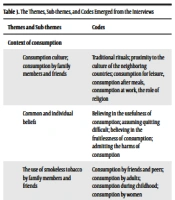
Table 3 shows the themes extracted from the context factors among adult smokeless tobacco users.
Table 3.
The Themes, Sub-themes, and Codes Emerged from the Interviews
| Themes and Sub-themes | Codes |
|---|---|
| Context of consumption | |
| Consumption culture; consumption by family members and friends | Traditional rituals; proximity to the culture of the neighboring countries; consumption for leisure, consumption after meals, consumption at work, the role of religion |
| Common and individual beliefs | Believing in the usefulness of consumption; assuming quitting difficult; believing in the fruitlessness of consumption; admitting the harms of consumption |
| The use of smokeless tobacco by family members and friends | Consumption by friends and peers; consumption by adults; consumption during childhood; consumption by women |
| Need for effective supervision | |
| Profitable market | High profits for sellers; high demand from the consumer; imposing costs on the consumer; abundant production in the province and abroad |
| Inadequate supervision | Weak formal and informal social control; creating environmental pollution; prohibition of consumption in formal institutions |
| Easy access | The wide availability of a variety of cheap materials; various available consumables |
The main category and subcategories, and basic concepts extracted during the coding process are shown in Table 3.
In the process of identifying the concepts and the dimensions of themes, 23 concepts, six sub-themes, and two main themes were identified through continuous questioning and comparative analysis based on the data obtained from the participants.
Finally, we obtained two main categories, including the “context of consumption” and “need for effective supervision”.
5. Discussion
The purpose of this study was to investigate and explain the reasons for and factors associated with smokeless tobacco use based on the grounded theory approach. We here discussed the important concepts and categories obtained in this study, and for the main codes, we provided an example of participants’ quotes.
The context of consumption was the first major category that emerged based on the statements frequently mentioned by the participants, whose subcategories included consumption culture, consumption by family members and friends, common and individual beliefs, and smokeless tobacco use by family members and friends.
5.1. Traditional Rituals
According to the findings of this study, custom and ritual are among the most important factors encouraging people to use smokeless tobacco. Most of these customs root in the ancient past, and people still believe in and follow them constantly. Grandparents’ consuming and telling old stories about the effects of these substances, as well as welcoming guests at parties with mouthwashes, as a tradition of the past, have remained main among main contributors. The impact of customs was also highlighted in a study by Grover et al. entitled “Tobacco use among young people in India”, noting that the social acceptance of tobacco, especially its smokeless forms, has led to its widespread prevalence in rural areas. In addition, villagers were reported to have a high chance of consuming smokeless tobacco due to environmental and cultural conditions (33). Also, 2 other studies conducted in India reported consistent findings, affirming the role of traditional customs obtained in our study.
In a study by Sah, 81.7% of people reported that they became smokeless tobacco users as a part of their own culture (34), which was consistent with the results of our research.
Participant No. 16: “It is customary here to provide a special container called Tofdan to spit in during gatherings. I fill cans of beans and other tin cans with soil and use them to spit chewed tobacco.”
Participant No. 13: “My fathers and grandfathers used Neswar (Nas). I will continue their path....”
Consumption for leisure and recreation was another factor that, like other tobacco products, contributed to the consumption of smokeless tobacco. In a study by Sah, it was reported that the factors associated with starting smoking were intended to reduce stress and tension in 70.8% of cases, due to family problems in 24.2% of cases, and for fun and recreation in 76.7%, which were statistically significant observations (P value < 0.01 and < 0.05) (34). Similarly, Pandey et al. reported that the most common reasons for smoking were curiosity (37.9%) and enjoyment (21.2%) (35). These findings were consistent with the results of our research.
Participant No. 14: “I go for Pan Parag as a hubby.” Participant No. 19: “Nowadays, most young people use Gotka and Pan-Parag for entertainment.”
Consumption after meals was also a factor mentioned repeatedly by consumers, which was a clear indication of the smokeless tobacco consumption culture linked with the social context of people in the region studied. In a qualitative study by Nair et al., most participants stated that they used smokeless tobacco after meals or with drinking tea, or after dinner (36), which was consistent with the results of our research.
Participant No. 6: “I always use it after meals, drinking water or tea (Naswar or Nas); otherwise, I will not eat anything. Even my brain will collapse.”
Consumption at work directly refers to the availability of conditions for consumption by individuals at work. Most of the participants said that they were more comfortable doing their job after consumption. In a study by Sah, it was shown that 21.7% of the participants used smokeless tobacco to improve their job performance, 16.7% used smokeless tobacco due to their dissatisfaction with job conditions, and 17.7% to relieve their job stress (34), which was consistent with the subcategory obtained in our study.
Participant No. 13: “If I put it in my mouth, I can put it all may work together very quickly (said in the shop in which he was interviewed). It’s kind of energizing.”
Common and personal beliefs were among other important factors contributing to smokeless tobacco consumption. This category included the following subcategories.
5.2. Believing in the Usefulness of Smokeless Tobacco
Believing in the usefulness of something is one of the most important concepts for behaving accordingly. Some people use smokeless tobacco to alleviate ailments such as toothache, believing in its rapid curative effectiveness and so on. This belief was a substantial trigger for the initiation of substance use by individuals and was considered to prevent tooth decay. Such useful beliefs were consistent with the findings of a qualitative study conducted on personal and social determinants of smoking behavior in rural areas of China by Mao et al. (37).
Participant No. 13: “I take Neswar when I want to talk to someone seriously, or if I want to be cool because it improves my brain performance.”
Participant No. 26: “The good thing about Pan is that I no longer get a toothache. When I have a toothache, if I start chewing Pan for a while, it will disappear instantly.”
5.3. Believing in the Difficulty of Quitting
Difficult quitting was another concept expressed by most consumers. This difficulty seemed to be related to the severity of the addiction. However, people found quitting these substances more difficult than quitting other tobacco products. Difficulty in quitting was declared to be due to daily and continuous use of these substances and high temptation to consume these substances. These factors led people to express that they could not quit and assumed quitting was a difficult job to do. This belief was especially prominent in people seeking to quit.
In a study by Zale et al., people experienced considerate difficulties in their last attempt to quit smoking, waning their self-confidence. Although the recent showed that it was difficult to quit cigarette smoking (38), here we showed that there was the same problem with smokeless tobacco, which also contains nicotine.
Participant No. 5: “Every pain has a cure, but Nas has no cure. There is no way to quit it, and it is very tempting.”
Participant No. 14: “Pan Parag is not something you can quit. I have friends who have been eating Pan-Parag and Gotka for 20 years, unable to quit.”
Participant No. 21: “I think it is impossible for anyone to quit Gotka and Pan-Parag for long or forever.”
5.4. Believing in the Harmlessness of Consumption
The belief that some substances are harmless was another factor making people curious to try or test these substances. In other words, it was the main reason for some people to have their first experience. Supari, for example, was a substance that most people knew very little about. Sometimes, the belief that one substance is more harmless than the other plays an important role in choosing the type of substance.
Participant No. 7: “Supari is made of wood, to which some breath freshener materials are added. Eating supari has no harm. If I quit it, there will be no problem.”
5.5. Believing in the Harms of Consuming
Believing in harmfulness was another concept expressed by the participants who were old users of these substances. People with a long history of consumption have experienced many side effects, which were even evident in their appearance, face, and teeth.
In a study by Oudjehih et al., the use of smokeless tobacco was reported to lead to cancer, increasing the risk of laryngeal cancer by three times, and was a major public health problem in Algeria (39). A recent study confirmed the harms of using these substances (39), which was reflected in the concept of harmful beliefs in our study.
Similarly, another study in Pakistan by Khan et al. reported the risk of oral cancer was increased due to the use of these substances (40).
Participant No. 29: “It causes a lot of damage to the stomach and kidneys. It is also carcinogenic and damages the teeth.”
5.6. Smokeless Tobacco Consumption by Family Members and Friends
The use of smokeless tobacco by family members was another important concept encouraging people to use it, highlighting the role of families in this phenomenon.
This subcategory included four basic concepts. Consumption by friends and peers, consumption among adults, consumption during childhood, and consumption among women.
Consumption by friends and peers was revealed as one of the important factors in people’s desire to consume smokeless tobacco. In other words, peers and friends affect each other’s decision to use these substances. In a study conducted by Habibi Nasab et al., the use of these substances among adolescents was reported to be influenced by a family history of consumption and consumption by friends, which was also consistent with our findings (41).
Participant No. 3: “My friends started using it. It was tempting for me, and I started using it too. I’ve been using it ever since.”
Consumption among adults was another concept repeatedly stated by most participants, noting that their fathers, uncles, sometimes their neighbors, and even their grandfathers were consumers. In fact, these people have a role model and subconscious influence on adolescents and young people. In a study by Mao et al., smokers in the family tended to smoke together, which was considered by smokers and non-smokers as a way to maintain family relationships (37). Therefore, family members who were non-smokers usually did not interfere with smoking behaviors. The results of this study (37) were completely consistent with the findings of our study.
Participant No. 27: “My father is not against it; he sometimes eats supper actually, but my uncle strongly opposed me. My mother also uses it but does not eat much. In my family, supper is consumed by most. All men and women eat.”
Participant No. 25: “Because we live as a family (and a tribal group) because I saw others eat it, I started to eat too.”
Consumption during childhood is a concept repeatedly stated by the participants. Many people started to consume at school age and many others at home and even at preschool age. An important point mentioned by several participants was that the beginning of consumption in childhood would cause less trouble and bad feelings about using other substances during adulthood. This becomes more pronounced, knowing that some older consumers experience vomiting and other side effects and sometimes even need emergency and hospital services after their first consumption.
In a study by Irfan et al., the age of onset of smoking in the study population was 14 years (42), which was consistent with the results of our research. Also, in another study, Begum et al. found that school-based interventions were ineffective for preventing students from being consumers, partly because they were exposed to these substances outside of school (43). Irfan et al. suggested that the use of smokeless tobacco should be stopped even before marriage and during pregnancy and that parents should avoid using smokeless tobacco in front of children (42). The results of the recent study were consistent with the findings of our study.
Participant No. 25: “I started eating supari from the age of 5 to 6 years, when I was a child because relatives and family members would eat, I was curious to know it and started consumption from that time.”
Consumption among women, such as mothers or grandmothers, and secret consumption by some girls show the widespread use of this substance. Given the important role of women in the home and family, the consumption of these substances by women will undoubtedly encourage children to consume. The use of smokeless tobacco along with hookah by women in private gatherings and groups should be regarded as an important factor in creating the conditions or context for consumption.
A study by Krishnamoorthy and Ganesh in tribal areas of India found that one of the main reasons that smoking (smoked and smokeless) was more prevalent among women in tribal areas was because it was an accepted cultural and social habit (44). However, this is not commonplace in the rest of India and in other parts of the world, where the use of tobacco by women is still socially unacceptable (44).
Other studies in tribal areas have also shown that cultural and social norms, peer pressure, and enjoyment are some of the other factors contributing to the prevalence of smoking. Challenges related to geographical and structural environment and the lack of awareness about tobacco products have led to the lack of the implementation of tobacco control activities in tribal areas (45, 46). The results of this study are consistent with our research as the population of Chabahar comprises large ethnic groups and tribes where smoking smokeless tobacco is a somewhat accepted habit.
Participant No. 30: “Women usually start eating secretly. Sometimes they eat secretly for years.”
5.7. Need for Effective Supervision
The need for effective supervision, as the second main category, included three sub-classes of the profitable market, inadequate supervision and easy access. Here, we discussed each subcategory and its concepts.
The profitable market consisted of five basic concepts. One of these concepts was the high profit for sellers. Many people are involved in the production and sale of smokeless tobacco and make money out of the production-sale cycle. Many participants admitted the great financial benefits of these materials. Due to the fact that there is always a high demand for these materials, the profit cycle for producers and sellers is still stable. It can be said that there is almost no financial supervision in this market. Main manufacturers announce big discounts in their advertisements in magazines in order to sell more and more smokeless tobacco (47).
Another contributor to the profitable market is high consumer demand. People buy these substances every day due to their severe addiction and dependence. Demand is usually rising, and naturally, growing consumption means more demand. There is no monitoring or control to reduce demand.
In a study by Kostygina and Ling in the United States, it was reported that in order to gain more sales and attract young people to use different brands of smokeless tobacco, manufacturers started to constantly add flavors to the materials to keep demand at a high rate (48). These results are consistent with our findings.
Imposing a cost on the consumer and the abundant production of smokeless tobacco are market-related concepts. Costs are further imposed due to the addictive nature of these materials. On the other hand, high profits lead to more production.
Participant No. 4: “Because it is highly profitable for producers and sellers, the value of gutka-percha is more than opium and heroin. Most sellers earn 20 to 300 thousand Tomans a day.”
Participant No. 14: “Now that prices have gone up a lot, I eat Pan-Paraag worth 30,000 Tomans a day. Pan-Paarag have a grain of 500 to 2,000 Tomans.”
Inadequate supervision included concepts such as weak formal and informal social control, contaminated environment, and the prohibition of consumption in bureaucratic places. In the beginning, we discuss the concept of social control. Social control is a sociological concept derived from the data of the interviewees. According to sociologists, social control comprises two basic types; formal and informal. The informal type includes the internalization of norms and values through the process of socialization. For example, adults who are consumers will not be able to have social control over their children. In Kumar et al.’s study, teachers who used smokeless tobacco were regarded as an incentive for students to start using this substance (46). A recent study showed that some adults were unable to execute proper social control.
The second type (i.e., formal social control) includes the external mechanisms used by various institutions to prevent lawlessness in society. In fact, social monitoring enables organizations to have more effective and sustainable control. Accordingly, the use of smokeless tobacco as a social behavior should be supervised. Also, in the interviews, the participants repeatedly admitted the lack of any control. In other words, social control (either formal or informal) has been poor. In a study conducted in the United States by Dave and Saffer, it was suggested that the advertisements of smokeless tobacco could be banned in the media (television, radio, billboards, transportation vehicles, sports fields, etc.) (47).
Regarding these rules, Pradhan et al., in a study in Indian schools, reported that although 81% of students were aware of school policies regarding the ban of smokeless tobacco inside or outside the school building, the use of smokeless tobacco was above 40%, and the use of tobacco areca nut above 65% (49). The ban on the use of these substances in formal setting is consistent with our study, but it seems that such laws are not able to prevent the use of smokeless tobacco (49) because people are exposed to this material outside these official institutions.
Participant No. 16: “My children and wife are upset. I am always told to quit, but it is very difficult for me.”
Participant No. 15: “The government has to stop these things because it’s not a good thing. It also reduces one’s activities. These contain supari and a few types of lime and tobacco in them (something like sharp lime).”
5.8. Easy Access
Easy access was another subcategory extracted from the data, which included two concepts of “cheap and widely available variety of materials” and “the variety of accessible consumables.”
The low price of smokeless tobacco made it easily available for children. Also, in the study of Habibi Nasab et al., it was reported that ease of access was an important factor facilitating its consumption (41). In addition, in the study of Sah, 70% of participants believed that the reason for starting consumption was the ease of access to these substances (34).
The diversity of smokeless tobacco was another important concept that was the opportunity for users to pick their interests among different choices and tastes. In other words, this variety was so great that anyone could offer it in any quantity and with any taste. This diversity was also present in terms of stylish and attractive packaging and colors, further encouraging consumers. In a study by Oliver et al., the mint flavor was reported to likely play a role in initiating and continuing consumption (50). The recent study pointed out that the variety of products with different flavors and colors contributed to different product choices by individuals (50).
Participant No. 13: “Another reason for using Neswar is that its price is very low; otherwise, many people would not pick it (Neswar).”
Participant No. 16: “It can be found anywhere in the market, shops, and stalls, wherever you imagine.”
5.9. Research Limitations
Although women used smokeless tobacco, females who were users refused to participate in the interviews, and one of the limitations of this study was the absence of women because of special cultural restrictions in Chabahar.
5.10. Conclusions
In general, the two main categories of the context of consumption and the need for effective supervision were the main incentives for people to become consumers. Concepts such as consumer culture, individual and public beliefs, consumption by family members and friends, profitable market, the need for effective supervision, and easy access were also among the factors encouraging the residents of Chabahar city to turn to smokeless tobacco at different ages. These results can be used as a basis for intervention-oriented research in the future and provide an important opportunity to advance our understanding of the reasons for using smokeless tobacco among youth and adults.