
1. Background
Well-being is one of the important criteria of mental health among adolescents, and many factors play a negative role in mental well-being. Today, the excessive use of mobile phones and other electronic devices has increased, and many people are dependent on them (1). With the increased use of cell phones to communicate, have fun, and spend time, a new form of cell phone use has emerged, which has become a way to harass people online (2). Bullies use newer methods, such as internet harassment, posting messages, images, videos, etc., to harass and bully their peers. Today, this type of bullying is called non-traditional bullying or cyberbullying (3). Cyberbullying involves deliberate and repeated aggression in which adolescents use computers, cell phones, or other electronic devices to abuse, humiliate, and harass people who cannot defend themselves. Anonymous identity, nicknames, and lack of parental supervision in cyberbullying lead to an unequal balance of power between the bully and the victim. In the case of a bully, because the person does not have face-to-face contact with the victim without being identified, he creates an ideal personality for himself, which is impossible in face-to-face communication (4). Empirical research has shown that cyberbullying is related to various individual and contextual factors. Regarding individual factors, some studies have investigated the frequency of gender in cyberbullying, and some findings show that girls and boys are equally involved in cyberbullying (both as bullies and victims). But with different forms of behavior and reasons, some other studies show that girls are more frequently victims than boys, and in terms of age, the frequency of bullying in elementary grades is low; it increases during pre-puberty and early adolescence, and after it decreases again at the age of 15 to 16 (5).
Regarding background factors, two family and parenting factors have been mentioned as factors related to online aggression (6). Many studies have predicted the family as one of the important elements in the emergence of cyberbullying-related behaviors (7). The cohesion and flexibility of the family as two important dimensions of the family have been examined in combination with various factors. Previous research shows that the cohesion and flexibility of the family as a supporting variable play a role in both the victim and the bully (8). Family cohesion refers to the sense of connection and mutual understanding of family members, and flexibility refers to the ability of the family system to change its structure and role and accept its role in response to stressful situations (9). In the late 1970s, Elson and his colleagues proposed a model that showed a balanced level of family cohesion and flexibility plays the greatest role in the growth and health of the family. The families at the center of this model have the greatest growth. They have individual and family functioning and have a high ability to cope with stress, and families at the end of the spectrum show contradictory types of dysfunction (10). In cyberbullying, if there is a lack of family support resources and positive communication between parents and children, adolescents are more exposed to the risks associated with the Internet. Then adolescents have the opportunity to discuss and communicate effectively with their parents. In addition to preventing bullying, they can reduce the effects of victimization. After the victim is bullied, the adolescent's confidence in talking to their parents helps them better cope with the victimization experience and reduce the effects of the victimization. Also, effective communication, cohesion, and family flexibility help teenagers find the necessary skills to solve problems and have good psychological well-being (11).
In addition to the cohesion and flexibility of the family, the adolescent's attitude towards the behavior and parenting style of the parent is also considered important. In 1959, Shaffer proposed two dimensions of affection and freedom as models in the parent-child relationship that the child's perception of the levels of responsiveness (warmth) (by requesting (control) in the parent's behavior is considered important (12). López-Castro states: That adolescents who are involved in cyberbullying usually have weak emotional relationships with their parents, rigid parental legalism, and low monitoring frequency, which requires proper monitoring and warm and supportive relationships between parents and children. It reduces the possibility of bullying for both the victim and the bully. In addition, adolescents who perceive their parents as cold, indifferent, and hostile have a high probability of being involved as both bullies and victims. Another study states that in families that do not have the necessary management skills in conflict situations or use excessive control, in contrast to families that have a democratic environment, children are more involved in bullying. Finally, the increase in conflicts and negative family atmosphere makes teenagers spend more time on the Internet to fill the gaps in their interactions, which makes them more vulnerable to being feared by their peers (13).
This study examined cyberbullying based on Family Adaptability and Cohesion and Perceived parenting style in adolescents.
2. Objectives
Considering the consequences of cyberbullying for adolescents, this study aimed to examine the association between family adaptability and cohesion and cyberbullying with the mediating role of perceived parenting style.
3. Materials and Methods
This study was descriptive, and a cross-sectional design was used. The study was performed on 220 students in Tehran using convenience sampling. Inclusion criteria were being between 12 - 18 years old and having access to mobile phones.
In the current research, considering the conditions of coronavirus and its limitations, the necessary explanations about the research were provided through networks and the link of the measures defined in the porsline.ir, and the link was sent to Telegram and WhatsApp groups. Afterward, the adolescent completed the questionnaires with the consent of their parents. Considering that the sample was collected online, the information would not be sent to the software if the questionnaires were not completed. Therefore, there was no missing data. An ethical review board of the Iran University of Medical Sciences approved the study procedure (Code of Ethics: IR.IUMS.REC.1400,809). The STROBE cross-sectional reporting guidelines were followed (14).
Family Adaptability and Cohesion Evaluation Scales (FACES_IV) (15): This self-report instrument contains two dimensions: Coherence and adaptability, each comprising 30 items. Participants rated items on a five-point scale ranging from almost never (0) to almost always (4). The evidence demonstrated acceptable internal consistency and good test-retest reliability (16).
Cyber-Bullying/Victimization Experiences Scale (CBVEQ) (17): This 14-item scale assesses the occurrence of direct and indirect CB/CV behaviors on a 5-point Likert scale (1 = Never, 5 = Everyday) among children and adolescents. This scale has shown adequate reliability Parental Authority Scale and comprises correlated two-factor: Cyber-bullying (CB) and cyber-victimization (CV) (17). Psychometric research in Iranian students indicated that Cronbach's alpha coefficient for the cyberbullying experience, cyber victimization experience, and total questionnaire were 0.75, 0.78, and 0.79, respectively (18).
Parental Authority Scale (PAQ) (19): This scale was developed to measure Baumrind's (1971) permissive, authoritarian, and authoritative parental authority prototypes. It contains 30 items using a 5-point scale, ranging from “strongly disagree” (1) to “strongly agree” (5) (19). The factor structure and reliability of the PAQ-R had an acceptable range (20). The present study obtained internal consistency coefficients of .91, .90, and .91 for authoritative, authoritarian, and permissive parenting styles, respectively.
3.1. Data Analysis
SPSS 25.0 was used to calculate descriptive statistics and correlation matrix between measured variables. Correlation matrices were examined by calculating the Pearson correlation coefficient, and the proposed conceptual model was analyzed by structural equation modeling (SEM). The correlation matrix between the observed variables showed no multiple linearities (21).
The measurement models were evaluated by confirmatory factor analysis (CFA), and SEM assessed hypothesized model with maximum likelihood estimation conducted in Amose. For measurement and structural model evaluation, fit, factor loadings, and modification indices were considered. Model fit indices included the χ2/df ratio, normed fit index (NFI), comparative fit index (CFI), incremental fit index (IFI), and root mean square error of approximation (RMSEA).
4. Results
The study involved 220 participants with an average age of 15.28 ± 1.85 years. Of these, 103 (46.8%) were male, and 117 (53.2%) were female. The highest frequency of 37(16.8%) was in 11th-grade adolescents, and the lowest frequency of 15 (6.8%) was in 5th-grade adolescents. Statistical findings of cyberbullying, Family Adaptability and Cohesion, and parenting styles (authoritarian, indulgent, and authoritative parenting styles), can be seen in Table 1. Table 2 displays a significant correlation between family cohesion and cyberbullying (r = - 0.246) (P < 0.01), family adaptability and cyberbullying (r = -0.167) (P < 0.01), family adaptability and cohesion and parenting styles (r = 0.433) (P < 0.01), authoritarian, indulgent, authoritative parenting style and cyberbullying (r = 0.246) (r = 0.139) (r = - 0.104) (P < 0.01).
Table 1.
Minimum, Maximum, Min, Max, and SD of Parenting Styles, Family Adaptability and Cohesion, and Cyberbullying
| Variables | Mean ± SD | Min | Max |
|---|---|---|---|
| Family cohesion | 23.04 ± 6.29 | 7 | 34 |
| Family adaptability | 24.08 ± 5.91 | 7 | 35 |
| Cyberbullying | 40.08 ± 18.62 | 24 | 110 |
| Parenting styles | 89.38 ± 14.23 | 43 | 150 |
| Authoritarian parenting style | 30 ± 6.77 | 14 | 50 |
| Indulgent parenting style | 28.40 ± 5.42 | 14 | 50 |
| Authoritative parenting style | 30.97 ± 7.02 | 14 | 50 |
Table 2.
Correlation Matrix Between the Study Variables a
| Variables | 1 | 2 | 3 | 4 | 5 | 6 |
|---|---|---|---|---|---|---|
| Family cohesion | 1 | |||||
| Family adaptability | 0.814** | 1 | ||||
| Cyberbullying | - 0.246** | 0.167* | 1 | |||
| Parenting styles | 0.365** | 0.359** | -0.74** | 1 | ||
| Authoritarian parenting style | -0.123** | -0.43** | 0.289** | 0.606** | 1 | |
| Indulgent parenting style | 0.32** | 0.302** | 0.124 | 0.73** | 0.299** | 1 |
| Authoritative parenting style | 0.568** | 0.513** | -0.143** | 0.712** | 0.31 | 0.498** |
a *: Correlation is significant at the 0.05; **: Correlation is significant at the 0.01.
Table 3 shows that the proposed model has a relatively proper fit. Moreover, root means a square error of approximation (RMSEA) obtained a score lower than 0.1, incremental fit index (IFI), normed fit index (NFI), and comparative fit index (CFI) indicators obtained scores greater than 0.9, χ2/df indicator obtained 3.36. Therefore, the measured model has a proper fit with the theoretical model of the research, and the mediating role of the perceived parenting styles in the relationship between family adaptability and cohesion and cyberbullying had a relatively good fit.
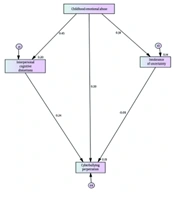
(Figure 1) The suggested model in this research indicates that perceived parenting style mediated the relationship between family adaptability and cohesion and cyberbullying.
Table 3.
Fit Indices of the Model for Parenting Styles Mediating the Relationship Between Family Adaptability and Cohesion and Cyberbullying
| RMSEA | NFI | CFI | χ2/df | IFI |
|---|---|---|---|---|
| 0.08 | 0.927 | 0.946 | 3.36 | 0.947 |
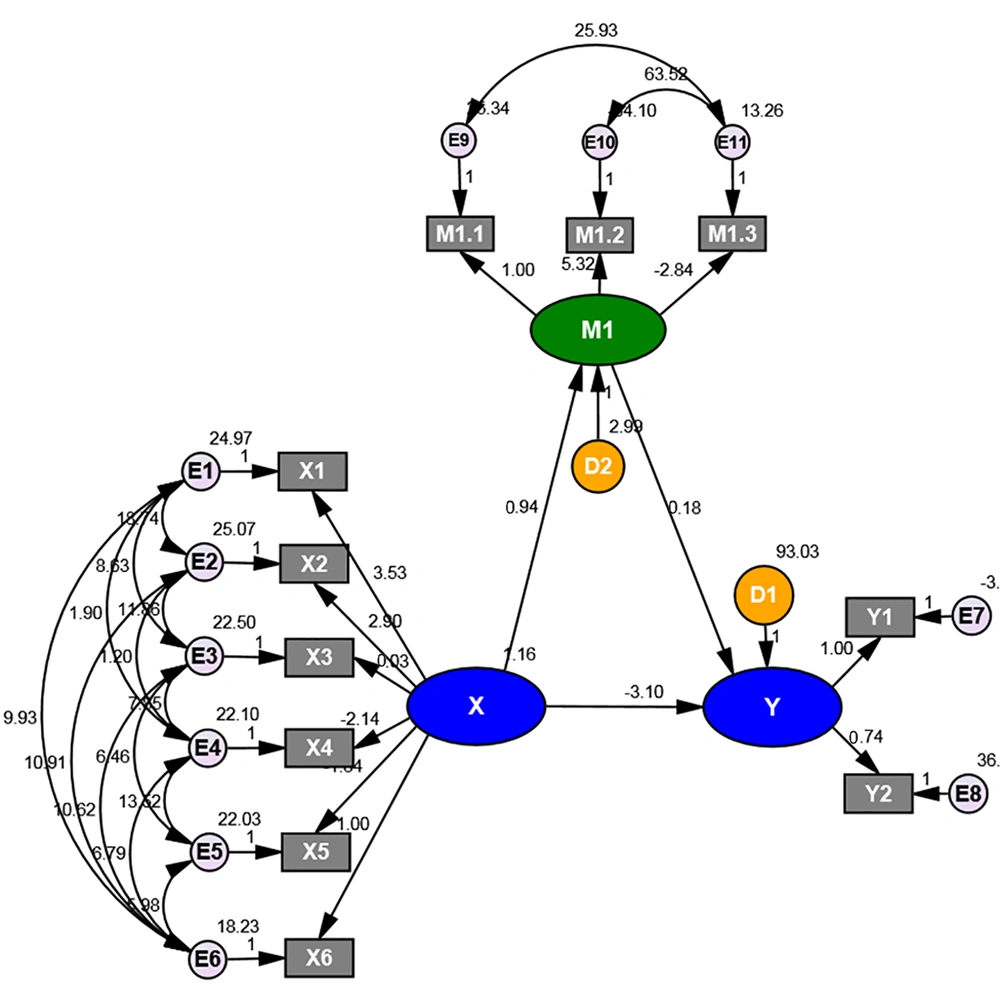
Figure 1.
The model for parenting styles is mediating the relationship between family adaptability and cohesion and cyberbullying. X= family adaptability and cohesion, Y = cyberbullying, M1 = parenting styles
5. Discussion
The results revealed that family adaptability and cohesion significantly negatively correlate with cyberbullying. Also, the model demonstrated family adaptability and cohesion, and cyberbullying did not have a direct relationship. However, perceived parenting styles can play a mediating role in this relationship. Our findings are in line with some of the previous studies. For instance, Buelga et al. showed that victims of cyberbullying had limited communication patterns and less family cohesion. In addition, family conflict predicts cyberbullying and a less open relationship with the mother, and a more avoidant relationship with the father predicts the role of cyber victim. Finally, conflict, non-open, and avoidant communication variables predicted the cyberbullying-victim role (22). Larrañaga et al. found that adolescents' avoidant communication with their mothers was associated with cyberbullying victimization. Additionally, parental report of abusive communication was associated with greater cyberbullying victimization. The results of this study demonstrated the relationship between being a victim of cyberbullying and the problems that arise in family communication (23). Zhang et al. showed that the reduction of psychological distress through family cohesion is more noticeable in victims of cyberbullying (1).
Family adaptability and cohesion also showed a significant positive relationship with parenting style, and parenting style had a significant negative relationship with cyberbullying. Families that have healthy communication and dialogue between children and parents use the Internet more responsibly. On the contrary, adolescents whose family atmosphere is tense and restless and does not have a good relationship with their parents spend more time on the Internet (24). A study showed that higher family cohesion can be related to parents' positive parenting style (25). Parents can reduce the problems caused by parenting with proper cohesion and mutual support. Suppose parents are strict, lax, and inattentive in raising their children and family interactions and use aggressive behavior patterns such as punishment and violence. In that case, there will probably be bullying among children (26). López-Castro states that adolescents with weak emotional relationships with their parents, rigid parental rules, and less frequent supervision are involved in cyberbullying (13).
Based on the results in line with this finding, cohesion, and healthy parent-child communication are needed to reduce the risks associated with cyberbullying. Decreased family cohesion has a positive relationship with self-esteem, internalizing and externalizing problems of adolescents, adaptability, problem-solving, self-efficacy, and perfectionism, and it has a negative relationship with worry, depression, tension, and physical symptoms. Reducing family cohesion and increasing interpersonal conflicts can reduce family flexibility (27). Finally, the increase in conflicts and negative family atmosphere makes teenagers spend more time on the Internet to fill the gaps in their interactions, which makes them vulnerable to peer bullying (13).
Therefore, the results showed that parent-child cohesion and healthy communication are essential in reducing cyberbullying, and the results also showed that adolescents' perception of parents' parenting styles in an authoritative manner reduces the risk of bullying behaviors. On the other hand, authoritarian or indulgent parenting styles can increase the risk of bullying behavior.
The present study had some limitations that must be addressed. First, data collection was online due to the conditions of the coronavirus. Second, the variables were all collected by questionnaire and subjective report. The adolescents’ answers on the self-reports could have social expectations effects and biases, although this point, the reliability and validity of the adolescents’ answers were acceptable. Therefore, future studies should collect multiple types of data (e.g., behavioral experiments or electroencephalograph recordings). Third, the sample size was limited to Tehran and did not represent the country’s adolescent population. It is suggested that future research should be performed in other cultural regions and populations of the country so that the results can be generalized with more certainty. Fourth, a cross-sectional study was used to examine the relationship between family adaptability and cohesion and cyberbullying in adolescents with the mediating role of perceived parenting style. Thus, the long-term effects on the family were not examined. A longitudinal research design is needed to better understand how family cohesion and adaptation, and perceived parenting style change during adolescence and how these dynamics affect cyberbullying victimization.
5.1. Conclusions
Overall, our results demonstrated the importance of family cohesion and perceived parenting style in preventing cyberbullying in adolescents and implied that these factors could have protective roles. These factors could be important in the understanding and tackling of cyberbullying. Therefore, it would be important to continue this line of research. Moreover, our results support the importance of involving families in prevention and intervention programs. Due to the increasing interaction between the real world and technology, parents have an important role in guiding and controlling the use and abuse of new technologies. It seems that training parents in the field of parenting and communication with teenagers can be useful. Finally, combining qualitative and quantitative methodology is suggested to examine cyberbullying from the perspective of parents and adolescents more closely.