
1. Background
Cancer is a life-threatening disease that significantly impacts the physical and psychological well-being of children (1, 2). Each year, more than 300,000 children worldwide are diagnosed with various types of cancer, including leukemia, lymphoma, and solid tumors (3). Despite advances in medical treatments such as chemotherapy, radiation, and surgery, cancer remains a leading cause of morbidity and mortality among children (2-4). The aggressive nature of these treatments, particularly chemotherapy, often results in a range of adverse effects, including pain, fatigue, nausea, and significant psychological distress (1, 3, 5). Hospitalization, frequent medical procedures, and separation from family and peers further exacerbate the emotional burden on pediatric patients, leading to increased rates of anxiety and depression (3, 6, 7).
Anxiety is one of the most common psychological responses observed in children undergoing cancer treatment (8, 9). Studies indicate that a significant proportion of children with cancer experience clinically relevant symptoms of anxiety, which can negatively affect their adaptive skills, treatment adherence, and overall recovery process (3, 10). The prevalence of anxiety disorders in pediatric cancer patients has been reported to range from 15% to 35%, with higher rates observed during the acute phases of treatment, such as chemotherapy (10, 11). Anxiety in these children is often associated with fear of medical procedures, uncertainty about the future, and the distressing side effects of treatment (3, 10). If left unaddressed, anxiety can contribute to poorer health outcomes, reduced quality of life, and increased risk of long-term psychological sequelae (10, 12).
Given the profound psychological impact of cancer and its treatment, there is a growing recognition of the need for comprehensive psychosocial care in pediatric oncology (3, 13). International guidelines now recommend the integration of mental health interventions into standard cancer care to promote well-being, prevent psychiatric comorbidities, and support the adjustment process for both patients and their families (3, 13). Among the various psychosocial interventions, cognitive-behavioral approaches, art therapy, play therapy, and story therapy have shown promise in alleviating psychological distress in children with cancer (3, 6, 12).
Story therapy, also known as storytelling therapy or bibliotherapy, is a structured intervention that utilizes the narrative process to help children express emotions, process traumatic experiences, and develop coping strategies (3, 6). Through the use of stories — whether read, told, or co-created — children are provided with a safe and imaginative space to explore their fears, anxieties, and hopes without direct confrontation or resistance (3, 6). Story therapy leverages the natural affinity of children for stories, allowing them to identify with characters, model adaptive behaviors, and gain insight into their own experiences (3, 14). This approach is particularly suitable for children with limited energy or physical capacity to engage in more active therapies, such as play therapy, during intensive treatments like chemotherapy (14, 15).
Recent research has demonstrated the efficacy of story therapy in reducing anxiety and improving psychological outcomes in children with cancer. Semi-experimental studies with control groups have shown that cognitive-behavioral story therapy, delivered in structured sessions, leads to significant reductions in anxiety and depression scores compared to standard care (3, 6).
2. Objective
Mechanisms, optimal delivery, and long-term effects require further investigation. This study examines the effect of story therapy on anxiety in children undergoing chemotherapy, aiming to inform evidence-based, integrative care to enhance psychological resilience and treatment outcomes (12).
3. Patients and Methods
3.1. Design and Settings
This study was a randomized, controlled clinical trial designed with parallel groups to evaluate the effect of story therapy on reducing anxiety in children with cancer undergoing chemotherapy. The trial was conducted at Ali-Asghar Hospital from January to November 2023 (IRCT20230923059493N1). All participants maintained their regular therapy throughout the study. Written informed consent was obtained from each patient and their parent. Children with cancer undergoing chemotherapy were enrolled in the study based on specific inclusion and exclusion criteria. Inclusion criteria comprised children aged 6 to 12 years with a confirmed cancer diagnosis currently receiving chemotherapy, with informed consent obtained from both the children and their parents. Exclusion criteria included children with physical or psychological impairments that prevented participation in therapy sessions, a history of congenital or genetic disorders, diagnosed psychiatric conditions, or current use of anxiolytic medications. Additionally, participants who were non-cooperative, missed two or more sessions, or passed away during the study were excluded.
Randomization was performed using simple block randomization with sealedenvelop.com software, with a block size of four. The random sequence was concealed from the principal investigator. It was only available to an independent third person and was revealed individually during the study period. Children with cancer undergoing chemotherapy were assessed for their suitability to enter one of two groups, including the story therapy group (N = 20) or the control group (N = 20). For the patients participating in this study, all conditions were the same between the two groups.
3.2. Inclusion, Exclusion, and Withdrawal Criteria
Inclusion criteria included children aged 6 to 12 years with a confirmed diagnosis of cancer undergoing chemotherapy, with informed consent obtained from both the children and their parents. Exclusion criteria encompassed physical or psychological incapacity to participate in sessions, a history of congenital or genetic disorders, diagnosed psychiatric conditions, or use of anxiolytic medications. Reasons for withdrawal included non-cooperation, absence from at least two sessions, or the patient’s death.
3.3. Randomization
Randomization was conducted using simple block randomization with sealedEnvelop.com software, employing a block size of four. The allocation sequence was concealed from the principal investigator and accessible only to an independent third party, who revealed it individually during the study. Children with cancer undergoing chemotherapy were assessed and assigned to either the story therapy group (n = 20) or the control group (n = 20). All conditions were identical for participants in both groups.
3.4. Procedures
3.4.1. Treatment Context
Participants were recruited from the pediatric hematology-oncology ward, comprising children actively receiving chemotherapeutic treatment. The cohort represented diverse phases of standard care, including induction, consolidation, and maintenance, with corresponding variation in prior treatment exposure (Table 1). Randomization effectively balanced this clinical heterogeneity between the intervention and control groups, as evidenced by comparable mean time since diagnosis (P = 0.776). All patients were undergoing active treatment for cancer at the time of the study. The primary chemotherapeutic route for all participants was systemic intravenous (IV) infusion. In accordance with established protocols for specific malignancies, particularly hematological cancers such as acute lymphoblastic leukemia (ALL), a subset of participants additionally received intrathecal (IT) chemotherapy for central nervous system prophylaxis or therapy.
Table 1.
Baseline Characteristics of Story Therapy and Control Group a
| Variables | Story Therapy Group (n = 17) | Control Group (n = 20) | P-Value |
|---|---|---|---|
| Gender | 0.630 | ||
| Men | 8 (52.9) | 11 (55) | |
| Women | 9 (52.9) | 9 (45) | |
| Age (mon) | 85.6 ± 8.28 | 84.45 ± 9.55 | 0.192 |
| Child's birth order | 0.653 | ||
| Firstborn | 7 (41.2) | 11 (55) | |
| Second | 7 (41.2) | 7 (35) | |
| Third and more | 3 (17.6) | 2 (10) | |
| Mother's education level | 0.524 | ||
| Illiterate | 0 (0) | 2 (10) | |
| < Diploma | 5 (29.4) | 5 (25) | |
| Diploma | 8 (47.1) | 7 (35) | |
| > Diploma | 4 (23.5) | 6 (30) | |
| Mother's occupation | 0.774 | ||
| Housekeeper | 15 (88.2) | 17 (85) | |
| Employed | 2 (11.8) | 3 (15) | |
| Father's occupation | 0.642 | ||
| Unemployed | 2 (11.8) | 2 (10) | |
| Employed | 15 (88.2) | 18 (90) | |
| Duration of cancer diagnosis (mon) | 23.18 ± 9.83 | 12.40 ± 9.58 | 0.776 |
| Underlying disease | 0.612 | ||
| Yes | 4 (23.5) | 5 (25) | |
| No | 13 (76.5) | 15 (75) | |
| Type of cancer | 0.242 | ||
| ALL | 13 (76.5) | 10 (50) | |
| Neuroblastoma | 3 (17.6) | 2 (10) | |
| Lymphoma | 0 (0) | 2 (10) | |
| Wilms tumor | 1 (5.9) | 2 (10) | |
| AML | 0 (0) | 3 (15) | |
| Osteosarcoma | 0 (0) | 1 (5) | |
| History of relapse | 0.541 | ||
| Yes | 0 (0) | 1 (5) | |
| No | 17 (100) | 19 (95) | |
| Surgical history | 0.367 | ||
| Yes | 1 (5.9) | 3 (15) | |
| No | 16 (94.1) | 17 (85) | |
| Type of surgery | 0.569 | ||
| No surgery | 16 (94.1) | 17 (85) | |
| Tumor resection | 0(0) | 1 (5) | |
| Nephrectomy | 1 (5.9) | 2 (10) |
Abbreviations: ALL, acute lymphoblastic leukemia; AML, acute myeloid leukemia.
a Values are expressed as mean ± SD or No. (%).
3.4.2. Revised Children’s Manifest Anxiety Scale
The Revised Children’s Manifest Anxiety Scale (RCMAS), developed by Reynolds and Richmond in 1978, is a widely validated tool for assessing anxiety in children (16). It demonstrates strong reliability, with KR-20 coefficients of 0.83 and 0.85 in independent studies (16). The scale includes 28 anxiety items and 9 lie-detection items, measuring three dimensions of anxiety: Physiological anxiety, worry/oversensitivity, and concentration difficulties (17). Each item is scored dichotomously (“Yes” = 1, “No” = 0), with total anxiety scores ranging from 0 to 28; scores above 19 indicate clinically significant anxiety. The Persian version, translated by Taghavi and Alishahi, has confirmed content validity and internal consistency (Cronbach’s alpha = 0.87) (18). The study also collected demographic and clinical data, including age, sex, cancer type, disease duration, and parental background.
3.4.3. Intervention and Storytelling Program
The intervention involved a comprehensive storytelling program aimed at reducing anxiety in children with cancer undergoing chemotherapy. The program featured ten weekly individual sessions, each lasting about 90 minutes, held during the children’s routine chemotherapy visits in a private, quiet room within the hematology ward. This environment offered a safe, supportive, and confidential space conducive to emotional expression and therapeutic engagement.
Each session started with a child psychologist leading warm-up activities like play, drawing, and open conversation to build rapport, ease anxiety, and emotionally prepare the child for storytelling. These activities helped children feel comfortable and encouraged active participation throughout the session.
The main part of the intervention involved storytelling with a set of ten carefully chosen narratives, each approved by two child psychologists to ensure they were age-appropriate and sensitive to the children’s emotional state. The stories centered on themes such as courage, resilience, hope, and coping with illness, enabling children to relate their own experiences to the narratives. While the stories remained the same for all participants, their order and emphasis were flexibly adjusted based on each child’s emotional and psychological needs during the session.
Children were encouraged to actively engage by discussing the stories, sharing their feelings, and reflecting on the characters’ experiences. This storytelling process served as a therapeutic tool to externalize fears, lessen feelings of isolation, and promote emotional regulation. Storytelling functioned as a form of verbal therapy, allowing children to process complex emotions related to their cancer diagnosis and treatment in a creative and supportive manner.
The control group received standard chemotherapy care according to established medical protocols but did not participate in any storytelling or additional psychological interventions. Both groups completed the RCMAS Questionnaire at two points: Before the intervention and immediately after the ten-week program. The timing of the questionnaires in the control group was aligned with that of the intervention group to ensure comparability.
Overall, this detailed storytelling program combined preparatory play and art activities with tailored narrative therapy, offering a holistic intervention designed to reduce anxiety and improve psychological outcomes in pediatric cancer patients undergoing chemotherapy.
3.5. Outcomes
3.5.1. Assessment Tool
Anxiety levels were measured using the RCMAS before the first session and after the final session. Parents completed the questionnaires in consultation with their child and under researcher supervision. Three participants from the intervention group withdrew during the study due to parental unwillingness to continue and changes in treatment location.
3.5.2. Outcome Measures
Primary outcome: Change in anxiety levels, as measured by the RCMAS total score and its subscales: Physiological anxiety, worry/oversensitivity and concentration. Secondary outcome: Subgroup analysis by gender and age.
At the end of the study, anxiety levels were compared between the two groups. Lower scores on the anxiety scale indicated less anxiety. Total RCMAS scores and subscale scores (1, physiological anxiety; 2, worry/oversensitivity; and 3, concentration) were calculated and compared. Pre- and post-intervention scores, as well as their differences, were analyzed between groups.
3.6. Statistical Analyses
The sample size was determined using Altman’s nomogram, based on a standardized effect size of 0.9 and a desired statistical power of 80%, which indicated a requirement of approximately 35 participants distributed across two groups. To accommodate potential dropouts, the final sample size was increased to 40 participants, with 20 allocated to each group. Categorical variables were expressed as frequencies and percentages (N, %), while continuous variables were summarized as means ± standard deviations (SD). The chi-square or Fisher exact test was used to assess associations between categorical variables. The Kolmogorov-Smirnov test evaluated the normality of all continuous variables. For comparisons of continuous variables between the two groups, the independent samples t-test or Mann-Whitney U test was applied. Data were analyzed using SPSS version 18, with statistical significance set at P < 0.05. Per-protocol approaches were employed: The per-protocol analysis included only participants who completed the intervention as originally allocated, excluding only those without outcome data (e.g., due to withdrawal or loss to follow-up). This approach ensured robust and reliable assessment of the intervention's effects.
3.7. Ethical Considerations
This study was approved by the Ethics Committee of Iran University of Medical Sciences (IR.IUMS.FMD.REC.1401.532) and registered in the Iranian Registry of Clinical Trials (IRCT20230923059493N1). All procedures were conducted in accordance with the principles outlined in the Declaration of Helsinki. In the manuscript preparation phase, perplexity was utilized as a tool for language refinement to enhance clarity and readability. It is hereby declared that the AI's role was strictly supportive; all research conceptualization, study design, data generation, analysis, interpretation, and the final intellectual conclusions are unequivocally the work and responsibility of the authors. Parents were assured of the confidentiality of all personal information, with no disclosure of names or addresses. Participation in the study involved no additional costs for the families. The study protocol was thoroughly explained to the parents, emphasizing that participation was entirely voluntary. Written informed consent was obtained from all parents prior to enrollment, and all patient data were anonymized and recorded using coded identifiers to ensure privacy.
4. Results
Between January and November 2023, 63 patients were screened for inclusion and exclusion criteria. After excluding 23 patients during the initial assessment, 40 patients were randomized into two groups. Three patients in the intervention group withdrew or deviated from the protocol and were excluded from the analysis. A final per-protocol analysis was conducted on two groups, each consisting of 37 patients (Figure 1).
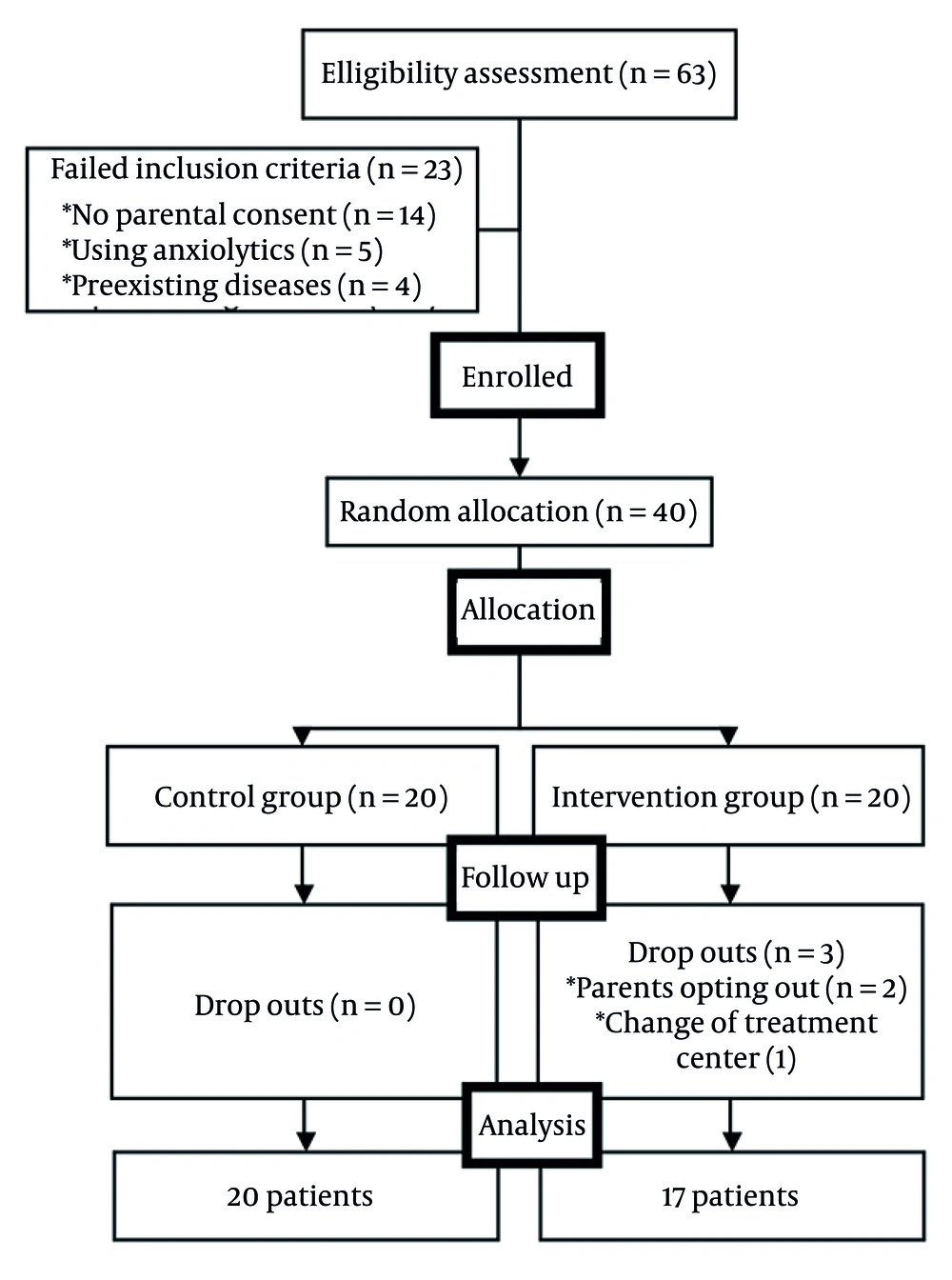
Figure 1.
Participants flow diagram
4.1. Baseline Characteristics of Story Therapy Group and Control Group
The two groups were well-balanced across all baseline demographic and clinical characteristics, confirming successful randomization (Table 1). The mean age was approximately 85 months in both groups, and the majority of participants in the intervention group (76.5%) and the control group (50%) were diagnosed with acute lymphoblastic leukemia, with no statistically significant difference in cancer type distribution (P = 0.242). Other variables, including gender, parental education and occupation, duration since diagnosis, and medical history, showed no significant differences.
4.2. Comparison of the Primary Outcome and Its Components Between the Story Therapy Group and the Control Group
Independent t-test results showed that before the intervention, the intervention group had significantly higher anxiety scores than the control group (17.12 ± 2.06 vs. 12.20 ± 5.27; P = 0.002). After the intervention, the intervention group exhibited significantly lower anxiety scores compared to the control group (9.76 ± 3.73 vs. 15.97 ± 4.14; P < 0.001) (Table 2).
Table 2.
Comparative Analysis of the Primary Outcome and Its Components (Post-intervention-Pre-intervention)
| Variables/Study Groups | Mean ± SD | P-Value a |
| Pre-physiological anxiety | 0.051 | |
| Story therapy group | 5.18 ± 1.912 | |
| Control group | 3.85 ± 2.084 | |
| Pre-intervention worry | 0.120 | |
| Story therapy group | 4.35 ± 1.869 | |
| Control group | 3.35 ± 1.954 | |
| Pre-intervention concentration | 0.002 | |
| Story therapy group | 7.59 ± 1.583 | |
| Control group | 5.50 ± 2.212 | |
| Pre-intervention total anxiety | 0.002 | |
| Story therapy group | 17.12 ± 2.058 | |
| Control group | 12.70 ± 5.273 | |
| Post-physiological anxiety | < 0.001 | |
| Story therapy group | 2.41 ± 1.278 | |
| Control group | 5.50 ± 1.395 | |
| Post-concentration | 0.001 | |
| Story therapy group | 3.53 ± 2.125 | |
| Control group | 6.00 ± 1.919 | |
| Post-worry | 0.301 | |
| Story therapy group | 3.82 ± 1.776 | |
| Control group | 4.45 ± 1.849 | |
| Post-total anxiety | < 0.001 | |
| Story therapy group | 9.76 ± 3.734 | |
| Control group | 15.95 ± 4.136 |
a Compared between two study groups by independent t-test.
Post-intervention, the story therapy group demonstrated significantly lower physiological anxiety (2.41 vs. 5.50, P < 0.001), concentration anxiety (3.53 vs. 6.00, P = 0.001), and total anxiety scores (9.76 vs. 15.95, P < 0.001) compared to controls. No significant between-group difference was observed for worry scores (3.82 vs. 4.45, P = 0.301; Figure 2).
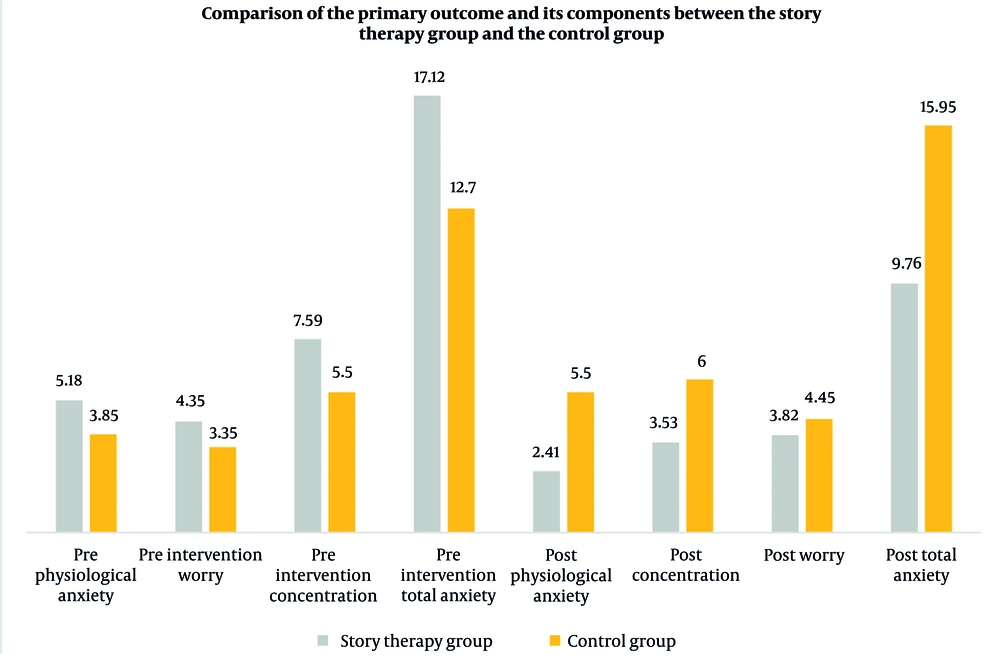
Figure 2.
Comparison of anxiety and its components between the story therapy group and the control group
4.3. Subgroup Analysis by Gender
The effects of story therapy on anxiety were analyzed by gender (Table 3). At baseline, anxiety subscale scores were generally comparable between genders within each group, except for significantly higher concentration and total anxiety scores among females in the intervention group (P = 0.001 and P = 0.003, respectively). Post-intervention, story therapy was associated with significant reductions in physiological anxiety and total anxiety for both males and females compared to their respective controls (all P < 0.05). However, concentration anxiety improved significantly only in males (P = 0.001), while the reduction in females was not statistically significant (P = 0.135). Worry scores did not change significantly for either gender following the intervention (Table 3).
Table 3.
Comparison of Anxiety Subscale Scores by Gender Pre- and Post-story Therapy Intervention
| Variables/Study Groups | Men | Women | ||
|---|---|---|---|---|
| Mean ± SD | P-Value | Mean ± SD | P-Value | |
| Pre-physiological anxiety | 0.175 | 0.064 | ||
| Story therapy group | 5.750 ± 2.375 | 4.667 ± 1.323 | ||
| Control group | 4.091 ± 2.700 | 3.556 ± 1.014 | ||
| Pre-intervention worry | 0.332 | 0.201 | ||
| Story therapy group | 4.500 ± 2.563 | 4.222 ± 1.093 | ||
| Control group | 3.364 ± 2.248 | 3.333 ± 1.658 | ||
| Pre-intervention concentration | 0.391 | 0.001 | ||
| Story therapy group | 6.625 ± 1.188 | 8.444 ± 1.424 | ||
| Control group | 5.909 ± 2.300 | 5.000 ± 2.121 | ||
| Pre-intervention total anxiety | 0.106 | 0.003 | ||
| Story therapy group | 16.875 ± 1.808 | 17.333 ± 2.345 | ||
| Control group | 13.364 ± 6.329 | 11.889 ± 3.822 | ||
| Post-physiological anxiety | < 0.001 | < 0.001 | ||
| Story therapy group | 2.250 ± 1.488 | 2.556 ± 1.130 | ||
| Control group | 5.727 ± 1.618 | 5.222 ± 1.093 | ||
| Post-concentration | 0.001 | 0.135 | ||
| Story therapy group | 3.500 ± 1.604 | 3.556 ± 2.603 | ||
| Control group | 6.636 ± 1.859 | 5.222 ± 1.787 | ||
| Post-worry | 0.419 | 0.703 | ||
| Story therapy group | 4.750 ± 1.909 | 3.000 ± 1.225 | ||
| Control group | 5.455 ± 1.695 | 3.222 ± 1.202 | ||
| Post-total anxiety | < 0.001 | 0.023 | ||
| Story therapy group | 10.500 ± 2.878 | 9.111 ± 4.428 | ||
| Control group | 17.818 ± 4.020 | 13.667 ± 3.122 | ||
Figure 3 illustrates a consistent reduction in post-intervention anxiety across most subscales for both women (Panel A) and men (Panel B) receiving story therapy compared to controls. The intervention was associated with notably lower scores in total, concentration, and physiological anxiety for both genders.
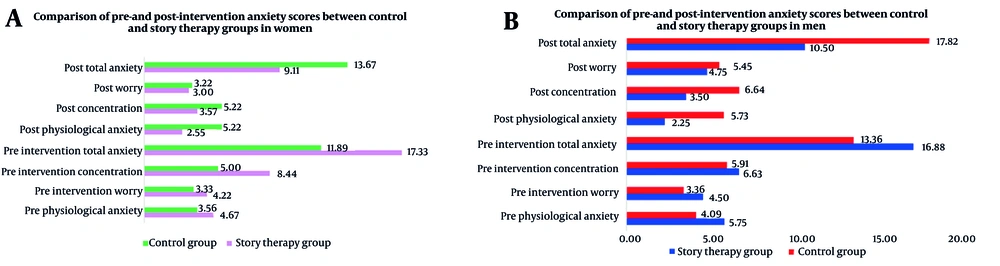
Figure 3.
A, comparison of pre- and post-intervention anxiety scores between control and story therapy groups in women; and B, in men
4.4. Age-Related Differences in Storytelling Effects on Children’s Anxiety
The intervention's efficacy was analyzed by stratifying participants into younger (≤ 7 years) and older (> 7 years) age groups (Table 4). At baseline, the younger children assigned to story therapy had significantly higher physiological, concentration, and total anxiety scores than their control counterparts (all P < 0.01), while baseline scores were comparable between groups for older children. After the intervention, story therapy led to significant reductions in physiological anxiety, concentration anxiety, and total anxiety in both age groups compared to their respective controls (all P < 0.05). The magnitude of improvement was more pronounced in the younger cohort. The worry subscale did not show a significant treatment effect in either age group (Table 4).
Table 4.
Comparison of Anxiety Subscale Scores Before and After Story Therapy Intervention by Age Group (≤ 7 y vs. > 7 y)
| Variables/Study Groups | ≤ 7 y | > 7 y | ||
|---|---|---|---|---|
| Mean ± SD | P-Value | Mean ± SD | P-Value | |
| Pre-physiological anxiety | 0.003 | 0.692 | ||
| Story therapy group | 6.13 ± 1.126 | 4.33 ± 2.121 | ||
| Control group | 3.80 ± 1.619 | 3.90 ± 2.558 | ||
| Pre-intervention worry | 0.805 | 0.094 | ||
| Story therapy group | 3.38 ± 1.408 | 5.22 ± 1.856 | ||
| Control group | 3.20 ± 1.549 | 3.50 ± 2.369 | ||
| Pre-intervention concentration | 0.004 | 0.164 | ||
| Story therapy group | 8.25 ± 1.282 | 7.00 ± 1.658 | ||
| Control group | 5.30 ± 2.312 | 5.70 ± 2.214 | ||
| Pre-intervention total anxiety | 0.004 | 0.127 | ||
| Story therapy group | 17.75 ± 2.121 | 16.56 ± 1.944 | ||
| Control group | 12.30 ± 4.322 | 13.10 ± 6.297 | ||
| Post-physiological anxiety | 0.004 | < 0.001 | ||
| Story therapy group | 2.63 ± 1.506 | 2.22 ± 1.093 | ||
| Control group | 5.30 ± 1.829 | 5.70 ± 0.823 | ||
| Post-concentration | 0.036 | 0.014 | ||
| Story therapy group | 3.63 ± 1.923 | 3.44 ± 2.404 | ||
| Control group | 5.80 ± 2.098 | 6.20 ± 1.814 | ||
| Post-worry | 0.140 | 0.639 | ||
| Story therapy group | 2.88 ± 1.126 | 4.67 ± 1.871 | ||
| Control group | 3.80 ± 1.398 | 5.10 ± 2.079 | ||
| Post-total anxiety | 0.007 | 0.002 | ||
| Story therapy group | 9.13 ± 3.682 | 10.33 ± 3.905 | ||
| Control group | 14.90 ± 4.228 | 17.00 ± 3.972 | ||
5. Discussion
This study demonstrates that a structured story therapy intervention significantly reduces anxiety in children undergoing chemotherapy for cancer. While the intervention group had higher baseline anxiety, post-intervention scores were significantly lower for total anxiety, physiological anxiety, and concentration anxiety compared to controls, indicating a clear therapeutic benefit. The lack of significant effect on the worry subscale suggests story therapy may be less effective for this cognitive dimension of anxiety. Subgroup analyses revealed beneficial effects across genders and a more pronounced response in younger children (≤ 7 years), who exhibited greater baseline anxiety but also more substantial improvement.
These findings align with literature supporting narrative-based therapies for managing emotional distress in pediatric populations. Narrative therapies, including story therapy, are grounded in the principle that reconstructing personal narratives helps individuals re-frame experiences, reduce psychological distress, and enhance coping (19, 20).
The significant improvements in physiological and concentration anxiety components observed in this study complement previous findings that story-based interventions can reduce somatic symptoms and improve cognitive focus in anxious individuals (21-23). For instance, studies with children and adolescents have demonstrated that storytelling and narrative techniques reduce physiological symptoms such as heart rate and muscle tension, suggesting a calming effect that facilitates concentration and emotional regulation (24, 25). Similarly, the observed reduction in total anxiety scores echoes findings from randomized controlled trials where narrative interventions yielded clinically meaningful anxiety reductions across populations (26, 27). In addition, Tollabzadeh et al. showed that music therapy for eight weeks, with music selected by patients from a list, could significantly reduce patients’ anxiety, pain, and perceived stress, and recommended the inclusion of this intervention in the routine care of patients with cancer (28). Also, Kaviyani et al. have suggested that emotion-focused therapy (EFT), which helps individuals identify, experience, and regulate emotions, has been effectively utilized in various formats with children and adolescents, primarily through family therapy (29).
Interestingly, this study found no significant change in worry scores post-intervention, implying that story therapy may be less effective in targeting the cognitive-affective aspect of anxiety characterized by persistent, uncontrollable worry. This corresponds with past research indicating that worry, as a core feature of generalized anxiety disorder, might require more cognitively targeted treatments such as cognitive-behavioral therapy or mindfulness-based interventions to achieve measurable improvement (30, 31). While narrative therapy supports emotional processing and meaning-making, the rumination and anticipatory cognitive patterns involved in worry may necessitate additional or complementary therapeutic components (32).
The gender-specific findings further enrich the analysis, showing significant reductions in physiological and total anxiety for both men and women, but concentration anxiety improvements were significant only in men. This supports growing literature that men and women may experience and respond to anxiety differently due to biological, psychological, and social factors (33, 34). Women often report higher baseline anxiety and may experience anxiety in more diffuse ways, while men may manifest more discrete concentration-related anxiety symptoms, which respond readily to interventions like story therapy (34, 35). Additionally, women’s slower improvement in concentration anxiety may reflect gender differences in coping strategies, emotional regulation, and socialization patterns influencing therapy outcomes (36). These gender nuances highlight the need to tailor anxiety interventions to optimize benefits across male and female patients.
Age-based analyses revealed that younger children (≤ 7 years) initially exhibited higher physiological, concentration, and total anxiety than older children but reaped more pronounced benefits post-therapy. These findings are consistent with developmental psychology research showing that narrative and play therapies are particularly effective in younger children who more naturally engage with storytelling and symbolic play to make sense of emotional experiences (37). Early childhood is a sensitive period when intervention can significantly influence emotion regulation development, suggesting that story therapy may capitalize on developmental plasticity to yield stronger anxiety reductions in younger populations (38). By contrast, older children and adults, with more entrenched cognitive patterns, might require more complex or integrative forms of therapy to achieve similar effect sizes (39). This age-related differential response underlines the importance of developmental considerations in therapy selection and timing.
The overall maintenance of elevated anxiety scores in the control group post-intervention substantiates that observed improvements in the story therapy group are attributable to the intervention rather than natural reduction over time. This reinforces the clinical utility of story therapy as a stand-alone or adjunctive intervention for anxiety management within community and educational settings, where access to specialized mental health services may be limited. It also echoes systematic reviews concluding that narrative approaches foster therapeutic alliance, empowerment, and symptom reduction, with effects comparable to standardized cognitive-behavioral protocols in some instances (40).
Several studies corroborate the mechanisms posited to underlie story therapy’s efficacy. By externalizing problems through narrative, individuals reconstruct anxieties in a manageable framework, decreasing avoidance and fostering insight (24, 41). The storytelling process enhances emotional expression, cognitive restructuring, and reduces isolation — key components in anxiety reduction documented across clinical populations (41, 42). Moreover, the social and cultural components embedded in story therapy have been shown to validate personal experiences and strengthen coping resources, which may amplify therapeutic gains beyond simple symptom reduction (43, 44).
Despite promising evidence, storytelling therapy is not yet routinely implemented in most pediatric oncology centers. Based on the results of this study, it is recommended that children's hospitals and oncology departments incorporate individual storytelling therapy as an effective non-pharmacological intervention in their care protocols to reduce stress and anxiety in pediatric cancer patients.
Reducing anxiety in children with cancer not only improves their quality of life and treatment adherence but may also prevent the emergence of high-risk behaviors resulting from psychological distress, such as aggression, social withdrawal, or treatment refusal. In this context, non-invasive interventions such as story therapy can play a preventive role by enhancing emotional regulation and decreasing the likelihood of risk-taking or maladaptive coping behaviors during childhood and adolescence.
5.1. Strengths and Limitations
The randomized controlled clinical trial on story therapy to reduce anxiety in children with cancer undergoing chemotherapy has several strengths and limitations. Strengths include its rigorous randomized controlled trial design with parallel groups, clear inclusion and exclusion criteria, and proper randomization with allocation concealment to reduce selection bias. Anxiety was measured using the validated RCMAS, and the storytelling intervention was carefully tailored and conducted in a controlled clinical setting by child psychologists. The control group received standard care, and ethical procedures including informed consent and trial registration were followed. Statistical power was calculated appropriately, and relevant demographic and clinical data were collected.
However, limitations include a relatively small sample size of 40 participants with some dropouts, limiting generalizability and statistical power, and the use of a per-protocol analysis, which may introduce bias by excluding non-completers. The study was conducted in a single center, which restricts external validity, and lacked participant and therapist blinding that could influence outcomes. The control group did not receive an attention-matched or placebo intervention, so nonspecific effects of therapy sessions were not controlled. The follow-up was short-term, measuring anxiety immediately after intervention without assessing long-term effects. Furthermore, while our study specified that children were undergoing chemotherapy, we clarify that this encompassed systemic intravenous treatment for all, with intrathecal administration for a subset per their clinical protocol. Additionally, while randomization successfully balanced key demographic and clinical variables, including the duration since diagnosis as a proxy for treatment experience, the study did not specifically categorize participants by treatment phase (e.g., first cycle vs. maintenance). Differences in prior treatment exposure could influence baseline anxiety and responsiveness to psychosocial intervention. Future studies would benefit from stratifying randomization or analyzing effects by specific treatment phase to refine the application of story therapy.
Overall, while the study’s design and execution provide a solid basis to evaluate storytelling therapy’s effect on anxiety, these limitations should be considered when interpreting the results and applying them in broader contexts.
5.2. Conclusions
This study provides strong and compelling evidence supporting story therapy as an effective intervention for reducing anxiety symptoms — especially physiological and concentration-related anxiety — across diverse gender and age groups. Although the therapy demonstrated limited effectiveness in alleviating worry, these findings highlight the potential benefits of combining story therapy with complementary treatments that specifically target the cognitive-affective aspects of anxiety. The observed gender and age differences emphasize the necessity of adopting personalized treatment approaches to optimize therapeutic outcomes. Future research should focus on investigating the long-term effects, elucidating the underlying mechanisms of change, and determining the most effective ways to integrate story therapy with other evidence-based interventions, thereby solidifying its role within a comprehensive framework for anxiety management.
Considering the close relationship between elevated anxiety and the development of high-risk behaviors in children and adolescents, the findings of this study suggest that implementing story therapy in clinical settings may not only alleviate anxiety but also serve as a preventive strategy against risk-related behavioral outcomes associated with chronic illness. Therefore, integrating such therapeutic approaches into pediatric psychosocial care programs could effectively reduce high-risk behaviors and promote psychological well-being in vulnerable populations.