1. Background
For years, stimulants were selling as a licensed and prescribed drug in different countries due to being known as effective in increasing alertness, reducing fatigue, insomnia, loss of appetite, and creating a sense of well being (1). The prevalence of amphetamine dependence is increasing in the world, according to the relevant unit of the united nations (UNODC). After marijuana, methamphetamine is currently the second most common substance of abuse around the world (2). In Iran, illegal use of stimulants has increased dramatically in recent years (2, 3).
Several studies have shown the association between methamphetamine use and similar compounds to occur in acute psychosis. Methamphetamine may lead to very similar psychotic symptoms of schizophrenia spectrum, which is why it is difficult to make differential diagnosis (4). Recent studies have shown that up to 25% of those who were initially diagnosed with methamphetamine-induced psychosis, were later diagnosed with early psychotic disorder (1).
Akiyama et al. in Japan, conducted a study on methamphetamine abuse by 32 female subjects (5) with the average abuse duration of 2 to 30 years and 5 to 31 months after cessation by injection. These females were suffering from psychosis as in 9 patients, recurrence had also occurred in no abuse of methamphetamine. The most common symptoms include: psychosis (auditory hallucinations, delusions), violence, delirium, depression, and suicidal ideation. Furthermore, in a significant proportion of patients, depressive symptoms persisted for several months after treatment with anti-psychotics.
In another study regarding long-term consequences of methamphetamine abuse after the first hospitalization in Thailand by Kittirattanapaiboon et al. it was shown that 50.7% of the patients had a psychotic relapse and 22.3% had attempted suicide. The results of this study indicated that many people with methamphetamine psychosis have a poor prognosis and most of them suffer from premature death, recurrence of psychotic symptoms, prolonged psychosis, high rates of alcohol abuse, and suicide, which makes it necessary to follow them with more accurate and frequent visits (6). Other studies emphasize the psychotic disorder after methamphetamine use (7-12).
Due to results of a large study that was conducted during 1987 and 2003 in Finland, in most of the cases, the diagnosis had occurred during the first three years of the follow-up (13).
2. Objectives
This study, were inspired to review and to examine the clinical status and mental health of patients hospitalized in the Iran Psychiatric Hospital with a diagnosis of psychotic disorder caused by methamphetamine after 2 to 5 years, from 2007 to 2011.
3. Patients and Methods
This study is a retrospective cross-sectional study. The population of the study consisted of patients with psychotic disorders caused by methamphetamine use admitted to the Iran psychiatric hospital during the period of 2007 to 2011.
Due to the risk of sample loss because of the cases’ unavailability, impossibility of interview caused by physical and psychological limitations, death of subject (s), or unwillingness to participate in the interview, about 2 times of the total number (324 persons) of all patients hospitalized from 2007 onwards, in the Iran Psychiatric Hospital, due to aforementioned problems with at least 2 years past their initial admission, were randomly selected and received a phone call, which resulted in 150 people who were available and gave their verbal consent to participate in research.
The inclusion criteria included the admission with a diagnosis of psychotic disorder caused by methamphetamine abuse, the diagnosis should be confirmed by a psychiatrist who is a faculty member at the time, an available landline, Persian dialect, and verbal or written consent to participate in research.
The exclusion criteria included the patient’s unwillingness to cooperate in the project or in the absence of sufficient information and unwillingness of the patient regarding interviewing their families.
If the person did not cooperate during the calls, or it was not possible to interview him/her after several calls, he/she was removed from the watch list. In cases that the information regarding the patient’s history was different from the file information, the results of the questionnaire would be applied. During the call, the patient was asked to announce his/her desire regarding participation in this research study.
The patient was encouraged to participate in the study by receiving free visits and copies and free consultation by calling the psychiatry resident. If it was not possible to visit the patient personally, a patient questionnaire would be completed by phone interview. Two psychiatric residents conducted and coordinated the interviews and three men were jointly interviewed; then, the diagnostic matching was performed. The diagnostic interview was done based on the SCID field of psychotic disorders, mood episodes disorders, alcohol dependence, and other disorders. The SCID is a semi-structured interview, which provides diagnoses based on the DSM-IV-TR. According to the study conducted in Iran by Eghtedari et al. (13), the SCID had acceptable reliability of the Iranian version and the total Kapa for all current diagnosis was 0.52 and the diagnosis for the entire lifetime was 0.55.
4. Results
4.1. Demographic Data
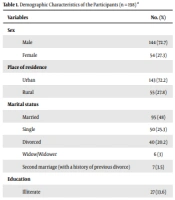
In the study, 150 patients were followed. A total of 6 of them (4.0%) died during the phone call follow-up. The mean age of individuals who were alive was 34.9 years (SD: 8.7). The median age was 33 years with a range of 21 to 61 years. A total of 41 patients (28.5%) were under 30 years old (Table 1). Only 12 women (8.0%) were present in this group. All the women were housewives and the total of 99 patients (68.9%) were considered unemployed. Demographic profile of the patients is shown in Table 1. It is necessary to notice that the demographic data of dead patients belong to the follow-up period.
Table 1.
Demographic Characteristics of Patients Who Re-Evaluated After First Diagnosis of Methamphetamine-Induced Psychotic Disordera
| No. (%) | |
|---|---|
| Sex | |
| Male | 138 (92.0) |
| Female | 12 (8.0) |
| Marital status | |
| Single | 75 (50.0) |
| Married | 52 (34.7) |
| Divorced or Widow | 23 (15.3) |
| Occupation | |
| Jobless (males) | 92 (61.3) |
| Housewives | 12 (8.0) |
| Employee | 46 (30.7) |
| Education | |
| Illiterate | 6 (4.0) |
| Low level | 84 (56.0) |
| High school diploma | 57 (38.0) |
| University degree | 3 (2.0) |
aIn deceased ones the last status was considered.
4.2. Methamphetamine Use
According to DSM-IV-TR and current (or the last) situation of methamphetamine use, 19 individuals (12.7%) were diagnosed as a methamphetamine abuser and 60 (40.0%) as methamphetamine dependent.
The mean age of onset of methamphetamine use in these patients was 28.8 years (SD: 7.7) and in the range of 13 to 53 years (median: 28 years). A total of 12 individuals (8.0%) began methamphetamine use before the age of 20, 16 of them (10.7%) had started it after entering the fifth decade of their life (Table 2).
Table 2.
Distribution of Variables Associated with Methamphetamine Use Among 150 Patients Previous Diagnosis of Methamphetamine-Induced Psychotic Disorder
| No. (%) | |
|---|---|
| Diagnosis of methamphetamine use disorder | |
| Abuse or dependence | 79 (52.7) |
| Previous hospitalization in psychiatric ward | |
| Yes | 27 (18.0) |
| History of suicide attempt | |
| No | 123 (82.0) |
| Once | 10 (6.7) |
| Two or more | 17 (11.3) |
| Relapse of psychosis | |
| Yes | 95 (63.3) |
| Re-hospitalization | |
| No | 69 (46.0) |
| Once or twice | 69 (46.0) |
| Three times or more | 12 (8.0) |
| History of methamphetamine intoxication | |
| Yes | 23 (15.3) |
| First use of methamphetamine, decade | |
| 2nd | 12 (8.0) |
| 3rd or 4th | 122 (81.3) |
| 5th or 6th | 16 (10.7) |
| Time interval between first use and incidence of psychosis, mo | |
| less than 3 | 47 (31.3) |
| 3.0 - 5.5 | 33 (22.0) |
| 6.0 - 12.0 | 40 (26.7) |
| More than 12 | 30 (20.0) |
| Duration of the index psychotic episode, d | |
| Less than 7 | 94 (62.7) |
| 7 - 29 | 46 (30.7) |
| ≥ 30 | 10 (6.7) |
A total of 27 individuals (18.0%) had a history of previous psychiatric hospitalization and 81 patients (54.0%) were re-admitted in psychiatric wards after index hospitalization. The maximum readmission times was 8. After the first period of hospitalization, due to methamphetamine-induced psychotic disorder, 95 (63.3%) had a recurrence of psychosis with or without methamphetamine use. Duration of a psychotic period of first hospitalization varied from 1 to 120 days (median: 4 days). The median time between the first use of methamphetamine and methamphetamine-induced psychotic disorders was 5 months (range: 0.5 to 72 months). Also, 28 patients (18.7%), after the first episode of methamphetamine-induced psychotic disorder, were intoxicated with methamphetamine at least once (Table 2).
4.3. Other substance Use
The most common substance used by these patients was nicotine (dependence rate of 76.7%). Other substances used by substantial portion of the patients were nicotine, cannabis, and opioids (82.0%, 26.7% and 22.0%, respectively; Table 3).
Table 3.
Frequency of Current Substance Use Disorders Among 150 Patients with Previous Diagnosis of Methamphetamine-Induced Psychotic Disorder
| No Use | Use | Abuse | Dependence | |
|---|---|---|---|---|
| Methamphetamine | 71 (47.3) | - | 19 (12.7) | 60 (40.0) |
| Nicotine | 27 (18.0) | 8 (5.3) | - | 115 (76.7) |
| Cannabis | 110 (73.3) | 8 (5.3) | 27 (18.0) | 5 (3.3) |
| Opioids | 117 (78.0) | 5 (3.3) | 14 (9.3) | 14 (9.3) |
| Ecstasy | 145 (96.7) | 4 (2.7) | 1 (0.7) | - |
| Hallucinogens | 148 (98.7) | - | 2 (1.3) | - |
| Other substances | 129 (86.0) | 8 (5.3) | 11 (7.3) | 2 (1.3) |
4.4. History of Suicide
A total of 27 patients (18.0%) had attempted suicide during the follow-up period. Among them, 18 subjects (12.0%) had attempted once or twice, and the others at least three time (maximum: 8 times).
4.5. Mortality
Despite insufficient information on the causes of death of 6 patients and unwillingness of families to talk about it, the following information was obtained:
Patient 1: 28-years-old, died apparently due to a heart attack.
Patient 2: 26-year-old died due to suicide by consuming opium.
Patient 3: 40-years-old died in a hospital a month later due to heart attack resulting from concomitant use of drugs (opium and methamphetamine) and drugs.
Patient 4: Died at the age of 34, in the camp, and as a result of drug use. The patient suffered from severe depression and potential suicide attempt, which resulted in death.
Patient 5: Died at the age of 41 of a heart attack. The dead patient was reported suffering from psychosis, despite not using glass in last 3 to 4 years.
Patient 6: Died at age 32, due to poisoning with methamphetamine, according to a forensic report.
4.6. Re-Diagnosis
At the follow-up interview, 38 patients reclassified as the cases of schizophrenia (25.3%), 17 as the cases of major depressive disorder (11.3%), 7 as the cases of bipolar disorder type I (4.7), two as the cases of schizoaffective disorder (1.3%), and two as cases as delusional disorder (1.3%). A total of 84 cases (56.0%) were diagnosed as recovered cases or as methamphetamine-induced psychotic disorder. Excluding deceased individuals, to predict diagnosis change from methamphetamine-induced psychotic disorder to other major psychiatric disorders (including schizophrenia, schizoaffective disorder, delusional disorder, major depressive disorder and bipolar disorder type I), we used binary logistic regression model. In this model, predicting variables were age (< 30 years and ≥ 30 years), sex, first age of methamphetamine usage (< 20 years and ≥ 20 years), diagnosis of methamphetamine use disorder (including abuse or dependence), previous admission (before index admission), short duration of psychotic episode in index admission (less than 7 days), prolonged psychotic period in index admission (≥ 30 days), interval between first use of methamphetamine and first psychotic episode (< 6 months and ≥ 6 months), and major mood disorder comorbidity. In this model Cox & Snell R2 was 0.507 (P < 0.001). By using this regression model we can correctly classify patients as the cases of final diagnosis of methamphetamine-induced psychotic disorder (diagnosis not changed over time) in 72 out of 82 cases (87.8%) or other major psychiatric disorder in 53 out of 62 cases (85.5%). Based on the binary regression model, variables that may help predicting diagnosis change are diagnosis of methamphetamine use disorder (adjusted OR = 3.978, 95% CI: 1.265 - 12.512), previous psychiatric admission (adjusted OR = 6.749; 95% CI: 1.639 - 27.779), and short duration of psychotic episode (adjusted OR = 0.171; 95% CI: 0.056 - 0.520. The results are shown in Table 4.
Table 4.
Results of Binary Logistic Regression Model to Predict Diagnosis Change Over Time from Methamphetamine-Use Disorder to Other Major Psychiatric Disorders
| Variable | B ± SE | Wald | P Value | Adjusted OR | 95% CI for Adjusted OR |
|---|---|---|---|---|---|
| Age, y (≥ 30) | -0.26 ± 0.65 | 0.15 | 0.696 | 0.76 | 0.22 - 2.79 |
| Sex (female) | -17.792 ± 5651.94 | 0.000 | 0.997 | 0.000 | - |
| Methamphetamine use disorder | 1.38 ± 0.59 | 5.58 | 0.018 | 3.98 | 1.27 - 12.51 |
| Age at first use of methamphetamine, y (< 20) | 0.13 ± 0.51 | 0.06 | 0.81 | 1.133 | 0.42 - 3.07 |
| Previous admission in psychiatric ward | 1.91 ± 0.72 | 7.00 | 0.008 | 6.75 | 1.64 - 27.78 |
| Short duration of psychotic episode, d (< 7) | -1.77 ± 0.57 | 9.68 | 0.002 | 0.17 | 0.06 - 0.52 |
| Prolonged duration of psychotic episode, d (≥ 30) | 0.34 ± 1.00 | 0.12 | 0.75 | 1.41 | 0.20 - 10.07 |
| Interval between first use and incidence of psychosis, mo (≥ 6) | -0.42 ± 0.56 | 0.56 | 0.45 | 0.66 | 0.22 - 1.97 |
| Mood comorbidity | 37.33 ± 8288.43 | 0.000 | 0.996 | 1.6 × 10¹⁶ | - |
Abbreviations: CI, confidence interval; OR, odds ratio.
5. Discussion
The aim of this study was to evaluate the mental health of those admitted with a diagnosis of psychotic disorder caused by methamphetamine abuse in the Iran psychiatric hospital during a time period of 2 to 5 years. The mean age of the participants in this study was 34.9 years (SD: 8.7), which is more than the mean age of 30 patients with a methamphetamine abuse admitted in the Iran psychiatric hospital in 2012 whose cognitive functions were examined. In that study, the average age of the patients suffering from methamphetamine psychosis was 32.1 (13). On the other hand, based on the studies done outside of Iran such as a study on 248 individuals diagnosed with methamphetamine abuse in 2014, the average age of the first methamphetamine intake was 17.8 years (14). This could indicate that the use of methamphetamine amongst young people is more frequent than others, which could lead to irreparable consequences for social performance.
The results of this study showed that 44.4% of participants (559 patients) has at least once used methamphetamine during their life. In our study, the prevalence of methamphetamine abuse was 12.7% and the dependence frequency was 40.0%, which is close to the results of the above-mentioned study. Comparing the results of both studies’ high percentage of methamphetamine, users may experience side effects such as psychosis.
Results of our study also indicated that 18.0% of participants had a history of previous psychiatric hospitalizations and more than half of them (54.0%) have again been hospitalized in psychiatric wards at the time of this research.
In a study on 744 retired members of the U.S. military with methamphetamine abuse, the results showed that 23.4% of the users have been readmitted to the hospital and 13.1% of them have been hospitalized more than three times (15). Although the methodology of this study is different from the previously mentioned, it is important to note that people with psychosis due to methamphetamine abuse, compared to consumers without symptoms, are in need of readmission with a higher percent. However, results of this study revealed that 18.7% of patients, after the first methamphetamine-induced psychosis, were at least once poisoned with it.
It can be concluded from our study that 63.3% of subjects faced with relapse of psychosis after the first admission, which had an average duration of 30 days. In a study by Fasihpour et al. on 111 hospitalized patients with methamphetamine induced psychosis, the results showed that the mean duration of hospitalization was 21.43 days and the mean duration of episodes of psychosis lasted 17.37 days (4), which is nearly close to the results of our study. According to the study by Ujik et al. methamphetamine abuse has three main features, which included progressive qualitative change in psychological symptoms from lack of psychosis to progressive psychosis, also, patients with methamphetamine abuse vulnerability to psychotic relapse has increased and in case of re-taking, this vulnerability will last for a very long time. These characteristics were named as the sensitivity of methamphetamine abuse and can explain the recurrence of methamphetamine-induced psychosis by stress and prolonged intractable psychosis caused by methamphetamine (16).
In a study by Akiyama et al. in Japan, conducted on 32 female abusers of methamphetamine, it was shown that the mean duration of abuse was found to be 2 to 30 years where psychosis had arisen during 5 to 31 months after cessation of methamphetamine injection and 9 patients had a recurrence in the absence of methamphetamine abuse. In addition, a significant number of patients with the above symptoms were suffering from depression for some months after treatment with anti-psychotics. The results of this study signify that in people who have less comorbidity with other psychiatric disorders, methamphetamine psychosis has a better prognosis. Also, in this study, it was concluded that the symptoms of psychotic and mood symptoms could be important in both recurrence and prognosis of patients with methamphetamine abuse (5). On the other hand, due to the high comorbidity of depressive symptoms in people who abuse methamphetamine, it is hypothesized that the risk of other psychiatric disorders may underlie addiction or relapse of methamphetamine use (17).
The results showed that 18.7% of those surveyed had attempted suicide during their follow-up. In a study conducted in Thailand, long-term consequences of methamphetamine abuse in patients who were evaluated after the first hospitalization was examined. In this study, 1,116 patients were examined after seven years of follow ups and results showed that 8.2% of them had died due to suicide, accidents, and AIDS; 39.2% were readmitted and 38% were diagnosed with schizophrenia caused by prolonged psychosis. The results of this study showed that many people with psychosis induced by methamphetamine had a poor prognosis, most of them being affected with early death, frequent recurrence of psychotic symptoms, prolonged psychosis, high rates of alcohol abuse, and suicide, which makes it necessary to more accurate and frequent visits (6). Comparing the results of this study with the current one shows that the suicide rate is lower in our study, which can be due to cultural differences with Thailand, reluctance on part of patients participating in the study to mention about their past suicide attempts or lack of long-term follow-ups of patients in our study.
On the other hand during the follow-ups in our study, seven patients had died due to cardiac arrest with four cases of heart failure, two cases of suicide, and one case of acute methamphetamine intoxication. Thus, the main cause of mortality in this study was cardiovascular incidents, which is different from the results of study conducted in Thailand, where the main cause of death was suicide. The mortality statistics in methamphetamine abusers in the current study was 4.0%, which is lower than Thailand (8.2%).
This emphasizes the importance of cardiovascular complications caused by the methamphetamine components in Iran, which necessitates further studies.
A study by Moon et al. in 2014, showed that people who abuse methamphetamine have been hospitalized due to cerebrovascular accidents during a 1 to 3 year follow-up with significantly worse prognosis than those who did not use methamphetamine (18).
On the other hand, the results of previous studies emphasized that the use of methamphetamine has increased the risk of cardiomyopathy as well as cardiovascular events and is also associated with increased risk of sudden death (19).
The lower suicide rate in Iran may be due to cultural differences or other factors of methamphetamine users where further studies are needed for an answer.
In our study, prediction of diagnosis change showed the diagnosis of methamphetamine use disorder (adjusted OR = 3.978, 95% CI: 1.265 - 12.512), previous psychiatric admission (adjusted OR = 6.749; 95% CI: 1.639 - 27.779), and short duration of psychotic episode (adjusted OR = 0.171; 95% CI: 0.056 - 0.520.)
During 1987 to 2003, a large study of 18,478 patients, who were first diagnosed with psychosis of material and had been hospitalized, was conducted in Finland. During the study, patients were followed for either the onset of psychotic symptoms or death, to reach the studies end (whichever occurred first), and their psychiatric changes were examined. In many cases, the diagnosis of psychosis induced by methamphetamine was changed to schizophrenia, which was more common in men than women. More diagnosis changes occurred during the first three years of follow-up. Therefore, it seems that methamphetamine-induced psychosis is a significant predictor of establishing the diagnosis of schizophrenia spectrum disorders in the future (20) and the results of this study also confirm this point.
A study on 295 patients who abuse methamphetamine was conducted in Canada where the patients were followed for 6 months on a monthly basis. The most powerful predictors of persistent psychotic symptoms inside the study were more severe psychotic symptoms, persistent period of abuse, and depression. These results indicate the importance of co-morbidities in persistence of psychosis induced by methamphetamine use (10). In the current study, lack of diagnosis was associated with stronger probabilities of mood comorbidities as well.
A study was conducted in 2013 in Malaysia where 292 patients who had a diagnosis of dependence on methamphetamine were examined. In the meantime, 13% of the patients’ were psychotic at the time of the study and 48% had a history of psychotic symptoms. The study found that there is a significant association between psychosis induced by methamphetamine use and major lifetime depressive disorder (OR = 7), bipolar disorder (OR = 14), and antisocial personality disorder (OR = 12.5). In addition, heavy methamphetamine use was associated with the incidence of induced psychosis (9).
A study of 80 Japanese female patients in 2011 showed that despite long-term abstinence, a subgroup of methamphetamine consumers was afflicted with chronic psychosis. It was also found that mood symptoms were effective on the severity of people’s psychosis (5).
In another study on 744 cases of retired military methamphetamine abusers, it was concluded that the most common psychiatric disorders included mood disorders, psychotic disorder, and post-traumatic stress (21).
In a study conducted in South Africa, 235 patients with methamphetamine abuse were examined; 59% of them were affected with delusions and 57% had hallucinations. Amongst them, 74% suffered from some kind of aggression. From 235 participants, 41% received a final diagnosis of methamphetamine use. In addition, during a 5-year follow-up study 31% of subjects received final diagnosis of schizophrenia and 12% of them were eventually diagnosed with bipolar disorder. The results of this study showed that mood disorders were more common in women than men (22).
As it shows, the detection of early psychosis and psychosis induced by methamphetamine is difficult based on the acute symptoms. Although it seems that recovery from methamphetamine-induced psychosis is faster compared with psychosis schizophrenia, the symptoms completely disappear. In both schizophrenia spectrum disorders and methamphetamine-induced psychosis, there are some predisposing genes. People that carry these genes probably have a lower psychotic symptom threshold and they suffer from less favorable clinical conditions (21).
Thus, there is a complex relationship between the use of amphetamines and psychosis, which is not completely discovered yet.
5.1. Study Limitations
The background variables belong to the time of the follow-up and they were not considered during the first admission, which can put a negative impact on the demographic result interpretation and people’s current status. The persons age or cause of death is not clear, given the importance of the cause of death in patients with methamphetamine use, information indicated seems necessary.
5.2. Conclusions
The results of our study showed that methamphetamine-induced psychosis can be associated with other psychiatric disorders. In addition, noticing the disorders and curing them can prevent further complications of these comorbidities. Although the study cannot say exactly whether other disorders existed at the start of hospitalization, simultaneously occurred with psychotic induced by methamphetamine, or during the recovery of the early psychosis symptoms, this is clear that many people suffering from methamphetamine psychosis will be affected with recurrence of methamphetamine psychosis symptoms with or without taking methamphetamine, which emphasizes on the importance of these patients’ follow-up after discharge.