
1. Context
Investigators described coronaviruses (CoVs) in the 1960s for the first time (1). The CoVs are a family of viruses that cause a variety of diseases in mammals and birds. The earliest reports were in chickens infected by two groups of viruses called human coronavirus 229E and human coronavirus OC43 and showed the clinical manifestations of the common cold (2). They belong to the subfamily Orthocoronavirinae, the member of the Coronaviridae family, the order of Nidovirales, and the kingdom of Riboviria (3, 4). They are a large family of single-stranded RNA viruses with a genome size of about 27 - 34 kb, which is the largest genome compared with other RNA viruses (5). Corona is a Latin term, meaning “crown”, due to the surface covering in club-shaped protein spikes of virions (the infective form of a virus) by electron microscopy. The CoVs contain spike (S), envelope (E), membrane (M), and nucleocapsid (N) as proteins forming their overall structure. After entry into the host cell, the virus particle is uncoated, followed by entering the genome to the cytoplasm (6).
There are seven strains of human CoVs, including Human coronavirus 229E (HCoV-229E), Human coronavirus HKU1, Middle East respiratory syndrome-related coronavirus (MERS-CoV), severe acute respiratory syndrome coronavirus (SARS-CoV), human coronavirus NL63 (HCoV-NL63, new haven coronavirus), Human coronavirus OC43 (HCoV-OC43), SARS-CoV-2 or “novel coronavirus 2019” (2019-nCoV) (7).
The CoV subfamily has categorized into four genera of alpha, beta, gamma, and delta CoVs. The human coronaviruses (HCoVs) can be found in alpha CoVs (HCoV-229E and HCoV-NL63) and beta CoVs (HCoV-HKU1, HCoV-OC43, MERS-CoV, SARS-CoV, and SARS-CoV-2). The CoV family, including SARS-CoV, HCoV NL63, HKU1, MERS-CoV, and SARS-CoV-2, was identified in 2003, 2004, 2005, 2012, and 2019, respectively. Human-to-human transmission of CoVs is believed to occur through respiratory droplets from sneezing and coughing (8).
2. Evidence Acquisition
To provide up-to-date information on neurologic manifestation of CoVs, we concisely reviewed the neurologic manifestations and their complications. Using the keywords, including coronavirus, corona, HCoVs, SARS, MERS, COVID-19, manifestations, complications, and neurologic, all relevant articles were retrieved from PubMed, reviewed, and critically analyzed.
3. Results
3.1. Common Clinical Manifestations
Some CoVs only affect animals, but a number of them can also affect humans. Symptoms are different in different species: chickens represent upper respiratory tract infections (URTIs), whereas cows and pigs have diarrhea. HCoVs infections are linked to respiratory and extra respiratory tract symptoms and can affect the central nervous system. In addition, in contrast to different RNA viruses, HCoVs are easily mutated and recombined after infecting the same cells by various strains and resulting in a new virus with unexpected host ranges as well as pathogenicity (9).
Common HCoVs, such as 229E, NL63, OC43, and HKU1, result in mild to moderate URTIs, including common cold (runny nose, sore throat, headache, fever, cough, and feeling of illness). Investigators believed that CoVs account for 15% - 30% of total common colds among adults and children, primarily in the winter and early spring seasons. Most people could be infected with CoVs during their lives. Lower respiratory tract infections (LRTIs) are caused by HCoVs, like pneumonia or bronchitis (direct viral or secondary bacterial) (10), which mostly affect those with cardiopulmonary disease, various immune system deficiencies, infants, and elderly. Rare forms of HCoVs, including SARS and MERS, lead to both LRTIs and URTIs and can be lethal (10). The prevalence of atypical pneumonia was announced in December 2019 in Wuhan, China, as a new strain of CoV and called 2019-nCoV by the World Health Organization, which was then called SARS-CoV-2 according to the International Committee on Taxonomy of Viruses (11). Coronavirus disease 2019 (COVID-19) has special pathogenesis due to causing both LRTIs and URTIs and its lethal feature. The HCoVs were found in upper respiratory tract secretions collected in 30% of acute respiratory infections and wheezy bronchitis in cases younger than six years with recurrent respiratory infections (12). Abdominal pain, emesis, and diarrhea are the initial manifestations of acute infections by non-SARS HCoVs. Such findings have also been announced, especially in the HCoV-OC43 and HCoV-NL63, that are possibly the direct outcomes of viral invasion along with the mucosa of the intestine (9).
3.2. Neurologic Manifestations
Members of Coronaviridae can cause respiratory, intestinal, hepatic, and neurological diseases of various severities in humans and animals. The clear involvement of several animal CoVs in acute and chronic neurologic diseases resulted in a search for similar pathogenicity of human CoVs. Community-acquired HCoVs can infect neural cells in vitro (13), and three-week-old mice develop generalized encephalitis after intracerebral inoculation with HCoV-OC43 (14). In another case report, HCoV-OC43 RNA was recovered from the brain, at autopsy, in an 11-month-old boy with severe combined immunodeficiency and acute encephalitis (15).
3.3. Demyelinating Disorders
The CoVOC43 was found in the cerebrospinal fluid (CSF) and nasopharyngeal secretions of a 15-year-old boy that admitted with the diagnosis of ADEM as the earliest announced link between HCoV and ADEM. This report confirms that CoV plays an important role in demyelinating disease in humans (16). Some investigators proposed a link between CoVs and multiple sclerosis (MS), but current evidence is inconclusive. T cell clones from patients with MS have been shown to react to both HCoV-229E antigens and myelin basic protein, suggesting molecular mimicry as a basis of pathogenesis (16). Some, but not all, investigators have detected RNA of the human CoVs, HCoV-OC43, and HCoV-229E, more frequently in brain tissue of cases with MS through reverse-transcriptase polymerase chain reaction than in healthy individuals (17). Despite these reports, an etiologic link between CoVs and demyelinating disorders such as MS or ADEM has not been proven.
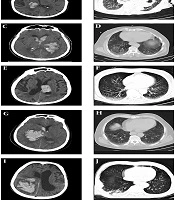
Arabi et al. (18) reported a severe neurologic syndrome associated with MERS CoV infections. The neurologic symptoms are alterations in mental state that range from confusion to coma, ataxia, and focal motor impairments. According to the results of brain MRI, new-onset widespread, two-sided hyperintensities on T2WI in white matter as well as subcortical regions of the frontal, temporal, and parietal lobes, the basal ganglia and corpus callosum, pons, cerebellum, and upper cervical cord (18). The HCoVs could cause neurological symptoms such as seizures and meningoencephalitis in children (19).
3.4. Acute Flaccid Paralysis
In particular, HCoV OC43 is a neurotrophic, neuroinvasive, and neuroinflammatory virus. Experimental animal studies reported that HCoV OC43 causes flaccid paralysis and demyelination (AFP) (20). Although HCoVs as a cause of AFP has not been reported until now (19), HCoV 229E and OC43 co-infection may cause respiratory failure and AFP (21).
3.5. Neurologic Complications During Treatment
Sometimes neurologic complications may be seen during the treatment of HCoVs infections. Kim et al. (22) revealed that neurological symptoms could be observed throughout or following MERS-CoV therapy. Bickerstaff’s encephalitis overlapping with Guillain-Barre syndrome, intensive-care-unit-acquired weakness, or other toxic or infectious neuropathies were the possible diagnoses presented for these four cases out 23 referred MERS cases (22).
3.6. Neurologic Complications of COVID-19
Although from the December 2019, outbreak of a novel coronavirus (SARS-CoV-2) or COVID-19 started in Wuhan and has become a global threat to human health in a short time, fortunately, significant neurological manifestations were not reported until now.
4. Conclusions
HCoVs can infect humans and animals. Moreover, HCoVs infections are accompanied by common respiratory and uncommon extra respiratory symptoms and can affect the central nervous system. The HCoVs have been causing worldwide outbreaks with high morbidity and mortality. Fortunately, neurological manifestations are not common but reported during the acute phase and treatment period.