Primary ciliary dyskinesia is a rare respiratory disease in children, with an incidence rate of 1:10000 - 1:20000 (
8). The disease often occurs early in life, with many infants, even full-term infants, exhibiting respiratory distress at birth (
9). Nonetheless, only 73% of children with PCD have been reported to exhibit neonatal respiratory symptoms (
10), thereby indicating that although PCD starts early, it is not generally a lethal disorder. Prognosis can be improved if PCD is diagnosed early so that appropriate protective measures can be implemented to delay the occurrence of bronchiectasis and prevent recurrent respiratory tract infections. Nevertheless, diagnosis is often delayed, as indicated in one early study conducted in the United Kingdom that reported an average age of PCD diagnosis at 4.4 years (
11). In a larger study conducted more recently on 1,009 PCD patients in 26 European countries and China, median ages at diagnosis of 5.3 years and 9.16 ± 3.67 years were reported, respectively (
12). More recently, a study conducted at Beijing Children’s hospital in China reported a median age at diagnosis of 7.0 years (2 months to 14 years) for 75 pediatric PCD patients admitted between 2012 to 2019 (
13). In the current study, the median age of diagnosis was 5.75 years as an indicator of earlier PCD diagnosis in China during the past 3 years.
The accurate diagnosis of PCD, a complex genetic heterogeneous disease, depends on the collection of medical information from a variety of sources (e.g., medical history, symptoms, examination findings, TEM analysis of ciliary ultrastructure analysis, and genetic testing) since no gold standard PCD diagnostic assay yet exists. The most useful and convenient first step for PCD diagnosis is to carefully examine the patient’s medical history and symptoms and compare these clinical features to four key PCD clinical features outlined in the American Thoracic Society clinical guidelines (
14). By basing a diagnosis on a positive match between patient clinical features and at least two of the four key clinical features outlined in the guidelines, PCD diagnostic specificity and sensitivity might be improved.
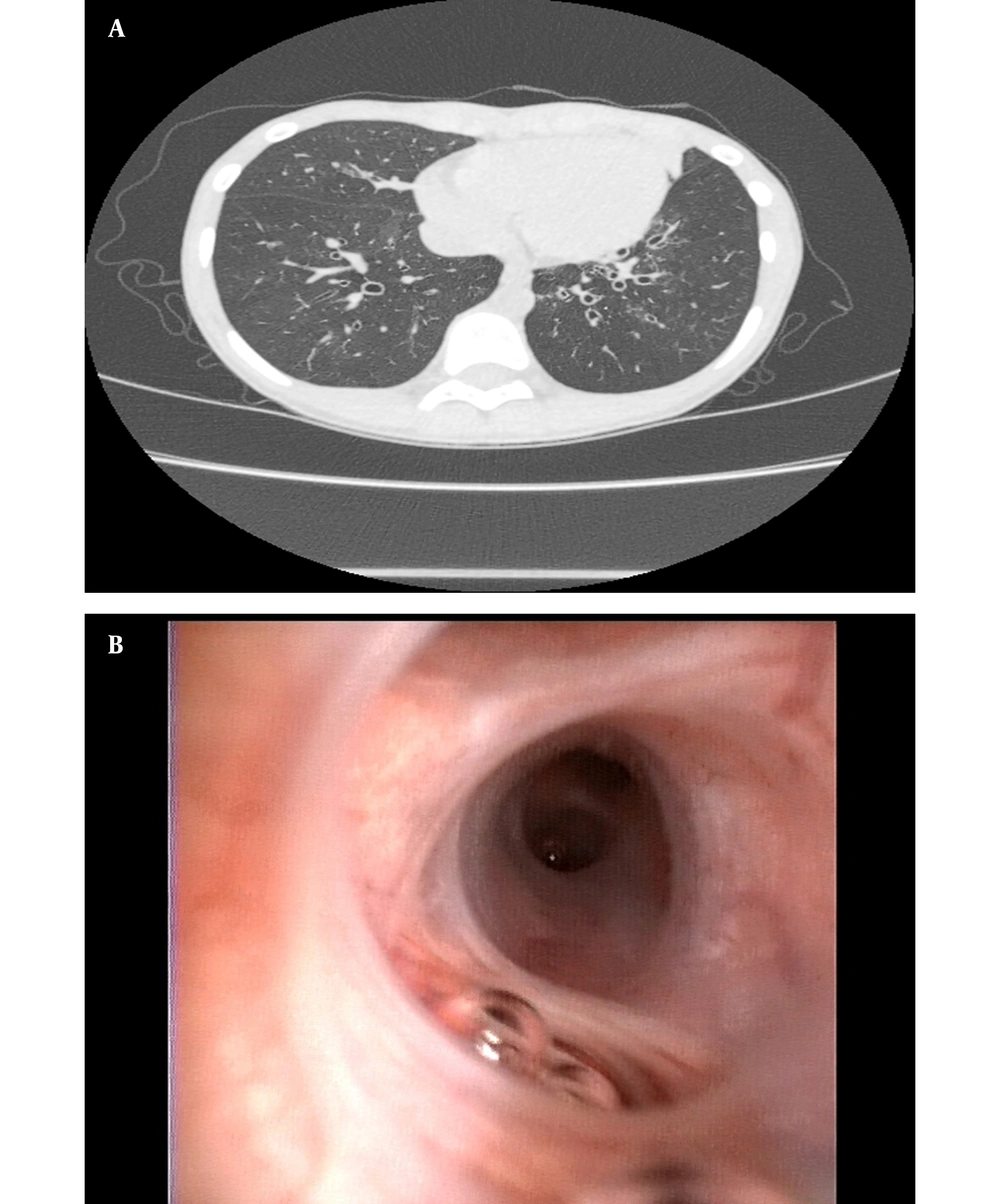
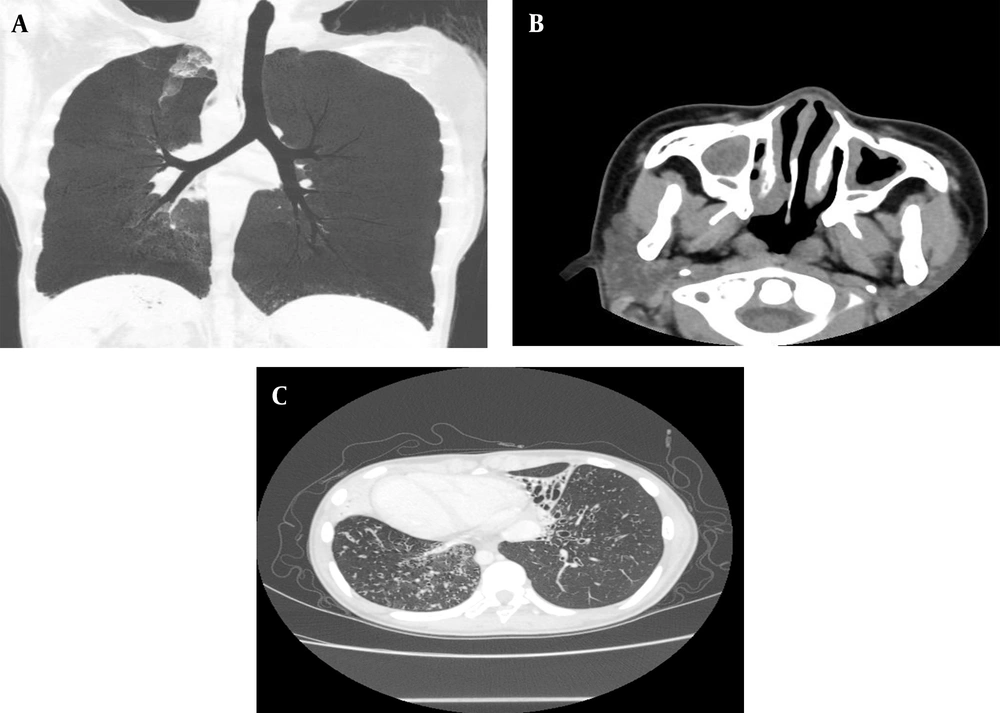
Importantly, expectoration in PCD patients is more pronounced than in other respiratory disorders, with symptoms in PCD cases almost always beginning at a very young age (most often shortly after birth) and improving (but never disappearing completely) under good weather conditions and after the administration of standard anti-asthma or anti-allergy treatments. Primary ciliary dyskinesia-related symptoms observed in this study included wet cough (100%, 8/8), neonatal respiratory distress (25%, 2/8), bronchiectasis (50%, 4/8), nasal congestion and runny nose (87.5%, 7/8), and otitis media (25%, 2/8). Moreover, PCD symptoms were accompanied by several other disorders, such as asthma, gastroesophageal reflux (
15), esophageal or extrahepatic biliary atresia, intestinal malrotation, and/or abnormal spleen or kidney development, with asthma, gastroesophageal reflux, and intestinal malrotation manifestations noted in these patients.
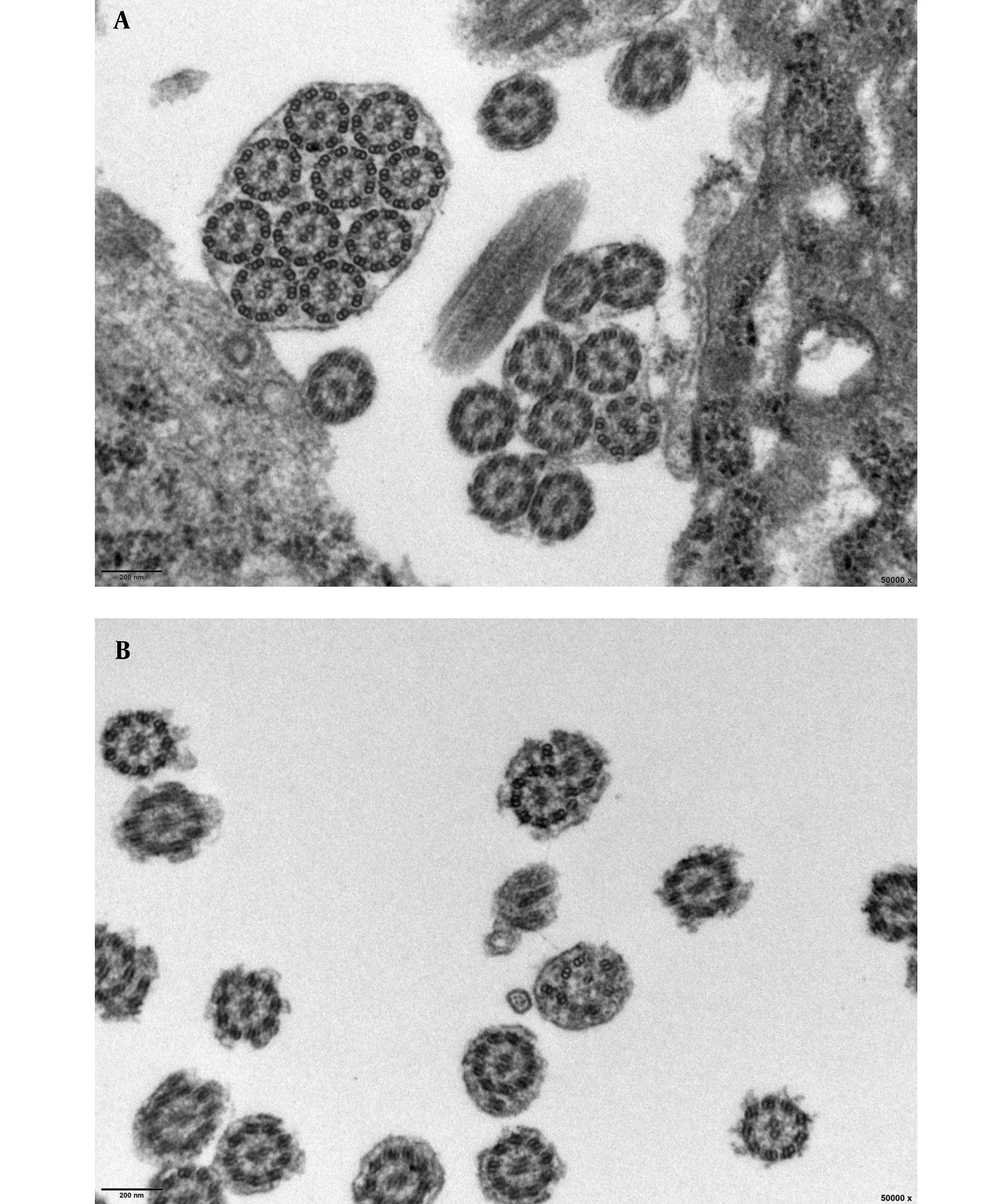
Although not all PCD-associated genes are known at present, PCD-related gene variants have been detected in about 65 - 70% of PCD cases. Therefore, a negative genetic test result cannot be used to completely rule out PCD as a diagnosis. However, as the price of genetic testing continues to fall, more variants will likely be discovered that will further broaden the known PCD spectrum of gene variants and, therefore, increase the proportion of cases that can be detected using this method. For example, genetic testing results for case 2 were normal (no PCD-associated gene variant); nonetheless, TEM analysis of ciliary ultrastructure after 8 weeks of infection revealed an absence of IDA and ODA as the basis for a PCD diagnosis for this patient. Nevertheless, until genetic testing can detect PCD in 30 - 35% of suspected patients with negative genetic test results, the ultrastructural examination of cilia will remain an important tool for PCD diagnosis. Meanwhile, TEM-associated technical difficulties in capturing informative ciliary ultrastructure defects in young children, poor compliance of tissue sampling in pediatric patients and parents, and potential secondary changes in mucosa and cilia ultrastructure can greatly impact TEM results (
16,
17). In the group of PCD patients studied in this investigation, only 2 children underwent successful ciliary biopsy; nevertheless, 2 newborns were diagnosed early through genetic examination alone since they were unable to produce specimens for TEM analysis.
To date, the relationship between PCD genotype and phenotype has not been fully clarified. One study reported that patients with CCDC39 or CCDC40 mutations had worse lung function and growth indices than those with ODA defects and
DNAH5 mutations, respectively (
18). With the rapid development of molecular biological tools and gene sequencing platforms, more and more PCD pathogenic genes have been discovered that have enhanced our understanding of the PCD genotype-phenotype relationship.
The genetic spectrum of PCD variants varies among populations in different countries (
19). Due to the fact that ultrastructural abnormalities are easy to identify, variants of
DNAI1 and
DNAH5 genes in PCD patients were the first to be characterized, with high prevalence rates found for
DNAH5 (15 - 21%) and
DNAI1 (9%) variants in these patients. Subsequently, Kazuhiko (
20) reported that if mutations were not detected within mutational hot spots of
DNAI1 and
DNAH5, whole-exome sequencing could be performed to attempt to detect variants of those genes. Notably, variants of
DNAH5, a gene encoding a protein involved in the assembly of the ODA, can cause visceral transposition, a characteristic observed in case 8 at birth that was consistent with a positive test result for a
DNAH5 variant. However, the cilia of patients with known PCD-associated genotypic variants of
DNAH11,
CCDC164,
CCDC65, and
OFD1 genes have been reported to possess normal ultrastructural characteristics. Nevertheless, although
DNAH11 variants were detected in 2 cases in the present study, their associations with ciliary dysfunction could not be assessed via TEM since parental approval for mucosal biopsy was not provided.
RSPH4A is involved in encoding the radial spoke head that plays a role in upstream signal transduction for the activation of ciliary motion involving the central microtubule and dynein arm. Immunofluorescence data and cryo-electron tomography data suggested that the spoke head and the neck/arch were disrupted in the absence of
RSPH4A in the mouse motile cilia (
21). Due to the fact that no central microtubules exist within the cilia of the embryonic node (i.e., a structure that determines left- or right-sidedness of the viscera), the mutations of the gene encoding the radial spoke do not cause visceral transposition, as exemplified by an
RSPH4A founder mutation (c.921+3_6delAAGT) that is viewed as a pathogenic PCD variant that does not cause lateral defects (
22). This
RSPH4A mutation disrupts the normal ciliary planar beating mode, resulting in circular ciliary motion (
23). In this study, case 5 exhibited a relatively later onset of atelectasis, nasosinusitis, and secretory otitis media without visceral transposition, as consistent with known phenotypic characteristics associated with
RSPH4A variants.
Children with variants of
CFAP300 (also known as C11orf70) share a consistent PCD phenotype beginning early in life that includes laterality defects and immotile respiratory cilia due to loss of both IDA and ODA (
24,
25). Notably, in this study, case 4 exhibited postnatal respiratory distress and visceral inversion that were consistent with the phenotype associated with this genotype. Using SIFT and PolyPhen2 protein destructive prediction software, the current study analyzed the effects of this c.603delG mutation and verified that this mutation might alter protein structure, which could lead to loss of protein function.
Due to the fact that no specific treatment for PCD has existed until recently, it has been important to diagnose PCD as early as possible so that treatment administration and long-term management can be started early in life to improve long-term prognosis. The current recommended treatment resembles treatments used to alleviate bronchiectasis caused by other disorders (e.g., cystic fibrosis) that delay disease progression by improving or maintaining lung function while preventing chronic lung injury, although regular airway cleaning and proactive administration of treatments to prevent airway infections. Importantly, the results of the first multinational randomized controlled trial on PCD drug treatment revealed that 6-month azithromycin maintenance treatment was well tolerated and halved the incidence of acute respiratory exacerbations (
26). The results of the aforementioned study have led to the use of azithromycin to treat pediatric PCD patients who experience frequent acute exacerbations in order to minimize the use of additional antibiotics while preventing irreversible lung injury. In the current study, disease progression was prevented in patients who received oral azithromycin for 1 to 6 months without triggering obvious side effects.
This research study had limitations. Firstly, the data were obtained from a single center, which might limit the generalizability of the findings. Secondly, the sample size was small, and further research is needed to confirm the obtained findings and explore potential differences in clinical manifestations between different subtypes of PCD. Moreover, nasal nitric oxide testing or immunofluorescence, the major diagnostic tools, were not used for these patients. Lung function tests, hearing tests, and mucosal and ciliary biopsies were not completed in all patients, with missing data limiting the analysis of some variables. Nonetheless, the present study’s results highlight the importance of early PCD diagnosis and case treatment management as conclusions that await confirmation through additional investigations based on larger, more diverse patient cohorts.
5.1. Conclusions
Clinical PCD manifestations, such as recurrent cough, expectoration, purulent discharge, bronchiectasis, and visceral inversion, and laboratory test results obtained using TEM and gene sequencing are important for achieving early PCD diagnosis. In addition, genotypes discovered in this study will expand the PCD genotypic spectrum.