1. Background
Body image, defined as an individual’s mental representation and attitudes toward their physical self, is a multifaceted concept involving cognitive, affective, and behavioral components (1). Extensive research highlights the impact of body image on various aspects of mental and physical health, with disturbances in body image linked to increased risks of depression, anxiety, low self-esteem, and reduced quality of life (2-4). During adolescence — a critical period for self-identity formation — body image concerns often intensify. Studies have found that negative body image is particularly prevalent in adolescents, leading to detrimental effects on self-worth, social relationships, and overall well-being (5).
Cochlear implantation (CI) is a widely used intervention for individuals with severe to profound sensorineural hearing loss, offering proven benefits in auditory and language development as well as significant improvements in quality of life (6, 7). Research demonstrates that CI recipients often experience enhanced communication abilities, social integration, and educational opportunities, thereby leading to improved life satisfaction (7-9). However, the procedure, which involves a visible implant, may introduce new psychosocial challenges, especially for adolescent patients who are in a sensitive phase regarding self-image and social acceptance.
Several studies have addressed the psychosocial implications of CI in adult populations, indicating that body image issues are a concern among CI users, often related to the visibility of the device and associated social stigma. For example, Ozturk and Ciprut (10) reported that adult CI users frequently experience body image concerns, which can affect their social confidence and self-perception. Similarly, Shaida et al. (11) found that while CI improves auditory abilities, it can also lead to heightened self-consciousness due to the device’s appearance, especially in younger adults. Nevertheless, research on the impact of CI on adolescents’ body image and psychosocial adjustment remains limited. Adolescents face unique challenges due to heightened social awareness and the development of self-identity, making the psychological impact of CI an essential area for further exploration.
Current studies on adolescents with CI primarily focus on auditory and language outcomes, with relatively few examining the broader psychosocial impacts, including body image and self-esteem. In a notable study, Boerrigter et al. (12) found that while adolescents with CI report improved auditory satisfaction, they also express concerns about social acceptance and self-confidence, particularly regarding the implant’s visibility. Additionally, studies have highlighted that CI can introduce both benefits and challenges, with improved hearing often accompanied by concerns over appearance and self-image, especially among younger recipients (13, 14).
Thus, understanding the influence of CI on body image in adolescents is crucial for developing holistic care approaches that address not only auditory outcomes but also the psychological well-being of these patients.
2. Objectives
This study aims to fill this gap by investigating the current status of body image in adolescent CI recipients and identifying the key factors influencing it. Insights gained from this research may inform targeted interventions that help adolescents develop a positive body image, thereby enhancing their overall quality of life and supporting a comprehensive rehabilitative process.
3. Methods
3.1. Study Population
This study utilized cluster sampling to select participants. Adolescent patients with severe to profound sensorineural hearing loss who underwent unilateral CI at the Zhejiang Cochlear Implant Center between January 2020 and January 2024 were included. Inclusion criteria were: (1) A diagnosis of severe sensorineural hearing loss; (2) age between 12 and 18 years; (3) successful intraoperative electrode implantation with no post-operative complications; and (4) absence of other diseases affecting intellectual development. Exclusion criteria were: (1) Post-operative damage to the implant; (2) a history of mental disorders or cognitive impairment; and (3) the presence of other physical deformities prior to CI.
3.2. Measurement Tools
3.2.1. General Information Questionnaire
Developed by the researchers to capture demographic and clinical characteristics, including age, gender, residence, school location, type of hearing impairment, Body Mass Index (BMI), use of hearing aids prior to implantation, duration of cochlear implant usage, primary family caregiver, educational level of the primary caregiver, and monthly household income.
3.2.2. Body Image Scale
Developed by Hopwood et al. (15), the Body Image Scale (BIS) assesses body image perceptions using 10 items rated on a 4-point Likert scale from “not at all” (0 points) to “very much” (3 points), with a total score range of 0 - 30. Higher scores indicate poorer body image and more severe body image disturbance. To enhance contextual relevance for adolescent cochlear implant users, we supplemented the instructions with references to implant-related features such as device visibility and surgical scars, without altering the original item content. The scale demonstrated good internal consistency (Cronbach’s α = 0.83). For the CI-specific items, inter-item correlations ranged from 0.42 to 0.67, indicating stable reliability and supporting the validity of the adapted instructions (15).
3.2.3. Rosenberg Self-esteem Scale
Originally developed by Rosenberg in 1965, this 10-item scale evaluates self-esteem, with responses ranging from “strongly agree” (4 points) to “strongly disagree” (1 point). Total scores range from 10 to 40, with higher scores indicating greater levels of self-esteem. The Cronbach’s α for the Rosenberg Self-esteem Scale (SES) in this study was 0.86, indicating high reliability (16).
3.2.4. Perceived Social Support Scale
Developed by Zimet et al., the Perceived Social Support Scale (PSSS) measures perceived social support from family, friends, and significant others. The 12 items are scored on a 7-point Likert scale. Higher total scores reflect greater perceived social support. In this study, the PSSS had a Cronbach’s α of 0.79, indicating satisfactory internal consistency (17).
3.2.5. Positive and Negative Affect Schedule
Comprising 20 affective adjectives, the Positive and Negative Affect Schedule (PANAS) is divided into two subscales: Positive affect (10 items) and negative affect (10 items). Responses range from “very slightly” (1 point) to “extremely” (5 points). Higher scores on the positive affect subscale indicate greater vitality and focus, while higher scores on the negative affect subscale reflect higher levels of distress and confusion. The PANAS demonstrated good reliability in this study, with a Cronbach’s α of 0.84 (18).
3.3. Data Collection
During follow-up visits, researchers distributed questionnaires to participants. Prior to completing the questionnaires, each participant and their legal guardian (usually a parent) received a thorough explanation of the study’s objectives, procedures, potential risks, and benefits. Written informed consent was obtained from the adolescent participants as well as their legal guardians to ensure a comprehensive understanding and voluntary participation. Researchers emphasized confidentiality and explained that participation was entirely voluntary, with the option to withdraw at any point without affecting treatment. To ensure participants’ understanding and address any questions, researchers provided standardized instructions and were available to assist as needed throughout the survey process. The completion time for each questionnaire was approximately 20 - 30 minutes. Upon completion, researchers reviewed each questionnaire on-site to verify completeness and accuracy before collecting it. In total, 104 questionnaires were distributed, and all were completed and returned, resulting in a 100% effective response rate.
3.4. Ethical Considerations
This study was conducted in accordance with the Declaration of Helsinki and received approval from the ethics committee (2023-IRB-0218-P-01). The privacy of all participants was strictly protected; personal information was anonymized during data processing, and results were reported in aggregate form to prevent individual identification. All study procedures were designed to minimize potential risks and discomfort to participants. Participants and their guardians were provided with contact information for further inquiries or concerns regarding the study.
3.5. Statistical Analysis
Data were analyzed using SPSS version 26.0 (IBM Corp., Armonk, NY, USA). Continuous variables were expressed as mean ± standard deviation (SD), and categorical variables as frequencies and percentages. Independent samples t-tests and one-way ANOVA were used for between-group comparisons, while Pearson correlation analysis was applied for continuous variables. Multiple linear regression analysis was performed for multivariate analysis. The significance level was set at α = 0.05.
4. Results
4.1. Body Image Scores and Comparison Across Adolescent Subgroups
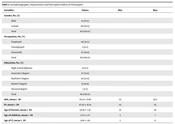
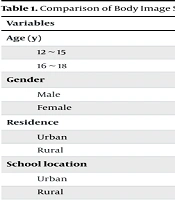
The overall BIS among adolescent patients following CI was 8.43 ± 3.65. The three items with the highest scores on the BIS, indicating greater concern, were scar appearance (1.58 ± 0.63), overall appearance (0.97 ± 0.35), and physical attractiveness (0.94 ± 0.39). Significant differences in body image scores were observed across various subgroups. Specifically, body image scores varied significantly based on age, gender, preoperative use of hearing aids, duration of cochlear implant use, and educational level of the primary caregiver (P < 0.05, Table 1).
Table 1.
Comparison of Body Image Scores Across Adolescent Patient Subgroups (N = 104)
| Variables | No. | BIS (Mean ± SD) | Test Statistic | P-Value | Effect Size |
|---|---|---|---|---|---|
| Age (y) | -2.445 a | 0.016 | -0.240 b | ||
| 12 ~ 15 | 67 | 7.83 ± 3.45 | |||
| 16 ~ 18 | 37 | 9.52 ± 3.23 | |||
| Gender | -2.395 a | 0.018 | -0.235 b | ||
| Male | 56 | 7.67 ± 3.39 | |||
| Female | 48 | 9.32 ± 3.63 | |||
| Residence | -1.518 a | 0.132 | -0.149 b | ||
| Urban | 41 | 7.68 ± 4.72 | |||
| Rural | 63 | 8.92 ± 3.59 | |||
| School location | 1.268 a | 0.208 | 0.124 b | ||
| Urban | 53 | 7.84 ± 3.91 | |||
| Rural | 51 | 9.04 ± 4.13 | |||
| Type of hearing loss | -0.656 a | 0.513 | -0.064 b | ||
| Sensorineural | 78 | 8.30 ± 3.58 | |||
| Mixed | 26 | 8.82 ± 3.24 | |||
| BMI | 1.119 c | 0.345 | 0.152 d | ||
| < 18.5 | 3 | 8.29 ± 4.32 | |||
| 18.5 ~ 23.9 | 51 | 7.92 ± 4.46 | |||
| 24 ~ 27.9 | 29 | 8.26 ± 3.95 | |||
| ≥ 28 | 21 | 9.92 ± 4.13 | |||
| Preoperative use of hearing aids | -2.017 a | 0.046 | -0.197 b | ||
| Yes | 69 | 7.89 ± 3.58 | |||
| No | 35 | 9.36 ± 3.37 | |||
| Duration of cochlear implant use (y) | 3.437 c | 0.036 | 0.203 d | ||
| < 1 | 36 | 9.32 ± 3.89 | |||
| 1 ~ 3 | 39 | 8.57 ± 2.97 | |||
| > 3 | 29 | 7.14 ± 3.13 | |||
| Primary family caregiver | -0.868 a | 0.387 | -0.085 b | ||
| Parents | 83 | 8.27 ± 3.59 | |||
| Other family members | 21 | 9.06 ± 4.23 | |||
| Primary caregiver’s educational level | 3.254 c | 0.025 | 0.227 d | ||
| Junior high school or below | 23 | 9.56 ± 3.37 | |||
| High school | 37 | 9.15 ± 2.96 | |||
| Associate degree | 35 | 7.24 ± 3.82 | |||
| Bachelor’s degree or above | 9 | 7.21 ± 3.18 | |||
| Monthly household income (CNY) | 0.248 c | 0.781 | 0.027 d | ||
| < 5000 | 23 | 8.15 ± 3.28 | |||
| 5000 ~ 10000 | 61 | 8.37 ± 3.82 | |||
| > 10000 | 20 | 8.94 ± 4.35 |
Abbreviations: BIS, body image score; SD, standard deviation; BMI, Body Mass Index.
at-value.
b Cohen's d.
c F-value.
d Cohen's f.
4.2. Correlation Analysis of Body Image Scale with Rosenberg Self-esteem Scale, Perceived Social Support Scale, and Positive and Negative Affect Schedule
The SES among adolescent patients was 27.45 ± 3.24, the PSSS score was 72.73 ± 5.28, the positive affect score was 20.31 ± 9.95, and the negative affect score was 35.32 ± 9.21. Pearson correlation analysis revealed that BIS scores were negatively correlated with SES (R = -0.374, P < 0.001), PSSS (R = -0.318, P < 0.001), and positive affect (R = -0.283, P < 0.05). The BIS scores were positively correlated with negative affect (R = 0.413, P < 0.001).
4.3. Multivariate Analysis of Factors Influencing Body Image in Adolescents
A multiple linear regression analysis was conducted to identify significant predictors of BIS in adolescents following CI (Table 2). The model included both categorical variables (age, gender, preoperative use of hearing aids, duration of cochlear implant use, and caregiver educational level) and continuous variables (self-esteem, social support, positive affect, and negative affect). The results showed that gender and educational level of the primary caregiver were significant predictors of BIS, with females and those with lower caregiver education levels reporting worse body image. Additionally, higher self-esteem and greater social support were associated with more positive body image, while negative affect was a significant negative predictor. The model explained 37.5% of the variance in BIS (R2 = 0.375), and after adjusting for the number of predictors, the adjusted R2 value was 0.344.
Table 2.
Multivariate Analysis of Factors Influencing Body Image in Adolescent Patients (N = 104) a
| Variables | β | sb | β’ | t | P-Value |
|---|---|---|---|---|---|
| Constant | 21.354 | 3.135 | - | 6.615 | < 0.001 |
| Gender | 7.465 | 1.409 | 0.346 | 2.115 | 0.002 |
| Primary caregiver’s education level | -2.078 | 0.768 | -0.187 | -2.476 | 0.024 |
| Self-esteem | -7.266 | 1.034 | -0.354 | -1.937 | 0.007 |
| Social support | -5.178 | 1.031 | -0.283 | -2.783 | 0.004 |
| Negative affect | 6.264 | 1.074 | 0.248 | 4.851 | < 0.001 |
a F = 29.196, P = 0.000, R2 = 0.375, and adjusted R2 = 0.344.
5. Discussion
5.1. Body Image Disturbances Among Adolescent Cochlear Implant Recipients
This study highlights the significant body image disturbances experienced by adolescents following CI, with an average BIS of 8.43 ± 3.65. This score is slightly lower than the 8.62 reported by Hopwood et al. for breast cancer patients, but aligns closely with findings from other adolescent populations with visible conditions (15, 19). The findings suggest that adolescents with cochlear implants face body image challenges comparable to, or even more pronounced than, those dealing with other visible conditions. Specifically, concerns related to scar appearance, overall appearance, and physical attractiveness were most prominent. These results underscore the substantial psychological impact that visible surgical scars and implants can have on adolescents’ self-perception and social confidence.
5.2. Factors Influencing Body Image Disturbances
The underlying reasons for these body image disturbances are likely multifactorial, with adolescence being a critical period for self-identity development. During this stage, physical appearance and peer acceptance significantly shape self-image. Visible surgical scars or implants may amplify negative self-assessments and social anxiety. As indicated in prior research, such as by Chen et al. (20), head and neck surgeries that result in visible scarring are linked to substantial body image issues due to the disruption of skin integrity.
Social comparison theory (SCT) (21) offers a robust framework for understanding these disturbances. This theory posits that individuals, particularly adolescents, evaluate themselves by comparing themselves to others (22). Adolescents with cochlear implants, especially those with visible devices and surgical scars, may compare themselves to peers without such visible markers, leading to negative self-assessments and exacerbating body image concerns. Our study observed that the visible components of cochlear implants, such as external devices and surgical scars, can heighten self-consciousness and feelings of difference, contributing to the body image disturbances noted in participants. These social comparisons can amplify the psychological impact of having a cochlear implant, particularly when adolescents feel they do not meet societal appearance standards. Choi and Jeong (23) found that children with cochlear implants, despite gains in hearing and language, still lagged in social cognition compared to their peers, which could increase self-doubt and body image concerns. Similarly, Dixon et al. (24) found that children with disabilities, when comparing themselves to non-disabled peers, experience negative shifts in self-concept. This pattern applies to cochlear implant populations, where visible differences intensify the psychological impact of social comparisons. Furthermore, Sears et al. (25) highlighted how young patients with pacemaker implants struggle with social comparison due to the lack of similar peers, mirroring the challenges faced by adolescents with cochlear implants. These findings emphasize that social comparisons among adolescents with cochlear implants affect not only appearance but also social cognition and self-concept. Therefore, interventions focused on reducing the negative impact of social comparisons and fostering positive self-concept development, independent of peer judgments, are crucial for improving body image and psychological well-being.
5.3. Key Determinants of Body Image Perception
Several factors were found to significantly influence body image in this population.
5.3.1 Gender Differences
Female adolescents reported more severe body image concerns than male adolescents, consistent with previous studies (26). Females often place greater importance on appearance and may be more vulnerable to negative self-evaluations when their appearance deviates from societal standards (27). The visible aspects of cochlear implants, such as shaved scalp areas or surgical scars, may heighten self-consciousness in females, who are especially sensitive to physical changes. Early psychological support tailored to female patients may foster self-acceptance and resilience in adapting to post-surgical changes.
5.3.2. Caregiver Education
A notable factor influencing body image was the educational level of the primary caregiver. Higher education levels were associated with more positive body image perceptions. Educated caregivers are more likely to provide emotional support, seek relevant information, and promote a positive self-concept in their children (28-30). In Chinese society, where academic achievement is highly valued, caregivers with higher education may be better positioned to offer the support necessary to foster positive body image (31). Conversely, caregivers with lower education levels may struggle to provide adequate support, potentially worsening the adolescent's body image. Future studies should explore how societal factors, particularly those related to education, influence adolescents' psychosocial experiences after implantation.
5.3.3 Self-esteem
Higher self-esteem was another critical factor influencing body image. Adolescents with greater self-esteem demonstrated more positive body image perceptions. This finding aligns with previous studies highlighting the importance of self-esteem in resilience to social pressures and acceptance of physical imperfections (32). Adolescents with congenital hearing loss may have lower resilience and heightened sensitivity to social feedback, further impacting their self-esteem. Therefore, interventions aimed at boosting self-esteem and fostering self-acceptance could play a key role in supporting positive body image post-surgery.
5.3.4 Social Support
Social support was also identified as a crucial factor in body image perception. Adolescents who reported stronger social support had higher body image scores. This finding is consistent with previous research suggesting that social support can alleviate the psychological burden of visible physical changes (33). For adolescents, support from family and friends is particularly valuable, helping them feel more accepted and adapt to changes in appearance. Strengthening social support networks could therefore enhance body image and mental well-being in adolescent cochlear implant patients.
5.3.5 Negative Affect
Finally, negative affect was found to significantly influence body image. Adolescents with higher levels of negative affect reported poorer body image perceptions. This aligns with findings from Rhoten et al. (34), who noted that individuals experiencing negative emotions often exaggerate perceived physical flaws. Adolescents with negative affect may feel anxious and self-conscious about their visible surgical changes, exacerbating body image concerns. Conversely, adolescents with a more positive outlook are generally better able to accept physical changes and maintain a healthier self-image (35). Addressing emotional health is therefore crucial for promoting more adaptive body image perceptions.
5.4. Conclusions
This study highlights significant body image disturbances among adolescent patients following CI, with notable influences from gender, primary caregiver’s educational level, self-esteem, social support, and negative affect. The findings emphasize that CI, while beneficial for auditory rehabilitation, poses psychological challenges related to body image, particularly due to visible changes such as surgical scars and implant devices. Addressing these challenges requires a holistic approach in clinical practice, where healthcare providers prioritize both the physical and psychological well-being of adolescent patients. Early identification of at-risk individuals — especially female patients or those with lower social support and self-esteem — combined with tailored psychological support and enhanced social and family involvement, may help improve body image and promote overall mental health in this vulnerable population.
5.5. Limitations
This study has several limitations. First, it was conducted at a single center, limiting the generalizability of the findings. Multi-center studies would enhance external validity. Second, the cross-sectional design restricts causal inferences, and longitudinal studies are needed to better understand the temporal relationships between body image and influencing factors. Although we considered participants' current age and years of CI, we did not include key variables such as the duration of deafness and age at implantation, which are known to significantly impact psychosocial adaptation and body image perceptions. The exclusion of these factors is a limitation of the study. Future research should incorporate these variables to provide a more comprehensive understanding of their role in body image perceptions. Longitudinal tracking of these variables could offer valuable insights into the long-term effects of early versus late implantation on psychosocial outcomes. Finally, the unexplained variance in our model suggests that additional factors not captured in our analysis may play a significant role in shaping body image perceptions. Potential omitted variables include psychosocial factors such as peer bullying, media exposure, and social comparison, as well as environmental and genetic influences. Future studies should explore these factors to provide a more complete picture of body image in cochlear implant recipients.