1. Background
Lymphatic malformations are benign vascular lesions that occur due to disturbances in the embryonic development of the lymphatic system. These malformations include a wide range of disorders such as cystic lesions, angiokeratomas, bone lymphatic lesions, lymphatic leaks, and lymphedema (1). The present study has only investigated cystic lymphatic lesions or lymphangioma, which is a congenital malformation of the lymphatic system, and it means numerous and connected lymphatic cystic channels that arise as hamartomas from lymphatic vessels and are slow growing (2, 3).
Lymphangioma are classified into three categories: (1) Simplex lymphangioma, which are made of small capillary-sized lymphatic channels with thin walls; (2) cavernous lymphangioma, which consists of enlarged lymphatic channels and is mainly covered with adventitia; (3) cystic lymphangioma or cystic hygroma consists of numerous cystic channels filled with lymphatic fluid. Cystic hygroma is the most common lymphangioma that occurs in children. The terms lymphangioma and cystic hygroma are commonly used interchangeably and include a large range of benign cystic tumors of the lymphatic system (4, 5).
This tumor mostly affects children, but it has also been seen in adults. Lymphangioma is present in 65% of cases at birth and appears in 80 - 90% of cases by two years of age (6). It is a significant cause of morbidity in pediatric populations. The global incidence of lymphangioma is estimated to range from 1 in 1,000 to 1 in 16,000 live births, depending on geographic location and population demographics (7, 8).
Swelling and cosmetic problems are the most common complaints caused by lymphangioma. Also, the vital structures of the neck can be pressured by lymphangioma and cause problems such as dysphagia, respiratory obstruction, and symptoms of pressure on one of the nerve roots (9).
These lesions can be seen in any anatomical region potentially, but they are more common in lymphatic vessel-rich areas. Areas such as the head and neck, axilla, mediastinum, groin, and retroperitoneum (10). In 75% of cases, these lesions occur in the head and neck (7).
Initial diagnosis is by physical examination and then confirmed by ultrasound in most patients. In patients suspected of lymphangioma of the head and neck, an ultrasound performed by a skilled person is usually sufficient for diagnosis. It can determine the diagnosis and extent of extension to the depth and connection of the lesion with soft tissue, muscles, and vascular structures (1).
There are 3 types of lymphangioma in the sonographic view: Microcystic (most cysts are smaller than 2 cm), macrocystic (most cysts are larger than 2 cm), and mixed cysts (a mixture of both types with the same percentage) (11, 12).
Surgical excision is the traditional treatment of cystic hygroma, but due to its tendency to involve deep structures such as muscles and nerves, complete excision is usually not possible (13). Extensive surgeries may sometimes lead to deformity, damage to vital organs, failure to completely remove the lesion, extensive scarring, and recurrence even up to 27% of cases. Mortality of surgery is also 2 to 6% (12, 14). Non-surgical methods were used to avoid surgical complications. For this purpose, many non-surgical treatment methods such as cryotherapy, diathermy, fibrin glue, radiotherapy, and sclerotherapy by percutaneous injection have been considered (15). Sclerotherapy is a technique for inducing tissue inflammation in vascular structures, which is performed by injecting a substance that causes thrombosis, obstruction, fibrosis, and regression of these structures (1). Today, substances such as acetic acid, bleomycin, doxycycline, and OK-432 are used for intralesional sclerotherapy and they have had acceptable results (16).
Bleomycin is a glycopeptide antibiotic that exhibits both antitumor and sclerosing properties, making it effective in the treatment of lymphatic malformations. The drug’s mechanism of action involves two distinct processes. First, bleomycin exerts its cytotoxic effect by binding to DNA and inducing strand breaks. This occurs through the formation of free radicals, which cause oxidative damage to cellular DNA, leading to the inhibition of DNA synthesis and ultimately, cell death. This property is particularly useful in its chemotherapeutic application for the treatment of cancers such as lymphoma. In the context of sclerotherapy, bleomycin's second key mechanism is its ability to induce fibrosis within vascular endothelial cells. When injected intralesionally into lymphatic malformations, bleomycin triggers an inflammatory response, causing endothelial damage, thrombosis, and subsequent fibrosis. This fibrosis leads to the regression of the abnormal lymphatic vessels, reducing the size of the malformation.
Bleomycin safety profile in pediatric patients, while generally favorable, has garnered attention due to its potential for systemic toxicity, especially pulmonary complications. However, when used intralesionally in lower doses, as is typical in pediatric sclerotherapy, the risk of significant side effects is greatly reduced compared to its intravenous use in chemotherapy. The most common side effects in pediatric patients receiving bleomycin for lymphatic malformations are local and typically minor, including erythema, swelling, and hyperpigmentation (17, 18).
Sclerotherapy has been considered by doctors due to less invasiveness and lower cost. Current studies have shown the effectiveness of bleomycin in small and scattered studies in other parts of the world, but not in Iran. If the efficacy and low complications of intralesional injection of bleomycin are proven in studies such as the current study, the next step is to design a clinical trial to investigate its long-term effects and results and compare it with surgery to reduce treatment costs and recurrence rates and the complications.
3. Methods
A case series of 40 patients with lymphangioma who were treated with intralesional bleomycin between October 2017 and March 2021 were evaluated. The diagnosis was reached on ultrasound sonography during a physical examination of the patients with suspected lymphangioma.
The age, gender, weight, symptoms, lesion location and size, number of injections, dose, and side effects were recorded for all patients.
A complete blood count (CBC) and coagulation profile (PT, PTT, INR) were requested for them. If tests were normal, the patient was sedated with a mask in the operating room. Under aseptic conditions, the lesion was aspirated with a 10 ml syringe. A 15-unit vial of bleomycin was diluted with 15 cc of normal saline injectable serum. Bleomycin was injected in the amount of 0.5 units per kilogram of body weight at the aspiration site. The maximum amount of injected bleomycin in every patient is 15 units regardless of weight. In patients whose lymphatic lesion size was less than 1 cc, the injection was performed under ultrasound guidance.
All patients were observed in the hospital for 4 hours; if no major complications occurred, they were discharged during this period. Patients were followed up by phone for 24 hours after the injection to check possible complications such as fever, skin erythema, and other complications. Four to six weeks later, new imaging of the lesion was done and the new lesion size was compared with the previous size. If the reduction in size was clinically acceptable and the possible cosmetic or functional defect had been resolved, or if there had been a numerical reduction of 90% or more in the lesion size, the injection was stopped; otherwise, the candidate patients were re-injected under the same conditions as the first injection.
If intralesional bleomycin injections were not successful after 5 injections, the treatment was terminated and the patients were candidates for surgical resection.
The response was graded as “excellent response” (> 90% reduction), “good response” (> 50% reduction in size), and “poor response” (< 50% reduction or no change in size).
Data analysis was performed using descriptive statistics to summarize patient demographics and treatment outcomes. Outcome categories (excellent, good, poor) were interpreted per predefined criteria, and imaging follow-up data were summarized to reflect average lesion-size reduction.
4. Results
The 40 cases comprised 18 female and 22 male patients with a mean age of 36.4 months. Patients were injected at least 1 time and at most 5 times (2.53 times on average). Excellent response was seen in 32.5% (13/40) of the patients, a good response in 55% (22/40), and a poor response in 5 patients (Table 1).
Table 1.
Patients’ Data and Treatment Outcome
| N | Age (Mon) | Gender | Number of Applications | Response |
|---|---|---|---|---|
| 1 | 2 | Male | 4 | Good |
| 2 | 2 | Male | 4 | Good |
| 3 | 30 | Male | 3 | Good |
| 4 | 36 | Male | 2 | Good |
| 5 | 72 | Female | 1 | Good |
| 6 | 84 | Male | 1 | Good |
| 7 | 1 | Female | 1 | Good |
| 8 | 144 | Female | 5 | Good |
| 9 | 30 | Female | 4 | Good |
| 10 | 1 | Male | 3 | Poor |
| 11 | 60 | Female | 1 | Good |
| 12 | 4 | Male | 1 | Poor |
| 13 | 12 | Male | 1 | Good |
| 14 | 48 | Male | 1 | Excellent |
| 15 | 1 | Male | 5 | Excellent |
| 16 | 72 | Female | 1 | Good |
| 17 | 84 | Male | 4 | Poor |
| 18 | 30 | Male | 4 | Good |
| 19 | 48 | Female | 4 | Good |
| 20 | 24 | Male | 3 | Excellent |
| 21 | 84 | Male | 1 | Excellent |
| 22 | 12 | Female | 2 | Excellent |
| 23 | 36 | Female | 3 | Excellent |
| 24 | 2 | Female | 4 | Excellent |
| 25 | 84 | Female | 4 | Excellent |
| 26 | 84 | Female | 3 | Excellent |
| 27 | 24 | Female | 1 | Excellent |
| 28 | 48 | Male | 2 | Excellent |
| 29 | 53 | Male | 1 | Good |
| 30 | 20 | Male | 3 | Good |
| 31 | 2 | Male | 2 | Good |
| 32 | 17 | Male | 1 | Good |
| 33 | 3 | Female | 3 | Poor |
| 34 | 48 | Male | 2 | Good |
| 35 | 1 | Male | 1 | Excellent |
| 36 | 48 | Female | 5 | Good |
| 37 | 12 | Female | 3 | Poor |
| 38 | 84 | Female | 2 | Good |
| 39 | 2 | Female | 3 | Excellent |
| 40 | 11 | Male | 2 | Good |
The total follow-up period ranged from 3 months to 5 years depending on the time of injection.
The main side effects of intralesional bleomycin injection are: Skin erythema, fever, and hyperpigmentation at the site of injection. Among the 40 people participating in the study, 8 patients (20%) had fever after at least one of the injections. Ten of the participants (25%) had erythema at the injection site in the first days after intervention, and 5 patients (12.5%) also experienced hyperpigmentation at the injection site. An interesting point about the children who had skin hyperpigmentation after injection is that all of them were injected with bleomycin 2.4 times on average.
No major complication outside of the injection site has been reported, especially pulmonary complications.
In the current study, failure is defined as "lack of clinical response to sclerotherapy and the final need for surgery". Based on this, only 3 patients (7.5%) did not respond clinically to bleomycin injection, and finally, we had to perform surgical excision of the lesion to resolve the patient's functional or cosmetic problem. During the follow-up period, there were no cases of recurrence of lymphatic lesions after treatment, either in cases that underwent sclerotherapy or surgery.
The average rate of response to injection and reduction of lesion size after injection is about 71% (Figure 1). This rate reaches about 80% without considering the patients who finally had a diagnosis inconsistent with lymphatic malformation.
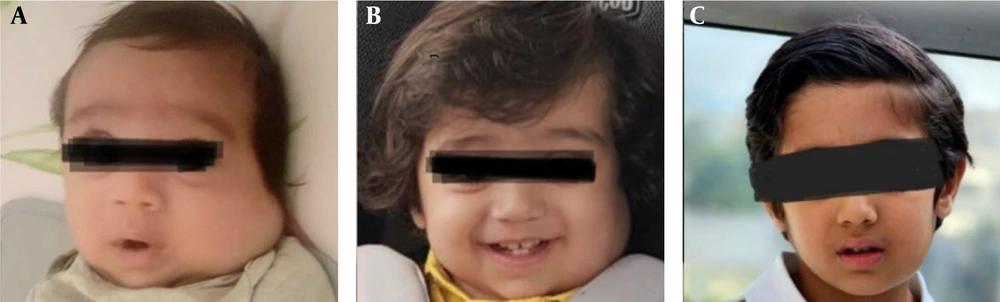
Figure 1.
A 6-month-old boy with diagnosed cystic hygroma that underwent 2 intralesional bleomycin injections; A, before injection; B, after first injection; C, after second and last injection
According to the research findings, 12.5% of patients had poor response, 55% had good response, and 32.5% had excellent response to bleomycin injection.
5. Discussion
The treatment of cystic hygroma can be approached through several modalities, including surgical excision, sclerotherapy using agents like bleomycin, doxycycline, or OK-432, and other less common methods such as fibrin glue and cryotherapy.
Surgical excision has been the traditional treatment for cystic hygroma, particularly for large or complex lesions. However, surgery often requires general anesthesia, extended hospital stays, and carries a higher risk of complications, such as infection, nerve damage, or cosmetic deformities. In addition to the surgical risks, the recurrence rate after incomplete excision can be as high as 27%, necessitating further interventions. Doxycycline carries a higher risk of inflammation and pain at the injection site, potentially leading to additional interventions or medications to manage these side effects. OK-432 is often more expensive than bleomycin due to its specialized production process and limited availability in some regions. Among these, bleomycin has gained prominence due to its efficacy and lower risk profile, but cost-effectiveness is a crucial factor in determining its utility, especially in resource-limited settings (5, 19, 20).
Use of bleomycin as a sclerosing agent began in 1977, and the percentage of response in different studies has been estimated from 35.7 - 91% for excellent response and from 82 - 100% for good response (21-23). In this study, in 32.5% of cases, excellent response (over 90%) and in 87.5% of cases over 50% response to treatment were seen, which results are relatively similar to other studies. The average size reduction per person was about 72%.
From the total of 40 children who were included in the study based on the inclusion criteria, finally 3 children (equivalent to 7.5%) underwent surgery and the others responded partially or completely to sclerotherapy, so that the need for surgical removal was clinically solved, both for cosmetic and functional reasons.
Regarding the pathological examination of patients who underwent surgery, out of 3 patients who underwent surgery due to lack of response to sclerotherapy, 2 patients were diagnosed with post-op pathology "teratoma" and 1 patient was diagnosed with branchial cyst, which is probably due to the similarity of imaging at the beginning of treatment.
The side effects of bleomycin injection are mostly minor and no serious life-threatening complications developed.
In Hashmi et al.'s study, the prevalence of fever and tenderness after injection is estimated at 2.5% and 7.5% (3). In the present study, fever after injection was seen in 20% and erythema in 25% of cases. Also, 12.5% of patients had some degree of hyperpigmentation at the injection site.
As previously stated, the result of the current study is on the effect of sclerotherapy with bleomycin on reducing the volume of congenital lymphatic lesions. However, the difference in its effects in boys and girls and also in different age groups (below 2 years and above 2 years old) is not statistically significant. So, sclerotherapy can be used as an excellent treatment modality in all age groups and regardless of the patient's gender.
Regarding side effects, most of the major side effects are dose-dependent and mostly happen in cases where the drug is used intravenously and in high doses for chemotherapy, and as seen in this study, there are no cases of major side effects such as pulmonary side effects. Considering that the side effects of intralesional injection are minor, they are not life-threatening, and sometimes they resolve spontaneously over time, they are acceptable
Despite the promising results observed in this study, several limitations should be acknowledged. First, the sample size of 40 patients is relatively small, which may limit the generalizability of the findings to larger populations. This study was a case series without a control group, which limits causal inferences; a larger cohort could provide more robust data, allowing for more detailed subgroup analyses. Additionally, the study’s follow-up period varied widely, from 3 months to 5 years, which introduces variability in assessing long-term outcomes and recurrence rates. Longer, standardized follow-up periods would help establish the durability of bleomycin treatment outcomes and better capture potential late-onset complications.
Finally, while the study focused on short-term side effects, such as fever and erythema, it did not systematically explore the potential long-term complications of bleomycin sclerotherapy, such as cumulative pulmonary toxicity. Future studies with more rigorous monitoring of long-term effects are needed to fully evaluate the safety profile of bleomycin, especially in pediatric populations.
Diagnostic challenges highlight the need for standardized diagnostic criteria and predefined imaging and/or pathology protocols. It would be beneficial for future studies to include patient-reported outcomes, quality of life assessments, and cosmetic satisfaction measures, especially in pediatric populations. Measuring functional and psychosocial outcomes could provide a more comprehensive understanding of the impact of treatment beyond just lesion size reduction.
5.1. Conclusions
Overall, the findings of this research show that sclerotherapy with bleomycin is a good choice for the non-surgical treatment of congenital lymphatic lesions, and if its positive effect is confirmed by further studies and systematic reviews, it can be included in treatment guidelines as the first-line treatment for congenital lymphangioma, thereby avoiding surgery complications, and using surgery only in cases of non-response to sclerotherapy.