1. Background
Lateral humeral condyle fracture is a common intra-articular elbow injury in children. Successful recovery depends on accurate surgical treatment and systematic postoperative rehabilitation and training (1-3). However, conventional family-based rehabilitation, which emphasizes guidance and encouragement, presents substantial challenges for pediatric patients (4, 5). The repetitive nature of rehabilitation exercises and the potential for pain conflict with children’s preference for enjoyable activities and their fear of pain. These factors often lead to poor adherence, which is a major barrier to functional recovery (6, 7). Rehabilitation adherence is widely recognized as one of the most important modifiable factors affecting postoperative outcomes in orthopedic surgery. Therefore, new rehabilitation strategies that effectively increase participation and adherence in children are needed (8, 9).
In recent years, the family-engaged gamified rehabilitation (FEG) model, which incorporates behavioral psychology and digital interaction techniques, has offered a new approach to this problem (10, 11). This model translates standard rehabilitation exercises into interactive, enjoyable game-based tasks and strengthens support and supervision through family involvement (12, 13). Family-centered approaches have improved engagement and adherence in other chronic care settings, highlighting the potential value of family participation in pediatric rehabilitation (14). Recent psychometric studies have further supported the importance of family functioning in pediatric rehabilitation, emphasizing the structured assessment of family dynamics to optimize intervention outcomes (15). The model is theoretically grounded in self-determination theory and behavioral shaping principles. Through carefully graded challenges, it aims to transform external therapeutic demands into intrinsic motivation and positive experiences, thereby reshaping rehabilitation behaviors (16, 17). The model offers several theoretical advantages over conventional methods. It leverages children’s natural inclination to play to increase interest in participation; visual feedback on progress may enhance self-efficacy, and family involvement may provide stable social support. Together, these features are expected to improve the sustainability, quality, and outcomes of rehabilitation (18-20). Although this approach has shown initial potential to improve motor function and therapeutic participation in neurological rehabilitation, including stroke and cerebral palsy, its effectiveness and mechanisms in post-traumatic musculoskeletal rehabilitation remain to be established. This gap is particularly relevant to pediatric lateral humeral condyle fractures, which require precise restoration of joint function within a defined rehabilitation period (21-23). High-quality evidence in this area remains scarce. Existing studies often have limited sample representativeness, inadequate control designs, short follow-up periods, or single outcome measures. Most have focused on whether the model is effective, without comprehensively assessing its midterm benefits across function, range of motion, pain control, and safety. Even less evidence addresses whether functional benefits are achieved through improved treatment adherence, an important potential mechanism underlying the model’s effects.
2. Objectives
This single-center retrospective cohort study used propensity score matching (PSM) to control for baseline confounding and compare FEG with conventional rehabilitation guidance after surgery for lateral humeral condyle fractures. The study assessed midterm differences in elbow function scores, range of motion (ROM), and pain, focusing on functional outcomes at 6 months postoperatively. It also quantified associations between rehabilitation adherence and functional recovery. The findings were intended to provide observational evidence to inform pediatric orthopedic rehabilitation and the development of interventions centered on children’s experiences and participation.
3. Methods
3.1. Study Design
This single-center retrospective cohort study retrieved clinical data from the hospital’s electronic medical record system for pediatric patients diagnosed with lateral humeral condyle fractures in our orthopedic department between January 2024 and January 2025 who underwent surgical treatment and subsequently entered a structured postoperative rehabilitation program.
Allocation to rehabilitation groups was nonrandomized and depended on the protocol implemented during the study period. From January 2024 to June 2024, standard conventional rehabilitation (SCR) was the default protocol. From July 2024 to January 2025, FEG was introduced as an alternative. Allocation was determined by clinician recommendations and family preferences after standardized education about both options. Equipment availability and the family’s willingness to participate in the gamified program also influenced allocation.
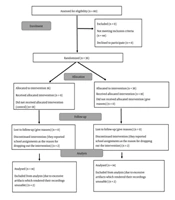
A total of 121 children were initially screened; 115 met the eligibility criteria and were allocated to the FEG group (n = 57) or the SCR group (n = 58). Subsequent 1:1 nearest-neighbor PSM balanced baseline differences, yielding a final matched cohort of 52 patients in each group. The study design and workflow are illustrated in Figure 1.
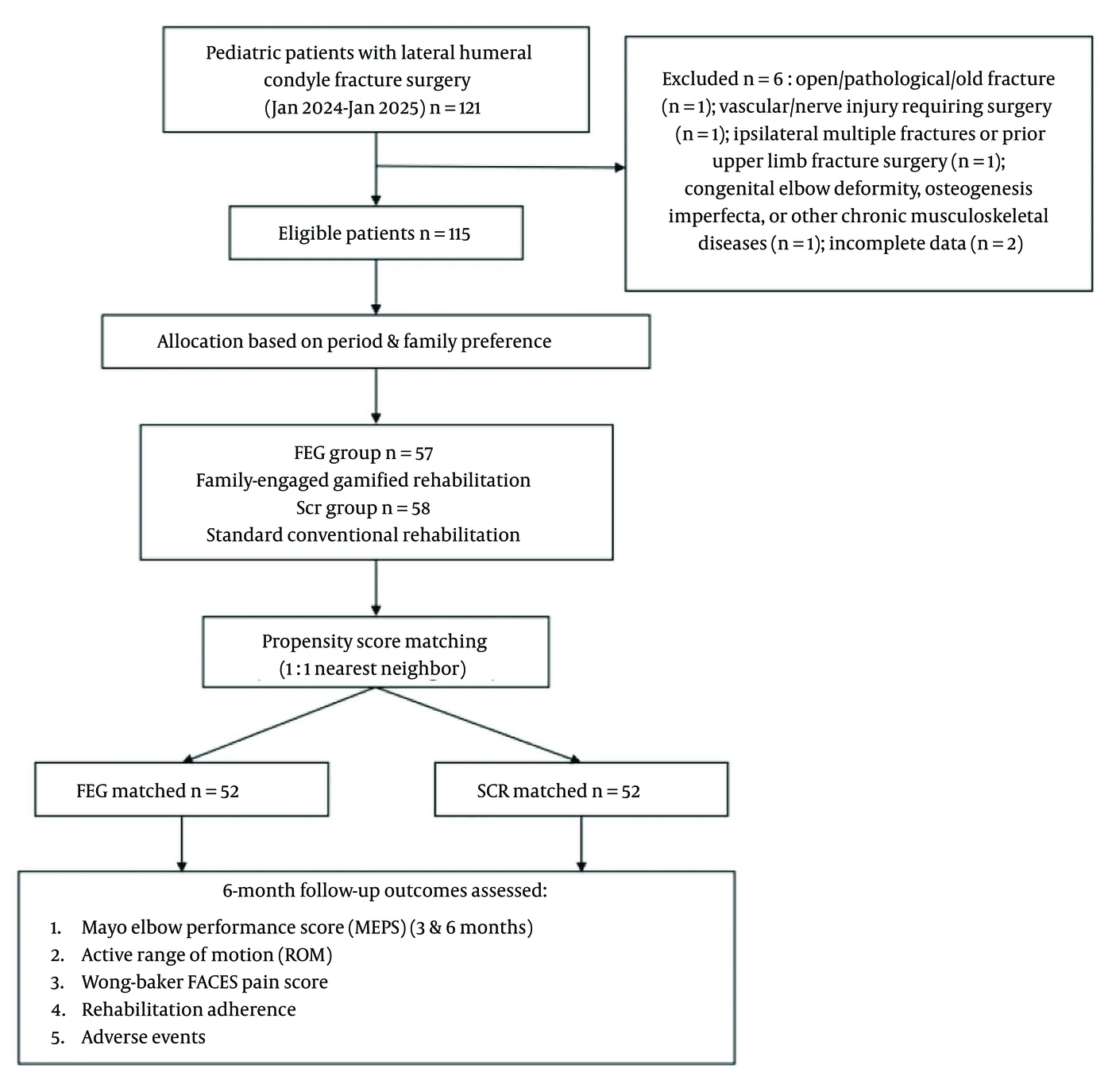
Figure 1.
Research flowchart
3.2. Ethical Considerations
The study was approved by the Jiaxing Second Hospital Ethics Committee (approval No. 2026 - 072) and conducted in accordance with the Declaration of Helsinki and applicable international standards for biomedical research. Because this retrospective study analyzed archived clinical data, the ethics committee approved a waiver of informed consent. All data were anonymized, and participants’ privacy and identities were protected throughout the study. Individual informed consent was not required because of the retrospective design and use of de-identified data.
3.3. Inclusion and Exclusion Criteria
The inclusion criteria were: 1) radiographically confirmed displaced pediatric lateral humeral condyle fracture (Micheli type II or III) (24); 2) age ≤ 14 years; 3) surgical treatment by closed or open reduction and internal fixation; and 4) complete clinical and follow-up data at baseline and at 3 and 6 months postoperatively.
The exclusion criteria were: 1) open, pathological, or old fracture; 2) concurrent vascular or nerve injury requiring surgery; 3) multiple ipsilateral fractures or a history of upper-limb fracture surgery; 4) congenital elbow deformity, osteogenesis imperfecta, or other chronic musculoskeletal diseases; and 5) incomplete clinical data.
3.4. Treatment Methods
All children received standard postoperative rehabilitation instructions at discharge from the same team of orthopedic surgeons and rehabilitation therapists. These instructions covered rehabilitation goals, basic exercises, pain management, and family monitoring. The nursing team also provided standardized rehabilitation education to all children and their families during hospitalization and provided supervision and reminders through online platforms and telephone calls, with the same frequency and content throughout the 6-month follow-up period.
3.4.1. Family-Engaged Gamified Rehabilitation
In addition to standard rehabilitation guidance, children in the FEG group participated in a motion-sensing gamified rehabilitation program that translated standard elbow exercises into structured, interactive game tasks (25-27). The program required a commercially available motion-sensing device (Kinect-style camera) connected to a standard home television or monitor. Before discharge, a designated primary caregiver received a standardized 30-minute training session covering device operation, safety precautions, and strategies for providing encouragement without physical assistance. Caregivers were instructed to supervise each session and document daily adherence in a structured log. Device availability was confirmed before enrollment, and all participating families owned or were provided with the necessary equipment. Each session lasted 20 - 30 minutes, with 1 - 2 sessions prescribed daily, requiring an estimated caregiver commitment of 3 - 5 hours per week.
The program comprised 3 core gamified activities: 1) "Origami Workshop", which required coordinated fine finger movements and elbow control to complete virtual folding tasks; 2) "Block Stacking Challenge", which involved controlled upper-limb movements to stabilize and stack blocks; and 3) "Children's Song Command Drills", in which children performed prescribed movements synchronized with music and visual cues.
The protocol prescribed 1 - 2 sessions per day, each lasting 20 - 30 minutes, throughout the 6-month postoperative period. The rehabilitation therapist individualized the plan according to the child’s postoperative phase and functional progress by adjusting difficulty (eg, speed and precision requirements), target ROM, and repetitions per task. Progression rules were predefined: advancement to a higher difficulty level required ≥ 80% correct performance over 3 consecutive sessions without exacerbation of pain.
Before discharge, a designated primary caregiver, typically a parent, received a standardized 30-minute training session from the rehabilitation therapist. Training covered the rationale for gamified rehabilitation, step-by-step operation of each game, safety precautions, and ways to provide encouragement without physical assistance. During the 6-month home program, caregivers acted as "game partners", supervising each session and assisting only when safety was a concern.
Caregivers documented adherence daily in a structured rehabilitation log, recording session duration, games completed, difficulty level, and any pain or difficulties encountered. The rehabilitation therapist reviewed the logs at scheduled postoperative follow-up visits at 1, 3, and 6 months. To monitor fidelity, 10% of logged sessions were randomly selected for telephone verification with caregivers, and the therapist cross-checked entries against follow-up progress notes. Inconsistencies were resolved through clarification calls, and all logs were retained in the case records.
3.4.2. Standard Conventional Rehabilitation
Children in the SCR group received conventional home-based rehabilitation guidance (11, 28). The rehabilitation therapist provided a detailed paper schedule specifying daily exercises, repetitions, techniques, and precautions for each postoperative phase. Under the supervision of a primary caregiver, children followed the plan, and completion was manually recorded in a rehabilitation diary. The therapist assessed progress and adjusted the plan at scheduled postoperative clinic visits at 1, 3, and 6 months.
All children completed the full 6-month rehabilitation program. Review of the case records indicated that the rehabilitation content, including specific exercises and target ROM, was consistent between groups. The main differences were the mode of delivery, feedback mechanisms, and nature of family involvement.
3.5. Assessment Measures
Data for all measures were collected retrospectively from the hospital’s electronic medical records, related communication logs, and standardized nursing documentation. Outcome measures, including the Mayo Elbow Performance Score (MEPS), active ROM, and Wong-Baker FACES Pain Rating Scale scores, were extracted and scored by 2 trained physical therapists independent of the treating orthopedic and rehabilitation teams. To minimize detection bias, the assessors were blinded to group allocation during data extraction and scoring; group information remained concealed until all outcome assessments were complete. Range of motion was measured using a standard goniometer according to established protocols, with the child seated and the elbow in the anatomical reference position. All assessments were conducted at scheduled outpatient visits at baseline (preoperatively) and at 3 and 6 months postoperatively, with standardized timing relative to the rehabilitation phase.
3.5.1. Baseline Data
Demographic data (age, sex, and body mass index), injury characteristics (injured side, dominant hand, injury mechanism, Micheli fracture classification, and concomitant nerve injury), and surgical parameters (time from injury to surgery, duration of surgery, and internal fixation method) were collected for all enrolled children. Baseline data were obtained from initial medical records and archived examination reports completed before treatment.
3.5.2. Efficacy Outcomes
The following measures were extracted from the case management system and analyzed:
1) Primary efficacy outcome: MEPS at 6 months postoperatively. The maximum score was 100, with higher scores indicating better function.
2) Secondary efficacy outcomes:
MEPS was assessed at 3 months postoperatively. Elbow ROM was measured at baseline and at 3 and 6 months postoperatively (29). Pain intensity was assessed at the same time points using the Wong-Baker FACES Pain Rating Scale, with scores ranging from 0 - 10 and higher scores indicating more severe pain (30).
Rehabilitation compliance was assessed using a structured scale developed by the rehabilitation therapy team based on clinical practice standards and a review of the pediatric rehabilitation adherence literature. The scale comprised 4 dimensions: exercise volume (0 - 25 points), time adherence (0 - 25 points), movement quality (0 - 25 points), and self-initiative (0 - 25 points), with a total score of 100. Content validity was confirmed by 3 senior rehabilitation therapists. Interrater reliability was assessed in 20 randomly selected cases (κ = 0.86), indicating excellent agreement. Compliance was categorized as full compliance (> 95), partial compliance (score 70 - 95), marginal compliance (score 55 - 69), or noncompliance (< 55). The overall compliance rate was calculated accordingly. To ensure accuracy, the rehabilitation therapist reviewed and cross-checked caregiver logs at scheduled postoperative follow-up visits at 1, 3, and 6 months. Discrepancies were resolved through direct discussion with caregivers.
Safety outcomes: Adverse events were defined as unfavorable and unintended signs, symptoms, or conditions temporally associated with rehabilitation, regardless of causality. The observation period extended from initiation of postoperative rehabilitation to the 6-month follow-up. All adverse events were prospectively documented by the rehabilitation therapist at scheduled postoperative visits at 1, 3, and 6 months, supplemented by caregiver reports and clinical examination findings. Events included joint stiffness, heterotopic ossification, implant irritation, neurovascular injury, and muscle or tendon damage. A comparative summary by group is presented in the Results section.
3.6. Sample Size Calculation
Sample size was estimated based on the primary outcome, MEPS. Based on previous studies and literature data (6), the expected excellent/good elbow function rate at 6 months postoperatively, defined as MEPS ≥ 80, was approximately 65% in the SCR group and 85% in the FEG group. With a two-sided α of 0.05 and statistical power (1 - β) of 0.80, PASS 15.0 indicated a minimum sample size of 49 patients per group. To account for potential attrition during matching, the planned enrollment was increased to 52 patients per group.
3.7. Statistical Analysis
Statistical analyses were performed using SPSS 26.0. The Shapiro-Wilk test assessed normality, and Levene’s test assessed homogeneity of variance. Normally distributed continuous data are presented as mean ± standard deviation (SD) and were compared using independent t tests. Categorical data are presented as number (%) and were compared using chi-square or Fisher’s exact tests, as appropriate. Propensity score matching was used to minimize selection bias. Propensity scores were estimated using logistic regression with the following prespecified covariates: age, sex, body mass index, fracture type (Micheli classification), time from injury to surgery, and duration of surgery. These variables were selected a priori based on clinical plausibility and observed baseline imbalances. Patients were matched using a 1:1 nearest-neighbor algorithm without replacement, with a caliper of 0.2 times the SD of the logit-transformed propensity score. Common support was enforced to ensure adequate overlap in propensity score distributions. Balance after matching was assessed using standardized mean differences (SMDs), with an absolute SMD < 0.1 indicating acceptable balance. Repeated-measures analysis of variance (ANOVA) was performed for MEPS, ROM, and FACES scores, with group as the between-subjects factor, time (baseline, 3 months, and 6 months) as the within-subjects factor, and a group × time interaction. Partial eta squared (η2) was reported as an effect size measure. Post hoc comparisons were adjusted using the Bonferroni method to control the risk of type I error. Correlations were analyzed using Pearson or point-biserial correlation. All analyses were two-tailed, with statistical significance defined as P < 0.05.
3.8. Missing Data and Follow-Up Completeness
Only patients with complete clinical and follow-up data at baseline and at 3 and 6 months postoperatively were included. Of the 121 patients initially screened, 2 were excluded because of incomplete follow-up data. No primary or secondary outcome data were missing in the final matched cohort of 104 patients (52 per group). Therefore, no imputation was performed.
4. Results
4.1. Comparison of Baseline Characteristics
A total of 121 children were initially enrolled. After applying the exclusion criteria, 115 children remained for preliminary allocation to the FEG or SCR group. To reduce potential confounding, 1:1 PSM was used to balance baseline characteristics, yielding a final matched cohort of 52 children per group. Before matching, the groups differed in age (t = -2.001, P = 0.048) and time from injury to surgery (t = -2.200, P = 0.030), as shown in Table 1. After matching, all baseline characteristics were well balanced, with no statistically significant between-group differences (all P > 0.05). All covariate SMDs were below 0.1, indicating excellent balance. Specifically, the groups did not differ significantly in age (P = 0.898), sex distribution (P = 0.839), body mass index (P = 0.918), fracture type (P = 0.844), time from injury to surgery (P = 0.590), duration of surgery (P = 0.915), or internal fixation method (P = 0.830).
Table 1.
Comparison of Baseline Characteristics Before and After Propensity Score Matching a
| Characteristic | Before PSM | After PSM | ||||||||
|---|---|---|---|---|---|---|---|---|---|---|
| FEG (n = 57) | SCR (n = 58) | t/χ2 | P | SMD | FEG (n = 52) | SCR (n = 52) | t/χ2 | P | SMD | |
| Demographic Characteristics | ||||||||||
| Age (y) | 6.64 ± 2.18 | 7.51 ± 2.47 | -2.001 | 0.048 | 0.377 | 7.08 ± 2.24 | 7.13 ± 2.35 | -0.128 | 0.898 | 0.025 |
| Male | 35 (61.40) | 41 (70.69) | 1.106 | 0.293 | 0.197 | 33 (63.46) | 32 (61.54) | 0.041 | 0.839 | 0.040 |
| BMI (kg/m2) | 16.74 ± 2.78 | 17.35 ± 2.94 | -1.143 | 0.256 | 0.216 | 16.98 ± 2.82 | 17.04 ± 2.89 | -0.103 | 0.918 | 0.020 |
| Injury and Fracture Features | ||||||||||
| Injured side-Left | 30 (52.63) | 26 (44.83) | 0.701 | 0.403 | 0.157 | 26 (50.00) | 25 (48.08) | 0.038 | 0.844 | 0.038 |
| Dominant hand-Left | 8 (14.04) | 7 (12.07) | 0.098 | 0.754 | 0.059 | 7 (13.46) | 6 (11.54) | 0.088 | 0.767 | 0.058 |
| Mechanism of injury-Fall | 32 (56.14) | 29 (50.00) | 0.435 | 0.509 | 0.123 | 28 (53.85) | 27 (51.92) | 0.039 | 0.844 | 0.039 |
| Fracture type (Micheli classification) | 0.078 | 0.780 | 0.052 | 0.038 | 0.844 | 0.038 | ||||
| Type II | 28 (49.12) | 30 (51.72) | 27 (51.92) | 26 (50.00) | ||||||
| Type III | 29 (50.88) | 28 (48.28) | 25 (48.08) | 26 (50.00) | ||||||
| Concomitant nerve injury | 5 (8.77) | 3 (5.17) | 0.154 | 0.695 | 0.142 | 4 (7.69) | 3 (5.77) | 0.153 | 0.696 | 0.062 |
| Surgery-Related Parameters | ||||||||||
| Time from injury to surgery (h) | 12.13 ± 4.66 | 14.15 ± 5.17 | -2.200 | 0.030 | 0.413 | 12.94 ± 4.81 | 13.46 ± 4.99 | -0.540 | 0.590 | 0.088 |
| Duration of surgery (min) | 36.38 ± 8.05 | 34.75 ± 8.81 | 1.035 | 0.303 | 0.194 | 35.17 ± 7.63 | 35.33 ± 7.01 | -0.107 | 0.915 | 0.021 |
| Method of internal fixation | 0.819 | 0.366 | 0.169 | 0.046 | 0.830 | 0.042 | ||||
| Kirschner wire | 40 (70.18) | 45 (77.59) | 37 (71.15) | 36 (69.23) | ||||||
| Cannulated screw | 17 (29.82) | 13 (22.41) | 15 (28.85) | 16 (30.77) | ||||||
a Values are expressed as mean ± SD or No. (%). SMD < 0.1 indicates acceptable between-group balance. P values are from independent t tests for continuous variables or chi-square tests for categorical variables. All P values are two-sided. Abbreviations: PSM, propensity score matching; SMD, standardized mean difference; FEG, family-engaged gamified rehabilitation; SCR, standard conventional rehabilitation; BMI, Body Mass Index; SD, standard deviation.
4.2. Changes in Mayo Elbow Performance Scores
Repeated-measures ANOVA demonstrated significant main effects of group (F = 391.828, P < 0.001, η2 = 0.704) and time (F = 16.733, P < 0.001, η2 = 0.015), as well as a significant time × group interaction (F = 3.419, P = 0.034, η2 = 0.006), as presented in Table 2. Post hoc within-group comparisons confirmed that MEPS at 3 and 6 months improved significantly from baseline in both groups (all P < 0.05). Baseline MEPS did not differ significantly between groups (P = 0.847). However, MEPS was significantly higher in the FEG group at 3 months (t = 3.749, P < 0.001), and this difference persisted at 6 months (t = 4.514, P < 0.001).
Table 2.
Changes in Mayo Elbow Performance Scores Between Groups a
| Time | FEG (n = 52) | SCR (n = 52) | t | P |
|---|---|---|---|---|
| Baseline | 48.38 ± 11.26 | 47.94 ± 12.03 | 0.194 | 0.847 |
| Month 3 | 76.50 ± 8.33 b | 69.85 ± 9.71 b | 3.749 | < 0.001 |
| Month 6 | 86.35 ± 6.14 b | 80.46 ± 7.12 b | 4.514 | < 0.001 |
| Main effect of Group | F = 391.828, P < 0.001, η2 = 0.704 | |||
| Main effect of Time | F = 16.733, P < 0.001, η2 = 0.015 | |||
| Interaction effect Time × Group | F = 3.419, P = 0.034, η2 = 0.006 |
a Values are expressed as mean ± SD. MEPS ranges from 0 to 100, with higher scores indicating better elbow function. P values are from repeated-measures ANOVA with post hoc Bonferroni correction. η2 indicates effect size. Abbreviations: MEPS, Mayo Elbow Performance Score; FEG, family-engaged gamified rehabilitation; SCR, standard conventional rehabilitation; SD, standard deviation; ANOVA, analysis of variance.
b P < 0.05 compared with baseline within the same group.
4.3. Changes in Range of Motion
Repeated-measures analysis demonstrated significant main effects of group (F = 1909.75, P < 0.001, η2 = 0.904) and time (F = 62.595, P < 0.001, η2 = 0.015), as well as a significant group × time interaction (F = 18.795, P < 0.001, η2 = 0.009), as presented in Table 3. Within-group comparisons confirmed that ROM at 3 and 6 months postoperatively was significantly greater than at baseline in both groups (all P < 0.05). Baseline ROM did not differ significantly between groups (P = 0.696). At both 3 and 6 months, ROM was significantly greater in the FEG group than in the SCR group (both P < 0.001).
Table 3.
Changes in Range of Motion Between Groups a
| Time | FEG (n = 52) | SCR (n = 52) | t | P |
|---|---|---|---|---|
| Baseline | 50.35 ± 9.14 | 51.06 ± 9.38 | -0.392 | 0.696 |
| Month 3 | 108.42 ± 8.43 b | 95.73 ± 9.61 b | 7.162 | < 0.001 |
| Month 6 | 128.63 ± 6.74 b | 117.29 ± 8.45 b | 7.566 | < 0.001 |
| Main effect of Group | F = 1909.75, P < 0.001, η2 = 0.904 | |||
| Main effect of Time | F = 62.595, P < 0.001, η2 = 0.015 | |||
| Interaction effect Time × Group | F = 18.795, P < 0.001, η2 = 0.009 |
a Values are expressed as mean ± SD. ROM is measured in degrees of elbow flexion-extension; higher values indicate better mobility.P values are from repeated-measures ANOVA with post hoc Bonferroni correction. η2 indicates effect size. Abbreviations: ROM, range of motion; FEG, family-engaged gamified rehabilitation; SCR, standard conventional rehabilitation; SD, standard deviation; ANOVA, analysis of variance.
b P < 0.05 compared with baseline within the same group.
4.4. Changes in Pain Scores
The analysis demonstrated significant main effects of group (F = 809.264, P < 0.001, η2 = 0.818) and time (F = 38.641, P < 0.001, η2 = 0.020), as well as a significant group × time interaction (F = 8.148, P < 0.001, η2 = 0.008), as presented in Table 4. Within-group comparisons showed significant reductions in FACES scores from baseline at both 3 and 6 months in both groups (all P < 0.05). Baseline pain scores did not differ significantly between groups (P = 0.714). At both postoperative assessments, FACES scores were significantly lower in the FEG group than in the SCR group (both P < 0.001).
Table 4.
Changes in Wong-Baker FACES Pain Rating Scale Scores Between Groups a
| Time | FEG (n = 52) | SCR (n = 52) | t | P |
|---|---|---|---|---|
| Baseline | 7.85 ± 1.02 | 7.92 ± 1.12 | -0.367 | 0.714 |
| Month 3 | 3.83 ± 1.08 b | 4.96 ± 1.03 b | -5.488 | < 0.001 |
| Month 6 | 1.92 ± 0.74 b | 2.83 ± 0.96 b | -5.370 | < 0.001 |
| Main effect of Group | F = 809.264, P < 0.001, η2 = 0.818 | |||
| Main effect of Time | F = 38.641, P < 0.001, η2 = 0.020 | |||
| Interaction effect Time × Group | F = 8.148, P < 0.001, η2 = 0.008 |
a Values are expressed as mean ± SD. FACES scores range from 0 (no pain) to 10 (worst pain), with lower scores indicating better pain control. P values are from repeated-measures ANOVA with post hoc Bonferroni correction. η2 indicates effect size. Abbreviations: FEG, family-engaged gamified rehabilitation; SCR, standard conventional rehabilitation; SD, standard deviation; ANOVA, analysis of variance.
b P < 0.05 compared with baseline within the same group.
4.5. Comparison of Compliance Rates
The proportion of children achieving full compliance was higher in the FEG group (19.23%) than in the SCR group (13.46%), as presented in Table 5. Conversely, noncompliance was more frequent in the SCR group (30.77%) than in the FEG group (9.62%). The overall compliance rate, calculated as the sum of all categories except noncompliance, was significantly higher in the FEG group than in the SCR group (90.38% vs 69.23%; χ2 = 7.220, P = 0.007).
| Group | Full Compliance | Partial Compliance | Marginal Compliance | Non-compliance | Overall Compliance Rate |
|---|---|---|---|---|---|
| FEG | 10 (19.23) | 19 (36.54) | 18 (34.62) | 5 (9.62) | 47 (90.38) |
| SCR | 7 (13.46) | 18 (34.62) | 11 (21.15) | 16 (30.77) | 36 (69.23) |
a Values are expressed as No. (%). Compliance categories are full compliance (> 95/100), partial compliance (score 70 - 95), marginal compliance (score 55 - 69), and noncompliance (< 55). Overall compliance excludes noncompliance. The P value is from a chi-square test of the overall compliance rate. Abbreviations: FEG, family-engaged gamified rehabilitation; SCR, standard conventional rehabilitation.
b The difference between the two groups was statistically significant (χ² = 7.220, P = 0.007).
4.6. Safety Analysis
The rehabilitation protocols had comparable postoperative adverse-event profiles, as presented in Table 6. There were no significant between-group differences in joint stiffness (3.85% vs 9.62%, P = 0.434), heterotopic ossification (3.85% vs 3.85%, P = 0.610), or implant irritation (1.92% vs 1.92%, P = 0.475). One case (1.92%) of mild neurovascular injury occurred in the SCR group, and 1 case (1.92%) of mild muscle or tendon strain occurred in the FEG group. Both resolved with rest or symptomatic management without interruption of rehabilitation. All reported events were mild to moderate, and no serious adverse events, such as refracture, occurred.
Table 6.
Comparison of Adverse Events Between Groups a
| Adverse Event | FEG (n = 52) | SCR (n = 52) | χ2 | P |
|---|---|---|---|---|
| Joint stiffness | 2 (3.85) | 5 (9.62) | 0.613 | 0.434 |
| Heterotopic ossification | 2 (3.85) | 2 (3.85) | 0.260 | 0.610 |
| Implant irritation | 1 (1.92) | 1 (1.92) | 0.510 | 0.475 |
| Neurovascular injury | 0 (0.00) | 1 (1.92) | - | - |
| Muscle/tendon strain | 1 (1.92) | 0 (0.00) | - | - |
a Values are expressed as No. (%). All reported adverse events were mild to moderate; no serious adverse events occurred. P values are from chi-square or Fisher's exact tests, as appropriate. Abbreviations: FEG, family-engaged gamified rehabilitation; SCR, standard conventional rehabilitation.
4.7. Correlation Analysis
Pearson correlation analysis was performed to explore relationships among gamified rehabilitation, postoperative functional recovery, and rehabilitation compliance (Table 7). Assignment to the FEG group was positively correlated with MEPS at 6 months postoperatively (r = 0.408, P < 0.01). Gamified rehabilitation was also positively correlated with rehabilitation compliance (r = 0.263, P < 0.05). Rehabilitation compliance was positively correlated with postoperative MEPS (r = 0.427, P < 0.01).
Table 7.
Correlations Among Gamified Rehabilitation, Postoperative Functional Recovery, and Compliance a
a Values are Pearson correlation coefficients (r). Abbreviation: MEPS, Mayo Elbow Performance Score.
b P < 0.001 (two-tailed).
c P < 0.01.
5. Discussion
This retrospective cohort study using PSM evaluated FEG compared with SCR for midterm functional recovery after pediatric lateral humeral condyle fracture. Children receiving FEG had better elbow function, greater ROM, lower pain scores, and higher rehabilitation compliance at key postoperative time points. Correlation analyses also showed a positive association between compliance and functional outcomes, providing preliminary insights into a potential mechanism. By quantifying associations with recovery and adherence at 6 months, this study provides observational evidence to inform the consideration of innovative approaches that may enhance patient participation. Digital and gamified interventions have been increasingly explored across pediatric clinical settings, supporting their broader potential applicability (31). Beyond pediatric orthopedics, game-based rehabilitation has improved motor function and reduced pain in post-stroke shoulder recovery, suggesting that attentional distraction and reward feedback mechanisms may extend across diagnostic groups (32). Similarly, technology-based educational interventions delivered through accessible platforms, such as WhatsApp, have improved self-care behaviors and lifestyle practices in chronic disease management, reflecting a broader trend toward digital rehabilitation and patient education (33).
The FEG group had significantly higher MEPS and greater elbow ROM at both 3 and 6 months than the SCR group. These findings may reflect the gamified model’s potential to encourage early, regular, high-quality training (34). Postoperative elbow recovery depends on sustained efforts to counter fibrosis and rebuild periarticular muscle strength. Translating flexion-extension exercises into intuitive game tasks may reduce children’s initial fear and resistance, facilitating earlier and more comprehensive joint mobilization (35, 36). The FEG group also had lower FACES scores at both 3 and 6 months. Pain is a major barrier to active rehabilitation in children (11, 37). Surgical trauma and rehabilitation constitute sustained stressors that may activate the HPA axis and influence stress hormone secretion, including cortisol. Excessive or chronic stress signaling can exacerbate pain perception, impede tissue repair, and produce broader pathophysiological effects (38). Gamified rehabilitation may reduce perceived discomfort during therapeutic movements through attentional distraction, consistent with the theory of attentional competition (39). Positive gaming experiences, such as a sense of accomplishment after completing tasks, may also stimulate the endogenous opioid system, producing analgesia and more favorable conditions for active movement (40).
Overall rehabilitation compliance was significantly higher in the FEG group, and compliance was positively correlated with MEPS at 6 months. These findings support the clinical hypothesis that improved compliance contributes to better rehabilitation outcomes. By making repetitive exercises engaging and challenging, gamification may draw on children’s exploratory and achievement motivations and increase sustained participation (41, 42). Improved compliance may provide a more adequate and consistent therapeutic dose, with more regular joint movement and muscle stimulation contributing to functional gains. A plausible mechanism is that FEG improves compliance and engagement by reducing barriers, including perceived pain, while increasing enjoyment and intrinsic motivation. Greater compliance may then support the continuity and adequacy of rehabilitation, helping to counter joint stiffness and promote muscle recovery. These effects may contribute to better joint function and ROM at midterm follow-up. Family involvement may further reinforce social support and supervision, consolidating these behavioral changes (43).
Adverse event profiles were similar between groups, with a low overall incidence and predominantly mild events. These findings suggest a favorable safety profile for both home-based rehabilitation models when delivered under professional guidance. No serious adverse events directly related to the interventions occurred, supporting their potential for sustained application under standardized management.
5.1. Study Limitations
This study has several limitations. First, its retrospective design leaves the possibility of unmeasured confounding despite baseline balancing through PSM. Second, reliance on motion-sensing technology and active caregiver involvement may limit generalizability to settings with fewer technological resources or limited caregiver availability. All participating families had access to the required device and were willing to provide the prescribed supervision, which may represent a selected population. Implementation may be more difficult where technological infrastructure or family support is limited. Nevertheless, the structured training protocol and use of low-cost consumer devices suggest potential transferability to other outpatient or home-based pediatric rehabilitation settings when adequate family engagement and technical support are available. Third, compliance was assessed primarily using retrospective rating scales. Objective tools, such as wearable sensors or digital logs, could provide more precise data in future studies. Fourth, the primary endpoint was 6 months postoperatively; longer-term efficacy and safety require further follow-up. Future prospective randomized controlled studies should incorporate objective compliance measures and patient-reported outcomes, including quality of life and treatment satisfaction, to validate the effects of gamified rehabilitation and clarify its mechanisms.
5.2. Conclusions
In children undergoing rehabilitation after lateral humeral condyle fracture, FEG was associated with higher treatment compliance and better midterm elbow function and ROM. The positive correlation between compliance and functional outcomes provides a preliminary direction for investigating potential mechanisms. These findings support further exploration and refinement of family-centered pediatric orthopedic rehabilitation strategies incorporating behavioral science principles. Considering each child’s and family’s circumstances, preferences, and support resources, such approaches may be explored as an adjunct or alternative to conventional rehabilitation guidance.