1. Background
Vitamin and micronutrient deficiency, especially iron deficiency, is an important and frequent health problem in children and adolescents (1, 2). Although vitamin B12 deficiency is common in these age groups, sources about its rates of occurrence, which are mostly regional reports, are limited (3-5). Vitamin B12, a special cofactor in the synthesis of DNA, neurotransmitters, and the methylation process, plays a critical role in the growth and development of the brain and neurological system (6-8). Patients with vitamin B12 deficiency may complain of forgetfulness, paresthesia, fatigue, hypotonia, decreased appetite, diarrhea, depression, hair abnormalities, adynamic ileus, growth retardation, and megaloblastic anemia (9-16). Vitamin B12 deficiency can reportedly progress to brain atrophy, leading to Alzheimer’s disease (17). When iron deficiency anemia superposes vitamin B12 deficiency, short stature and delayed puberty may occur (18).
Due to the variability and severity of symptoms resulting from vitamin B12 deficiency, the early diagnosis and treatment of this deficiency is important for improving the quality of life of patients and their families. The symptoms associated with vitamin B12 deficiency may be confused with psychiatric diseases, such as depression, in the adolescent age group. The symptoms caused by vitamin B12 deficiency may be managed with vitamin supplementation, which may decrease the need for further laboratory tests and medication.
2. Objectives
In this report, we aimed to evaluate the frequency with which vitamin B12 deficiency occurs in children and adolescents. We also tried to define the differences in clinical symptoms in patients with vitamin B12 < 200 pg/dL and those with vitamin B12 < 300 pg/dL and to determine the vitamin B12 levels for treatment.
3. Methods
The clinical information and laboratory tests of the children and adolescents admitted to Bakırköy Dr. Sadi Konuk Research and Training Hospital between April 1 and September 30, 2014 were collected prospectively from the pediatric outpatient clinic in which the same physicians were working over the six-month period. The patients’ age, sex, symptoms, presence of chronic disease and laboratory tests, complete blood count, erythrocyte sedimentation rate, vitamin B12 levels, folic acid, ferritin, homocysteine, and 25-OH vitamin D levels were recorded.
The maternal vitamin B12 level of the patients was checked and recorded. Their plasma folate level was accepted as low when it was less than 5 nmol/L.
3.1. Exclusion Criteria
Patients with diseases that can cause vitamin B12 deficiency, such as such as atrophic gastritis and chronic gastritis, or who were taking medication that can cause vitamin B12 deficiency, such as antacids or antiepileptic drugs, were excluded from this study. Patients with a chronic disease or an active infection were also excluded from the study.
3.2. Nutritional Status
Each patient and their family were questioned about vegetarianism. Each patient’s nutritional status and their consumption of breast milk, red meat, cow milk, and eggs were recorded. The consumption of eggs at least three times a week and the consumption of red meat at least once a week were accepted as efficient.
3.3. Clinical Features
All patients were questioned about the presence of paresthesia, numbness, hypotonia, seizures, forgetfulness, headache, joint pain, abdominal pain, constipation, chest pain, aphthous stomatitis, vertigo, fatigue, unhappiness, anxiety, and hair abnormalities. Patients younger than three years old were evaluated based on information provided by their parents. Paresthesia, dizziness, numbness, forgetfulness, unhappiness, and poor school performance were not asked of the patients younger than three years of age (Group I). A statistical analysis of the association and correlation between vitamin B12 level and clinical symptoms was computed. The patients going to the school were classified as good, moderate, or bad according to their school performance.
3.4. Treatment
Children and adolescents with vitamin B12 deficiency (< 200 pg/mL) were treated with parenteral vitamin B12 (19-21). We offered the same dose of peroral vitamin B12 to 13 patients who rejected the parenteral form. Depending on the presence of symptoms, patients with a vitamin B12 level of 200 - 300 pg/mL also received treatment.
The patients were also questioned about the presence of anal pruritus, nose itching, and parasites in their feces. Almost all families suspected of intestinal parasitosis refused to deliver fresh feces for examination or to apply a tape test, so we treated these cases with antiparasitic drugs based on this suspicion.
Nearly one month after treatment, the vitamin B12 levels and the improvement of the symptoms of all the patients were checked.
Patients with iron deficiency anemia (Hb < 11%) were treated with 8 mg/kg/day of ferrous sulfate.
3.5. Ethics
This work was carried out in accordance with the code of ethics of the world medical association (Declaration of Helsinki) for experiments involving humans. Informed consent was obtained from the families of the patients.
3.6. Statistical Analysis
This was a prospective cohort study. Demographical characteristics were described as medium (minimum–maximum) and/or mean ± standard deviation. The data was analyzed using SPSS (Version 13). Nonparametric values were evaluated by the Kruskal-Wallis and Mann-Whitney U tests, and parametric data was evaluated by the Student’s t-test. More than two continued variables were analyzed by an analysis of variance. P < 0.05 was accepted as statistical significance. If the P value was significant, Pearson’s correlation coefficient (r) was used to determine the correlation between two parameters. If r > 0.2, a positive correlation between the parameters was accepted.
4. Results
Over a six-month period, 26910 patients were referred to our pediatric outpatient clinics. Patients with chronic diseases or acute infections or who were taking medications that can cause vitamin B12 deficiency were excluded from this study. In total, 524 children and adolescents were included in the study. The mean age of the patients was 8.3 ± 4.2 years. The patients were grouped according to their age: Group I (0 - 3 years old) consisted of 72 patients (15%; 36 males), Group II (3 - 10 years old) consisted of 240 patients (46%; 126 males), and Group III (10 - 16 years old) consisted of 206 patients (39%; 104 males). All the patients and/or their families had been living in Istanbul for at least one year. The mean body mass index (kg/m²) of the patients was 17.3 (10.6 - 29.2) kg/m2. Overweight patients were mostly in the adolescent age group (P = 0.00).
4.1. Laboratory Results
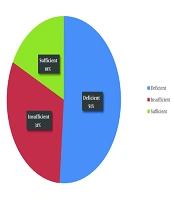
The mean vitamin B12 levels according to group were 317.4 ± 187.9 pg/mL in Group I, 342.8 ± 151 pg/mL in Group II, and 241.4 ± 126.5 pg/mL in Group III. If the lower level for vitamin B12 deficiency limit was accepted as 300 pg/mL, then 53.8% of the patients in Group I, 43.3% of the patients in Group II, and 75.7% of the patients in Group III were vitamin B12 deficient. The patients in Group III (the adolescent group) had a higher incidence of vitamin B12 deficiency than the other groups (P = 0.00). The vitamin B12 level of the mothers of the patients in all groups was 192.7 ± 105.6 pg/mL. The vitamin B12 level of the mothers was lower than the vitamin B12 level of the patients. In particular, the vitamin B12 levels of the mothers of the patients with vitamin B12 < 200 pg/mL were lower than that of the mothers of the patients with vitamin B12 < 300 pg/mL in all age groups (Table 1).
Table 1.
Laboratory Values of Patients With Vitamin B12 < 200 pg/mL and Vitamin B12 < 300 pg/mL
| Laboratory Parameters | Vitamin B12 < 200 pg/mL | P Value | Vitamin B12 < 300 pg/mL | P Value |
|---|---|---|---|---|
| Age, y | 9.4 ± 4.8 | 0 | 9.1 ± 4.4 | 0 |
| Vitamin B12 level of mothers | 166.4 ± 77.7 | 0.037 | 189.1 ± 108 | 0.48 |
| White blood cell | 8025 ± 4670 | 0.69 | 7955 ± 4433 | 0.22 |
| Hemogram | 12.4 ± 1.3 | 0.62 | 12.4 ± 1.3 | 0.53 |
| Hematocrit | 37.8 ± 3.7 | 0.7 | 37.7 ± 3.6 | 0.79 |
| Neutrophil | 3943.5 ± 1778.9 | 0.23 | 3882 ± 1734 | 0.06 |
| Lenfocyte | 3285.8 ± 3526.6 | 0.95 | 3210 ± 2761 | 0.45 |
| MCV | 81.5 ± 7 | 0.02 | 80.6 ± 7.1 | 0.69 |
| Folic acid | 10 ± 4 | 0 | 11.03 ± 5.5 | 0.06 |
| Homocysteine | 9.6 ± 6 | 0 | 8.4 ± 4.9 | 0 |
| Iron | 63.3 ± 29.4 | 0.33 | 63.1 ± 32.9 | 0.11 |
| Iron-binding capacity | 307.6 ± 51.2 | 0.35 | 305 ± 50.4 | 0.64 |
| Ferritin | 21 ± 18.6 | 0.85 | 20.7 ± 17.2 | 0.93 |
| 25-OH vitamin D, ng/mL | 11.8 ± 7.7 | 0 | 13.1 ± 7 | 0 |
Folic acid deficiency was diagnosed in 2.1% of all patients, occurring in 3.6% of children and adolescents with vitamin B12 < 200 pg/mL and 5.6% of patients with vitamin B12 < 300 pg/mL. This shows that patients with lower vitamin B12 levels also had lower folic acid levels (P < 0.01). In Table 1, patients’ vitamin B12 levels are compared with their peripheral blood count parameters. Homocysteine was higher in patients with lower vitamin B12 levels (Table 1). In patients with vitamin B12 < 200 pg/mL, the folic acid level was low and the MCV level was higher than normal. The other blood count parameters did not show a significant association with vitamin B12 level (Table 1).
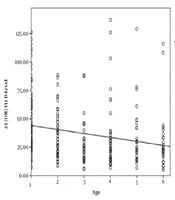
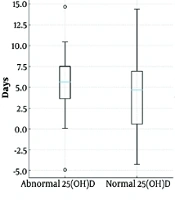
We also checked each patient’s 25-OH vitamin D level. The 476 recorded patients’ 25-0H vitamin D levels were 14.74 ± 8.6 ng/mL. The 25-OH vitamin D levels were 24.3 ± 11.1 ng/mL in Group I, 14.9 ± 7.5 ng/mL in Group II, and 11.08 ± 5.2 ng/mL in Group III. The vitamin D levels of the patients in Group III were significantly lower than that of the patients in the other groups (P = 0.001). The 25-OH vitamin D levels were generally decreased in patients with vitamin B12 < 300 pg/mL. There was a positive correlation between vitamin B12 levels and 25-OH vitamin D levels (P < 0.00, r = 0.26) (Table 1).
4.2. Clinical Findings
Overall, 91.7% of children and adolescents with vitamin B12 < 200 pg/mL complained of at least one symptom of vitamin B12 deficiency. Forgetfulness, fatigue, anxiety, and headache were the most common symptoms (63.3%, 63.3%, 59.7%, and 46%, respectively, across all age groups). The frequency of abdominal pain, constipation, and aphthous stomatitis did not increase in either the patients with vitamin B12 < 200 pg/mL or vitamin B12 < 300 pg/mL (Table 2). Muscle weakness (hypotonia) was the only symptom detected significantly more in the vitamin B12 < 200 pg/mL patients than in the vitamin B12 < 300 pg/mL patients. Additionally, muscle weakness was observed in only Group I patients. The mothers of all the patients in each group were vitamin B12 deficient. The other symptoms were observed similarly in both patients with vitamin B12 < 200 pg/mL and those with vitamin B12 < 300 pg/mL (Table 2). There was a weak positive correlation of forgetfulness and fatigue with both vitamin B12 < 200 pg/mL and vitamin B12 < 300 pg/mL, depression and paresthesia were weakly correlated with vitamin B12 < 200 pg/mL, and chest pain was weakly correlated with vitamin B12 < 300 pg/mL (Table 2).
Table 2.
Clinical Symptoms in Patients With Vitamin B12 < 200 pg/mL and Vitamin B12 < 300 pg/mL
| Clinical Symptoms | Vitamin B12 < 200, pg/mL (%) | P Value | Pearson’s Correlation Coefficient (r) | Vitamin B12 < 300, pg/mL (%) | P Value | Pearson’s Correlation Coefficient (r) | Relative Risk (95% Confidence Interval) |
|---|---|---|---|---|---|---|---|
| Complaining of symptoms | 91.7 | 0.02 | 0.11 | 90 | 0.02 | 0.13 | 1.49 [1.16 - 1.9] |
| Forgetfulness | 63.3 | 0 | 0.32 | 52.2 | 0 | 0.29 | 2.29 [1.68 - 3.12] |
| Fatigue | 63.2 | 0 | 0.2 | 62.4 | 0 | 0.33 | 2.3 [1.78 - 2.99] |
| Anxiety | 59.7 | 0 | 0.18 | 52.9 | 0.003 | 0.15 | 1.41 [1.12 - 1.79] |
| Headache | 46 | 0.002 | 0.15 | 43.6 | 0 | 0.2 | 1.73 [1.3 - 2.29] |
| Pain in lower extremity | 44.4 | 0.22 | 0.06 | 47 | 0.001 | 0.16 | 1.5 [1.17 - 1.94] |
| Depression | 43.8 | 0 | 0.22 | 34.7 | 0.002 | 0.15 | 1.5 [1.13 - 2] |
| Poor school performance | 39.6 | 0.02 | 0.08 | 39.8 | 0.001 | 0.18 | - |
| Abdominal pain | 38.1 | 0.9 | -0.01 | 37.6 | 0.65 | -0.02 | 0.95 [0.76 - 1.2] |
| Pain in upper extremity | 36.5 | 0 | 0.2 | 30.2 | 0 | 0.18 | 1.78 [1.25 - 2.5] |
| Dizziness | 34.6 | 0.08 | 0.1 | 32.6 | 0.03 | 0.13 | 1.5 [1 - 2.25] |
| Paresthesia | 33.3 | 0 | 0.2 | 26.3 | 0.002 | 0.16 | 1.7 [1.18 - 2.5] |
| Arthralgia | 31.7 | 0.24 | 0.06 | 34.2 | 0.001 | 0.16 | 1.61 [1.19 - 2.18] |
| Constipation | 26.4 | 0.59 | -0.03 | 24.6 | 0.055 | -0.09 | 0.79 [0.63–0.99] |
| Aphthous stomatitis | 24.1 | 0.59 | -0.03 | 27.5 | 0.47 | -0.04 | 1.12 [0.82 - 1.5] |
| Chest pain | 14.3 | 0.04 | 0.1 | 15.4 | 0 | 0.22 | 4.65 [1.82 - 11.8] |
| Muscle weakness | 4.1 | 0.01 | 0.12 | 2.3 | 0.35 | 0.05 | 1.65 [0.49–5.52] |
The comparison of symptoms of the patients in the three age groups showed that all symptoms except muscle weakness, which was observed in only Group I, were significantly more common in adolescents. Anxiety and forgetfulness were the major symptoms in adolescent patients (Table 3).
Table 3.
Comparison of the Clinical Symptoms of the Patients in Groups I, II, and III
| Clinical Symptoms | Group I (%)a | Group II (%)b | Group III (%)c | P Value |
|---|---|---|---|---|
| Complaining of symptoms | 72.3 | 82 | 96.6 | 0 |
| Muscle weakness | 11.1 | 0 | 0 | 0 |
| Constipation | 37.1 | 27.3 | 25.3 | 0.167 |
| Headache | 5.3 | 24.7 | 54 | 0 |
| Dizziness | 0 | 21.7 | 38.6 | 0 |
| Abdominal pain | 26.3 | 41.4 | 37.9 | 0.21 |
| Chest pain | 0 | 6.1 | 16.1 | 0 |
| Pain of lower extremity | 10.5 | 35.4 | 51.7 | 0 |
| Arthralgia | 10.5 | 25.3 | 34.5 | 0.006 |
| Pain of upper extremity | 10.5 | 17.3 | 33.3 | 0 |
| Anxiety | 12.5 | 41.1 | 62.1 | 0 |
| Depression | 0 | 18.2 | 48.3 | 0 |
| Forgetfulness | 0 | 25.3 | 61.6 | 0 |
| Paresthesia | 0 | 13.4 | 32.2 | 0 |
| Fatigue | 27.6 | 45.5 | 58.6 | 0 |
| Aphthous stomatitis | 3.6 | 26 | 35.3 | 0 |
| Poor school performance | - | 21.7 | 28.2 | 0.017 |
aGroup I: 0 - 3 years old.
bGroup II: 3 - 10 years old.
cGroup III: 10 - 16 years old.
None of the patients had seizures. Alopecia (4%) and aphthous stomatitis (10%) occurred more in patients with vitamin B12 deficiency. In most of the patients with alopecia and aphthous stomatitis, iron deficiency anemia accompanied their vitamin B12 deficiency.
The symptoms of vitamin B12 deficiency, especially forgetfulness, fatigue, depression, pain in the extremities, aphthous stomatitis, and alopecia, may be seen among patients with iron deficiency anemia. Therefore, the patients were classified as patients with vitamin B12 deficiency and patients with vitamin B12 deficiency + iron deficiency anemia. There was no significant difference between the symptoms of the patients in the two classes (P > 0.05).
Almost half (48.4%) of the patients complained of fatigue. The vitamin B12 level of those who complained of fatigue was 256.2 ± 126.2 pg/mL and was 338.8 ± 173.9 pg/mL for those without the symptom (P = 0.00). Among the patients who complained of fatigue, 41.3% had vitamin B12 < 200 pg/mL and 75% had vitamin B12 < 300 pg/mL. We questioned the nutritional status of these patients. Being vegetarian or having limited consumption of red meat due to low income were risk factors for vitamin B12 deficiency. Group III had the worst nutritional status compared to Groups I and II (35%, 17%, and 49%, respectively) (P < 0.05). The vitamin B12 levels of the patients with poor nutritional status (233.2 ± 132.7 pg/mL) was lower than the patients with a good nutrition history (308.3 ± 160.8 pg/mL) (P = 0.002).
Vegetarianism and/or poor consumption of meat was significantly more common among patients with vitamin B12 < 300 pg/mL (P < 0.000), and there was a weak positive correlation (r = 0.21) between them.
4.3. Treatment
Treatment was given to 288 (55%) children and adolescents with vitamin B12 < 200 pg/mL and patients suffering from irritating symptoms with vitamin B12 levels between 200 and 300 pg/mL. Antiparasitic drugs were used if intestinal parasitosis was suspected.
4.4. Control After Treatment
Approximately one month after treatment, the vitamin B12 levels of 99 (34%) treated patients were checked, all of whom then had vitamin B12 > 300 pg/mL. The complaints of the patients were totally resolved.
5. Discussion
Vitamin B12 is a water-soluble essential vitamin that plays a role in hematopoiesis, neuronal functions, the synthesis of myelin and epithelium, the mucosal functions of the gastrointestinal system, and the metabolism of fatty acids, carbohydrates, and nucleic acids (17). In biochemical processes, vitamin B12 presents as two coenzyme forms: methylcobalamin and adenocyanocobalamin. Due to the functional losses from vitamin B12 deficiency, hematopoietic system abnormalities, neurological and psychiatric diseases, and changes in the epithelium of the gastrointestinal system have been observed (17). In patients with vitamin B12 deficiency, depression and anxiety were detected more than other symptoms, so in adolescents with signs of unhappiness (depression) and anxiety, vitamin B12 levels should be checked, especially adolescent patients who are seeing psychiatrists or psychologists due to depression and anxiety. If there are no clinical symptoms other than depression and anxiety, a patient’s vitamin B12 level is usually is not checked. Some patients, particularly adolescents, refuse to see psychiatrists or psychologists. Additionally, having adolescents take drugs regularly for a long time is difficult because of their poor cooperation. In spite of this, when a child, particularly an adolescent, complains of unhappiness and anxiety, before referring the child to a psychiatrist, the child’s vitamin B12 level should be checked and treated if it is less than 300 pg/mL.
Recurring headaches and dizziness are frequent symptoms in children and adolescents. Some of these patients do not present any observed disease, such as sinusitis or migraine, so advanced tests and/or imaging techniques are often required for the diagnosis of the cause of these symptoms. We observed that vitamin B12 deficiency is significantly associated with headaches and dizziness. Of the patients with vitamin B12 < 300 pg/mL in our study, 43.6% presented with headaches and 32.6% presented with dizziness. Therefore, before employing advanced imaging modalities, the vitamin B12 level of a child or adolescent with recurring headaches and dizziness should first be checked.
Although muscle weakness and paresthesia are seen more often in adults than in children, children and adolescents sometimes may complain of these symptoms (17). In our study, 26.3% of patients with vitamin B12 < 300 pg/mL presented with these symptoms. Therefore, when a patient complains of muscle weakness and paresthesia, the patient’s vitamin B12 level should be checked before ordering electromyography (EMG) or more advanced, high-cost tests. The treatment of vitamin B12 deficiency frequently resolves these symptoms. On account of this, managing the vitamin B12 deficiency of patients with mild symptoms is preferable for those with vitamin B12 < 300 pg/mL (22).
Vitamin B12 is involved in hematopoiesis via the effect of nucleic acid metabolism. Due to vitamin B12 deficiency, macrocytic anemia, neutropenia, and thrombocytopenia may develop. Aydogdu Colak et al. (23) designed a study to investigate the effects of vitamin B12 deficiency on complete blood count parameters. They showed that vitamin B12 deficiency did not significantly correlate with any parameters. In our study, we also did not see any correlation between vitamin B12 deficiency and complete blood count parameters except for an inverse association with MCV.
Almost all the mothers of the patients with vitamin B12 deficiency had a low vitamin B12 level. A mother’s vitamin B12 passes to the fetus during the fetus’s gestational life, so in the first year of life, infants do not need vitamin B12 supplementation (9). After the first year of life, nutritional support is required. Despite these facts, we found no differences between age groups in this respect. Among 206 adolescents, we obtained the vitamin B12 levels of 40 mothers. Out of the mothers of the adolescents, 50% had vitamin B12 < 200 pg/mL, and 95% had vitamin B12 < 300 pg/mL. Due to this result, we assumed that environmental factors and nutritional intake are as important as the prenatal transmission of vitamin B12 for determining the vitamin B12 level of children.
We supposed that the reasons for vitamin B12 deficiency in adolescents may be insufficient nutrition, insufficient red meat consumption, and the presence of intestinal parasitosis (24). Patients generally refuse to deliver stool samples due to the difficulty associated with this delivery. New studies are required to determine whether antiparasitic drugs should be prescribed when stool parasite tests cannot be carried out. Although we supposed that vitamin B12 deficiency is related to intestinal parasitosis in adolescents and their mothers, abdominal pain was not significantly present in these patients. In Turkey, red meat is expensive to consume for patients with low socioeconomic status. Vegetarianism and insufficient red meat consumption were shown to be a cause of vitamin B12 deficiency (25). More research is required to determine whether checking the vitamin B12 levels of patients of low socioeconomic status routinely is necessary or whether patients of low socioeconomic status should receive vitamin B12 regularly.
Adolescent age was determined to be a particularly risky period for vitamin B12 and vitamin D levels (26). All patients with vitamin B12 < 200 pg/mL and vitamin B12 < 300 pg/mL also had a significantly low 25-OH vitamin D level. The association between these two vitamins is not adequately defined. There is no study on the correlation between 25-OH vitamin D and vitamin B12 deficiencies. Ours is the first study to show the concomitance of the two. This lack of information may be because of inattentive nursing of children and adolescents. The mechanism of this correlation is not understood exactly, so new studies are required to show the correlation between these two vitamins.
5.1. Conclusion
Vitamin B12 deficiency is observed more than expected in the population. We should keep in mind that if a patient complains of forgetfulness, fatigue, anxiety, headache, pain in the extremities, unhappiness and paresthesia, their vitamin B12 level may be insufficient. Before performing complicated laboratory tests, imaging studies (such as cranial MRI, X-rays, EMG), or consulting a child psychiatrist or child neurology clinics, a patient’s vitamin B12 level should be checked and treated. Anxiety, unhappiness, and forgetfulness were extremely common among adolescents with vitamin B12 deficiency in this study. Vitamin B12 deficiency was also correlated with a decreased 25-OH vitamin D level and poor nutritional status, which suggests that adolescents do not care about their nutrition. Increasing adolescents’ knowledge about healthy nutrition would decrease the incidence of vitamin B12 deficiency and the symptoms caused by it.
5.2. Limitations
There were some limitations for this study. First of all, we did not test the patients’ stool for parasitosis. Additionally, the patients were collected only once they applied to the hospital. Community or school research may be performed to study all the symptomatology of adolescents because some adolescents may not share their feeling of fatigue or feelings like depressed mood.