1. Introduction
Wiskott–Aldrich syndrome (WAS) is a rare, X-linked primary immune deficiency (PID), characterized by impaired cellular and humoral immunity, micro-thrombocytopenia, and eczema (1) with an incidence of approximately 1:100,000 live births. It is associated with an increased risk of autoimmunity and malignancy (2).
WAS occurs due to a hemizygous mutation in the gene of WAS protein (WASP) in location Xp11.22-23 (3). WASP plays an important role in signaling pathways for reorganization of actin cytoskeleton which is widely expressed in the cytoplasm of hematopoietic cells (4). Defects in the function of WASP lead to the impairment of cellular and humoral immunity as well as platelet (PLT) formation (5). Therefore, as the result of WASP gene mutation, clinical phenotypes with differing symptom severity occur. These phenotypes include classic WAS with severe symptoms and poor prognosis, and two other milder phenotypes called X-Linked thrombocytopenia (XLT) and X-Linked neutropenia (XLN) (6). Hematopoietic stem cell transplantation (HSCT) at present is the only curative method (3). In this report, a novel phenotype of classic WAS with mild clinical symptoms and without need to HSCT is presented.
2. Case Presentation
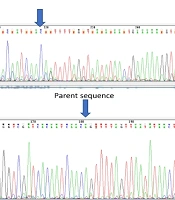
Patient 1: A 7-year-old boy was referred to allergy clinic at Bushehr University of Medical Sciences, Iran, with complaints of wheezing, dry skin and infection. He was the first child born to consanguineous parents. At age 2, he was hospitalized for the first time with high grade fever due to severe cold, followed by respiratory distress and ecchymosis. PLT count was 30000/mL. A bone marrow biopsy was performed to evaluate underlying etiology of thrombocytopenia. Idiopathic thrombocytopenic purpura (ITP) and asthma were diagnosed and he was treated with prednisolone and oral beclomethasone spray. During the age 3 to 6, he was suffering from asthma attacks and admitted to ICU for several times. Also, he developed generalized eczema when he was 6 years old. Two of his uncles were reported to have died in childhood after experiencing similar symptoms. Physical examination revealed generalized eczema and normal growth. Laboratory tests showed microcytic thrombocytopenia with PLT count of 30000/mL and WBC 6000/ml with 50% neutrophils, 38% lymphocytes and 5% eosinophils. The results of the assessment of humoral and cellular immune systems by using ELISA and flow cytometry methods are shown in Table 1. Ultimately, the diagnosis of WAS was suggested and sequencing for WAS gene performed. Hemizygous missense mutation, NG_007877.1: g. 1974G > A, c. 397G > A, p. E133K, a known disease-causing mutation variant for the classical WAS was reported (Figure 1). Treatment with IVIG (400 mg/kg, monthly) started and for infection prophylaxis Cotrimoxazole applied. The clinical symptoms subsided and thrombocytopenia was corrected.
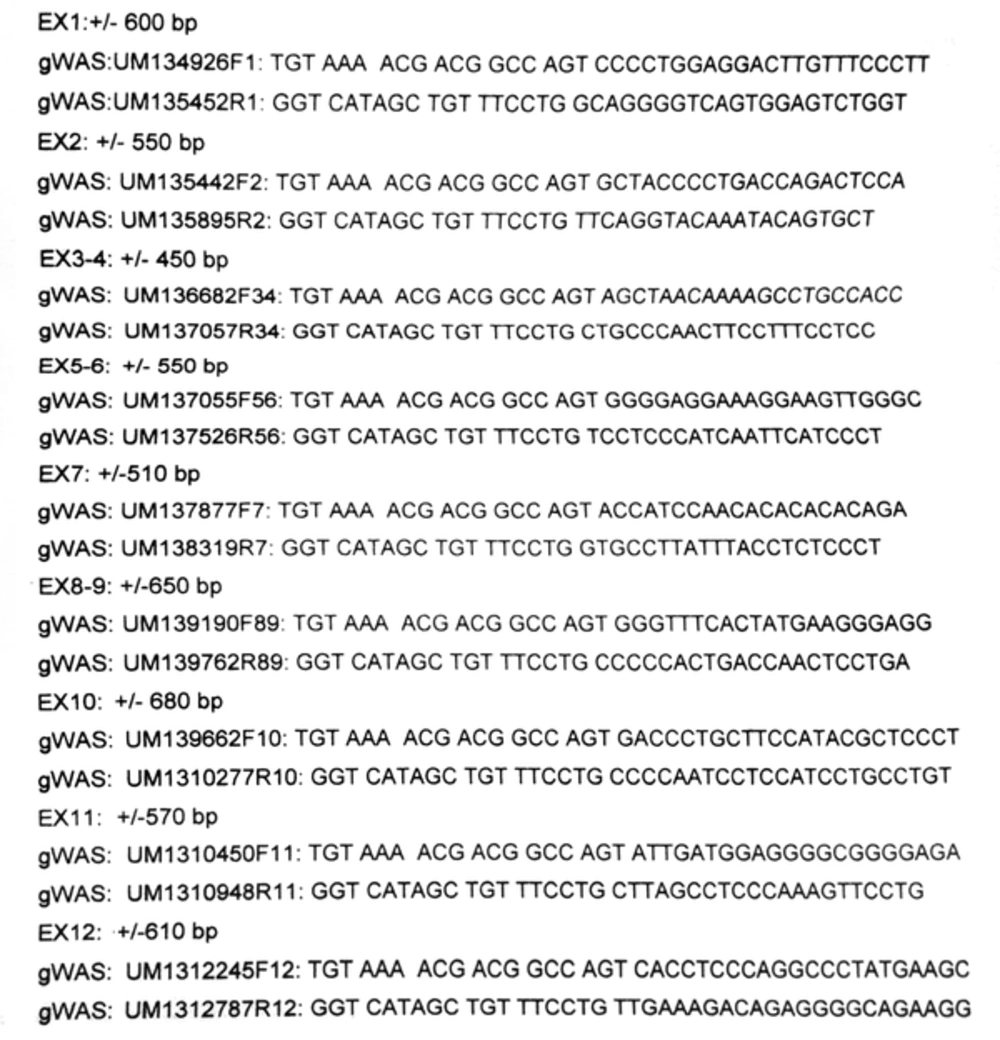
Figure 1.
Hemizygous Missense Mutation, a Variant of the Classical WAS
Patient 2: A 7-year-old boy, cousin to patient 1 referred to the clinic with symptoms of joint pain and swelling. At the age of 2.5, he had urticaria and was hospitalized for arthritis. Interestingly, his arthritis started in fall, and aggravated following the treatment with antibiotics. PLT count was decreased to below 50000/ml and WBC 5400/ml with 52% neutrophils, 36% lymphocytes and 4% eosinophils. When 5 years old, he was referred to rheumatologist for severe arthritis symptoms and was treated with prednisolone. After treatment, PLT increased to 175000/ml. Finally, his cellular and humoral immune systems were assessed and the results are shown in Table 1. The result of gene assessment of the patient indicated hemizygous missense mutation of NG_007877.1: g. 1974G > A, c. 397G > A in WAS gene (Figure 1). Therefore, the patient was treated with IVIG (400 mg/kg, monthly) and received cotrimoxazole for prophylaxis.
In both patients, no hepatosplenomegaly, no lymphadenopathy but a moderate eczema was seen in physical exam. After one month, no response to HBV vaccine and normal isohemagglutinin antibody was seen. Gene assessment of the patients was done in experimental laboratory of immunology, Catholic University of Leuven, Belgium.
Table 1.
Immunological Findings of Two Patients with Classic WAS
| Value | Patient 1 | Patient 2 |
|---|---|---|
| WBC (n) | 6000 | 5400 |
| CD3 (%) | 23 | 17.4 |
| CD4 (%) | 2.9 | 5.8 |
| CD8 (%) | 2.5 | 9.5 |
| CD19 (%) | 5.8 | 24.3 |
| CD16CD56 (%) | 7.8 | 15.2 |
| IgG (mg/dl) | 1167 | 1090 |
| IgA (mg/dl) | 333.5 | 230 |
| IgM (mg/dl) | 71 | 55 |
| IgE (IU/ml) | 230.3 | 178 |
3. Discussion
In this report, we describe a different phenotype of two cousins with classic WAS showing mild clinical symptoms. Classic WAS presents in early childhood with a hemorrhagic diathesis due to microthrombocytopenia, and recurrent infections with extensive eczema. The clinical symptoms are usually severe in those classic WAS patients with chronic eczema and frequent lymphadenopathy and hepatosplenomegaly (1). Moreover, patients with the classic WAS phenotype should be usually treated with allogeneic HSCT (7). It is vital to treat classic WAS patients with severe symptoms and infections as soon as diagnosis is established (8). A study performed in Japan on 57 WAS patients treated with HSCT showed that 5 year-old patients suffering from classic WAS, at the time of transplantation had increased susceptibility to infection and hemorrhage diathesis had shown already poor prognosis. Therefore, timely diagnosis and starting treatment of WAS seems to be very important (9). Interestingly, in our study all the symptoms and infections vanished after treatment with monthly IVIG and prophylactic antibiotics, and treatment with HSCT was not needed.
In addition, XLT, the milder form of WAS, resulting from the mutation in WAS gene, causes decrease in protein expression of WASP. It is characterized mainly by thrombocytopenia which is associated with milder eczema and immunodeficiency (10). To our knowledge, more than 300 mutations of the WAS gene among various ethnic groups have been reported to affect protein expression of WASP. Genetic investigation in our cases revealed the occurrence of classic WAS phenotype missense mutations.
In conclusion, our results suggest that a new phenotype of classic WAS may be present, which manifest milder clinical symptoms.