
1. Background
Preterm birth refers to childbirth before 37 completed weeks and its frequency rate has been reported to be about 5 to 13% (1, 2). Parents of preterm neonates are exposed to stress associated with their infant’s survive and immaturity, neonatal hospitalization, parenting problems and financial burdens. These situations are responsible for critical psychological distress, depression, anxiety and posttraumatic stress disorders (PTSD). Symptoms related to PTSD include flashbacks, nightmares, severe anxiety, intrusiveness, avoidance, hyper arousal as well as uncontrollable thoughts about the event. Moreover, parents experience some problem-related disturbance of sleep and eating pattern that increase the risks of PTSD (3-5).
It is also reported that about 1.5% - 3% of parents of full term neonates have shown signs of PTSD after infants’ birth (6). Both pregnancy and delivery are critical periods for parents which can induce large physiological, emotional, psychological and social changes (1). Different risk factors such as previous history of psychological problems and trauma, prenatal and obstetric complications, unwanted pregnancy, lack of familial and social supports and type of delivery contribute to the development of post-partum PTSD (7).
Several studies have compared PTSD in parents of term and preterm infants and found higher prevalence of this disorder among parents of preterm infants (6, 8). It is notable that PTSD not only constrains a traumatic and stressful situation on parents, but also negatively affects the quality of parent-infant relationship (9, 10).
2. Objectives
In the present study we assessed the prevalence of PTSD in parents of preterm NICU hospitalized and term hospitalized babies to determine the role of preterm birth on PTSD scores of parents. Such studies could adjust population study and omit some confounding factors. Moreover, to our knowledge PTSD is being neglected among fathers, although fathers like mothers have a critical role in growth and development of infants. So the current study also evaluated this disorder and its related risk factors in fathers.
3. Methods
A descriptive-comparative study was done in Yas and Vali-e-asr Hospitals (affiliated to Tehran University of Medical Sciences, Tehran-Iran) during 2016 and 2017. Population study was parents of term and preterm neonates. We divided our subjects into 2 groups:
Group A; parents of NICU hospitalized preterm neonates (gestational age 24 - 36 weeks) aged 2 to 5 days who were selected by convenience sampling.
Group B; parents of term but hospitalized neonates (gestational age > 38 weeks) aged 2 to 5 days). Most of the neonates were hospitalized due to sepsis, pneumonia, and blood electrolytes or sugar imbalance. Newborns were not critically ill and their prognoses were not poor.
Exclusion criteria for both groups were considered as follow: Parental psychiatric or underlying diseases, smoking and drug abuse. All parents signed an informed consent before entering the study and accepted well-timed attending for interviews. Socio-demographic data of the parents (sex, age, level of education, occupation, history of any accident during current year or experience of recent stressful events, satisfaction with hospital care, place of settlement, ability to pay hospital fees), and neonates’ demographic data were recorded in check lists. Parents in both groups were invited for interviews at day 3-5 after neonate’s birth. The interviews were held by an expert psychologist at the hospital. The structured diagnostic interview sessions were established based on “structured diagnostic psychiatric interview for DSM-IV and ICD-10” (13). The clinician-administered PTSD scale was used to diagnose and assess PTSD. Questionnaires pertaining acute stress disorder (ASD) determining the status of anxiety disorders were completed for both mother and father at day 3 - 5 after neonate’s birth. Acute stress disorder refers to symptoms manifested between two days and one month following a traumatic event (12). Based on the results of ASD scores with cut-off 56, participants in each group were assigned into 2 groups; positive or negative for ASD.
After a month, parents were asked for a second interview. Questionnaires on PTSD were completed for both mother and father; prenatal post traumatic stress questionnaire (PPQ) for mothers and posttraumatic stress disorder checklist (PCL) for fathers were completed. PCL as a useful self-report screening measure is widely used to assess both the frequency and severity of the 17 DSM-IV PTSD symptoms (14). PCL questionnaire is composed of 17 questions for each domain ranging from 1 = not at all to 5 = extremely. A score of 30 is considered as the diagnostic cut-off (2, 15). PPQ is composed of 14 yes-no questions for each domain of intrusive memories, avoidance and arousal symptoms. Total score higher than 30 was considered as PTSD (2, 12, 16-18). All questionnaires have been translated to Persian and validated (validity; r = 0.79, P < 0.001, reliability; 0.74 and Cronbach’s alpha; 0.88) for Iranian PTSD patients (1, 19).
Based on following formula and an investigation by Goutaudier et al. 80% of mothers had experienced PTSD after delivery of a preterm neonate (20). With the proposed sample size of 80 in each group, the study had a power of 95% and an alpha error of 0.05.
Alfa = 0.05, d = 0.09, p = 0.08, Z1-a/2 = 1.96; n = 80.
3.1. Statistical Analysis
All recorded data were analyzed to identify and compare the prevalence of PTSD among parents of term and preterm infants as well as assessment of some related risk factors. All statistical analyses were conducted using SPSS 19. Data were presented as mean ± standard deviation (SD) for continuous variables and No. (%) for categorical variables. Independent samples t-test and ANOVA test were used for analyzing the relationships between variables with a normal distribution. Mann Whitney and Spearman analyses were also used for variables without a normal distribution. P values less than 0.05 were considered statistically significant.
Our data were confidential and no extra cost was constrained on our participants. They were also assured about their right to discontinue the study course whenever they wished. Our study was approved by the institutional review board of Tehran University of Medical Sciences and according to Helsinki Declaration (No.: 310609104-94).
4. Results
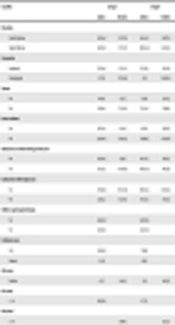
Parents of 80 NICU hospitalized preterm neonates as well as parents of 80 term hospitalized neonates entered the study and completed post-traumatic stress questionnaires during the first days of life and one month later. Demographic variables related economic, social and cultural statuses in the two groups were not significantly different. Data related parents are shown in Table 1. No significant differences were obtained between term and preterm infants’ parents regarding their age, level of education, occupation, place of settlement, ability to pay hospital charge and satisfaction with hospital care.
Table 1.
Demographic Data of the Parentsa
| Variables | Group A | Group B | ||
|---|---|---|---|---|
| Fathers | Mothers | Fathers | Mothers | |
| Education | ||||
| Under diploma | 28 (35.4) | 22 (27.8) | 28 (41.3) | 30 (37.5) |
| Upper diploma | 51 (64.6) | 57 (72.2) | 47(58.82) | 50 (62.5) |
| Occupation | ||||
| Employed | 73 (92.4) | 12 (15.2) | 76 (915) | 11 (13.8) |
| Unemployed | 6 (7.6) | 67 (84.8) | 4 (5) | 69 (86.3) |
| Disease | ||||
| Yes | 8 (10.1) | 6 (7.7) | 7 (8.8) | 9 (11.3) |
| No | 71 (89.9) | 72 (92.3) | 73 (91.3) | 71 (88.8) |
| Severe accident | ||||
| Yes | 18 (23.4) | 8 (10.1) | 8 (10.1) | 13 (16.3) |
| No | 59 (76.6) | 71 (89.9) | 71 (89.9) | 67 (83.8) |
| History of an accident during current year | ||||
| Yes | 22 (27.8) | 15 (19) | 10 (12.7) | 16 (20) |
| No | 57 (72.2) | 64 (81.0) | 69 (87.31) | 64 (80) |
| Satisfaction with hospital care | ||||
| Yes | 67 (84.8) | 60 (75.9) | 66 (82.5) | 66 (82.5) |
| No | 12 (15.2) | 19 (24.1) | 14 (17.5) | 14 (17.5) |
| Ability to pay hospital charges | ||||
| Yes | 46 (58.2) | 55 (69.6) | ||
| No | 33 (41.8) | 24 (30.4) | ||
| Settlement area | ||||
| City | 76 (96.2) | 72(90) | ||
| Suburb | 3 (3.8) | 8(10) | ||
| ASD scores | ||||
| Positive | 4 (5) | 34 (43) | 3 (4) | 24 (30) |
| PCL scores | ||||
| > 30 | 28 (35.4) | 6 (7.5) | ||
| PPQ scores | ||||
| > 30 | 38 (48) | 25 (31) | ||
Abbreviations: ASD, acute stress disorder; PCL, posttraumatic stress disorder checklist; PPQ, prenatal post traumatic stress questionnaires.
aValues are expressed as No. (%).
Both the mean ASD and PPQ scores among mothers of preterm infants were significantly higher than those of mothers of the term infants (P = 0.032 and P = 0.032). There was no significant difference between 2 groups with regard to fathers’ ASD scores at 2 - 5 days of neonatal life (31.4 ± 10.6, 31.4 ± 9.2; P = 0.192). On the other hand after one month, the mean PCL score among fathers of preterm infants was significantly higher than their counterpart group (31.5 ± 14.9 vs. 21.37 ± 5.4; P < 0.0001) (Table 2).
Table 2
. Comparison of the 2 Groups for PTSD Scores
| Groups | Mean ASD Scores of Mothers | Mean ASD Scores of Fathers | Mean PPQ Scores | Mean PCL Scores |
|---|---|---|---|---|
| Group A | 53.77 ± 13.58 | 31.47 ± 10.62 | 31.67 ± 11.85 | 31.50 ± 14.99 |
| Group B | 49.27 ± 12.55 | 31.40 ± 9.25 | 28.08 ± 8.80 | 21.37 ± 5.44 |
| P value | 0.032 | 0.192 | 0.032 | 0.0001 |
Abbreviations: ASD, acute stress disorder; PCL, posttraumatic stress disorder checklist; PPQ, prenatal post traumatic stress questionnaires.
Determining correlations between variables, a significant correlation was observed between mothers’ PPQ and fathers’ PCL scores (P < 0.0001, r = 0.634). Mothers with higher ASD scores also showed higher PPQ scores (P < 0.001, r = 0.400).
ANOVA analysis was also used to determine the influence of each variable on PTSD scores of preterm neonates’ parents. Father’s unemployment and mother’s occupation increased mother’s PPQ scores (P = 0.025, P = 0.038). History of an accident during current year for each parent also significantly increased fathers’ and mothers’ PTSD scores (P = 0.014, P = 0.025) (Table 3).
Table 3.
Significant Factors Influencing PTSD Scores
| Variables | ASD Mother | ASD Father | PPQ | PCL |
|---|---|---|---|---|
| Father’s occupation | ||||
| Unemployed | 60.33 ± 16.84 | 35.83 ± 13.25 | 42.00 ± 17.41 | 38.50 ± 24.44 |
| Employed | 53.23 ± 13.28 | 31.11 ± 10.40 | 30.82 ± 11.02 | 30.93 ± 14.05 |
| P value | 0.221 | 0.229 | 0.025 | 0.237 |
| History of an accident during current year | ||||
| Yes | 57.81 ± 14.36 | 32.14 ± 9.80 | 36.45 ± 13.29 | 38.13 ± 16.63 |
| No | 52.21 ± 13.07 | 31.22 ± 10.98 | 29.82 ± 10.82 | 28.94 ± 13.61 |
| P value | 0.100 | 0.738 | 0.025 | 0.014 |
| Mother’s occupation | ||||
| Unemployed | 53.62 ± 13.61 | 31.84 ± 11.05 | 30.50 ± 11.25 | 30.98 ± 14.82 |
| Employed | 54.58 ± 14.02 | 29.41 ± 7.85 | 38.16 ± 13.48 | 34.41 ± 16.27 |
| P value | 0.824 | 0.469 | 0.038 | 0.469 |
Abbreviations: ASD, acute stress disorder; PCL, posttraumatic stress disorder checklist; PPQ, prenatal post traumatic stress questionnaires.
5. Discussion
In the present study, we compared PTSD among parents of preterm and term hospitalized newborns. Present results showed that although hospitalization of a neonate is a stressful event for parent, neonate’s condition was the main subject for parent’s psychological complication. Preterm birth and unexpectedly early delivery could negatively influence parent’s mental health resulting in PTSD symptoms. On the other hand, hospitalization of a term neonate with no severe complications could not increase the mean PTSD scores upper than the cut-off level.
We found that both the mean ASD and PPQ scores among mothers of preterm infants were significantly higher than those in mothers of term infants. It is supposed that mothers of preterm infants experience lots of anxiety, stress, helplessness, lack of self-esteem and fear due to higher risk for poor development, neonatal death and receiving bad news. All these factors cause more risks of PTSD for mothers. Recently, preterm birth is reported as one of the risk factors for post-traumatic post-partum stress symptoms in mothers (4, 21). In accordance with our results Ghorbani et al. indicate that mothers of preterm infants had higher PTSD scores in comparison with those of term infants. This difference between two groups was statistically significant (1). Other studies have also confirmed that immediately after preterm birth till at least one month later, scores of PTSD, anger, anxiety and depression among mothers of preterm infants were significantly greater than those among mothers of full term infants (11, 13, 14, 22).
According to the results of this study, the mean ASD score for fathers of preterm infants was not significantly higher than scores of their counterparts; however, after one month, their mean PCL score was significantly higher than fathers’ mean score in the term group. Other studies reported that fathers prefer to relieve their emotional response, minimize their infant’s medical complications, and use more instrumental coping strategies to decrease PTSD related distresses (17, 18). Consistent with our results, Shaw et al. reported that among 18 parents of hospitalized neonates who completed a self-report measure of ASD, fathers had delayed onset of PTSD symptoms (23). On the other hand, Lefkowitz et al. showed a significant decrease in the number of fathers who met PTSD diagnostic criteria after 30 days in comparison to the first days of hospitalization (5).
Determining correlations between variables, we observed that there was a significant correlation between mother’s PPQ and father’s PCL scores. Compatible to this finding, Carter et al. indicated that there was a significant clinical relevance between PTSD scores of the mothers and fathers of hospitalized neonates (24). Moreover, it was observed that mothers with higher ASD scores also showed higher PPQ scores. In accordance to our results, Brandon et al. showed significantly higher PTSD measures after one month in mothers of preterm infants with high level of these scores following delivery (25).
Our results also revealed that of all variables, history of an accident during current year for each parent could increase mother’s PPQ and father’s PCL scores. Based on other studies, some factors like prior trauma exposure, the number of concurrent stressors, previous psychological history, and the presence of pre-existing psychopathology are potential risk factors for higher rates of psychological distress in preterm infants’ parents (4, 26-28).
According to our results, both father’s unemployment and mother’s occupation could significantly influence mother’s PTSD scores. Mother’s employment may limit mother’s time and energy for attendance in hospital, neonate’s support and helping in care process. On the other hand, father’s unemployment may provide more stress related economic problems. In accordance to our results, Shaban et al. also showed a positive correlation between parents’ occupational status and PTSD following childbirth (29).
Our study had some limitations. First, we did not consider and compare the frequency of symptoms of PTSD among our participants in both groups. Second, the influence of PTSD on parent-infant relationship was not assessed. Third, we did not follow our participants for long time to find the probability of persistence of symptoms after a preterm child birth. Finally, full term but critical ill neonates with poor diagnosis were not considered in the study that could provide some informative and beneficial data.
5.1. Conclusions
Results of the present study showed that neonate’s condition at birth was the main subject for parents’ psychological complication and PTSD. Moreover, we found that of parents, mothers were more vulnerable for PTSD but fathers indicated delayed onset of PTSD symptoms. Some related factors like parental occupational status and history of an accident during current year could influence PTSD scores.