Toxoplasma gondii is a neurotropic parasite with lifelong persistence in the host brain that can affect brain function. Chronic infection causes behavioral and cognitive dysfunction by manipulating the activity of essential molecules and pathways of the host body and subsequently nerve degeneration (
29,
31-
35). On the other hand,
Toxoplasma often infects the areas of the brain that are affected by AD, such as the hippocampus (
47). Many researchers suggested toxoplasmosis as a risk factor for the development of neurodegenerative and psychiatric disorders, such as AD; however, the link between toxoplasmosis and AD has not been fully elucidated (
26,
48). Therefore, the present study was designed to investigate the effects of chronic toxoplasmosis infection with Types I (RH), II (PRU), and III (VEG) strains alone and in combination on cognitive impairments in Alzheimer's rat model.
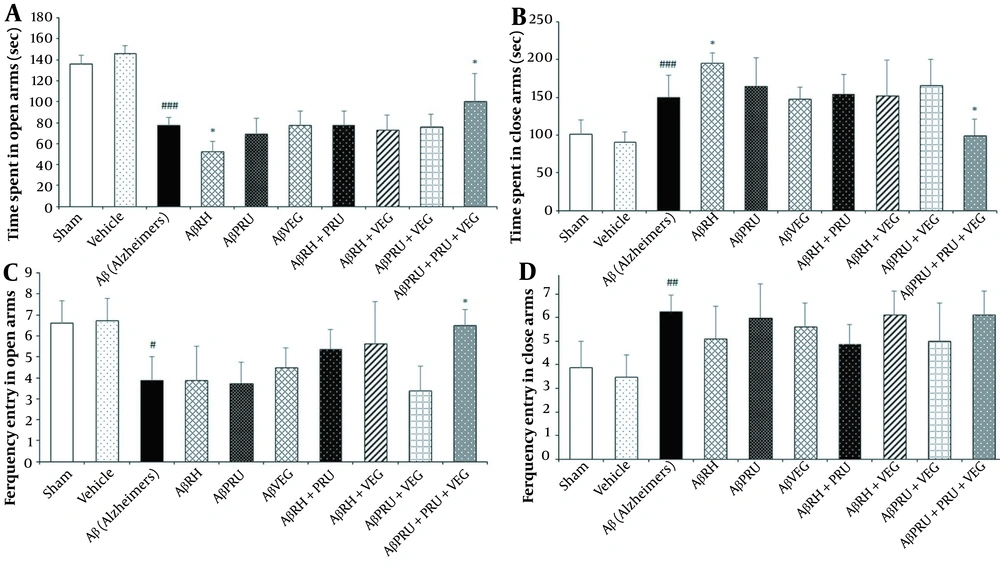
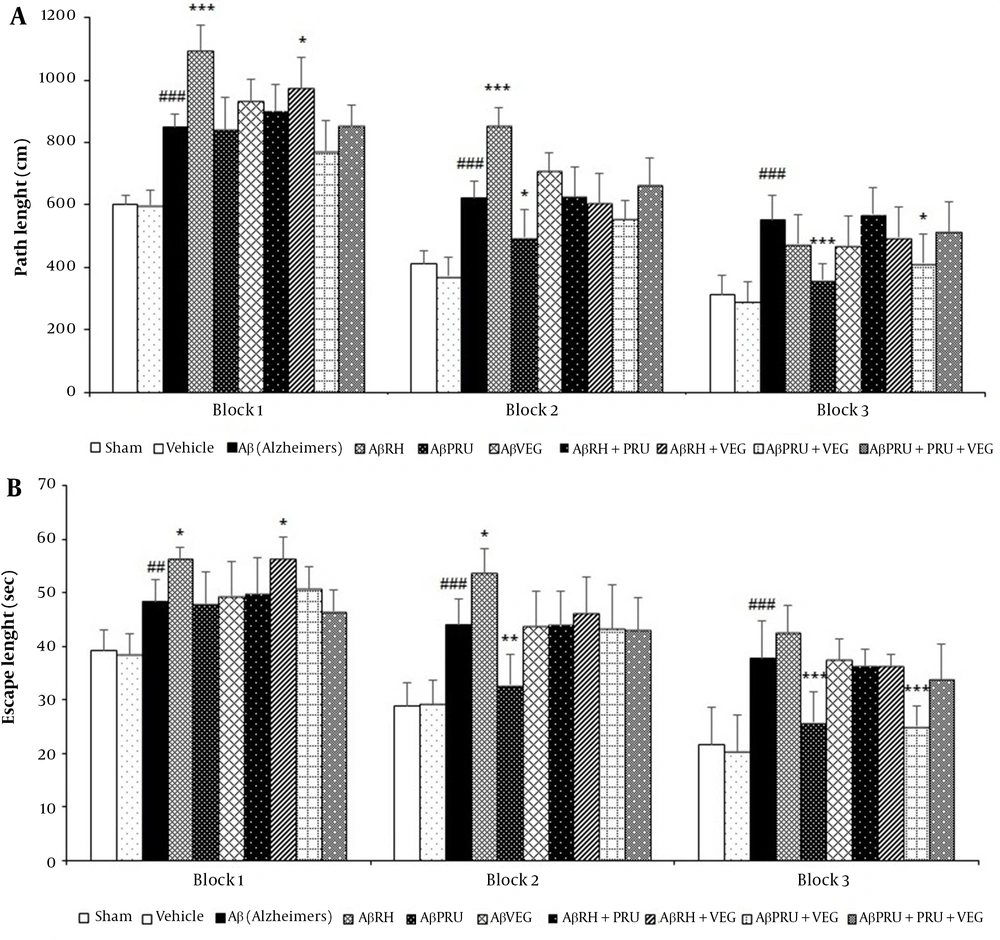
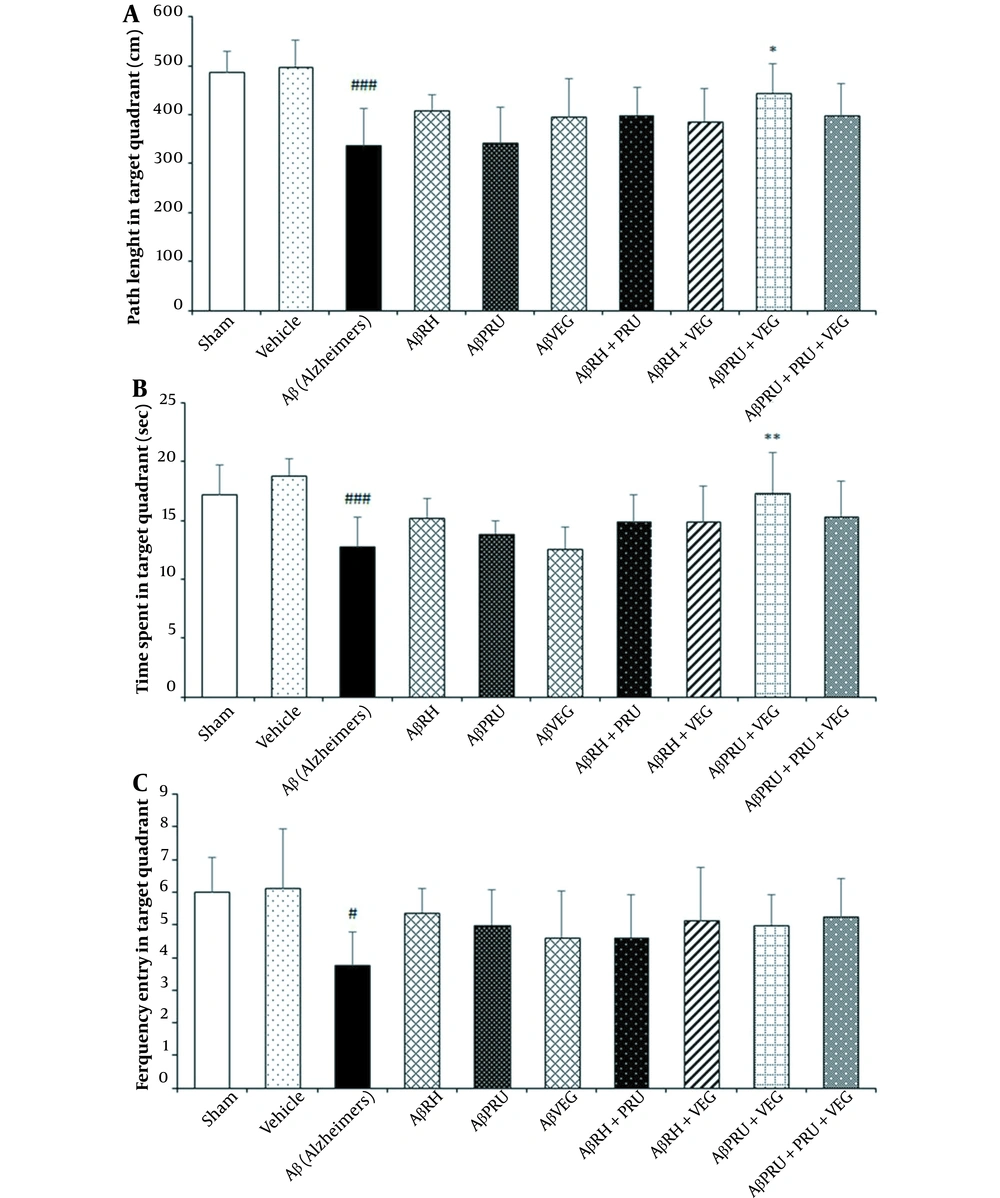
Our findings showed that chronic toxoplasmosis infection with RH strain increased anxiety-like behavior in Alzheimer's rats in the EPM. In addition, a decrease in anxiety-like behavior was observed in the group infected with RH, PRU, and VEG strains in combination. In agreement with the EPM findings, infection with the RH strain led to the worsening of spatial learning impairments in the Alzheimer's rat model in the MWM task; however, it did not affect spatial memory as demonstrated in the probe test. Conversely, infection with the PRU strain significantly enhanced spatial learning in the test without being able to improve memory impairments. Improvement in spatial learning and memory impairments was also observed in Alzheimer's rats infected with PRU and VEG strains in combination. Infection with RH and VEG strains in combination relatively exacerbated the spatial learning impairments caused by AD that was less than the effect of RH strain. On the other hand, chronic infection with VEG strain did not show a significant effect on cognitive disorders of the Aβ1-42-induced AD model rats.
Numerous studies have focused on the association between toxoplasmosis and AD in humans and animal models; however, their findings have been controversial (
37-
42). In agreement with our findings, research on animal models has shown that toxoplasmosis with the ME49 Type II strain plays a protective role in AD and reduces the neurodegeneration process by reducing the accumulation of plaques (
37,
38). One of these studies showed attenuated spatial learning and memory impairments in Tg2576 mice infected with
T. gondii by the water- and Y-maze tests (
37). The authors of this study have argued that increasing anti-inflammatory cytokines (TGF-β and IL-10) and subsequently immunosuppression induced by the chronic form of the parasite in the brain reduces neuroinflammation and AD symptoms (
37). The other study identified the successful clearance of plaques by the phagocytic system as the reason for the reduced pathogenesis of AD (
38). Cabral et al. showed that the protective effect of toxoplasmosis against AD was specific to Type II strains and could not be due to an increase in anti-inflammatory cytokines (
39). Conversely, Mahmoudvand et al. illustrated that chronic
T. gondii infection had a detrimental role and induced cognitive impairments in the brain of mice by causing neuroinflammation through inflammatory cytokines in the MWM test (
40).
As noted, our findings of the protective role of the Type II strain of
T. gondii in AD pathogenesis are consistent with the results of most studies (
37-
39); however, there have been studies with different results (
40). Various reasons for these differences can be defined, the most important of which are the type of animal used, the dose and strain of
T. gondii, type of induction of Alzheimer's model, stage of AD pathogenesis, and chronic toxoplasmosis period during experiments (
49,
50).
In general, the protective role of type II strains in the studies can be due to the establishment of an immune environment in the brain that is in favor of AD and ultimately reduces neuronal degeneration caused by the deposition of amyloid plaques. On the other hand, our findings on the detrimental role of Type I (RH strain) of T. gondii against AD can be considered very important because it has not been studied so far. Since diverse strains of T. gondii have distinct pathogenicity degrees and trigger different immune responses in the host body, it can be said that the immune responses and other interactions triggered by RH strain are distinct from the changes induced by PRU strain that lead to increased impairments and exacerbation of the neurodegenerative process of AD.
Furthermore, the sum of the interactions created in the host body by chronic infection with a combination of the strains determines their protective or destructive role in AD, and relating the overall effect to a particular strain is difficult and complex since the effect of one strain when it causes a chronic infection alone may be very different from that when it creates together with the others. The total of direct and indirect changes (e.g., alterations in the expression of many genes, the production of cytokines, neurotransmitters, enzymes, etc.) (
26-
31,
36,
37) resulting from infection with one strain alone ultimately lead to an overall outcome on AD pathogenesis that may exacerbate or improve the disease or have no effect on it. But when two or more strains infect the host, changes made by them together determine the course of AD, which may be different in type and amount from effects of each strain alone. For example, the findings of our study showed increased anxiety-like behavior in rats infected with RH strain in the EPM, whereas when RH strain was combined with PRU and VEG strains, the anxiety-like behavior of animals decreased.
5.1. Conclusions
In conclusion, the present findings demonstrated that chronic infection with the PRU strain of T. gondii protects against cognitive impairments of AD, while RH strain plays a detrimental role in AD pathogenesis. In addition, infection with PRU and VEG strains in combination significantly improves spatial learning and memory deficits in Alzheimer's rats. Relative detrimental and protective effects on AD pathogenesis were also observed for the groups of AβRH + VEG and AβRH + PRU + VEG, respectively. The VEG strain had no significant effect on AD pathogenesis. Further studies are required to determine which types of mechanisms are involved in the effects of these strains against Aβ1-42-induced cognitive impairments.