


1. Background
2. Objectives
3. Methods
3.1. Study Design and Participants
3.2. Sample Size
3.3. RNA Extraction and cDNA Synthesis
3.4. Gene Expression Buffer Analysis
3.5. Statistical Analysis
4. Results
4.1. Demographic Characteristics
| Diagnostic Groups | Age (y) | Sex | BMI (kg/m2) | FKBP5 | SLC6A4 | BDI-II Scores |
|---|---|---|---|---|---|---|
| Total | ||||||
| Patients (n = 40) | 31.24 ± 3.88 | 40 (47.6) | 25.04 ± 1.07 | 31.34 ± 2.42 | 35.23 ± 1.90 | 24.70 ± 2.23 |
| Healthy controls (n = 44) | 30.57 ± 3.98 | 44 (52.4) | 25.05 ± 1.12 | 29.22 ± 2.38 | 29.49 ± 4.81 | 8.28 ± 3.75 |
Abbreviations: MDD, major depressive disorder; HCs, healthy controls; BMI, Body Mass Index; FKBP5, FKBP prolyl Isomerase 5; SLC6A4, solute carrier family 6 member4; BDI-II, Beck Depression Inventory–II.
a Values as expressed as mean ± SD or No. (%).
4.2. Comparison of the Expression of FK506 Binding Protein 5 and Solute Carrier Family 6 Member 4 Genes for Differentiating the Major Depressive Disorder Group from the Healthy Control Group
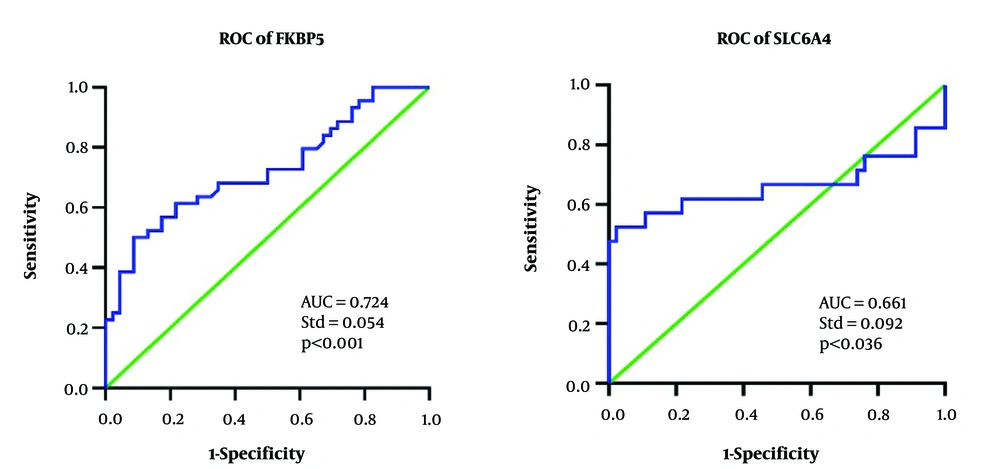
Receiver operating characteristic (ROC) curve using FKBP5 and SLC6A4 to discriminate healthy controls (n = 44) from: (A) samples with major depressive disorder (n = 40)
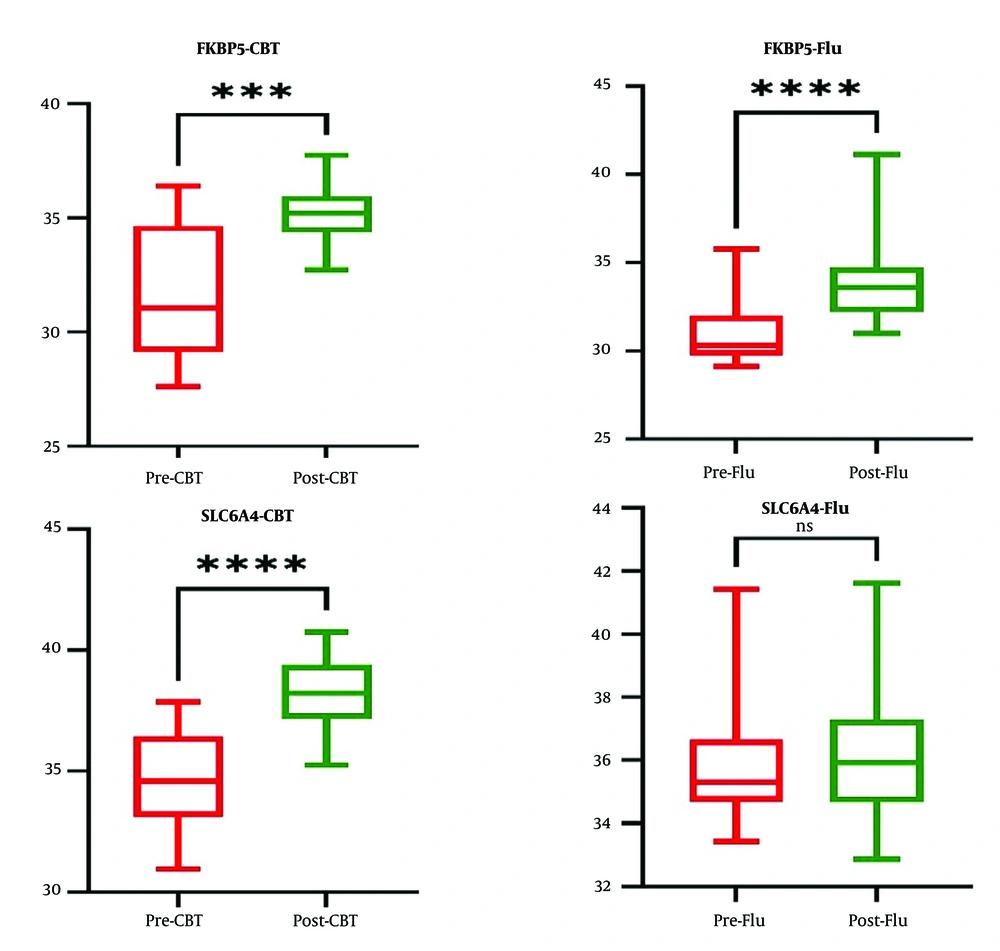
Mean (CT) of FKBP5 and SLC6A4 genes before and after therapeutic intervention in major depressive disorder (MDD) patients treated with cognitive behavioral therapy (CBT) and fluoxetine. Statistical significance is denoted by *** P < 0.001; ****, P < 0.0001; ns, not significance.
Abbreviation: CBT, cognitive behavioral therapy.
a Values as expressed as mean ± SD.
b P-Values for between group comparing at before and after the intervention were computed using analysis of covariance (ANCOVA) after adjustment for baseline measures.
c P-Values for paired t-test; P < 0.05 was considered statistically significant.


