


1. Background
Autism spectrum disorder (ASD) is a multifaceted neurodevelopmental disorder defined by persistent challenges in social communication and interaction, coupled with restricted, repetitive patterns of behavior, interests, or activities (1). The prevalence of autism has significantly increased over the past two decades, with current estimates ranging from 0.8 to 23.6 per 1,000 individuals in developed countries (2). Individuals with ASD often exhibit comorbid mental health conditions alongside their core symptoms, including generalized anxiety disorder and obsessive-compulsive disorder (3).
Individuals with generalized anxiety disorder experience persistent and excessive worry about various aspects of life, such as work, school, and family (4). Individuals with ASD may be particularly susceptible to developing generalized anxiety disorder due to the challenges they face in social situations, their need for routine and predictability, and their heightened sensitivity to sensory stimuli (5). Given the considerable impact of anxiety on the well-being and quality of life of individuals with ASD, it is crucial to differentiate between the symptoms of ASD and anxiety, and to identify risk factors for the development of anxiety in this population (6). Elevated levels of anxiety are linked to the emergence of depression, disruptive behaviors, aggression, self-injury, and increased parental stress (7). Without precise assessment and diagnosis, anxiety and its associated impairments in this population may remain untreated and deteriorate over time (8).
Obsessive-compulsive disorder (OCD) is a prevalent psychiatric condition affecting nearly 0.25 - 3% of children and adolescents (9). This disorder can cause significant distress and impair educational, social, and familial functioning (10). Notably, OCD is particularly prevalent among young people with ASD, with an estimated 37% of individuals with ASD also experiencing OCD (11). Young individuals with both OCD and ASD often experience greater functional impairment, necessitate more intensive mental health interventions, and have less favorable outcomes following multimodal treatment for OCD compared to those with OCD alone (12).
Differentiating repetitive behaviors in ASD from compulsions in OCD is a critical diagnostic challenge, particularly given their high comorbidity (13). The core distinction lies in the motivation and subjective experience driving the behaviors (14). Autism spectrum disorder related repetitive behaviors, often described as restricted, repetitive patterns of behavior, interests, or activities (RRBs), are typically ego-syntonic; they are often pleasurable, self-soothing, or serve to regulate sensory input, and the individual generally does not find them distressing or unwanted, resisting attempts at interruption (15). Conversely, OCD compulsions are predominantly ego-dystonic, performed as repetitive behaviors or mental acts in response to intrusive, anxiety-provoking obsessions, with the primary goal of reducing distress or preventing a feared outcome (16). The individual typically experiences these compulsions as unwanted, burdensome, and recognizes them as excessive, yet feels driven to perform them.
The evaluation and treatment of generalized anxiety disorder and OCD in individuals with ASD can be particularly challenging, as the manifestations of these conditions may be atypical or overlap with the core symptoms of autism (17). Individuals with ASD have an increased likelihood of developing anxiety disorders and OCD (3). These comorbid conditions can significantly exacerbate ASD symptoms, leading to increased distress and behavioral challenges (17).
2. Objective
To date, despite the high prevalence of anxiety and OCD symptoms in this population, relatively few studies have been conducted. To address this knowledge gap, we aimed to investigate the prevalence of generalized anxiety disorder and obsessive-compulsive disorder in individuals with ASD aged 6 - 18 years.
3. Methods
This cross-sectional study included children with ASD who were referred to the Psychiatry Department of Urmia Razi Hospital, affiliated with Urmia University of Medical Sciences, between March 2022 and October 2023. Prior to commencement, ethical approval was obtained from the relevant ethics review committee, ensuring adherence to the principles outlined in the Declaration of Helsinki (code: IR.UMSU.REC.1402.272). Informed consent was acquired from participants or their parents. Data collection was conducted using a convenience sampling method.
The inclusion criteria were children aged 7 - 15 years with a verified medical diagnosis of ASD, encompassing autistic disorder, Asperger's disorder, or pervasive developmental disorder not otherwise specified by using Kiddie-Schedule for Affective Disorders and Schizophrenia for DSM-5-Present and Lifetime Version (K-SADS-PL) (American Psychiatric Association, 2000). The DSM-5 introduced three ASD levels of severity: Level 1 (“requiring support”), level 2 (“requiring substantial support”), and level 3 (“requiring very substantial support”). Written informed consent was obtained from participants' parents or legal guardians, with assent additionally obtained from all minors capable of providing it, in accordance with ethical guidelines.
Exclusion criteria were patients with bipolar disorder, schizophrenia, or schizoaffective disorder; patients who endorsed clinically significant suicidality or engaged in suicidal behaviors during the past 6 months (the clinical assessment of suicidality included a detailed review of the patient's history for past suicide attempts, direct questioning by a trained clinician regarding current suicidal thoughts, intent, and plans during the intake interview); had a significant and/or unstable medical condition; had new antidepressant during 10 - 12 weeks or an antipsychotic within 6 - 8 weeks before the study enrollment; or made any alteration in established psychotropic medications (e.g., antidepressants, anxiolytics, or antipsychotics) or alternative medications with potential behavioral effects within the specified timeframes before study baseline assessment.
3.1. Anxiety Screening Protocol
Participants were screened for anxiety symptoms using the screen for child anxiety-related emotional disorders (SCARED). While the self-report version has demonstrated high sensitivity in high-functioning ASD populations (18), its utility is limited in children with significant cognitive deficits or limited verbal abilities. To ensure coverage across the ASD spectrum, the Parent-Report version of the SCARED was utilized for participants unable to complete the self-report form due to age, cognitive impairment, or communication deficits. It is important to note that the SCARED functioned primarily as a screening adjunct; definitive diagnostic confirmation for all participants, regardless of functioning level, was established via the K-SADS-PL semi-structured interview administered by a trained psychiatrist to the parents/guardians, relying on behavioral observations and caregiver reports to identify anxiety symptoms in non-verbal or lower-functioning participants.
Following a detailed explanation of the study procedures and obtaining informed consent, the K-SADS-PL questionnaire was administered to each participant. The questionnaire was translated into Persian by professional translators. Parental assistance was provided to participants under the age of 11 during questionnaire completion, while older participants responded autonomously. Questionnaire completion typically took 30 - 40 minutes. Additionally, demographic data, including age and gender, were collected.
The K-SADS-PL is a semi-structured interview instrument designed to evaluate current and past psychopathology in children and adolescents aged 6 - 18 years, based on DSM-IV criteria. It encompasses five diagnostic groups:
1- Mood disorders: Major depressive disorder (MDD), persistent depressive disorder (dysthymia), mania, and hypomania.
2- Psychotic spectrum disorders
3- Anxiety disorders: Social phobia, agoraphobia, specific phobia, OCD, seasonal affective disorder (SAD), generalized anxiety disorder (GAD), panic disorder (PD), and post-traumatic stress disorder (PTSD)
4- Disruptive behavioral disorders: Including oppositional defiant disorder (ODD)
5- Substance-related and addictive disorders, tic disorders, feeding and eating disorders, and elimination disorders
The Persian version of the K-SADS-PL has demonstrated robust psychometric properties, with a reliability coefficient of 0.81 and an inter-rater reliability of 0.69. Additionally, it has exhibited high sensitivity and specificity (19).
3.2. Differentiation of Obsessive-Compulsive Disorder and Autism Spectrum Disorder Symptoms
To address the diagnostic overlap between ASD-related restricted, repetitive behaviors (RRBs) and OCD compulsions, the K-SADS-PL administration incorporated specific differential diagnosis protocols. Adjudication was based on three primary behavioral anchors evaluated by a board-certified child and adolescent psychiatrist:
1- Subjective experience (ego-dystonic vs. ego-syntonic): Behaviors reported by the child as unwanted, intrusive, or senseless (ego-dystonic) were classified as OCD compulsions. Conversely, behaviors experienced as pleasurable, comforting, or preferred (ego-syntonic) were classified as ASD-related RRBs.
2- Functional intent: Behaviors performed specifically to neutralize anxiety, prevent a feared outcome, or reduce distress related to an obsession were attributed to OCD. Behaviors functioning primarily for sensory regulation, self-stimulation, or maintenance of sameness were attributed to ASD.
3- Response to interruption: The interviewer distinguished between distress caused by the interruption of a preferred routine (indicative of ASD) versus anxiety arising from the inability to complete a ritual to prevent a perceived catastrophe (indicative of OCD).
3.3. Statistical Analysis
Data analysis was conducted using SPSS software version 22.0 (IBM Corp., Armonk, NY, USA). Categorical variables were summarized using frequency distributions and percentages, while continuous variables were summarized using means and standard deviations. The normality of continuous variables was assessed using the Kolmogorov-Smirnov test. Categorical variables were compared between groups using the chi-square test (or Fisher's exact test for small sample sizes). Independent t-tests (or Mann-Whitney U tests for non-normally distributed data) and one-way ANOVA were used to compare continuous variables between groups. To examine the relationship between variables, logistic regression analysis was conducted. Statistical significance was set at the 0.05 level.
4. Results
The study included 120 patients, of whom 26 (21.7%) were female and 94 (78.3%) were male. The mean age of the participants was 11.3 years, with a standard deviation of 3.91 years. The male-to-female odds ratio (MFOR) was calculated to be 6:3 (Figure 1).
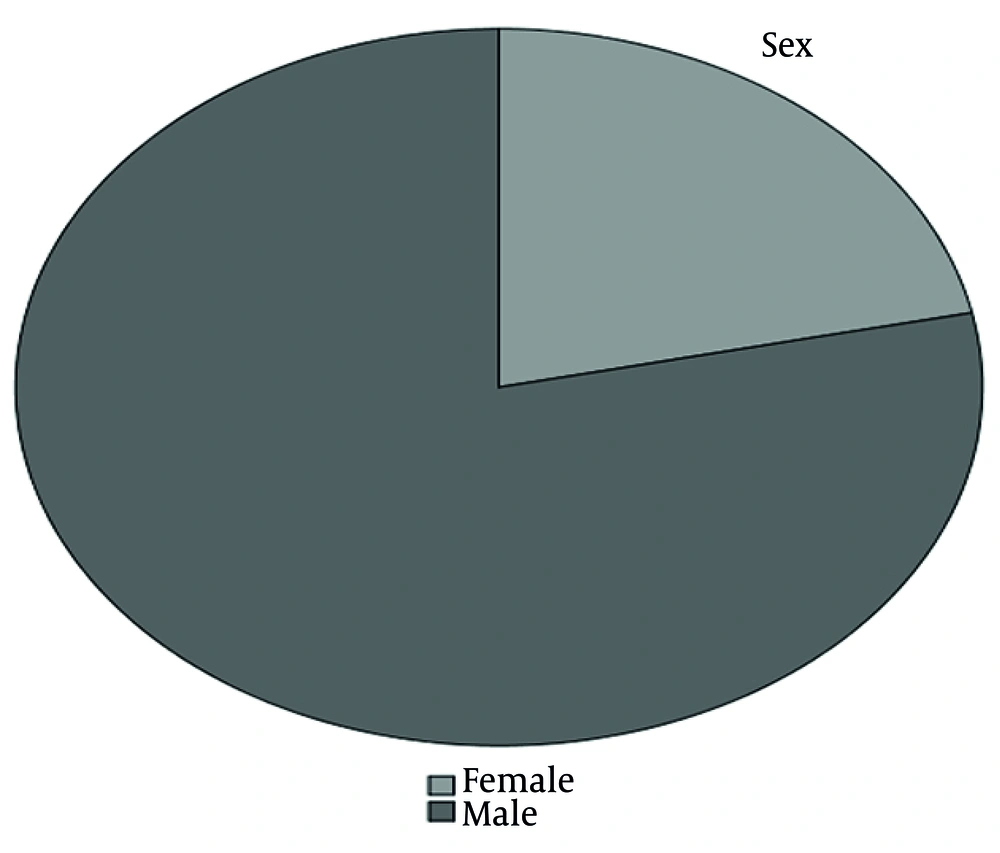
Figure 1.
Pie chart of MFOR ratio in the studied population
Of the 120 patients, 13 (10.8%) were diagnosed with OCD, including 3 females (11.5%) and 10 males (10.6%). The mean age of patients with OCD was 12.92 ± 3.66 years. Additionally, 21 (17.5%) patients were diagnosed with GAD, comprising 4 females (15%) and 17 males (18.1%). The mean age of patients with GAD was 12.29 ± 3.70 years (Table 1).
Table 1.Demographic Features of the Patients with and Without Obsessive-Compulsive Disorder and Generalized Anxiety Disorder
| Variables | With OCD (N = 13) | Without OCD (N = 107) | P-Value | With GAD (N = 21) | Without GAD (N = 99) | P-Value |
|---|---|---|---|---|---|---|
| Age (y); mean ± SD | 12.99 ± 3.66 | 11.10 ± 3.90 | 0.113 | 12.29 ± 3.70 | 11.09 ± 3.93 | 0.194 |
| 6 - 11 | 4 (30.8) [9.7 - 61.4] | 58 (54.2) [44.6 - 63.6] | 0.110 | 8 (38.1) [19.8 - 59.9] | 54 (54.5) [44.5 - 64.3] | 0.171 |
| 12 - 18 | 9 (69.2) [38.6 - 90.3] | 49 (45.8) [36.4 - 55.4] | 13 (61.9) [40.1 - 80.2] | 45 (45.5) [35.7 - 55.5] | ||
| Gender | 0.748 | |||||
| Male | 10 (76.9) [49.9 - 93.1] | 84 (78.5) [69.6 - 85.5] | 0.896 | 17 (81.0) [59.4 - 93.4] | 77 (77.8) [68.6 - 85.1] | |
| Female | 3 (23.1) [6.9 - 50.1] | 23 (21.5) [14.5 - 30.4] | 4 (19.0) [6.6 - 40.6] | 22 (22.2) [14.9 - 31.4] |
a Values are expressed as No. (%) [CI] unless otherwise indicated.
Patients were categorized into two age groups: 6 - 11 years and 12 - 18 years. Of those diagnosed with OCD, 30.8% were 6 - 11 years old, while 69.2% were 12 - 18 years old. Similarly, among GAD patients, 19% were 6 - 11 years old, and 81% were 12 - 18 years old. No significant association was found between age and the prevalence of OCD (P = 0.113) or GAD (P = 0.194). Additionally, there was no significant difference in the number of affected individuals within each age group for either disorder (P = 0.110 and P = 0.171, respectively). Moreover, no significant sex differences were reported in the prevalence of OCD or GAD (P = 0.896 and P = 0.748, respectively) (Table 1).
To examine the potential causal relationship between gender and age and the development of OCD and GAD, logistic regression analysis was conducted for each factor independently (Table 2).
Table 2.The Relationship Between the Investigated Variables with Obsessive-Compulsive Disorder and Generalized Anxiety Disorder with Logistic Regression
| Variables | P-Value | OR | CI |
|---|---|---|---|
| OCD | |||
| Age (y) | 0.119 | 1.129 | 3.58 - 0.216 |
| Gender | 0.859 | 0.881 | 1.31 - 0.969 |
| GAD | |||
| Age (y) | 0.205 | 1.08 | 1.222 - 0.958 |
| Gender | 0.566 | 0.70 | 2.364 - 0.207 |
As shown in Table 2, neither age nor sex was found to be a significant predictor of OCD or GAD.
5. Discussion
Autism spectrum disorder is a neurodevelopmental disorder marked by persistent challenges in social communication and interaction, as well as restricted, repetitive patterns of behavior, which affect around 0.6% of the population (20). Various medical conditions, including OCD and GAD, have been linked to ASD, increasing the risk by nearly twofold (21). Given this association, this research sought to investigate the frequency of OCD and GAD among children and adolescents between the ages of 6 and 18 who have been diagnosed with ASD. Additionally, the study explored the correlation between demographic factors and the occurrence of these two disorders in the ASD population.
Our cohort exhibited a male predominance (78.3%), consistent with the established gender disparity in ASD diagnosis (22, 23). While recent meta-analyses have revised the male-to-female ratio to approximately 3: 1 (24), females remain significantly underdiagnosed or diagnosed later in life (25). This diagnostic gap is largely attributed to the "female autism phenotype," characterized by a distinct presentation that may not align with traditional male-centric diagnostic criteria (26). A key component of this phenotype is 'camouflaging', a multifaceted cognitive strategy comprising compensation, masking, and assimilation, whereby individuals actively suppress autistic traits to navigate social environments (26). Empirical data utilizing the Camouflaging Autistic Traits Questionnaire (CAT-Q) indicate that females engage in significantly higher levels of camouflaging than males. Crucially, Hull et al. (26) demonstrated a robust correlation between high camouflaging effort and severe generalized anxiety symptoms, suggesting a significant psychological cost to these adaptive behaviors. This relationship introduces a diagnostic confound: The elevated anxiety observed in female participants may act as a 'surface' presentation that obscures the underlying neurodevelopmental disorder. Consequently, accurate detection of the ASD-anxiety comorbidity is particularly challenging in females, as their anxiety may be both a co-occurring condition and a direct sequela of the cognitive exhaustion associated with masking (27, 28).
On average, participants in this study were 11.3 years old, with a standard deviation of 3.91 years. Prior research has indicated that the average age of diagnosis ranges from 6.8 to 9.1 years, as reported in studies (29, 30). Factors such as socioeconomic status, geographic location, symptom presentation, number of pediatricians consulted prior to diagnosis, and physician behavior have been linked to the age at which children with ASD receive a formal diagnosis (31). A study by (32) found that the average delay between initial autism screening and diagnosis exceeds two years.
Obsessive-compulsive disorder is substantially more prevalent in youth with ASD, with a pooled prevalence of 11.6%. This is a 5 - 6-fold increase compared to the 2% prevalence rate in the general pediatric population (33). Furthermore, research has demonstrated that clinically significant obsessive-compulsive symptoms are prevalent among children and adolescents with ASD who do not fully meet the diagnostic criteria for OCD (34, 35). Our findings indicate that 13 (10.8%) of the ASD participants, including 3 girls and 10 boys, had OCD with a mean age of 12.99 ± 3.66 years. Several factors may underlie the high rate of comorbidity between ASD and OCD. One potential explanation lies in the phenomenological similarities between the two conditions.
Comparing our findings to broad global prevalence ranges for OCD (0.6 - 55%) and GAD (11 - 84%) reveals significant variability, which necessitates careful consideration of potential contributing factors. Such wide ranges in global prevalence often stem from diverse methodological approaches, including varying diagnostic criteria (e.g., DSM versions, subthreshold symptom inclusion), different assessment tools (e.g., self-report questionnaires versus structured clinical interviews like the K-SADS-PL), and the specific characteristics of the study populations (e.g., clinical samples vs. general community cohorts) (36). Furthermore, cultural factors play a crucial role, influencing both the manifestation and reporting of symptoms (e.g., somatization of distress, stigma associated with mental health), as well as diagnostic thresholds and clinical recognition in different regions (37). Therefore, any discrepancies between our observed prevalence rates and these broad global estimates could be attributed to a combination of these methodological nuances and socio-cultural influences on symptom presentation and diagnosis.
The observed prevalence rates of OCD and GAD in our study, when compared to the wide global ranges, highlight crucial clinical implications, particularly the necessity for tailored screening and diagnostic approaches within ASD populations. Given the significant symptomatic overlap between core ASD features and anxiety/OCD symptoms, and the pervasive issue of camouflaging (especially in females with ASD), traditional screening tools and diagnostic interviews may not adequately capture the nuanced presentation of these comorbidities (3). Our findings underscore that a failure to implement ASD-specific screening can lead to under-recognition, misdiagnosis, or delayed intervention for anxiety and OCD in this vulnerable population. Therefore, clinicians working with ASD individuals must adopt comprehensive, individualized assessment strategies that account for unique autistic presentations of distress, including considering specialized tools designed to differentiate anxiety in ASD, to ensure timely and appropriate therapeutic support (38).
Several obsessive-compulsive symptoms, such as intrusive thoughts and restricted interests, or repetitive behaviors and stereotypies, can present in ways that resemble core features of ASD. It is crucial to acknowledge that studies have reported a wide range of concurrent prevalence rates, from a low of 0.6% (29) to a high of 55.0% (39). This variability may arise from an incorrect categorization of restrictive, repetitive behaviors and interests as OCD signs, and vice versa. Data sources like electronic health records, which lack individual assessments, may not accurately capture the true prevalence of comorbidities due to underdiagnosis (40). This is particularly relevant for individuals with ASD and intellectual disability, who may face challenges in the accurate assessment of overlapping symptoms (41).
Estimates of impairing anxiety in individuals with ASD vary widely, ranging from 11% to 84% (42, 43). In Iran, the prevalence of generalized anxiety disorder (GAD) in the general population is 13.6%, as reported by Salmanian et al. in 2019 (44). In the US, DeMartini et al. estimated the prevalence of GAD in the general population to be between 4% and 7% (45). Lai et als’ study reported a GAD prevalence of 7.3% in the general population and 20% in individuals with autism (46). Our study found a GAD prevalence of 17.5% (21% of participants).
Anxiety disorders were significantly more prevalent in girls (18.08%) compared to boys (15.38%), aligning with previous findings (47-49). Consistent with prior research, our study revealed an age-related increase in anxiety disorders, particularly among adolescents (50, 51).
Adolescents with anxiety disorders may experience social difficulties, such as increased rejection from peers and association with deviant peer groups, due to social pressures and expectations during this developmental stage. Additionally, physical maturation and hormonal changes during adolescence may contribute to higher rates of anxiety disorders. Consequently, adolescents with anxiety disorders may exhibit more antisocial behaviors (52).
To investigate the causal relationships between age, gender, and the occurrence of OCD and GAD, logistic regression analysis was employed. The results indicated no significant association between age and gender with either OCD or GAD. These findings align with previous research by Salazar et al. (53) and Lai et al. (46). Salazar et als’ study (53) did not identify a significant relationship between gender and GAD, and Lai et als’ research (46) did not find significant associations between age and gender with either OCD or GAD in children with autism.
Given the high prevalence of co-occurring anxiety and OCD in individuals with ASD, compounded by the diagnostic complexities of symptom overlap and camouflaging, our findings highlight a critical clinical imperative: The implementation of routine, dual screening protocols within pediatric psychiatry. Exclusive reliance on general population anxiety instruments risks overlooking underlying neurodevelopmental traits, while isolated ASD diagnostic pathways may fail to capture distinct, treatable psychiatric comorbidities. To mitigate diagnostic overshadowing, clinicians should prioritize assessment tools specifically validated for the ASD phenotype. For differential diagnosis, the Anxiety Disorders Interview Schedule (ADIS) with the Autism Addendum (ADIS-ASD) serves as the gold standard, effectively distinguishing between anxiety-driven avoidance and ASD-related sensory or social deficits. For routine clinical surveillance, instruments such as the Anxiety Scale for Children–ASD (ASC-ASD) or the Autism Spectrum Disorder-Comorbidity for Children (ASD-CC) offer enhanced sensitivity to the atypical anxiety presentations characteristic of this population. Integrating these specialized measures into standard intake procedures facilitates earlier, more accurate diagnoses and the deployment of targeted, evidence-based interventions that address both the core neurodevelopmental disorder and its associated psychiatric comorbidities.
5.1. Limitation of Study
This study is subject to several methodological constraints that warrant consideration. First, the modest sample size and significant male predominance (78.3%) limit the generalizability of the findings. Crucially, stratification by gender resulted in insufficient statistical power for female subgroups (OCD: n = 3; GAD: n = 4), introducing a substantial risk of type II error. Consequently, the observed non-significant associations between gender and comorbidities should be interpreted with caution as an absence of evidence within this cohort rather than definitive evidence of no association. Second, maternal psychiatric history was not assessed; the absence of these data precluded control for significant genetic and environmental confounders known to influence neurodevelopmental trajectories. Third, cultural factors and societal stigma surrounding mental health in Iran may have contributed to the underreporting of symptoms by caregivers, potentially leading to an underestimation of true prevalence rates.
To address these gaps, future research should prioritize longitudinal designs to elucidate the natural history of these comorbidities. Investigations should specifically track the chronological age of symptom onset, the temporal sequence of comorbidity emergence relative to the ASD diagnosis, and the impact of critical developmental transitions (e.g., puberty). Furthermore, longitudinal monitoring of treatment responsiveness is essential to determine if the presence of ASD alters the standard therapeutic trajectory for anxiety and OCD.
5.2. Conclusion
The present study found a 10.8% prevalence of OCD and a 17.5% prevalence of GAD in children with autism. The age and gender distribution of patients with OCD and GAD was relatively equal, and no significant associations were found between age, gender, and the occurrence of these disorders. To further extend this research, it is recommended to conduct similar studies in adult populations. Additionally, investigating the prevalence of other comorbid conditions, such as ADHD and seizures, may provide valuable insights. Given the higher prevalence of OCD and GAD in autistic children, earlier identification and diagnosis of these disorders can significantly improve quality of life. Therefore, it is recommended to prioritize necessary evaluations at a younger age to facilitate timely intervention and support.
