
1. Background
Schizophrenia is one of the most incapacitating mental disorders with a 1% worldwide prevalence, a global burden of 1.1% of the total disability-adjusted life years (DALYs), and 2.8% of years lived with disability (YLDs) (1). Considering the burden that schizophrenia imposes on patients, their caregivers and the healthcare system, massive effort is concentrated on understanding its etiology and the development of new treatments. With an estimated heritability of 80% - 85% (2, 3), and with unanimous compelling evidence from familial, twin and adoption studies (2), genetic factors seem to play a major role in schizophrenia. However, no single gene is responsible for the development of this disorder; instead, many genes with small effects are involved (4). Several chromosomal regions are identified to play roles in schizophrenia (5, 6). Besides, many environmental factors, such as prenatal exposure to infection and adulthood cannabis use may trigger susceptibility genes (7, 8).
To get a clear picture of the genetic roots of schizophrenia, it is the best to work with more basic phenotypes (i e, endophenotypes), which are less diverse than the final complex syndrome, and are closer to the underlying genetic flaws. In addition, endophenotypes follow less intricate patterns of inheritance than those of the full-blown disease. Negative symptoms are among those endophenotypes and are present throughout the course of the disorder and not just during acute episodes (9, 10). Negative symptoms imply the absence of functions that are normally present in the population (11). Based on the positive and negative syndrome scale (PANSS), negative symptoms include blunted affect, emotional withdrawal, poor rapport, social withdrawal, difficulty in abstract thinking, lack of spontaneity and flow of conversation and stereotyped thinking. Of the vast array of clinical manifestations of schizophrenia, negative symptoms are the most puzzling and refractory to treatment (12). Furthermore, they are recognized as important indicators of poor prognosis in schizophrenia (11).
Several underlying mechanisms are proposed responsible for negative symptoms and cognitive deficits. Among them are the factors that impact gray matter volume, including inflammation (marked by a rise in serum C-reactive protein; CRP), oxidative stress and increases in glucocorticoid response (5). Organic lesions and dysfunction of the prefrontal cortex and cerebellum are also associated with negative symptoms (13); a recent study by Manoliu et al. stated that insular dysfunction was related to the severity of negative symptoms during remission (14).
A number of chromosomal regions are associated with negative symptoms. They include catechol-O-methyltransferase (COMT) (15), dopamine receptor D2 (DRD2) (16) and brain-derived neurotrophic factor (BDNF) genes (5), as well as B-cell CLL/lymphoma 9 (BCL9), chromosome 9 open reading frame 5 (C9orf5), ST3 beta-galactoside alpha-2,3-sialyltransferase 1 (ST3GAL1), ring finger protein 144 (RNF144), catenin (cadherin-associated protein), alpha 3 (CTNNA3), zinc finger protein 385D (ZNF385D) (7) and the neuregulin-1 (NRG1) gene (17).
Evidence suggests an association between NRG1 gene and schizophrenia, which was described for the first time by Stefensson et al. (18) and was confirmed by subsequent studies (19, 20). Kukshal et al. reported three NRG1 single nucleotide polymorphisms (SNPs) associated with schizophrenia (21). On the other hand, the two most recent genome-wide association studies (GWAS) did not detect NRG1 as a causal locus of schizophrenia, in spite of analyzing thousands of samples (22, 23). The P-values for NRG1 were reported 0.872 and 0.798 in the psychiatric genomic consortium (GWAS) published in 2011 and 2013, respectively [http://www.broadinstitute.org/mpg/ricopili/]. However, convergent functional genomic studies on schizophrenia provided solid evidence for the involvement of this gene in this disorder (24). The NRG1 gene is approximately 1.1 Mb, and has multiple splicing sites that result in a number of isoforms. Neuregulin-1, an important cell-cell signaling protein, is involved in several cellular processes such as myelination, oligodendrocyte development, synapse and neuromuscular junction formation, and neuronal migration (25). The NRG1 SNP examined in the current study, rs6988339 (NC_000008.11:g.32688398G > A), is located in intron 3 at the 3' end of the gene, and extends across sensory and motor neuron-derived factor isoforms. For the first time, Thomson et al. reported the association of this SNP with schizophrenia and bipolar disorder (20), and this association was later confirmed by Walker et al. (26). Since this SNP had already been analyzed in East Asian populations (27) (www.HapMap.org; www.SZgene.org), it seemed coherent and innovative to examine the association in an Iranian population. The current study aimed to investigate the association of rs6988339 with schizophrenia and its negative symptoms using PANSS, which is a widely used rating scale that measures symptoms severity in patients with schizophrenia, and assesses their response to treatment. PANSS is composed of sub-scales including general psychopathology (sixteen items), positive (seven items) and negative (seven items) scales, with the total score as the sum of the three. Patients are rated on each item from one to seven, based on the information acquired during interviews and from the patients` relatives.
2. Objective
The purpose of this study was to examine the association of rs6988339 with schizophrenia and its negative symptoms in an Iranian population.
3. Materials and Methods
3.1. Participants
The study enrolled 469 participants, including 276 unrelated patients diagnosed with schizophrenia and 193 healthy controls (Table 1). Patients with schizophrenia were recruited form Roozbeh psychiatric hospital from 2012 to 2014. All participants and/or a first degree relative signed an informed consent form before being registered in the project. Two expert psychiatrists independently determined the diagnosis of schizophrenia following diagnostic and statistical manual of mental disorders (DSM)-IV criteria on the basis of structured clinical interviews and patients’ medical records. The psychiatrists had no diagnostic discordance for schizophrenia. Exclusion criterion for both groups was a history of alcohol and/or substance use in the past year. Patients diagnosed with schizophrenia were cleared of major non-psychiatric illnesses (such as metabolic diseases and organic brain damage) by detailed history taking probing for traumatic brain injury; meticulous physical examination with an emphasis on neurological hard and soft signs; and laboratory tests such as complete blood count (CBC), renal function tests, plasma glucose level, thyroid function tests, etc. Opium and amphetamine screening tests were also performed. In case of suspicious or abnormal neurological examination, the patient was referred to a neurologist for evaluation. In this regard, none of the registered subjects had a neurological disorder. In addition, those subjects with comorbid diagnoses of schizoaffective disorder, mood disorders, substance-related disorders or dementia were excluded. Both incident- and prevalent-cases were hired. Gender was not applied as a recruitment criterion.
Table 1.
Demographic Data of Study Participantsa
| Participants With Schizophrenia (n = 276) | Control Group Participants (n = 193) | Statistical Analysis (P) | |
|---|---|---|---|
| Age, y, (mean ± SD) | 37.32 ± 10.58 | 37.63 ± 12.32 | 0.83 |
| Gender, % | 0.56 | ||
| Male | 60.1 | 63.2 | |
| Female | 39.9 | 36.8 | |
| Handedness, % | 1.00 | ||
| Right | 87.1 | 86.6 | |
| Left | 12.9 | 13.4 | |
| Height, cm, (mean ± SD) | 166.59 ± 9.47 | 168.80 ± 7.60 | 0.17 |
Abbreviation: SD, standard deviation.
aNote that there were no significant differences in age, gender, handedness or height between patients diagnosed with schizophrenia and healthy controls.
Controls were selected in an age and gender-matched manner and from the same geographical area. They were recruited from research volunteers, including university staff and students. All healthy controls were interviewed by a psychiatrist and screened using unstructured clinical interviews. Those who mentioned a non-psychiatric (e.g. diabetes mellitus) or psychiatric disorder, history of illicit drug abuse, alcohol consumption or smoking were excluded. Additionally, they lacked a family history (i e, first-degree relative) with psychiatric conditions, serious somatic diseases and substance abuse (excluding nicotine dependence). Authors specially made sure not to enroll persons with a schizophrenic first-degree relative in the study.
The study was designed and performed in accordance with the world medical association declaration of Helsinki ethical principles for medical research involving human subjects.
3.2. Clinical Assessments
All participants were assessed for intelligence quotient (IQ) and negative symptoms using the Persian version of Wechsler adult intelligence scale (WAIS-III) and the original version of PANSS. Professionals adequately trained in the application of WAIS and PANSS performed both tests.
3.3. Single Nucleotide Polymorphism Genotyping
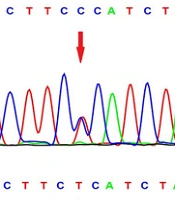
Immediately after admission to hospital, venous blood samples were taken and kept in proper condition until sent to the molecular genetic laboratory. High molecular weight genomic DNA was obtained from leukocytes using the salting out method (28). The candidate SNP (rs6988339) was ascertained after consulting related literature (20, 26) and databases such as SNPper, University of California Santa Cruz (UCSC) genome browser and HapMap. The selected SNP was genotyped by restriction fragment length polymorphism-polymerase chain reaction (RFLP-PCR), and DNA sequencing. Primer 3 software (http://primer3.ut.ee) was used for primer design. The primer sequence (5’ to 3’) CTCAACTCACCTAAACTTCTGTG (forward) AGGCAGACAGGTGAAGATG (reverse) initiated the amplification of a 248 bp DNA fragment.
The PCR reaction cocktail contained 100 - 500 ng genomic DNA, 10 pM of each forward and reverse primers, 1X PCR Buffer (10 mM KCl, 67 mM Tris-HCl), 1.5 mM MgCl2, 0.2 mM dNTP and 0.5 U Taq DNA polymerase. The PCR program setup was as follows: initial denaturation at 95°C for five minutes; followed by thirty cycles of denaturation at 95°C for 45 seconds, annealing at 56°C for 40 seconds, and extension at 72°C for 35 seconds. The final extension occurred at 72°C for 35 minutes. To accomplish quality assurance, water negative controls, 100% callable genotypes, and a minor allele frequency greater than 2% were used. The chain termination method for DNA sequencing was performed via Basic Local Alignment Search Tool (BLAST), FASTA, and Chromas software programs.
3.4. Statistical Analysis
The majority of data analysis was done using SPSS ver. 20, including demographic information and comparison of the means of WAIS and PANSS scores. A two-tailed confidence interval of 95% was selected for all tests, except for Hardy-Weinberg equilibrium. Hardy-Weinberg equilibrium was computed for allelic distribution using the Chi-squared (χ2) goodness-of-fit test with the significance level of 0.01. Allele frequency was calculated and compared using COCAPHASE software, and genotype frequency was obtained using CLUMPP-22 software. The mode of inheritance of SNP was estimated by a logistic regression test using R software. To study the association of SNP with PANSS scores in each subscale, univariate regression analysis was used, with SNP genotype as the independent variable and PANSS negative, positive, general and total scores as dependent variables.
The data of the study on rs6988339 were submitted to Leiden open (source) variation database (LOVD) (http://databases.lovd.nl/shared/genes/NRG1; individual ID #00019919).
4. Results
PANSS scores analysis showed that in each subscale the mean score of patients with schizophrenia was significantly higher compared to those of the healthy controls (Table 2). Conversely, the control group yielded significantly higher scores in verbal, performance, and total IQ in WAIS tests (Table 3). Data breakdown showed a significant difference in the minor allele G frequency, when comparing controls to schizophrenia cases (P = 0.0007). The disparity in allele frequency observed in the combined male and female sample was also evident when testing male participants only (P = 0.005). The same was applied to genotype frequency in the male sample (P = 0.006), but not when testing females only (Table 4). The far right column in Table 4 reports Hardy-Weinberg equilibrium with significance at level of 0.01. As shown in Table 5, all three models (dominant, recessive and additive) were significantly involved in rs6988339 inheritance in schizophrenia. Finally, the association between this SNP and PANSS scores were tested. Of the four scores obtained for the association with PANSS, this SNP showed the strongest association with negative symptoms (P = 0.001) (Table 6).
| PANSS Score (mean ± SD) | Participants With Schizophrenia (n = 276) | Control Group Participants (n = 193) | Statistical Analysis | |
|---|---|---|---|---|
| F | P | |||
| Positive | 24.46 ± 4.47 | 8.04 ± 0.80 | 57.054 | < 0.001* |
| Negative | 24.47 ± 5.09 | 8.31 ± 0.97 | 46.687 | < 0.001* |
| General psychopathology | 46.40 ± 6.51 | 24.12 ± 3.07 | 13.749 | < 0.001* |
| Total | 95.37 ± 11.58 | 40.32 ± 3.63 | 30.992 | < 0.001* |
aComparison of PANSS subscales for positive and negative symptoms, as well as the general psychopathology scales yielded significant differences between patients diagnosed with schizophrenia and healthy controls.
b*Significant differences.
| WAIS Score, (Mean ± SD) | Participants With Schizophrenia, (n = 276) | Control Group Participants, (n = 193) | Statistical Analysis | |
|---|---|---|---|---|
| F | P | |||
| Verbal IQ | 74.35 ± 11.072 | 105.19 ± 7.246 | 1.937 | < 0.001* |
| Performance IQ | 74.19 ± 8.721 | 108.48 ± 5.660 | 0.023 | < 0.001* |
| Total IQ | 74.03 ± 9.425 | 113.42 ± 6.299 | 0.103 | <0.001* |
Abbreviations: IQ, intelligence quotient; SD, standard deviation.
aThe comparison of verbal and performance scores of patients diagnosed with schizophrenia and healthy controls yielded significant differences for both parameters.
b*significant differences
| Allele Frequency | Genotype Frequency | HWE | |||||||||||
|---|---|---|---|---|---|---|---|---|---|---|---|---|---|
| Groups | Polymorphism | Alleles | Allele Frequency | COCAPHASE | CLUMP | ||||||||
| Schizo-phrenia | Control | χ² | P | χ² | P | P | |||||||
| A/G | AA | AG | GG | ||||||||||
| Male + Female | A | 0.56 | 0.67 | 11.485 | 0.0007* | Schizophrenia | 0.27 | 0.58 | 0.15 | 12.40 | 0.002* | 0.09 | |
| G | 0.44 | 0.33 | Control | 0.42 | 0.49 | 0.09 | 0.28 | ||||||
| Male | A | 0.55 | 0.71 | 15.319 | 0.005* | Schizophrenia | 0.30 | 0.52 | 0.18 | 9.78 | 0.006* | 0.62 | |
| G | 0.45 | 0.29 | Control | 0.48 | 0.45 | 0.07 | 0.62 | ||||||
| Female | A | 0.56 | 0.58 | 0.228 | 0.63 | Schizophrenia | 0.20 | 0.70 | 0.10 | 4.33 | 0.11 | 0.02* | |
| G | 0.44 | 0.42 | Control | 0.34 | 0.55 | 0.11 | 0.24 | ||||||
aThere were significant differences in the frequency of allele G between schizophrenia patients and controls (male + female). Significant differences were also observed when comparing only male participants. Similar differences were observed in genotype frequency. Interestingly, comparing allele or genotype frequency for females only did not yield significant differences. The right column shows the results of assessing Hardy-Weinberg equilibrium (HWE).
b*Significant differences.
| Model | Participants With Schizophrenia | Control Group Participants | Odds Ratio (CI = 95%) | P-Value |
|---|---|---|---|---|
| Recessive | 0.036* | |||
| AA + AG | 234 (84.8) | 176 (91.2) | 1 | |
| GG | 42 (15.2) | 17 (8.8) | 0.54 (0.30 - 0.98) | |
| Dominant | 0.0004* | |||
| AA | 73 (26.4) | 81 (42) | 1 | |
| AG + GG | 203 (73.5) | 112 (58) | 0.50 (0.34 - 0.74) | |
| Additive | 0.58 (0.43 - 0.78) | 0.0002* |
aRecessive, dominant, and additive models are significantly involved in rs6988339 inheritance in schizophrenia.
b*significant differences.
cValues are expressed as No. (%).
Table 6.
Association Between Positive and Negative Syndrome Scale Scores and rs6988339 in Patients Diagnosed With Schizophrenia
| PANSS Score | Male + Female | Male | Female | |||
|---|---|---|---|---|---|---|
| F | P | F | P | F | P | |
| Positive | 3.618 | 0.028* | 4.656 | 0.010* | 1.326 | 0.268 |
| Negative | 6.718 | 0.001* | 9.806 | < 0.001* | 0.539 | 0.584 |
| General psychopathology | 5.034 | 0.007* | 6.602 | 0.002* | 0.782 | 0.459 |
| Total | 5.34 | 0.005* | 7.212 | 0.001* | 0.928 | 0.397 |
aThere were significant associations between rs6988339 variant and all PANSS subscales scores. However, the strongest association was observed in the negative syndrome.
b*significant differences.
5. Discussion
The current population-based case-control study investigated the association between the NRG-1 gene SNP rs6988339 with schizophrenia and its negative symptoms in an Iranian population. Based on the obtained results, it was evident that this neuregulin-1 SNP was a schizophrenia susceptibility locus in the Iranian population; the minor allele G was the pathogenic allele, and A the protective allele. One novelty of the study was that it focused on the association between NRG1 with negative symptoms, an association that few studies previously investigated. In addition, to the best of the authors` knowledge, the current study was the first to examine the association between rs6988339 and schizophrenia symptoms.
The current study results coincided with those of previous studies by Thompson et al. (20) and Walker et al. (26) in different Scottish populations, and also with that of Kukshal et al. (21) in an Indian population. Since the strong relationship of rs6988339 with schizophrenia was clear in the total examined population, and also in male patients, this may imply that different genetic pathways lead to schizophrenia in the two genders; thus, producing a more severe course of the illness in males. The gender dissimilarity in age of onset may also be attributable to various genetic roots of the disorder.
The clear association between this SNP and PANSS scores further confirmed its role in the development of schizophrenia symptoms. There is a growing body of evidence on genetic causes of negative symptoms, including neuregulin-1 (17). With that in mind, in the current study, negative scores showed the strongest association with rs6988339, which suggested a role for this SNP in the pathogenesis of negative symptoms.
Authors were unable to control the population stratification because of the small size of the subpopulations involved. Another limitation of the study was the relatively small sample of female patients, which may have produced a different statistical result if the female sample was larger. Therefore, it is desirable to perform this type of analysis in a larger sample, adjusting the population stratification. Taking into account the polygenic nature of schizophrenia, future studies should be directed towards genes in epistasis with NRG1. NRG1 is linked to negative symptoms, and on the other hand, certain organic flaws such as diminished interhemispheric connectivity (29) and insular dysfunction (14) correlate with negative symptoms. Therefore, future researches should investigate NRG1 in brain areas implicated in negative symptoms.