
1. Background
The trend of smartphone use in recent years shows a dramatic increase and it has become part of the everyday life of a large proportion of populations, particularly the youth (1). According to Iran’s Ministry of Information and Communication Technology in 2015, 27.5 million people were smartphones users in the country (2). During the last decade, the concept of addiction has been widening to include not only substance use, but also behavioral addiction including gambling, Internet use, and games (3, 4). The American Psychiatric Association (APA) reclassified the gambling disorder as an addictive disorder and listed Internet gaming disorder in section III of DSM-5 as an addictive disorder requiring further research (5).
There are similarities between smartphone addiction and Internet addiction as technology addiction. However, there is a more complicated interaction between individuals and their smartphones because of the multi-purpose application of smartphones (6). Since smartphones provide a wide range of services, their maladaptive use might not be evident at the early stages. Although there are no internationally approved criteria for smartphone addiction, researchers conceptualize it as a maladaptive pattern of smartphone overuse that results in the loss of control over its use and paying less attention to other important areas of functioning (6-10). Al-Barashdi et al. reviewed the signs and symptoms of addiction to smartphones. They recognized a number of features in their work including overuse and excessive time spent, emotional tension when smartphones could not be used, obsession to smartphones or a sense of anxiety and loss when not having access to phones, positive anticipation, difficulty in managing the use, helplessness in controlling the urge and craving, and daily life disturbance (7). Despite the benefits of using smartphone technology, the problematic use or overuse of smartphones could be associated with negative effects on mental health and psychosocial functioning (7, 11-14).
Given that the widespread use of smartphones is a relatively recent phenomenon, the most bodies of research on this type of addiction have focused on instruments designed to evaluate problems with mobile phones, such as the problematic mobile phone use (15), the mobile addiction test (16), the Manolis/Roberts cell phone addiction scale (17), the mobile phone problem use scale (18), and the cellular phone addiction scale (19). These tools mostly conceptualize the problem as a type of behavioral addiction featured by problems with impulse control for cell phone activities such as using the short message service (SMS), multimedia message service (MMS), and some Internet services. In contrast, a smartphone provides a convergence of services such as a camera, MP3 player, GPS, web browsing, calling, sending e-mails, gaming, and social networking services (SNS). To our knowledge, to date, there are only three instruments to assess smartphone addiction: the smartphone addiction scale (20), the smartphone addiction measurement instrument (21), and the smartphone addiction inventory (SPAI) (6, 22). Previous studies have shown the reliability and validity of the SPAI among Taiwanese (6) and Italian (22) university students.
2. Objectives
Given the increasing trend of smartphone users among the youth and the lack of screening questionnaires for smartphone addiction in the Persian language, the purpose of this study was to measure the psychometric properties of the Persian version of the SPAI in a sample of Iranian university students.
3. Materials and Methods
3.1. Participants and Sampling
A psychometric design was used to conduct the study. The study population included the undergraduate students of Shahid Beheshti University (SMU) located in the North of Tehran who were studying in the academic year of 2016 - 2017. A convenience sampling method was used to recruit the participants from February to March 2017.
Among 425 university students who consented to participate in the study, we excluded 23 participants who did not answer the study assessments completely. The final sample (n = 402; 72.63% female) reported a mean age of 21.98 years (range = 18 - 33, SD = 3.18). The inclusion criteria were being at least 18-years-old, being a university student, and using a smartphone while the exclusion criterion was not giving informed consent.
Participation in the study was voluntary and the participants consented to take part in the study. Participants completed the study instruments anonymously in privacy. They were assured that they could leave the study at any time they want, that their presence in the study was completely anonymous, and that they would opt for deleting or not giving any information about which they felt concerned. An identification number was assigned to each of the participants in order to identify the information related to them.
No criteria have been defined in the literature for the adequate sample size for studies measuring the psychometric properties of questionnaires. It has been recommended using at least 50 participants to measure reliability. The adequate sample size to conduct a factor analysis is subject to debate. There are many rules of thumb for determining adequate sample sizes for factor analysis including the rule of 5 (at least five cases per each item in the questionnaire) and the rule of 10 (at least 10 cases per each item in the questionnaire) with a minimum number of 100 participants to ensure the stability of the variance-covariance matrix (23). Some authors have recommended a minimum of 300 participants and an item-to-participant ratio of at least 5 to 10 (24). The SPAI questionnaire has 24 items. Given that there might be missing data, we considered a sample size of 425. Before the confirmatory factor analysis, we conducted Kaiser-Meyer-Olkin (KMO) to measure sampling adequacy. The KMO index of sampling adequacy was 0.92, which indicated the sample size was quite adequate.
3.2. Tools
3.2.1. The Internet Addiction Test (IAT)
The Internet addiction test (IAT) is a 20-item self-administrated questionnaire developed by Young (25) with good internal consistency and concurrent validity (26, 27). Each item is scored based on a five-point Likert-type scale ranging from 1 (never) to 5 (always). The questionnaire has been validated in the Persian language with Cronbach’s alpha of 0.89 (28). This measure assesses how much Internet use is associated with the loss of control and how much it negatively affects personal, interpersonal, and social functioning of the individual. We used the IAT scores to test the convergent validity of the SPAI.
3.2.2. Smartphone Addiction Inventory (SPAI)
The smartphone addiction inventory (SPAI) is a self-administrated questionnaire with items scored based on a four-point Likert scale from 1 (strongly disagree) to 4 (strongly agree). The questionnaire was originally developed to measure smartphone addiction based on Internet addiction features among the Taiwanese youth (6). The Italian version of the SPAI with 24 items showed excellent internal consistency and good convergent validity with IAT (22).
In order to collect the data regarding the gender, age, and academic majors of the participants, a specific questionnaire was developed and used by the researchers to assess the sociodemographic information of the participants.
The study protocol and the questionnaires were approved by the Ethics Committee of Shahid Beheshti University (No. 1395.781).
3.3. Data Analysis
We used SPSS-22 for descriptive analysis and AMOS statistical software (version 21) for confirmatory factor analysis of the data.
4. Results
We obtained written permission from Pavia et al. (22) for the translation of the SAPI. Then, two professionals who were fluent in both Persian and English languages translated the SPAI from the original English text into Persian. They compared their translations and discussed alternative words that best conveyed the concepts of the test. A third bi-lingual expert conducted a back-translation. There were minor conceptual and syntactical inconsistencies between the original English text and the back-translated version. After discussing and making adjustments, the final Persian version of the SPAI was prepared.
4.1. Confirmatory Factor Analysis
We used a five-factor model identified in the Italian version of the SAPI including time spent, compulsivity, daily life interference, craving, and sleep interference for confirmatory factor analysis. The goodness-of-fit index indicated a good fit of the model to the data (chi-square = 1105.445; P < 0.000; CFI = 0.902; TLI = 0.92; RMSEA = 0.09) using AMOS statistical software (version 21) and there was a deviation of the data from the model (Figure 1).

Figure 1.
Confirmatory factor analysis
“Time Spent” (items 1 to 4) comprised four items that assessed the individuals’ levels of difficulty in stopping using smartphones (e.g., “Q2: I feel uneasy once I stop using the Smartphone for a certain period of time”) and dedicating more time and resources for using smartphones (e.g., “Q1: I was told more than once that I spend too much time on the smartphone”). “Compulsivity” (items 5, 10, 20, and 23) assessed the level of uneasiness and emotional suffering (e.g., nervousness, touchiness, and tension) felt by not using smartphones (e.g., “Q10: I feel distressed or down once I cease using the smartphone for a certain period of time”). The compulsivity factor also implicitly indicates the state that despite the negative consequences of using smartphones, individuals could not stop themselves from using smartphones (e.g., “Q5: I feel very vigorous upon the smartphone use regardless of the fatigue experiencing”). “Daily life interference” (items 6 - 8, 12, 13, 15, 17, and 18) would identify the greatest percentage of variance and inconsistency among individuals and it was one of the main factors for defining the concept of addiction to smartphones. Some items of this factor addressed the issue of interference of the smartphone use with other routine activities (e.g., “Q18: My recreational activities are reduced due to smartphone use”) and some other items dealt with interpersonal problems that originated from using smartphones (e.g., “Q12: I find myself indulged on the smartphone at the cost of hanging out with friends). “Craving” (items 11, 14, 16, 19, and 21) assessed the level of one’s helplessness to resist against the longing and desire for continuing the use of smartphones (e.g., “Q11: I fail to control the impulse to use the smartphone”, “Q19: I feel the urge to use my smartphone again right after I stopped using it”. It also described the situations in which the individuals tend to refrain from withdrawing their addiction to smartphones (e.g., “Q14: The idea of using the smartphone comes as the first thought on my mind when waking up every morning”). Finally, the last factor namely “Sleep Interference” (items 8, 22, and 24) consisted of items focusing on the relationship between using smartphones and reduced sleep time (e.g., “Q8: I have slept less than four hours more than once due to using the smartphone”) and also items that focused on sleep disorders due to smartphone use (e.g., “Q23: I make it a habit to use the smartphone despite that my sleep quality and total sleep time have decreased”).
4.2. SPAI Convergent Validity
To test convergent validity, the correlation of SPAI scores including the SPAI total score and its five subscales’ scores with the IAT total score was measured. The SPAI total score showed a significant positive correlation with the IAT total score (r = 0.73, P < 0.000). A significant correlation was found between the SPAI subscales’ scores and the IAT total score, with correlation coefficients ranging from 0.647 for “craving” to 0.483 for “sleep interference” (P < 0.000). Table 1 presents the convergent validity results.
Table 1.
Pearson Correlation Analysis Between SPAI Scores and the IAT Total Scorea
| SPAI Total Score | Time Spent | Compulsivity | Daily Life Interference | Craving | Sleep Interference | |
|---|---|---|---|---|---|---|
| IAT total score | 0.713 | 0.589 | 0.616 | 0.639 | 0.647 | 0.483 |
Abbreviations: IAT, Internet addiction test; SPAI, smartphone addiction inventory.
aP < 0.01.
4.3. Correlations Among SPAI Factors
Internal consistency reliability (Cronbach’s alpha) was performed for the revised model of the SPAI. For the SPAI total score, the Cronbach’s alpha coefficient for internal consistency was excellent (α = 0.92). Cronbach’s alpha values for the five factors were in the range of 0.53 to 0.84 (time spent = 0.80; compulsivity = 0.65; daily life interference = 0.84; craving = 0.72; sleep interference = 0.53). Table 2 shows the correlations between the five factors.
Table 2.
Correlations Between SPAI Factors
| Factors | Time Spent | Compulsivity | Daily Life Interference | Craving | Sleep Interference |
|---|---|---|---|---|---|
| Time spent | - | - | - | - | - |
| Compulsivity | 0.588a | - | - | - | - |
| Daily life interference | 0.638a | 0.720a | - | - | - |
| Craving | 0.699a | 0.782a | 0.778a | - | - |
| Sleep interference | 0.317a | 0.488a | 0.529a | 0.494a | - |
Abbreviations: SPAI, smartphone addiction inventory.
aP < 0.001.
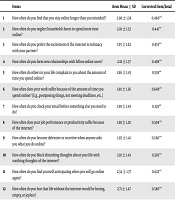
Table 3 presents the mean and standard deviation of scores for each item of the SPAI.
Table 3.
Mean and Standard Deviations of the Scores of Each Item of the SAPI
| SAPI Items | Mean ± SD |
|---|---|
| 1. I was told more than once that I spend too much time on the smartphone. | 2.73 ± 0.92 |
| 2. I feel uneasy once I stop using the smartphone for a certain period of time. | 2.28 ± 0.82 |
| 3. I find that I am hooking on the smartphone longer and longer. | 2.64 ± 0.81 |
| 4. I feel restless and irritable when my smartphone is unavailable. | 2.25 ± 0.83 |
| 5. I feel very vigorous upon smartphone use regardless of the fatigue experiencing. | 2.33 ± 0.79 |
| 6. I use the smartphone for a longer period of time and spend more money than I intend. | 2.36 ± 0.74 |
| 7. Although using the smartphone has brought negative effects on my interpersonal relationships, the amount of my time spent on the Internet remains unreduced. | 2.06 ± 0.81 |
| 8. I have slept less than four hours more than once due to using the smartphone. | 1.52 ± 0.66 |
| 9. I have substantially increased my time spent on the smartphone per week in the three most recent months. | 1.77 ± 0.69 |
| 10. I feel distressed or down once I cease using the smartphone for a certain period of time. | 1.83 ± 0.68 |
| 11. I fail to control the impulse to use my smartphone. | 2.00 ± 0.79 |
| 12. I find myself indulged on the smartphone at the cost of hanging out with friends. | 1.72 ± 0.67 |
| 13. I feel aches and soreness in the back or eye discomfort due to excessive smartphone use. | 1.94 ± 0.80 |
| 14. The idea of using smartphone comes as the first thought on my mind when waking up every morning. | 2.46 ± 0.90 |
| 15. The use of the smartphone has had certain negative effects on my schoolwork or job performance. | 2.24 ± 0.78 |
| 16. I feel like I am missing something after stopping smartphone use for a certain period of time. | 2.37 ± 0.87 |
| 17. My interaction with family members is decreased because of smartphone use. | 2.25 ± 0.89 |
| 18. My recreational activities are reduced due to smartphone use. | 1.99 ± 0.86 |
| 19. I feel the urge to use my smartphone again right after I stopped using it. | 2.11 ± 0.78 |
| 20. My life would be joyless if there had not been a smartphone. | 2.08 ± 0.85 |
| 21. I try to spend less time on the smartphone, but the efforts were in vain. | 2.17 ± 0.77 |
| 22. I make it a habit to use smartphone despite that my sleep quality and total sleep time have decreased. | 2.12 ± 1.62 |
| 23. I need to spend increasing time on the smartphone to achieve the same satisfaction as before. | 1.87 ± 0.62 |
| 24. I feel tired during the daytime due to late-night use of the smartphone. | 1.88 ± 0.87 |
Abbreviations: SPAI, smartphone addiction inventory.
5. Discussion
Larger proportions of the youth population in Iran are increasingly using smartphones (2). Smartphone use has definite benefits for everyday life. The smartphone technology not only has been adopted by health professionals to facilitate high-quality care (29, 30), but also has shown promising results to improve the self-management of chronic conditions (31-33) including substance use disorders (SUDs) (34, 35) through smartphone applications.
To the best of our knowledge, this is the first study that investigated the psychometric properties of the SPAI and examined its involved factors using AMOS statistical software. The results of the study showed that the Persian version of the SPAI had good internal consistency and convergent validity as a self-administrated tool for the assessment of Iranian university students. In this study, we used a confirmatory factor analysis that worked well with the five-factor solution originating from the Italian version of the SPAI (22). The authors of the Italian version of the SPAI reviewed the literature and showed that their proposed five factors were consistent with previous studies of smartphone addiction questionnaires (22). A recent study monitored the time spent on smartphones using a mobile application and showed the self-reported time of smartphones use was significantly lower than the real time of use (9).
A recent review of animal and human neuroimaging studies on the neurobiology of addiction proposed three phases of addictive behaviors toward substances including “binge and intoxication”, “withdrawal and negative affect” and “preoccupation and anticipation” (35). It has been suggested that the three stages of substance addiction are also applicable to describe behavioral addiction (36) including gambling and Internet addiction disorder (37). There are similarities between “times spent,” “compulsivity,” and “craving” subscales of the SPAI and “binge and intoxication,” “withdrawal,” and “preoccupation and anticipation” subscales of substance addiction, respectively. Our five-factor model, however, did not exactly match the addiction stages proposed in the mentioned studies. Further studies are warranted to measure smartphone addiction informed by state of the art neurobiological studies.
The SPAI scores showed significant correlations with the IAT total score. This is in line with the results of another study reporting that college students with higher SPAI scores showed more preference to immediate monetary awards and biased toward value magnitude in intertemporal choice task, which were reported in other types of addiction (38). To better understand the nature of smartphone addiction, further research is needed on the comorbidity of smartphone addiction with other psychiatric disorders, particularly mood, anxiety, impulse control, and substance-related and addictive disorders.
5.1. Limitations to the Study
Study participants were all the students of Shahid Beheshti University located in the North of Tehran and most of them were female. This limits the generalizability of the results to other youth populations in Iran. More studies are needed to investigate the psychometric properties of SPAI among other Iranian populations, particularly high school students and employees at the workplace.
Recently, international studies have provided diagnostic criteria (39) and screening tools (40) for smartphone addiction. There is a need for more studies among Iranian populations to determine the cutoff scores of the SPAI. It would also be fruitful to conduct an experimental study that aims to develop a remedial program to help smartphone addicts overcome addiction, as well as to conduct research to predict factors affecting smartphone addiction among university and high school students.
5.2. Conclusions
The Iranian version of the SPAI showed good psychometric properties as a useful tool to measure smartphone addiction among Iranian university students. The SPAI also provided a good tool for comparing smartphone overuse among the Iranian youth and people from other countries.