
1. Background
Anxiety is an antipathy emotional state in which the feeling of fear is disproportionate to the nature of the danger. Anxiety is implicated in some psychiatric disorders (1). Approximately one-eighth of the total population has inappropriate anxiety worldwide (2). The prevalence of anxiety disorders is estimated 28.8% in the US population and it is the most common class of psychiatric disorders in the US and many other countries (3). It seems that mental health patterns in Iran and Western countries are similar (4). Stress and anxiety can affect people’s capability, especially in females, and population-based studies indicate that anxiety disorders frequently go untreated; hence, they merit more consideration (5, 6).
Recent studies show a possible relationship between the level of vitamin D and antioxidants, and anxiety and stress (7). Moreover, vitamin D deficiency is a major health problem worldwide, especially in the developing countries (8, 9). Epidemiological researches indicate that 30%-50% of both children and adults in the US, Canada, Europe, Australia, New Zealand, and Asia have vitamin D deficiency (8). In Tehran, the capital of Iran, the overall prevalence of vitamin D deficiency was estimated 81% in adult subjects (9). As a nuclear steroid hormone, vitamin D has different physiological roles and it is recognized as a neuroactive steroid (10, 11). Vitamin D receptors are present in some specific brain areas including the cortex, cerebellum, and limbic system, which are all linked in behavior regulation (12, 13). In addition, the vital enzyme to synthesize the active form of vitamin D is found in the brain (14). Vitamin D deficiency and/or its receptors dysfunction is a reason for numerous brain dysfunctions (15). For example, impairments in cognitive functions such as memory, orientation, dementia, and Alzheimer’s disease are associated with low concentrations of serum vitamin D (16-19). Also, self-reported psychotic-like experiences and depressive symptoms are lower in people with increased dietary intake of vitamin D (20). Animal studies show that both vitamin D deficiency and vitamin D receptors dysregulation can increase the stress and anxiety disorders (21, 22). However human studies in this field are limited. In a study on patients with fibromyalgia, Armstrong et al. showed an inverse association between serum vitamin D levels and anxiety (23), however, in a clinical trial on healthy adults, no significant association was observed (24).
Antioxidants are another dietary group which serum levels may be related to stress and anxiety. There is a link between oxidative stress and certain anxiety disorders such as obsessive-compulsive and panic disorders. Also, it is postulated that the regulation of anxiety can be affected by some systems such as oxidative metabolism (25). For example, it is well known that reactive oxygen species (ROS) in low/moderate concentrations affect a great number of physiological functions (26). Brain oxidative damage causes nervous system dysregulation and it happens when ROS concentrations exceed the antioxidative capacity (26). Brain high O2 consumption, its modest antioxidant defenses and also its lipid rich contents make it vulnerable to oxidative stress (27, 28). Fatty acid peroxidation of lipid-rich ingredients of the brain in the presence of oxidative stress results in decrease of membrane fluidity and damage in membrane proteins, inactivating receptors, enzymes, and ion channels. Altogether, oxidative stress can change neurotransmission, neuronal function, and overall brain activity. Therefore, it seems that stress and anxiety can be affected by oxidative stress (26, 28, 29). An animal study by Filiou et al. indicated an inverse association between total antioxidant capacity (TAC) and stress (30). A clinical trial by Mazloom et al. showed that vitamin C supplement, can decrease anxiety and stress levels in patients with diabetes (31).
2. objectives
Accordingly, the present study assumed that a stronger antioxidant defense and higher vitamin D status may be associated with lower anxiety and stress levels. Hence, the current study mainly aims at investigating the relationship between stress and anxiety status with vitamin D levels, and TAC in young females.
3. Materials and Methods
A case-control study was conducted on 45 non-depressed female medical science students with some degrees of stress and anxiety and 45 controls with no measurable depression, stress and anxiety at Ahvaz Jundishapur University of Medical Sciences, Iran. The study was conducted on 18 - 32 year-old students from April to June 2014. Sample size was calculated using 2 formulations. The statistical power of the study was 0.2. Subjects were selected by systematic random sampling method based on questionnaires. The inclusion criteria were: Female student at least 18 years old, living in university dorms, and willing to participate in the study. Exclusion criteria were: Depression or any psychiatric disorder except anxiety and stress, and also, taking any medications and supplements that may affect blood markers levels or stress and anxiety. The study protocol was approved by the medical ethics committee of Jundishapur University.
3.1. Assessment of Dietary Intake
Students completed a customized and validated food frequency questionnaire for dietary assessment. The questionnaire was designed to include food groups mainly consumed in students’ usual dietary pattern. The introductory question, “How often do you eat the following foods?”, was asked from the participants about the frequency of their usual consumption of each food group separately (rated on a 6-point scale: several times a day, daily, several times a week, 1 - 4 times a month, once in 2 - 3 months, and never). Validity and reliability were evaluated by test -retest statistical method.
3.2. Assessment of Psychological Status
The depression, anxiety, and stress status (DASS) questionnaire was designed to measure 3 related but distinct negative affective states in nonclinical populations (32). The 21-item questionnaire contains 7 sentence items for each of the 3areas and subjects are asked to use 4-point severity/frequency scales to rate the extent to which they experienced each state over the past week, with higher scores indicating a greater degree of mood disruption. The total score is determined by summing the 3 subscale scores. Reliability of the 3 scales was considered excellent; with Cronbach’s alpha at 0.95 for D, 0.90 for A, 0.93 for S, and 0.97 for total score. Test-retest reliability was also excellent with 0.72 for D, 0.79 for A, and 0.81 for S. The DASS-D (depression) also correlates with the Beck Depression Inventory (BDI-II; r = 0.74), the standard clinical measure of depression. The DASS has adequate convergent and discriminant validity (confirmatory fix index (CFI) = 0.93) (33, 34).
3.3. General Characteristics
The general questionnaire included information such as: age, weight, height, education level, marital status, physical activity (habitual in 3 categories), history of stress and anxiety disorders, and any history of psychiatric disease in participants and their families, using medications and supplements, having special diet such as being on a vegetarian diet, avoiding certain foods or weight loss diet, in the last 6 months and economic status (in 3 categories based on household monthly income as less than 30 USD, between 30 and 60 USD, and more than 60 USD).
Height and weight were measured while wearing light clothes with no shoes. Body Mass Index (BMI) was defined as weight (kg) divided by height squared (m2).
3.4. Laboratory Measurements
Twelve hour night fasting blood samples were taken from each subject. Whole blood samples were centrifuged at 2500 rpm for 10 minutes and the plasma and buffy coat were separated.
3.5. Vitamin D Assessment
A 25-hydroxy vitamin D EIA kit (IDS kit, UK, code: AC-57sf1) was used as an enzyme immunoassay intended for the quantitative determination of 25-hydroxyvitamin D in human serum or plasma. Based on the kit standard, 25-OH > D25 nM/L is defined deficient, 25 - 74 nM/L insufficient, 75 - 250 nM/L sufficient and 25-OH D > 250 nM/L is potential intoxication.
3.6. TAC Assessment
TAC kit (LDN kit, Germany) was used AS a colorimetric/photometric fast test for the quantitative determination of the total antioxidant capacity in serum and plasma. Assay interpretation of this kit indicates TAC < 1 mM/L as too low, 1 - 1.3 borderline and TAC > 1.3 mM/L shows sufficient antioxidant capacity.
3.7. Statistical Analysis
Statistical analysis was performed using SPSS version 20 (IBM SPSS, Chicago, IL). Comparisons of food intake and concentrations of vitamin D and TAC between the case and control groups were done using independent t test. Then, regression analysis was applied to assess the relationship between food groups and stress/anxiety status. Confounding factors included in regression models were BMI, age, economic status, physical activity levels and marital status. For all tests, P value less than 0.05 were considered statistically significant.
4. Results
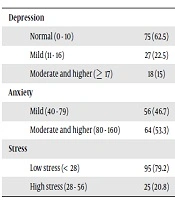
Table 1 shows demographic and clinical characteristics, serum vitamin D and TAC levels of the study groups. Except vitamin D, none of the basic characteristics were significantly different between the groups. More than 90% of the subjects showed moderate to severe anxiety levels and more than 80% of them had moderate to severe degrees of stress. It should be mentioned that, both groups demonstrated high prevalence of vitamin D deficiency. Only 17.2% of the students were vitamin D sufficient. In terms of TAC status, 67% were regarded as sufficient.
Table 1.
Basic Characteristics of the Study Groupsa
| Variables | Cases | Controls | P Value |
|---|---|---|---|
| Age, y | 22.96 (2.7) | 23.58 (4.0) | 0.39 |
| Weight, kg | 56.98 (7.9) | 56.44 (7.5) | 0.74 |
| BMI | 21.57 (2.7) | 21.71 (2.5) | 0.79 |
| Students grade | 0.58 | ||
| BSc | 29 (46.4) | 25 (55.6) | |
| MSc | 8 (17.8) | 8 (17.8) | |
| PhD | 8 (17.8) | 12 (26.7) | |
| Habitual physical activity | 0.26 | ||
| Yes | 5 (11.1) | 11 (24.4) | |
| No | 30 (66.7) | 26 (57.8) | |
| Sometimes | 10 (22.2) | 8 (17.8) | |
| Economic statusb | 0.25 | ||
| High | 11 (24.4) | 16 (35.6) | |
| Moderate | 30 (66.7) | 28(62.2) | |
| Low | 4 (8.9) | 1 (2.2) | |
| Stressc | 9 (20) | - | - |
| Mild | 17 (37.8) | - | |
| Moderate | 17 (37.8) | - | |
| Sever | 2 (4.4) | - | |
| Very sever | |||
| Anxietyc | - | ||
| Mild | 4 (8.9) | - | |
| Moderate | 22 (48.9) | - | |
| Sever | 9 (20) | - | |
| Very sever | 10 (22.2) | - | |
| Vitamin D, nM/L | 33.23 ± 20.89 | 53.42 ± 29.35 | 0.002 |
| TAC, mM/L | 1.45 ± 0.33 | 1.54 ± 0.38 | 0.26 |
Abbreviations: BMI, body mass index; TAC, total antioxidant capacity.
aValues are expressed as mean ± SD or No. (%).
bBased on monthly budget.
cBased on DASS questionnaire.
The dietary pattern of the participants is indicated in Table 2. There were no significant differences between the groups regarding food groups’ consumption.
Table 2.
Consumption of the Main Food Groups by the Study Participantsa
| Food Groups (Servings/Day) | Cases | Controls | P Value |
|---|---|---|---|
| Low fat dairy | 2.97 ± 1.196 | 2.80 ± 0.99 | 0.445 |
| High fat dairy | 3.35 ± 1.15 | 3.04 ± 0.998 | 0.174 |
| Fruits | 2.80 ± 0.842 | 2.53 ± 0.786 | 0.124 |
| Salads | 3.26 ± 0.986 | 3.088 ± 0.763 | 0.342 |
| Refined cereals | 3.20 ± 1.407 | 2.79 ± 1.780 | 0.235 |
| Whole cereals | 2.08 ± 1.018 | 2.16 ± 0.974 | 0.729 |
| Fast foods | 4.31 ± 0.668 | 4.33 ± 0.707 | 0.879 |
| Red meats | 3.17 ± 0.886 | 3.20 ± 0.726 | 0.897 |
| Fish | 4.13 ± 0.786 | 4.06 ± 0.687 | 0.670 |
| Eggs | 3.88 ± 0.647 | 3.68 ± 0.90 | 0.229 |
| Olive oil | 4.86 ± 1.337 | 5.33 ± 0.977 | 0.063 |
| Hydrogenated fats | 4.73 ± 1.388 | 4.25 ± 1.705 | 0.155 |
aValues are expressed as mean ± SD.
Results of the regression analyses after adjusting the co-variates indicated that hydrogenated fats increased the risk of stress and anxiety (odds ratio (OR) = 1.53, P = 0.019). The result of high fat dairies was nearly the same, but it was insignificant (OR = 1.63, P = 0.078). ORs for vitamin D was significant (OR = 0.97, confidence interval (CI) = 0.948 - 0.988, P = 0.002). Increment of each unit of vitamin D serum concentrations could reduce the risk of stress and anxiety for 3.33%. The results are presented in Table 3.
Table 3.
Relationship Between the Risk of Anxiety and Stress, and Serum Vitamin D, TAC, and Dietary Fats
| Variables | OR (95% CI) | P Value |
|---|---|---|
| Vitamin D | 0.97 (0.95 - 0.99) | 0.002 |
| TAC | 0.50 (0.148 - 1.656) | 0.260 |
| High fat dairy | 1.63 (0.947 - 2.839) | 0.078 |
| Hydrogenated fats | 1.53 (1.072 - 2.192) | 0.019 |
Abbreviations: CI, confidence interval; OR, odds ratio; TAC, total antioxidant capacity.
5. Discussion
Based on the available literature, there are scarce findings regarding the relationship between vitamin D and antioxidant status with stress and anxiety. The current study results showed an inverse relationship between vitamin D serum levels and stress and anxiety. Findings on other types of psychiatric disorders indicated that the current study results were consistent with those of case-control and cohort studies. In the British birth cohort study, that investigated the relationship between vitamin D and common mental disorders including depression, anxiety, panic and phobia, an inverse association of 25 (OH) D concentrations with current and subsequent risk of depression and panic was observed in mid adulthood (35). A cross-sectional study by Armstrong et al. on patients with fibromyalgia indicated that vitamin D deficiency was more common in patients with anxiety and depression (23). A systematic review that evaluated the association between vitamin D and cognition, found that 18 out of 25 cross sectional studies and 4 out of 6 prospective studies showed inverse association between vitamin D and cognition impairment (36). Also a community based cohort study on individuals with the mean age of 84 ± 12 years indicated that low plasma vitamin D levels were associated with greater risk for cognitive function defects (37). These studies presented possible mechanisms showing that vitamin D is involved in the brain functions. Distribution of vitamin D receptors in the human brain and also existence of enzyme responsible for synthesis of the active form of vitamin D in the brain makes the potential impacts of vitamin D on brain function and psychiatric disorders stronger (15). Neurotrophins and neuron growth factors such as nerve growth factor (NGF), neurotrophin-3 (NT-3), NT4/5 and glial cell-derived neurotrophic factor (GDNF) under the influence of vitamin D, all contributed to cognitive functions. Furthermore, vitamin D affects psychiatric disorders by altering pro-inflammatory cytokine levels (38). On the other hand, the results of clinical trials are different. Thouvenot and Camu in their review entitled “vitamin D and neurology” mentioned that: “Despite the links between vitamin D deficiency and the risks of developing neurological disorders, there is no proof that supplementation could alter the course of these diseases” (39). A recent meta-analysis of randomized controlled trials on vitamin D and depression indicated that after vitamin D supplementation, no significant reduction in depression was evident (40). Moreover, in a randomized controlled trial, vitamin D supplementation did not influence cognitive or emotional functioning in young healthy adults (24). Furthermore, in another randomized controlled trial, no significant differences were detected regarding the effect of high-dose vitamin D supplementation on mental well-being and placebo in females (41).
A clinical trial conducted by Angela indicated that individuals with mental health problems were regularly more likely to reduce outdoor activity, which can lead to lower vitamin D status than the other people (24). Psychiatric disorders are multifactorial and the discrepancies in results may be due to the type of the subjects studied and also the dose and duration of supplementation (24). In the current case control study, the subjects had the same living conditions and all lived in the same dorm, attended the same university environment and had comparable dietary pattern and physical activity. Also, a 3.3% reduction in stress and anxiety risk was observed by each serum vitamin D unit, which merits more attention.
Since the results of other types of psychiatric disorders are conflicting, it seems that more studies are needed in this area.
TAC is another variable investigated in the current study. It is well known that a great number of psychological functions can be affected by ROS (42, 43). Since it is well accepted that oxidative damage in the brain leads to nervous system impairment, a possible link between oxidative stress and emotional stress and anxiety is plausible (44). When an imbalance between pro-oxidant production and antioxidant protection occurs, there would be changes in gene expression, protein conformation and cellular signaling. This state may lead to neurotransmission alteration, neuronal function and finally brain activity as well as disrupting membrane integrity (44, 45). Most studies indicate that stress and anxiety are controlled by nervous system, but it is not clear how antioxidants would affect the stress and anxiety status. A review by Bouayed indicated a link between oxidative stress and anxiety (44). As mentioned earlier, the current study results showed no significant differences in TAC levels between the case and control groups. It may be due to the sample size, or high impressibility of TAC from environmental factors. Studies to investigate the relationship between TAC with stress/anxiety directly are warranted.
In terms of the relationship between dietary pattern and stress/anxiety status, evidence mostly suggested that high fat and high carbohydrate foods can improve the mood status, albeit these are short time effects (46). The current study results showed that consumption of hydrogenated fat can increase the risk of stress and anxiety, which was in agreement with those of other researches (47, 48).
Based on the results presented here, intake of high fat dairy was associated with the risk of stress and anxiety, it was, however, nearly significant. A research on adolescent subjects indicated that full fat dairy had a positive association with stress, anxiety, depression, weak memory and cognitive dysfunctions (49).
In most studies, olive oil had a protective role for psychiatric disorders and it may be due to its protective role against oxidation, compared to other oils (50). Such a relationship was observed in the current study, but it was also nearly significant.
The current study had some limitations. The exact amount of exposure to sunlight, which can affect vitamin D serum levels, was not measured. Also, stress and anxiety were evaluated by questionnaires. Clinical evaluation is of importance in the future studies.
5. 1. Conclusions
Vitamin D levels were lower in subjects with degrees of anxiety/stress, but TAC serum levels showed no difference between the controls and cases, nevertheless, the possibility of relationship among stress/anxiety, vitamin D and antioxidant status is plausible. The current study results indicated that consumption of hydrogenated fat may lead to more stress and anxiety levels.