


1. Introduction
Patients with factitious disorder induce, develop, or exaggerate disease symptoms to get medical attention. These patients may impose painful and even life-threatening injuries without the aim of receiving external rewards such as avoiding tasks or financial gains. The main clinical manifestation of factitious disorder is a falsification of physical or psychological symptoms or induction or exaggeration of injury or disease without any clear gain or external reward (1). The actual prevalence of the factitious disorder is unknown, although it is estimated to be approximately 1% of the health-seeking population. In fact, the estimation of the actual prevalence of this disorder had methodological limitations (2).
Most patients have experienced working in medical or nursing professions. Further, many patients are from crowded families who may have been neglected in their childhood and have grown without adaptive coping skills. Accompanying psychiatric disorders such as major depression, substance abuse, psychiatric disorders, or mental retardation may be seen in these patients. Therefore, cognitive and psychoanalytic treatments and treatment of the underlying psychiatric disorders are advised in these patients (3). Behavioral theories also suggest that patients receive a positive reward by playing the role of a patient, who receives care and attention, not provided at home or from the medical system and this system acts as a source of emotional support and care. In treating patients with factitious disorder, the main three general objectives include: reducing the risk of morbidity and mortality of the patients, finding the underlying emotional needs or underlying psychiatric diagnoses, and addressing the ethical and legal issues of the patients (1).
In this article, a middle-aged Azerbaijani man from Sarab city, East Azerbaijan is presented who had frequently referred to general hospitals with complaints of abdominal and leg pain. According to examinations, he had undergone repeated surgical procedures (laparotomy and surgical removal of the needle from the leg) due to foreign bodies (needle and nail) in the intestines and leg. Medical examination was otherwise normal. There was no sign of acute abdominal pain and no GI bleeding was revealed during the follow-up studies. The interview was done based on DSM-5 by a psychiatrist and the diagnosis was affirmed by a second opinion through a ground round session at the department of psychiatry, Tabriz University of Medical Sciences, Tabriz, Iran. The objective is to emphasize the importance of timely diagnosis and treatment of factitious disorder to prevent invasive therapeutic and diagnostic interventions and thereby, reducing the complications, morbidity and mortality in the patients and preventing unnecessary diagnostic and therapeutic interventions. As it is a rare condition, it will be helpful for residents and medical students so that they pay more attention in the similar cases with limited treatment responses.
2. Case Presentation
The case was a 48-year-old married man, with 3 children, a hospital employee who had undergone several previous surgeries after the diagnosis of foreign bodies inside the intestines and leg muscles. He was born in a crowded family with conflictual parenting and poor effective relationship with his siblings except for his younger brother who was committed to helping him get better. The patient was hospitalized in spring 2016 due to a traumatic injury to the left hand’s thumb (pressed by the door), with the potential for finger amputation. A few months after this traumatic event, in July 2016, he referred to the hospital with complaints of abdominal pain and no bowel function and underwent laparotomy and treatment of the possible intestinal obstruction.
Two months after the laparotomy, in September 2016, the patient referred to the hospital again with complaints of abdominal pain, which was investigated by abdominal radiographies and underwent laparotomy surgery due to foreign body in the intestines (3 needles and 5 knitting needles). In March 2017, the patient underwent laparotomy again with the diagnosis of a foreign body (needle and nail inside the intestine). Eight months later, in November 2017, the patient referred to the hospital with a complaint of pain and burning in the right leg’s calf. In the radiographic examination, the presence of a knitting needle in the right leg was diagnosed as the cause of the complaint and he underwent surgery for removal of the foreign body. During the recent year, the patient has been hospitalized repeatedly in a short period of time and therefore, the medical staff suspected that the patient develops symptoms by swallowing knitting needles and nails and pushing needles into his leg’s muscle; thus he was referred to a psychiatrist, although he declared he did not know why a needle existed in these areas and denied it.
By interviewing the patient’s family, it was revealed that the patient complained of a balance disturbance and falling during walking without physical injury about 2 years ago, and by referral to a neurologist and conducting EEG and brain MRI studies, there was no finding in favor of neurological lesion or seizure, and eventually the possibility of conversion disorder was considered for the patient. During this period, the patient suffered from reduced mood, symptoms of depression, and sleep disorder. In psychological examination with the Minnesota multiphasic personality inventory-2(MMPI-II), depression, multiple psychosomatic complaints, self-doubt, immaturity, and dependence were reported. In Thematic Apperception Test (TAT), the patient’s responses were elementary and simple, and he had a little abstract thinking, and most of the responses were related to depression. Rorschach test showed that the patient often had painful emotions, depression, and poor reality testing without psychotic response.
The patient used denial, acting out and suppression defense mechanisms through interviews threatening to leave therapy. No psychosis was found in the investigations. On physical examination, the patient had multiple scars due to abdominal laparotomy as well as scars of surgeries in his legs in which the wounds were infected because of manipulations by the patient (Figures 1 - 4).
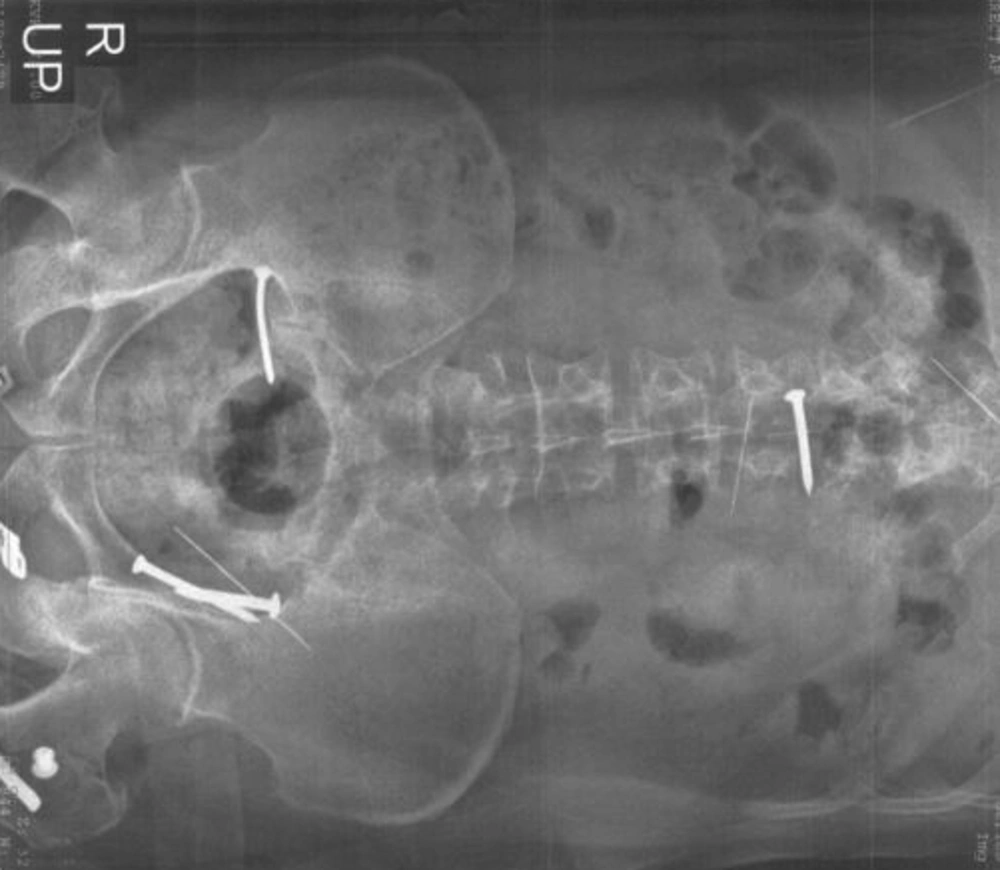
Figure 1.
X-ray graph showed nails and needles in GI and the patient’s chest
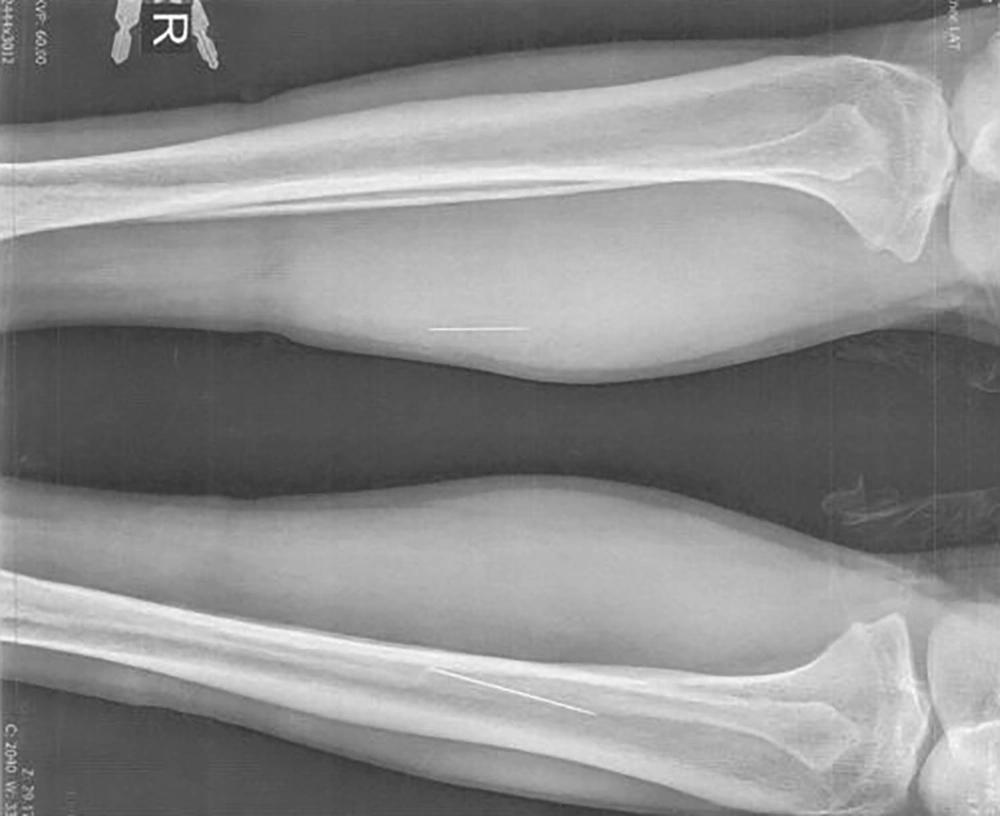
Figure 2.
AP radiography of the patient showed needle in both legs’ calves
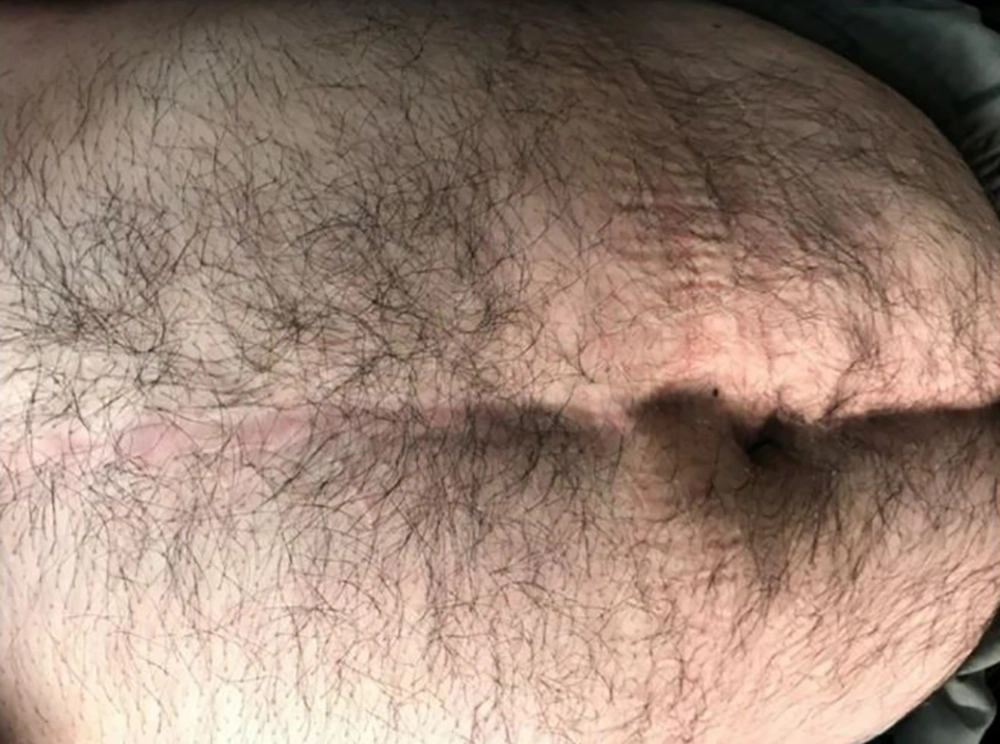
Figure 3.
Laparotomy scars in the anterior abdomen are seen
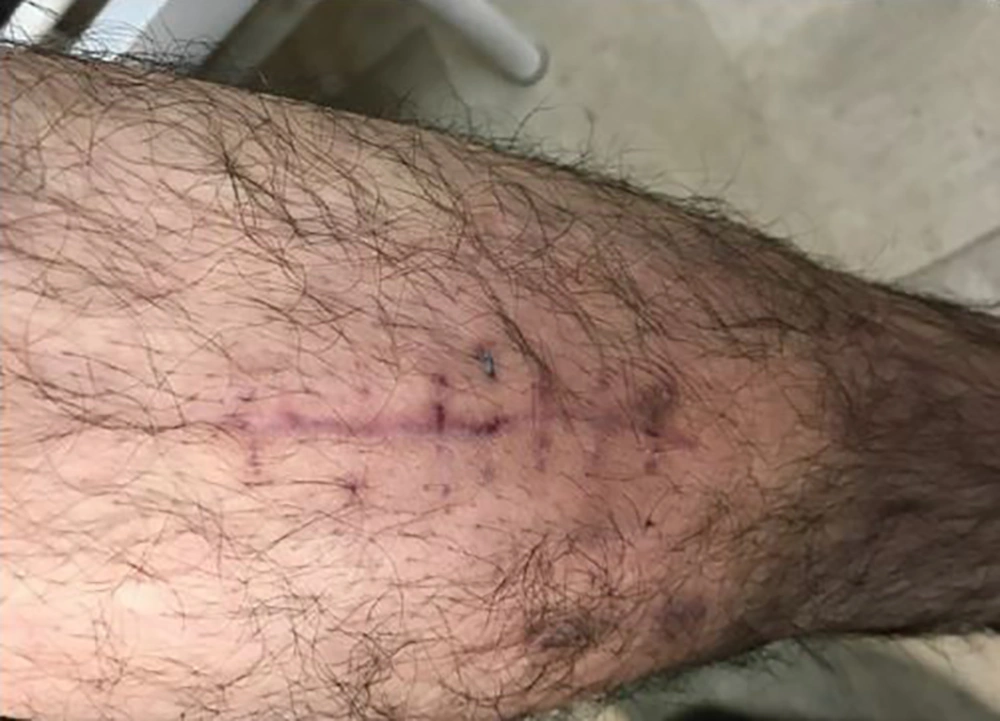
Figure 4.
The patient’s right leg indicating suture and surgical scars
The patient was born in a crowded family and is currently a hospital staff with depressive disorder; all of these are risk factors of factitious disorder and it is possible that the patient was neglected in his childhood. For the treatment of this patient, in addition to prescribing an antidepressant (fluoxetine 30 mg daily) for the associated depressive disorder, cognitive-behavioral therapy sessions were conducted to enhance coping skills with future stress. His family was reluctant to participate in family education sessions. The only person accompanying the patient during follow-up visits was his younger brother. Proper management of the factitious disorder, although is very difficult, could prevent unnecessary diagnostic and therapeutic interventions in this patient and reduce the complications of frequent surgeries. A six-month follow-up showed a partial remission in depressive disorder and anxiety relief. However, he has now a favorite function in the work but the patient was unwilling to adhere to the treatment in the last visit. Intervention in his family system may require much more time than usual.
3. Discussion
Patients with atypical and unusual manifestations of a disease associated with frequent hospital admissions and receiving multiple therapies can lead us to the diagnosis of factitious disorder (4). In patients with factitious disorder, although the development of symptoms was conscious and intentional, the main motivation for the behavior of these patients for playing the sick role and receiving attention and medical treatment is unconscious (1, 2, 5, 6). The presence of depression, anxiety, traumatic experiences in childhood, or recent traumatic experiences in patients suggest the backgrounds for psychiatric disorders (1). Meanwhile, according to a study, patients with factitious disorder have lower depression, anxiety, and stress scores than individuals with open self-harm behaviors (7). The key point is that the patients may have masochistic or sexual incentives while inserting foreign bodies (8, 9). Based on psychiatric interviews, psychological assessments and information elicited from the informants, our patient has also presented unconscious motives from childhood period.
For diagnosis, there is no objective test available to confirm that symptoms of the illness are caused by the patients themselves, and on the other hand, the patients deny the symptoms and refuse psychiatric treatment, which makes it difficult to treat these patients. Working as a health care professional along with growing in a crowded family could make the presented case susceptible to fabricating medical signs and symptoms (10). Diagnosing of a patient with factious disorder is challenging and needs a long-term monitoring and review of the past medical records which are denied by them (11). Other differential diagnoses such as conversion disorder and malingering should be kept in mind to be ruled out. In this patient, we did not find any external gain and while playing a “sick role” he had an unconscious motivation to fabricate the signs and symptoms claiming that his body was producing nails and needles.
One of the important factors in establishing a fair prognosis is early diagnosis and timely referral to a psychiatrist. The treatment cooperation between the patient and the doctor is one of the effective factors for improvement of prognosis, and therapeutic relationship between the physician and psychiatrist is essential in the treatment of underlying psychiatric disorders, such as depression or personality difficulties (1, 3, 6). Although the treatment of a patient with factious disorder is very difficult, some cases have been treated successfully (12).
3.1. Conclusions
With the timely diagnosis of factitious disorder, it is possible to prevent invasive and unnecessary diagnostic and therapeutic interventions and reduce morbidity and mortality. In the patient introduced here, beside anti-depressant therapy, used to treat the underlying depression, cognitive interventions, family therapies, and long-term psychotherapy was performed to provide appropriate treatment and prevent multiple surgeries and complications of laparotomy such as adhesion and intestinal obstruction. Although it is difficult to treat patients with factitious disorder, a therapist while making a strong alliance with them should primarily focus on co-morbidities and then family interventions and individuals’ psychotherapy as far as possible. The ultimate goal is to reduce complications, morbidity, and mortality in these patients.
3.2. Limitations
Although the clinical interview is considered the main procedure for establishing diagnosis, it should be clarified that self-disclosure is the limitation of our report.


