Fulltext
The full-text is available in pdf.
International Cardiovascular Research Journal
An annual journal in scientific affiliation with the Cardiovascular Research Center, Shiraz University of Medical Sciences
Image Credit:Int Cardiovasc Res J
Authors
 1, Mohammad Hassan Nemati2,*, Seyed Hedayatollah Akhlagh3, Ali Mohammad Keshtvarz Hesam Abadi4
Background:
Coronary Artery Bypass Grafting (CABG) has been considered as the complete treatment of Ischemic Heart Disease (IHD). Cardioplegic (extracellular and intracellular) solutions have been suggested to reduce the cross-clamping duration. It was hypothesized that the combination of the two intra- and extra-cellular solutions, namely Del Nido (DN) and custodiol, could result in beneficiary clinical and economic outcomes.
Objectives:
The present study aimed to compare the myocardial protection of custodiol alone and in combination with modified DN in patients undergoing cardiac surgery.
Methods:
This prospective, double-blind, clinical trial was conducted on 50 patients undergoing redo CABG surgery. Aortic clamping was performed using custodiol (20 cc/kg) in group A. In group B, custodiol 1000 cc was combined with 15 cc/kg cold DN and was injected using the antigrade method. The two groups were compared regarding the levels of Creatinine Kinase-MB (CK-MB) and troponin at the time of anesthesia induction and two hours and 48 hours after the surgery, intraoperative and postoperative variables, and 48–hour mortality rate.
Results:
The results showed similar CK-MB levels in the two groups at the induction time (P = 0.12). However, a significant difference was observed between the two groups in this regard two hours (P = 0.018) and 48 hours after the surgery (P = 0.021). Within-group comparisons revealed significant changes in CK-MB and troponin levels in both groups, with a steep increase from induction until two hours after the surgery and a decrease from two hours until 48 hours after the surgery (P < 0.001). The results indicated no significant difference between the two groups regarding CK-MB and troponin levels, frequency of intraoperative and postoperative dysrhythmia, need for intraoperative defibrillation, ischemic time, and 48-hour mortality rate (P > 0.05). However, the costs were two-folds higher in group A than in group B (P < 0.001).
Conclusions:
The present study findings showed that the selected solution was appropriate in terms of clinical aspects for the patients undergoing CABG surgery with long surgical duration or low Ejection Fraction (EF) and reduced the costs to half. Considering the significant difference in the CK-MB level and the lower troponin level in the combined group (not statistically significant), further studies are required to confirm the clinical priority of the combined solution.
© 2020, Author(s). This open-access article is available under the Creative Commons Attribution 4.0 (CC BY 4.0) International License (https://creativecommons.org/licenses/by/4.0/), which allows for unrestricted use, distribution, and reproduction in any medium, provided that the original work is properly cited.
Mousavizadeh M, Ghanbari A, Zirak N, Ghadrdoost B, Yaghubi M, et al. Comparative Myocardial Protection Effects of Buckberg and del Nido in Mitral Valve Surgery: A Prospective Randomized Trial. Int Cardiovasc Res J. 2021;15(4):e117124. doi:
Sadeghi S, Austin N, Totonchi Z, Bakhshandeh H, Hadavand N, et al. Impact of Procaine Hydrochloride Versus Lidocaine in Cardioplegic Solution, on Reperfusion Arrhythmia During Coronary Artery Bypass Graft Surgery. Multidiscip Cardio Annal. 2018;9(2):e67749. doi: https://doi.org/10.5812/mcardia.67749
Maher Hussien R, Nabil El Shafei M, Mohsen Ahmed M, Abdelmoneim W, Ghoneim MA, et al. Effect of Dexmedetomidine on Stress-Induced Changes in Hemodynamic and Left Ventricular Function in Coronary Artery Bypass Grafting Surgery: A Randomized Controlled Trial. J Cell Mol Anesth. 2025;10(1):e160218. doi: https://doi.org/10.5812/jcma-160218
Imantalab V, Sedighinejad A, Mir Mansouri A, Sadeghi Meibodi A, Haghighi M, et al. A Comparative Study of Cardioprotective Effect of Three Anesthetic Agents by Measuring Serum Level of Troponin-T after Coronary Artery Bypass Grafting. Int Cardiovasc Res J. 2017;6(3):e12797. doi:
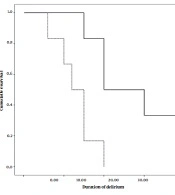
Javaherforooshzadeh F, Babazadeh Dezfoli A, Saki Malehi A, Gholizadeh B. The Efficacy of Dexmedetomidine alone or with Melatonin on Delirium after Coronary Artery Bypass Graft Surgery: A Randomized Clinical Trial. Anesth Pain Med. 2023;13(4):e138317. doi: https://doi.org/10.5812/aapm-138317
Last Update: 1 month ago
Last Update: 1 month ago
Last Update: 1 month ago
Last Update: 6 hours ago
Last Update: 10 hours ago
Last Update: 4 days ago

