Fulltext
The full text is available in PDF.
International Cardiovascular Research Journal
An annual journal in scientific affiliation with the Cardiovascular Research Center, Shiraz University of Medical Sciences
Image Credit:Int Cardiovasc Res J
Authors
Background:: Some patients with Coronary Artery Disease (CAD) have no well-known risk factors of this disease, but are diagnosed with cardiovascular events. The present study aimed to assess the association between Apo A1 and ApoB and the severity of CAD and determine whether these parameters are better predictors of Ischemic Heart Disease (IHD).
Methods:: In this case control study, 271 individuals who were suspicious of having CAD and had been referred to Arak Amir-al-Momenin hospital underwent coronary angiography. Based on the results of angiography, the participants with presence or absence of coronary artery stenosis were allocated into the case and the control group, respectively. The severity of CAD involvement was determined by Gensini score. The data were entered into the SPSS statistical software and analyzed through parametric and non-parametric tests, sensitivity analysis, and logistic regression.
Results:: The results revealed no significant correlation between apoA-1 and severity of CAD involvement (GS) (r = 0.017, P = 0.797). However, a significant correlation was found between apoB and GS (r = 0.127, P = 0.047). Logistic regression model showed ApoB, sex, DM and, FH as the only proper predictors of IHD (P < 0.048, P < 0.002, P < 0.040, and P < 0.001, respectively). In comparison to angiography for diagnosis of CAD, ROC analysis represented ApoB as a more useful predictor (P = 0.023).
Conclusions:: In addition to measurement of conventional parameters for assessing CAD high risk groups, according to the results of this study using ApoB would be resonable as well. Further investigations are recommended to clear the problem.
© 2017, Author(s). This open-access article is available under the Creative Commons Attribution 4.0 (CC BY 4.0) International License (https://creativecommons.org/licenses/by/4.0/), which allows for unrestricted use, distribution, and reproduction in any medium, provided that the original work is properly cited.
Bagheri B, Shokrzadeh M, Mokhberi V, Azizi S, Khalilian A, et al. Association between Serum Iron and the Severity of Coronary Artery Disease. Int Cardiovasc Res J. 2017;7(3):e12425. doi:
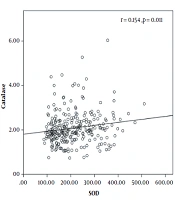
Dinarvand N, Rasouli M, Meshkini F, Zargari M. Investigation of Antioxidant Status in Coronary Artery Disease Patients. J Adv Immunopharmacol. 2021;1(1):e115238. doi: https://doi.org/10.5812/tms.115238
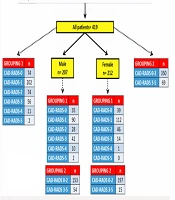
Seyithanoğlu M, Kizildag B, Gulmez R, Cagri Aykan A. Monocyte/HDL Cholesterol Ratio and Atherogenic Indexes as Predictors of Coronary Artery Disease Severity and Angiography Need in Patients Undergoing Coronary CT Angiography. I J Radiol. 2025;22(1):e157636. doi: https://doi.org/10.5812/iranjradiol-157636
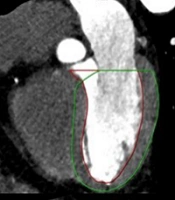
Kadiyoran C, Yilmaz PD. Monocyte-to-High-Density Lipoprotein Ratio may be Related to the Coronary Artery Disease Reporting and Data System Score and Increased Left Ventricular Mass. I J Radiol. 2022;19(1):e118837. doi: https://doi.org/10.5812/iranjradiol.118837
Hekmatnia A, Pourmoghaddas A. Prevalence of increased intima-media thickness ratio of carotid arteries in patients with coronary artery disease. J Inflamm Dis. 2024;7(2):e154945. doi:
Last Update: 1 week ago
Last Update: 1 week ago
Last Update: 1 week ago
Last Update: 3 hours ago
Last Update: 7 hours ago
Last Update: 5 days ago
