
1. Introduction
Myocarditis is an inflammatory condition that causes myocyte necrosis or degeneration and is distinct from ischemic damage (1). Viral infections are common causes; however, other etiologies include collagen vascular diseases and drugs. Many cases remain idiopathic (2, 3).
Recent research has investigated genetic factors in the pathogenesis of myocarditis, supported by twin studies, mostly in children or newborns (4, 5), familial clustering (6, 7), and population genetic factors (8). However, the distinction between genetic susceptibility and shared environmental factors remains unclear.
This report describes monozygotic twins who were admitted simultaneously with acute myocarditis and whose paraclinical studies revealed similar patterns of cardiac involvement.
2. Case Presentation
2.1. Clinical Timeline
The twins shared the same sleeping, eating, and travel environment during the week before symptom onset. The timeline of events is shown in Table 1.
Table 1.
Clinical Timeline a
| Event | Day Relative to Symptom Onset | Twin 1 | Twin 2 |
|---|---|---|---|
| Return from journey | Day -7 | Yes | Yes |
| Flu-like symptoms begin | Day -7 | Yes | Yes |
| Flu-like symptoms resolve | Day -3 | Yes | Yes |
| Onset of chest pain, dyspnea, and palpitations | Day 0 | Yes (same day) | Yes (same day) |
| Admission to hospital | Day 0 | Yes | Yes |
| Initial laboratory testing | Day 0 | Yes | Yes |
| Echocardiography | Day 1 | Yes | Yes |
| CMR | Day 3 | Yes | Yes |
| Treatment initiation | Day 0 | Yes | Yes |
| Discharge | Day 7 | Yes | Yes |
| Outpatient follow-up | Day 14 | Yes | Yes |
| Holter monitoring | Day 14 | Yes | Yes |
a Cardiac symptoms occurred 3 days after the resolution of the flu-like illness (symptoms resolved on Day -3; cardiac symptoms began on Day 0).
2.2. Presentation and History
A pair of monozygotic twins, born in 2001, were admitted at age 18 with simultaneous symptoms of acute myocarditis. Both presented with left-sided chest pain, dyspnea, and palpitations 1 week after returning from a journey during which they experienced flu-like symptoms. Notably, both twins developed cardiac symptoms on the same day, 3 days after the resolution of their flu-like illness. Their parents were not consanguineous, and both twins had a history of thalassemia minor.
No other family members or close contacts experienced similar flu-like or cardiac symptoms during this period.
Electrocardiography (ECG) showed J-point and ST-segment elevation in the precordial leads (V2-V6) in both twins.
2.3. Diagnostic Reasoning
The differential diagnosis of chest pain with ST-segment elevation and elevated troponin levels in young adults includes acute coronary syndrome, pericarditis/myopericarditis, stress cardiomyopathy (Takotsubo), pulmonary embolism, and inherited cardiomyopathies. Acute coronary syndrome was considered unlikely because of the absence of cardiovascular risk factors, the clinically presumed normal coronary anatomy, and the patients' young age; coronary angiography was therefore considered unnecessary given the low pretest probability. Pericarditis was excluded because of the absence of diffuse ST-segment elevation, PR-segment depression, a pericardial friction rub on examination, and pericardial effusion on echocardiography or cardiac magnetic resonance (CMR). Stress cardiomyopathy was considered improbable given the absence of a profound emotional or physical trigger and the focal pattern of involvement on CMR, rather than apical ballooning. Pulmonary embolism was excluded based on normal oxygen saturation, the absence of right-heart strain on echocardiography, and the clinical course. Inherited cardiomyopathies were considered; however, no family history was present. Therefore, acute myocarditis remained the most likely diagnosis. The diagnosis was based on the updated 2018 Lake Louise Criteria, requiring both T2-based (STIR/T2 hyperintensity) and T1-based (LGE) criteria. Viral and autoimmune testing was not considered necessary given the classic presentation and fulfillment of the Lake Louise Criteria.
2.4. Comparative Findings
Comparative clinical, laboratory, echocardiographic, and CMR findings are summarized in Table 2.
Table 2.
Comparative Clinical, Laboratory, Echocardiographic, and CMR Findings
| Laboratory tests | Twin 1 (IV:1) | Twin 2 (IV:2) |
|---|---|---|
| CRP | 6.9 mg/L (normal < 5) | Negative |
| CPK | 848 U/L (normal 24 - 195) | 205 U/L (normal 38 - 174) |
| LDH | 569 U/L (normal 207 - 414) | Normal |
| Troponin I | 23.6 ng/mL (normal < 0.034) | 5.0 ng/mL |
| Ultrasound | Mild splenomegaly (130 × 56 mm) | Mild splenomegaly (138 × 50 mm) |
| Echocardiography (Day 1) | LVEF 55%, GLS - 19.3%; mild decrease in inferolateral wall strain; mild TR/MR; PAP 16 mmHg | LVEF 55%, GLS - 18.8%; mild hypokinesia in basal lateral, anteroseptal, and inferior walls; trivial MR/AR, mild TR; PAP 16 mmHg |
| CMR T2-weighted (Day 3) | Localized inflammation in the inferolateral LV | Localized inflammation in the apicoanterior and apicolateral segments |
| CMR LGE (Day 3) | Myocardial injury (edema and/or early fibrosis) in the basal and mid posterolateral segments | Myocardial injury (edema and/or early fibrosis) in the apicolateral and apicoanterior segments |
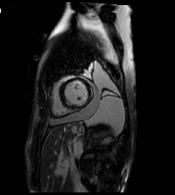
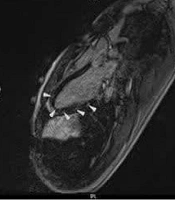
Twin 1 had elevated inflammatory markers (CRP, CPK, LDH, and troponin I), whereas Twin 2 had normal CRP and LDH levels despite positive CMR findings. The corresponding CMR findings are shown in Figures 1-4. This finding illustrates the recognized variability in the systemic inflammatory response in myocarditis, in which serum markers may dissociate from myocardial inflammation.
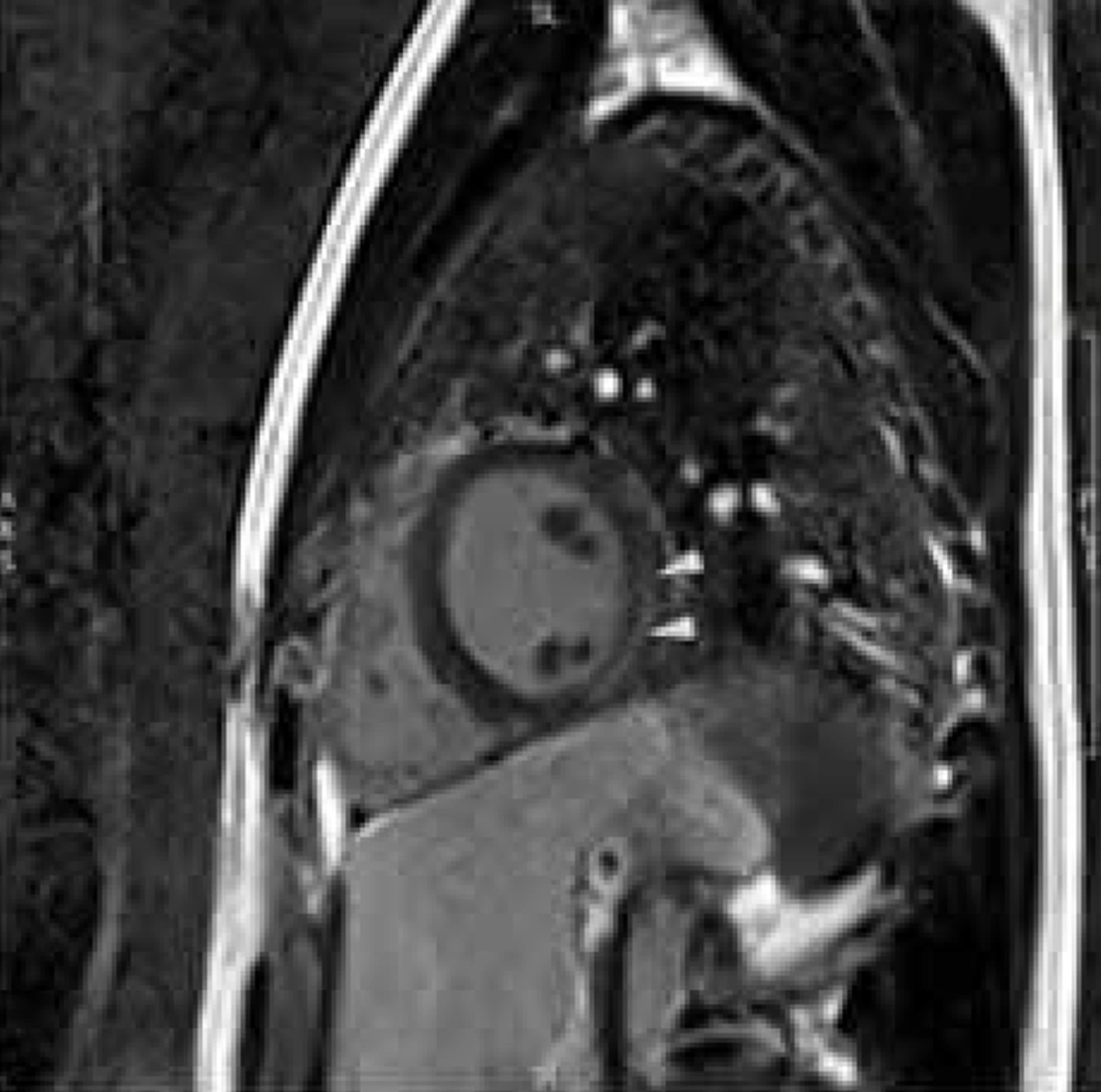
Figure 1.
T2-weighted CMR including STIR showing localized myocardial inflammation in the inferolateral wall of the left ventricle (Twin 1). Arrows indicate hyperintense signal.
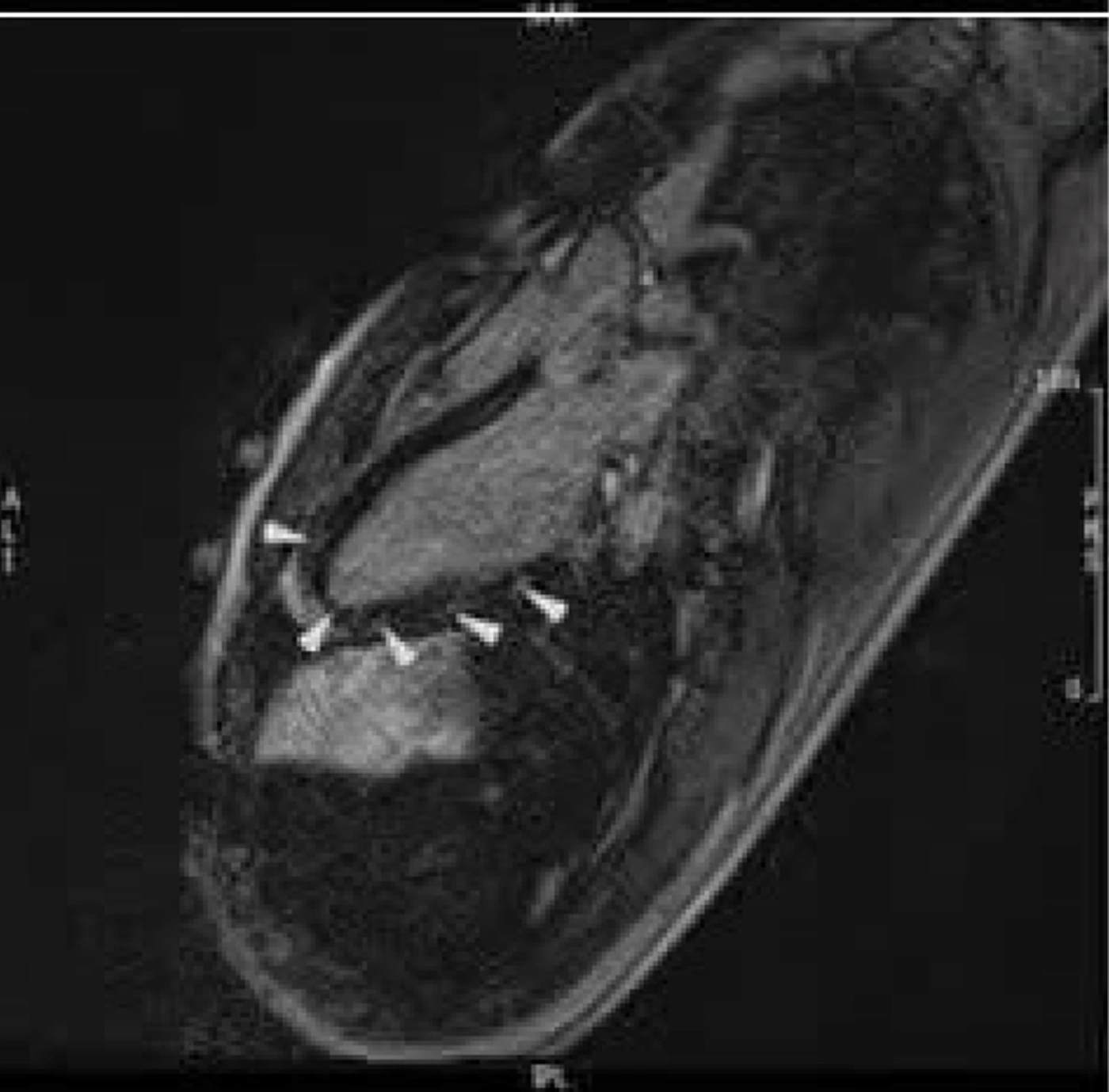
Figure 2.
Late gadolinium enhancement (LGE) in Twin 1, demonstrating myocardial injury (edema and/or early fibrosis) in the basal and mid posterolateral segments (arrows).
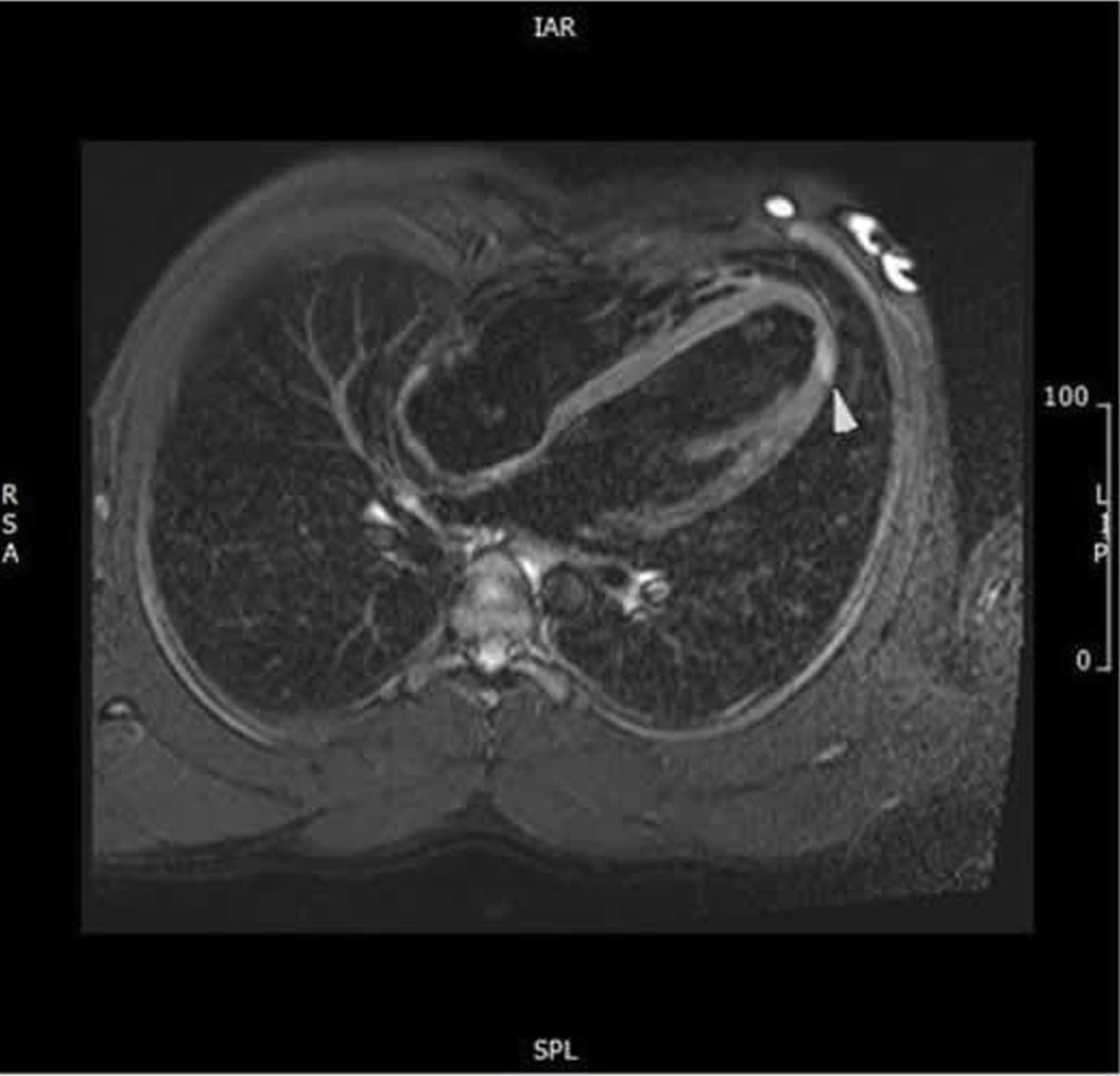
Figure 3.
T2-weighted CMR including STIR in Twin 2, showing inflammation in the apicoanterior and apicolateral segments (arrows).
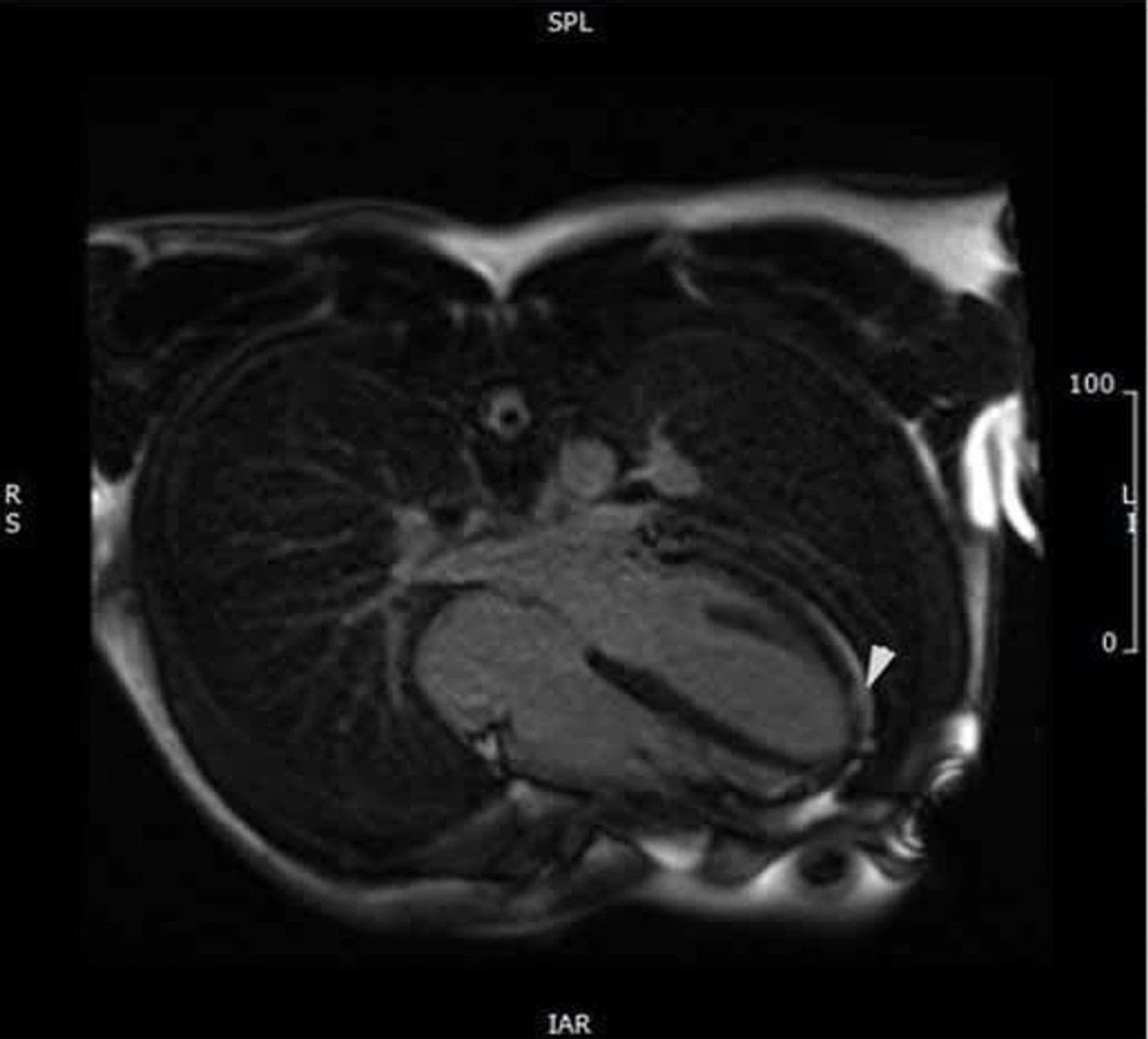
Figure 4.
LGE in Twin 2, with myocardial injury (edema and/or early fibrosis) in the apicolateral and apicoanterior segments (arrows).
2.5. Treatment and Follow-Up
Both twins were treated with carvedilol (a beta-blocker), captopril (an angiotensin-converting enzyme inhibitor), and aspirin. The therapeutic rationale was as follows: despite preserved LVEF, the presence of extensive LGE indicating myocardial injury and the potential risk of adverse ventricular remodeling supported the use of renin-angiotensin-aldosterone system inhibition and beta-blockade. Aspirin was added primarily for its anti-inflammatory effect; however, the authors acknowledge that routine aspirin use in isolated myocarditis without pericardial involvement is controversial and that its benefit in this setting is unproven. Both patients were discharged on Day 7 with complete symptom resolution and troponin I levels reduced to less than 5 times the upper limit of normal. No adverse events, including arrhythmia, worsening heart failure, or recurrent chest pain, occurred during hospitalization.
At the 2-week outpatient follow-up, both twins remained asymptomatic. Twenty-four-hour Holter monitoring showed no clinically significant arrhythmias, specifically no nonsustained ventricular tachycardia, couplets, or frequent premature ventricular contractions (> 100 per 24 hours). Exercise restriction for 3 - 6 months was recommended. Repeat CMR was scheduled at 3 months but had not yet been performed at the time of manuscript submission.
3. Discussion
The global prevalence of myocarditis is estimated at 22 per 100,000; however, concurrent presentation in young adult twins is rare. The most likely explanation for the simultaneous presentation is shared environmental exposure, including the recent journey and flu-like illness, with a common viral trigger. Genetic factors remain hypothetical without molecular confirmation.
Several reports have described myocarditis in twins, predominantly in infants. Ozdemir et al. reported myocarditis in 4-month-old twins (3), Bissel et al. described coxsackievirus B4 infection (9), Amdani et al. reported neonatal enteroviral myocarditis (4), and Cho et al. described myocarditis in 3-month-old twins (5). Our case is unusual because the twins were 18 years old and presented simultaneously with similar CMR patterns.
A comprehensive contemporary review by Tschöpe et al. (10) emphasizes that myocarditis is a heterogeneous inflammatory cardiomyopathy with variable clinical presentations and outcomes. The authors highlight the increasingly recognized role of genetic susceptibility in the pathogenesis of inflammatory cardiomyopathy, particularly through variants in genes encoding desmosomal proteins, such as desmoplakin (DSP), as well as dystrophin and sarcomeric components. Tschöpe and colleagues also note that acute viral infections may act as "second hits" that unmask previously silent genetic variants, leading to clinically apparent myocarditis. Although this paradigm is mechanistically plausible, our data do not demonstrate such a genetic predisposition. The observed similarity in CMR patterns is more likely to reflect shared environmental exposure and a viral trigger than a defined genetic architecture influencing myocardial distribution.
To our knowledge, Kissopoulou et al. first reported 17- and 18-year-old twins with myocarditis and identified a heterozygous nonsense variant in the DSP gene [NM_004415.2: c.2521_2522del] associated with desmosomal dysfunction (1). Although we could not perform genetic testing, the similarity in the twins' CMR findings raises the hypothesis of a similar genetic background; however, this remains speculative.
Other studies support potential genetic contributions. Dystrophin and dysferlin defects increase susceptibility to coxsackievirus B3 myocarditis (11, 12), and enterovirus causes disruption of the sarcoglycan complex (13). Belkaya et al. found that recessive defects in the myocardium may predispose to acute heart failure after viral infections (14), and Tschöpe et al. noted that acute myocarditis can unmask previously silent genetic variants (10). Collectively, these reports support the evolving concept that genetic predisposition, whether through desmosomal, dystrophin-associated, or other immune-regulatory genes, may modify the host response to common viral pathogens. However, confirmation requires molecular testing, which was not performed in this case. Furthermore, Tschöpe and colleagues (10) advocate advanced CMR protocols and genetic testing in cases with atypical presentations or familial aggregation. Our case exemplifies such a scenario: concurrent presentation in monozygotic twins with similar CMR findings warrants consideration of genetic evaluation despite the absence of a known family history. The authors also emphasize the importance of longitudinal follow-up with serial CMR and arrhythmia monitoring because inflammatory cardiomyopathy can progress to dilated cardiomyopathy or arrhythmogenic right ventricular cardiomyopathy over time, considerations that are directly relevant to the long-term management of our patients.
3.1. Limitations
Several important limitations must be acknowledged:
1) No genetic testing was performed; therefore, genetic predisposition remains speculative.
2) No familial cardiac evaluation (e.g., echocardiography or ECG in parents/siblings) was conducted.
3) No virological or immunological confirmation was obtained; therefore, the presumed viral etiology cannot be definitively confirmed.
4) Follow-up CMR was not available at the time of manuscript submission.
5) The similarity in CMR patterns is noteworthy but does not establish a genotype-phenotype correlation because the segmental distribution of myocarditis is highly heterogeneous even among unrelated individuals.
3.2. Conclusions
This case report describes concurrent acute myocarditis with similar CMR patterns in monozygotic twins without molecular confirmation. Although shared viral exposure during travel is the most likely explanation for the simultaneous presentation, the similar findings in identical twins raise the hypothesis that host genetic factors may influence susceptibility to myocarditis. The findings are hypothesis-generating rather than demonstrative of genetic predisposition. Genetic testing, including testing of desmosomal genes such as DSP, is recommended in future twin cases of myocarditis.